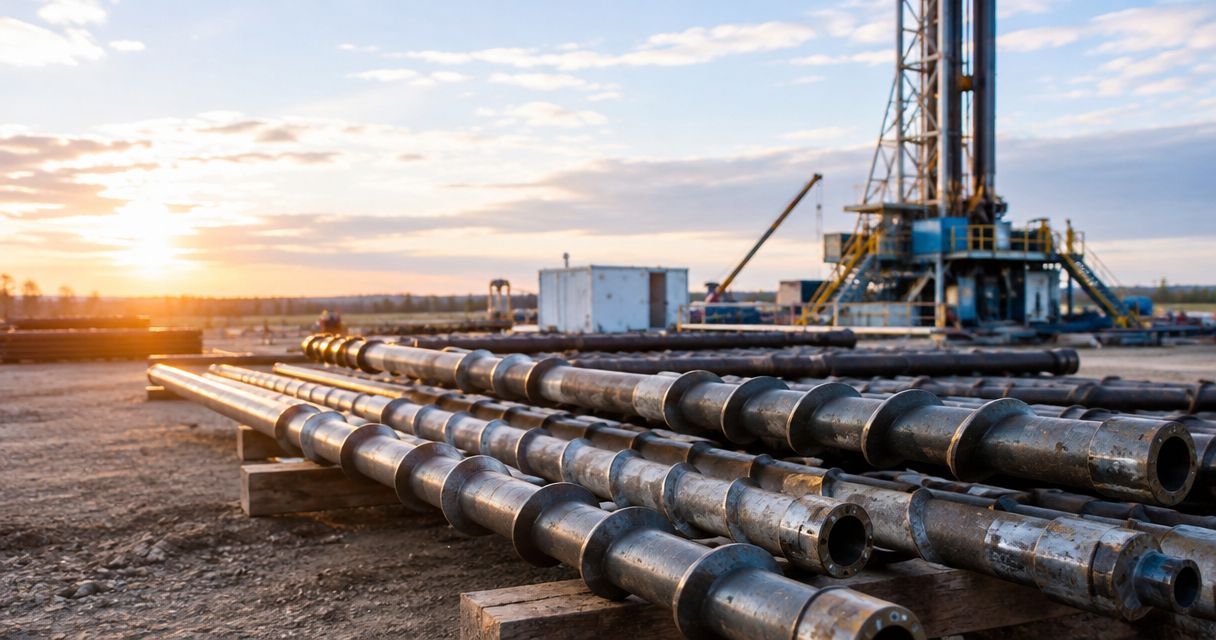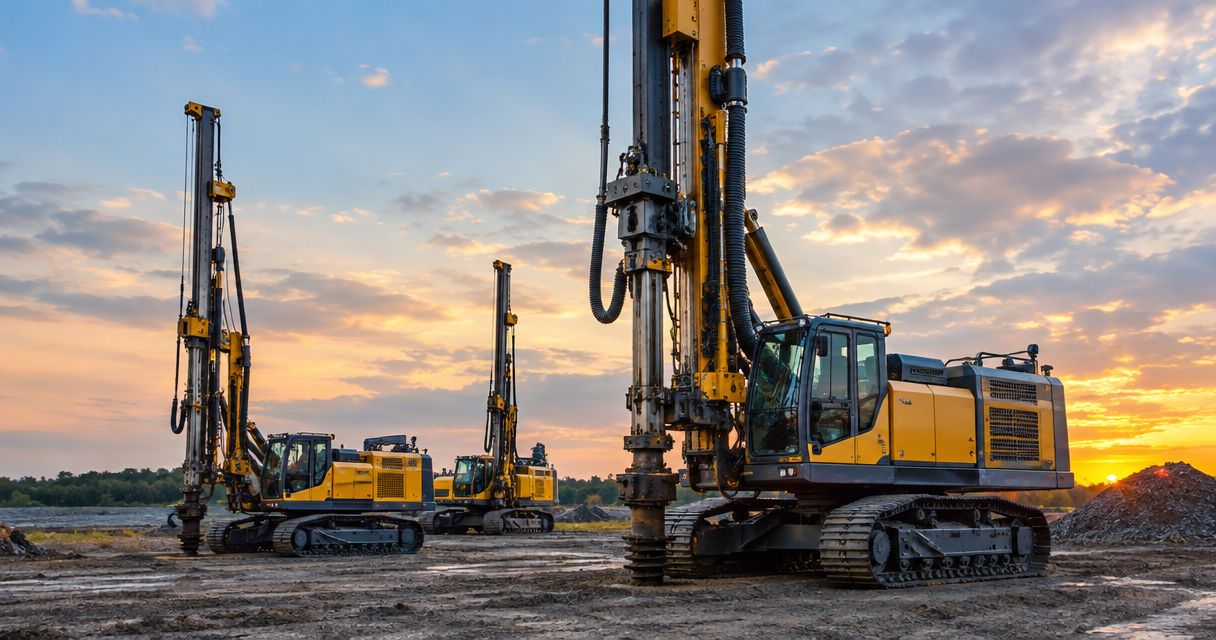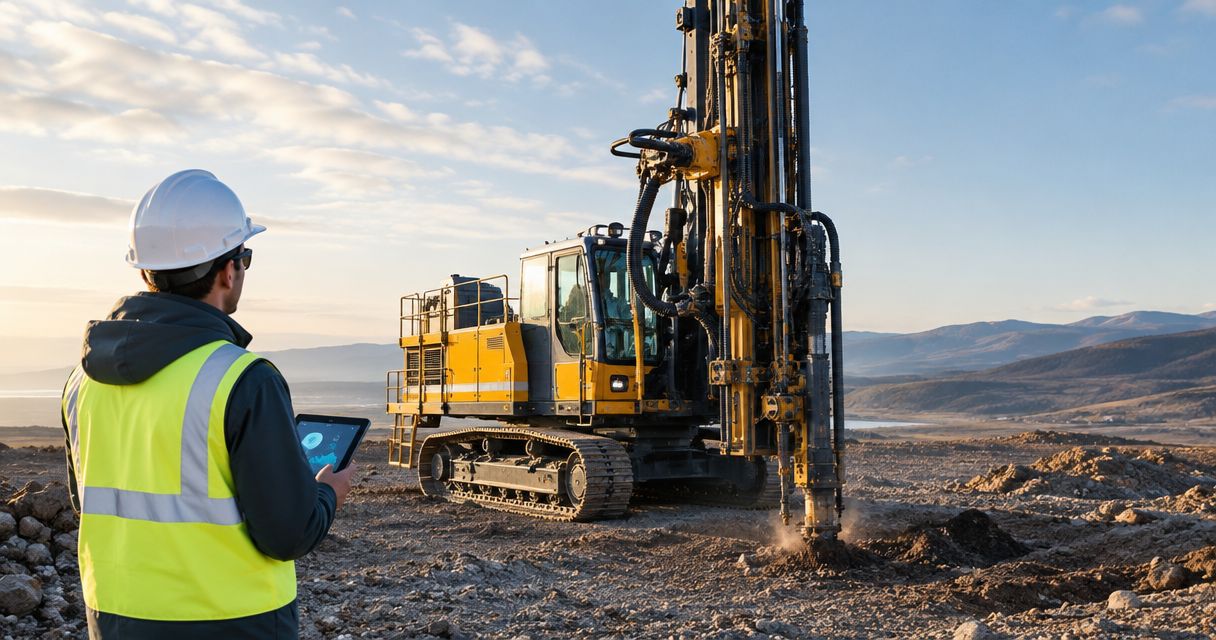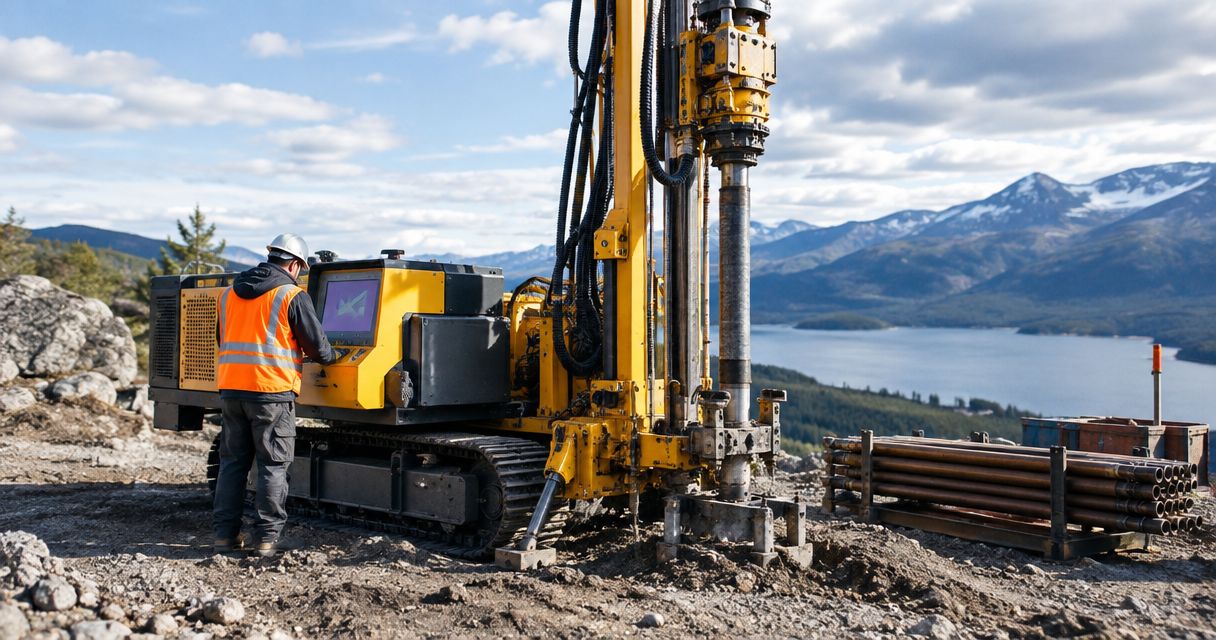
Best overall for routine soil investigations: a truck-mounted hollow-stem auger rig. Best for rough-ground access: a track-mounted auger rig. Best for environmental sampling: a direct-push rig. This 2026 guide compares seven used configurations by drilling method, site access, and inspection priorities—not by manufacturer badge.
- The best geotechnical drill rigs match your sampling method, ground conditions, and site access—not just your preferred manufacturer.
- Truck-mounted hollow-stem auger rigs are the default shortlist for routine soil investigations with suitable vehicle access.
- Direct-push rigs suit environmental sampling; wireline core rigs suit projects that require rock recovery.
- Drill Rig Marketplace suits contractors seeking used geotechnical drill rigs alongside inspection, repair, and rebuild services.
Why this matters
A used rig is a drilling system, not just an engine and mast. The carrier, tooling, sampling equipment, and working condition determine whether it can perform your contracted work.
Drill Rig Marketplace is best for contractors seeking used geotechnical drill rigs with inspection, repair, and rebuild support. Its services include brokerage, hydraulic repairs, drivetrain repairs, truck remounts, and tooling sourcing. Start your shortlist with Drill Rig Marketplace, then evaluate the individual machine against your work requirements.
The seven picks below are equipment configurations, not claims that every machine within a category performs equally. A manufacturer name alone does not establish drilling capability or condition.
What makes the best geotechnical drill rigs
Use these criteria to compare used equipment in 2026:
- Method match: Require the drilling and sampling methods specified for your projects.
- Access fit: Check the carrier against entrances, ground conditions, overhead clearance, and setup space.
- Mechanical condition: Inspect the feed system, rotation head, mast, hydraulics, and carrier separately.
- Tooling fit: Confirm that included augers, rods, casing, and samplers match the proposed work.
- Repair support: Identify repair needs, parts sources, and documentation before committing.
A strong engine does not compensate for a worn feed assembly. Fresh paint does not establish mechanical condition.
Used geotechnical drill rigs at a glance
| Configuration | Best for | Standout feature | Key limitation |
|---|---|---|---|
| Truck-mounted hollow-stem auger | Routine soil investigations | Borehole support through hollow-stem augers | Requires suitable vehicle access |
| Track-mounted auger | Rough-ground access | Tracked carrier for off-road positioning | Transport and surface protection need planning |
| Direct-push | Environmental sampling | Advances sampling tools without conventional rotary drilling | Ground conditions restrict penetration |
| Rotary wash | Saturated soil investigations | Fluid-assisted drilling with casing as required | Fluid management complicates setup |
| Wireline core | Rock characterization | Retrieves a core barrel through the drill string | Core tooling adds maintenance requirements |
| Compact limited-access | Confined work areas | Smaller working envelope | Compact dimensions can limit capability |
| Multipurpose auger/rotary | Mixed soil-and-rock workloads | Supports different drilling methods when equipped | More systems and tooling to inspect |
1. Truck-mounted hollow-stem auger: best for routine soil investigations
A truck-mounted hollow-stem auger rig is the first shortlist for recurring soil-boring work where vehicle access is straightforward. Hollow-stem augers provide a supported passage for sampling equipment, although soil and groundwater conditions still affect the sampling process.
For a 2026 purchase, verify the sampling setup rather than assuming an auger rig includes everything needed for Standard Penetration Testing.
Truck-mounted hollow-stem auger pros:
- Combines road transport and drilling equipment on one carrier.
- Supports soil sampling through the auger stem.
- Fits recurring auger-based investigation workflows.
Truck-mounted hollow-stem auger cons:
- Truck access restricts positioning on some sites.
- Auger joints and drive components require close wear checks.
Best for: Contractors whose routine workload centers on accessible soil-boring sites.
Verdict: Buy when the auger drive, sampling equipment, and truck condition match your work.
2. Track-mounted auger: best for rough-ground access
A track-mounted auger rig puts an auger drilling system on a tracked carrier. Choose this configuration when site access—not a different sampling method—is the main obstacle.
Inspect the undercarriage as carefully as the drilling assembly. Carrier repairs belong in the purchase decision, not in a separate calculation after delivery.
Track-mounted auger pros:
- Suits off-road positioning on appropriate terrain.
- Carries auger capability beyond truck-accessible locations.
- Offers a different access solution without changing the core drilling method.
Track-mounted auger cons:
- Requires a suitable transport arrangement.
- Tracks do not eliminate slope, bearing-capacity, or surface-damage concerns.
Best for: Contractors working on rough-ground sites that remain suitable for tracked equipment.
Verdict: Buy when access requirements justify the carrier and its maintenance needs.
3. Direct-push: best for environmental sampling
A direct-push rig advances sampling tools using static force, percussion, or both, depending on the machine. It suits environmental sampling in penetrable unconsolidated materials; it is not a substitute for every auger or rock-drilling assignment.
Ask which sampling tools are included and inspect their connections. A suitable carrier without the required sampling system is an incomplete purchase.
Direct-push pros:
- Provides a dedicated environmental sampling configuration.
- Supports soil or groundwater sampling with suitable tooling.
- Avoids conventional rotary drilling for compatible tasks.
Direct-push cons:
- Dense layers, coarse material, and rock can restrict advancement.
- Sampling capability depends on the actual tooling package.
Best for: Environmental contractors with compatible ground conditions and defined sampling requirements.
Verdict: Buy for direct-push work; skip as your only rig when contracts require incompatible methods.
4. Rotary wash: best for saturated soil investigations
A rotary wash configuration uses drilling fluid circulation to assist borehole advancement and cuttings removal. Casing and drilling practices must suit the ground conditions and investigation requirements.
For your 2026 shortlist, check the pump, hoses, swivel, and fluid-handling equipment together. The rotation system alone does not establish a complete working setup.
Rotary wash pros:
- Provides an alternative to auger-only advancement.
- Supports fluid-assisted drilling in suitable formations.
- Can work with casing and sampling procedures appropriate to the investigation.
Rotary wash cons:
- Requires fluid supply, containment, and disposal planning.
- Fluid circulation affects how cuttings and sample conditions are interpreted.
Best for: Contractors whose saturated-soil investigations specify fluid-assisted drilling.
Verdict: Buy when the fluid system and sampling workflow meet the project requirements.
5. Wireline core: best for rock characterization
A wireline core rig retrieves the inner core barrel through the drill string instead of withdrawing the entire string for each retrieval. It belongs on your shortlist when the investigation requires recovered rock core.
Inspect the wireline winch, overshot, barrel, rods, and water system. A rotation head capable of coring is not proof of a complete wireline package.
Wireline core pros:
- Supports recovery of rock for geological examination.
- Retrieves the inner barrel through the drill string.
- Fits investigations centered on rock characterization.
Wireline core cons:
- Requires compatible barrels, rods, and retrieval equipment.
- Core recovery depends on tooling, formation, and operating technique.
Best for: Contractors handling rock investigations with specified core-recovery requirements.
Verdict: Buy for recurring rock work; skip when your workload is exclusively shallow soil sampling.
6. Compact limited-access: best for confined work areas
A limited-access rig prioritizes a smaller transport or operating envelope. Compact equipment still needs enough space for mast movement, tooling handling, stabilization, and safe operation.
Measure the complete access route and working area. Check the operating configuration, not just the machine with its mast folded.
Compact limited-access pros:
- Addresses entrances and work areas unsuitable for larger equipment.
- Supports specialized access-dependent assignments.
- Lets access constraints guide machine selection explicitly.
Compact limited-access cons:
- Compact dimensions can restrict feed travel or drilling capability.
- Ventilation and exhaust controls require attention for enclosed work.
Best for: Contractors with confined-site assignments that match the machine's documented capabilities.
Verdict: Buy after checking both entry dimensions and the full working envelope.
7. Multipurpose auger/rotary: best for mixed-method workloads
A multipurpose auger/rotary rig supports different drilling methods when fitted with the required systems and tooling. It suits contractors whose assignments include both soil investigation and rotary drilling.
For 2026 purchases, demand a demonstration of each method you intend to use. An attachment list does not prove that every system works.
Multipurpose auger/rotary pros:
- Accommodates different methods on compatible equipment.
- Supports mixed workloads without choosing an auger-only configuration.
- Allows tooling selection around changing project requirements.
Multipurpose auger/rotary cons:
- Adds systems, connections, and tooling to the inspection.
- Method changes require setup and equipment handling.
Best for: Contractors with recurring mixed-method assignments and crews trained for those methods.
Verdict: Buy when demonstrated versatility matches contracted work; skip unnecessary complexity.
Inspect the sampling system before committing
For Standard Penetration Testing, ASTM D1586/D1586M specifies a nominal 140-pound hammer falling 30 inches. The sampler is driven 18 inches, with the blow count over the final 12 inches used for the SPT N-value. Check the applicable standard and project specifications; a seller's description of an SPT-equipped rig is not verification of compliance.
Have a qualified inspector assess structural condition, hydraulic leaks, controls, safety systems, and carrier condition. Require demonstrations under appropriate operating conditions, with personnel clear of moving equipment.
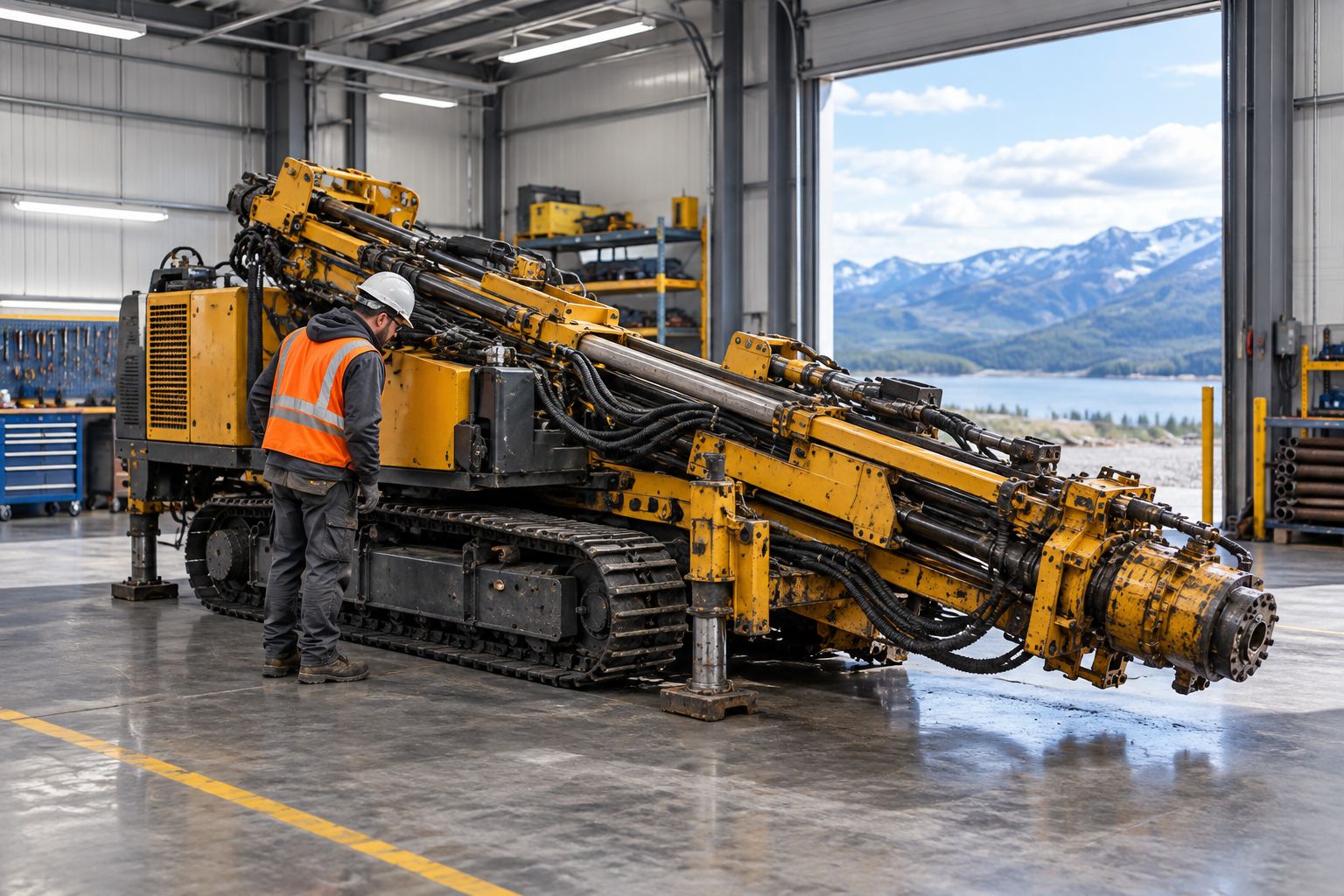
Drill Rig Marketplace provides inspections, repairs, and complete rebuilds at its Beaver, West Virginia facility. Establish the machine's repair scope before deciding whether to buy it as-is or pursue refurbishment.
How we ranked
The order prioritizes distinct job requirements, not unverified performance claims. Routine soil work comes first; access constraints, environmental sampling, saturated soils, rock recovery, confined sites, and mixed-method work each receive a separate slot.
Which geotechnical drill rig should you choose?
Choose a truck-mounted hollow-stem auger rig as the default for accessible, routine soil investigations. Change that choice when the required sampling method or site access demands another configuration.
The best geotechnical drill rigs in 2026 are the machines that complete your specified work and pass inspection. Do not buy unused capability at the expense of mechanical condition.
FAQ
What's the best used geotechnical drill rig for routine soil borings?
A truck-mounted hollow-stem auger rig is the default shortlist for routine soil borings with suitable vehicle access. Confirm the sampling equipment and mechanical condition before buying.
Is a track-mounted drill rig better than a truck-mounted rig?
A track-mounted rig is the better fit when suitable off-road access is the deciding requirement. A truck-mounted rig combines road transport and drilling equipment, so the choice depends on the site and transport plan.
Can a direct-push rig replace an auger rig?
A direct-push rig does not replace an auger rig for every investigation. Choose it when the ground conditions and specified sampling methods support direct-push work.
What used drill rig should I buy for rock coring?
Shortlist a wireline core configuration when your projects require recovered rock core. Inspect the barrel, rods, retrieval equipment, winch, and water system as a complete package.
What should I inspect before buying a used geotechnical drill rig?
Inspect the drilling assembly, carrier, hydraulics, controls, safety systems, and included tooling. Require an appropriate operating demonstration and a qualified condition assessment.
Does Drill Rig Marketplace repair used geotechnical drill rigs?
Drill Rig Marketplace provides drill rig inspections, repair, complete rebuilds, truck remounts, and refurbishment. Its full-service repair and rebuild facility is in Beaver, West Virginia.
One last thing
Ask the seller to demonstrate the exact sampling method your next contract requires. A rig that starts, rotates, and looks clean has not yet proved it can perform that assignment.