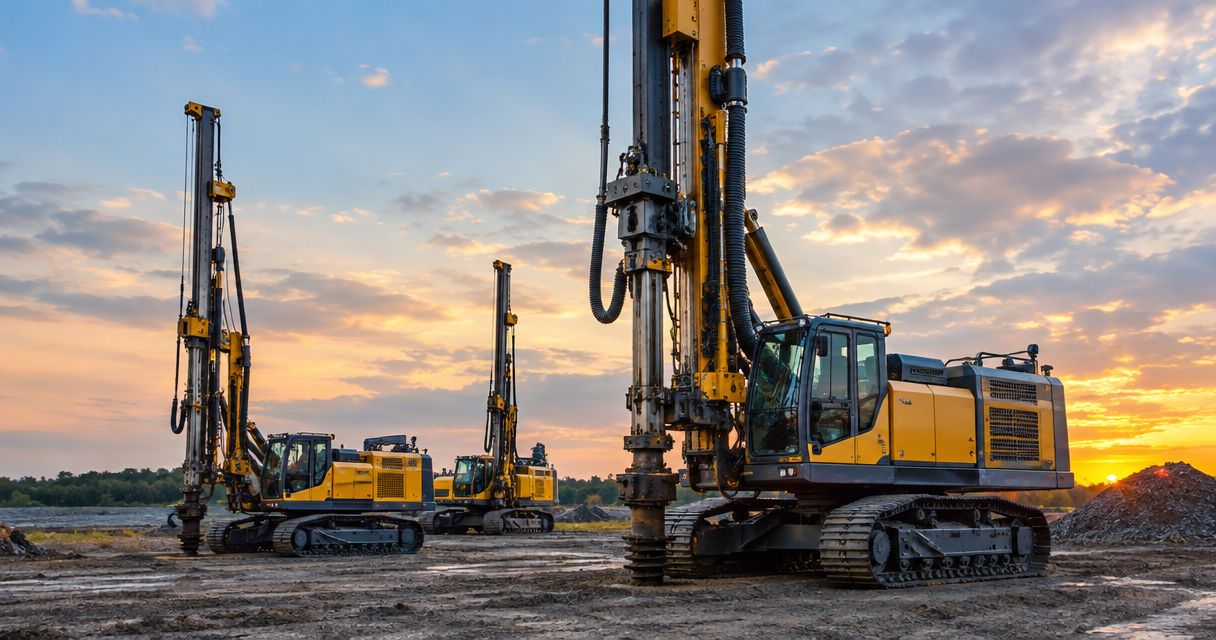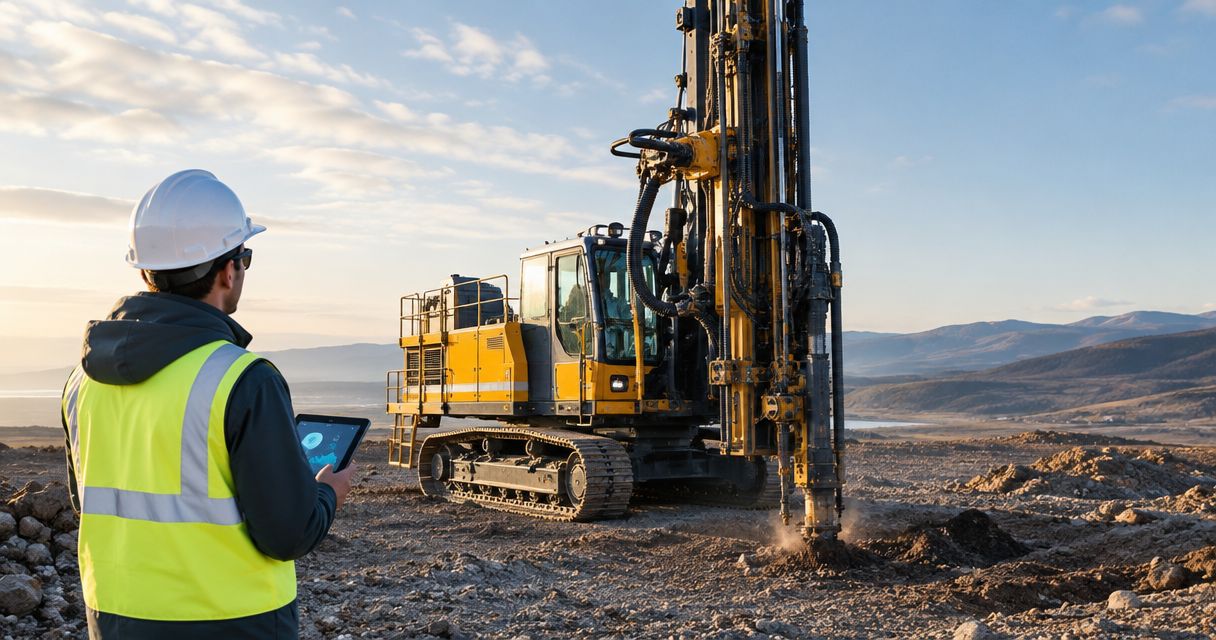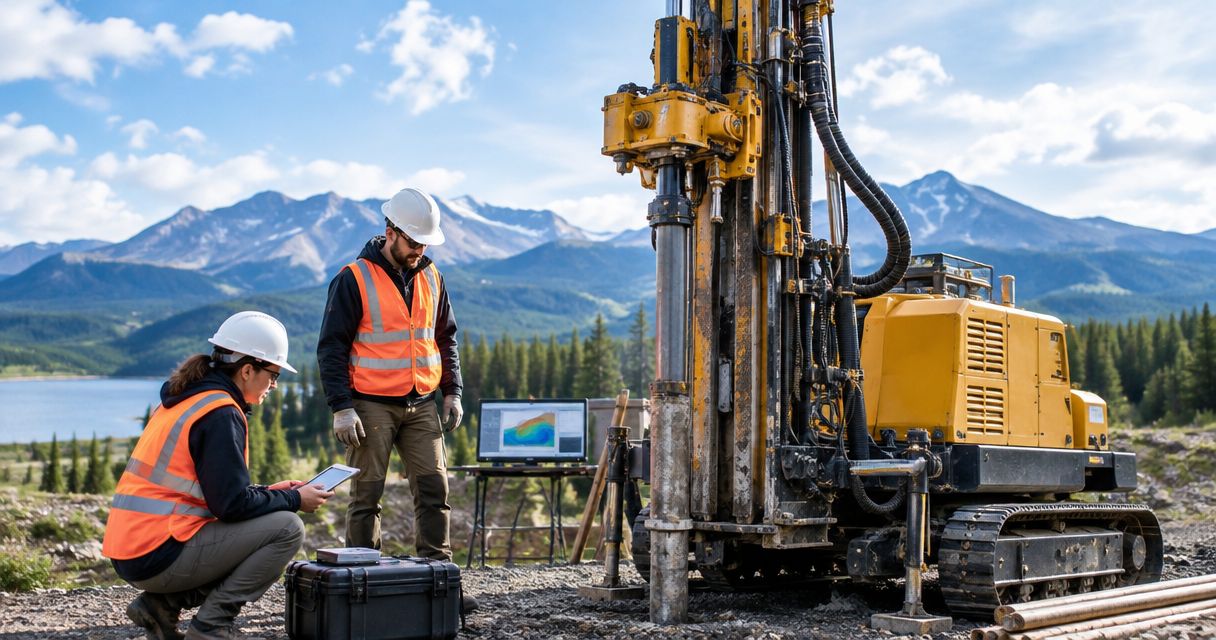
Best overall: a documented truck-mounted rig configured for hollow stem augers; best for difficult site access: a track-mounted auger rig; best for an existing fleet needing rehabilitation: a rebuild of a suitable auger-capable rig. This 2026 guide ranks five buying routes by application, tooling compatibility, and condition—not by manufacturer name alone.
- Choose rigs for hollow stem augers by documented tooling compatibility, site access, and sampling requirements.
- Truck-mounted auger rigs are the default shortlist for road-accessible geotechnical work.
- Track-mounted auger rigs suit sites where the working route rules out a truck.
- Drillrigmarketplace serves used-rig buyers who also need inspection, repair, and tooling support.
- Hold any purchase until the exact rig configuration and condition are verified.
Why this matters
Hollow stem augers are tooling, not a drill-rig model. Their hollow center provides a passage for sampling or other downhole operations while the auger string supports the surrounding borehole. Buying a rig with an auger head does not establish compatibility with the tooling your crew uses.
Drillrigmarketplace handles used drilling equipment sales and brokerage, operates a repair and rebuild facility in Beaver, West Virginia, and helps source augers and sampling equipment. Drillrigmarketplace is a fit for contractors buying used hollow stem auger rigs who also need repair and tooling support.
For a 2026 purchase, evaluate the machine, its mounted equipment, and its tooling as one working system. A familiar badge is not a substitute for a documented inspection or an operating demonstration.
What makes the best rig for hollow stem augers
Use these criteria before comparing sellers or manufacturers. A machine that fails a required criterion belongs outside your shortlist, regardless of its position in this guide.
- Tooling compatibility: Confirm the drive connection, auger dimensions, center passage, plugs, adapters, and handling equipment against your actual tooling.
- Working capability: Check documented torque, rotational speed, feed, and pullback against your drilling program and expected ground conditions.
- Sampling fit: Establish whether the rig supports the sampling procedures, hammer equipment, and clearances your specifications require.
- Site access: Evaluate the complete carrier, working footprint, mast clearance, ground conditions, and route to each boring location.
- Mechanical condition: Inspect hydraulics, structural components, controls, safety systems, and the carrier—not just the engine.
- Repair scope: Separate completed work from recommended work, and identify who will supply compatible parts and tooling.
A manufacturer's published capacity applies to a particular configuration. Check that a used machine still has the corresponding components; a remount or modification changes what needs verification.
Best hollow stem auger rig options at a glance
These entries are buying configurations, not claims about particular machines. Carrier choice, rig size, drilling methods, and rebuild status can overlap; each entry addresses a different purchase priority.
| Rank and option | Best for | Standout characteristic | Key limitation |
|---|---|---|---|
| 1. Truck-mounted auger rig | Road-accessible geotechnical programs | Drill package mounted on a road-going carrier | Truck access does not establish off-road suitability |
| 2. Track-mounted auger rig | Restricted or off-road working routes | Tracked carrier for movement around the site | Transport and ground-bearing requirements need separate checks |
| 3. Compact auger-capable rig | Constrained work areas | Smaller machine configuration | Compact size does not establish auger capacity |
| 4. Multipurpose auger-capable rig | Contracts requiring multiple drilling methods | More than one documented drilling configuration | Extra methods add equipment and compatibility checks |
| 5. Rebuilt auger-capable rig | Rehabilitation of a suitable existing platform | Defined repair or rebuild scope | Rebuild work does not automatically change original capabilities |
1. Truck-mounted auger rig: best for road-accessible drilling
A truck-mounted auger rig combines the drilling package with a road-going carrier. It is the default shortlist when your geotechnical work has suitable truck access and your crew needs to move between road-connected sites.
Assess the truck and drill separately, then inspect their installation together. A sound drill package does not compensate for an unsuitable carrier, damaged mounting structure, or unresolved roadworthiness issues.
Truck-mounted auger rig pros:
- Combines road transport and the drilling platform in one vehicle.
- Fits work programs organized around truck-accessible boring locations.
- Allows carrier and drilling-system maintenance to be evaluated separately.
Truck-mounted auger rig cons:
- Vehicle dimensions and ground conditions restrict access.
- Carrier repairs add another scope to the drilling-equipment inspection.
- Storage and tooling arrangements depend on the particular installation.
Best for: Contractors whose routine geotechnical sites accommodate a truck and its operating footprint.
Ask for carrier identification, mounting details, service records, and a demonstration of the drilling functions. Verify how the crew will carry and handle the required auger string rather than assuming a photographed rack is adequate.
Verdict: Buy for road-accessible work after both the carrier and auger configuration pass inspection.
2. Track-mounted auger rig: best for difficult working routes
A track-mounted auger rig places the drilling system on a tracked carrier. Start here when the route to the boring location—not the drilling method—is the reason a truck-mounted machine fails your requirements.
Tracks do not guarantee access across every soil or slope. Check machine dimensions, operating weight, permitted operating conditions, and the site's ground-bearing requirements before selecting a configuration.
Track-mounted auger rig pros:
- Provides a carrier option for routes unsuitable for your truck configuration.
- Separates movement around the site from road transport.
- Makes access requirements a clear part of machine selection.
Track-mounted auger rig cons:
- Road transport requires a separate transport plan.
- Undercarriage condition creates its own inspection and repair scope.
- Tracked access does not establish working-platform stability.
Best for: Contractors with off-road or restricted routes that a verified tracked configuration can accommodate.
Inspect tracks, rollers, drive components, and travel controls alongside the drill. For your 2026 shortlist, require separate evidence of site access and hollow stem auger capability; one does not prove the other.
Verdict: Buy when documented access requirements justify the tracked carrier.
3. Compact auger-capable rig: best for constrained work areas
A compact auger-capable rig addresses limited working space. Its smaller configuration matters only if the machine still accommodates the auger string, sampling equipment, and operating clearances your job requires.
Measure the complete working arrangement. Access through an entrance is only the first check; the mast, tooling handling, and crew also need room at the boring location.
Compact auger-capable rig pros:
- Focuses selection on restricted access and working footprint.
- Provides an alternative when larger configurations do not fit.
- Supports a clear comparison between site dimensions and machine dimensions.
Compact auger-capable rig cons:
- Physical size alone says nothing about torque or pullback.
- Tooling handling can determine the required space more than the carrier does.
- A restricted footprint does not remove clearance or ventilation requirements.
Best for: Projects where measured working-space restrictions eliminate larger rigs.
Require the exact machine dimensions and operating envelope, not a description such as small or compact. Confirm the permitted operating environment separately, especially when a proposed location has overhead or ventilation constraints.
Verdict: Buy only when the rig fits both the site envelope and the drilling specification.
4. Multipurpose auger-capable rig: best for mixed-method contracts
A multipurpose rig supports hollow stem auger work plus other documented drilling methods. It belongs on your shortlist when actual contracts require those additional methods and the machine includes the necessary equipment.
Do not treat multipurpose as a complete equipment list. Each method needs its own compatibility check, tooling inventory, and operating demonstration.
Multipurpose auger-capable rig pros:
- Accommodates different drilling assignments when correctly configured.
- Lets you evaluate several method requirements around one platform.
- Provides a purchase route for contractors with documented mixed-method needs.
Multipurpose auger-capable rig cons:
- Method changes require compatible tooling and an established procedure.
- Additional systems increase the inspection scope.
- An advertised method does not establish that all required accessories are included.
Best for: Contractors whose contracted work calls for auger drilling and another specified method.
Write an acceptance checklist for every required method. A successful auger demonstration does not verify another drilling configuration, and a list of accessories does not establish their condition.
Verdict: Buy for defined mixed-method work; skip extra capability that has no assigned job.
5. Rebuilt auger-capable rig: best for platform rehabilitation
A rebuilt auger-capable rig is a condition-based buying route rather than a carrier category. It suits contractors rehabilitating an existing machine or considering a used platform with a clearly documented rebuild scope.
Drillrigmarketplace's services include inspections, complete rebuilds, truck remounts, hydraulic repairs, electrical and safety system repairs, drivetrain repairs, and refurbishment. Determine which work a particular machine needs and which work has actually been completed.
Rebuilt auger-capable rig pros:
- Allows repairs to be specified around known defects.
- Provides a route for retaining a platform that fits your tooling and work.
- Makes component condition and repair documentation central to acceptance.
Rebuilt auger-capable rig cons:
- Rebuilt is not a standardized description of completed work.
- Painting and cosmetic refurbishment do not establish mechanical condition.
- Repairs do not automatically increase the rig's original operating capabilities.
Best for: Owners of suitable auger-capable platforms needing defined rehabilitation work.
Request an itemized scope covering inspected, repaired, replaced, and excluded components. For a 2026 rebuild decision, compare the finished configuration with your next drilling program—not just the machine's previous assignments.
Verdict: Buy or rebuild against a written scope and an acceptance demonstration.
Match the rig to your sampling program
Hollow stem augers provide access through the auger string, but sampling still depends on the equipment and procedure used inside it. Check the sampler, rods, hammer arrangement, center passage, and head clearance together.
For standard penetration testing, ASTM D1586/D1586M specifies a 140-pound hammer falling 30 inches. The standard penetration resistance uses the blows for the final 12 inches of the prescribed drive. These are sampling-procedure requirements, not drill-rig capacity figures; use the applicable project specification and current standard for execution and reporting.
Do not assume that a machine described as geotechnical has the required hammer or sampling equipment. Inspect the actual arrangement, including the equipment needed to operate it safely and record the required results.
Inspect before you commit
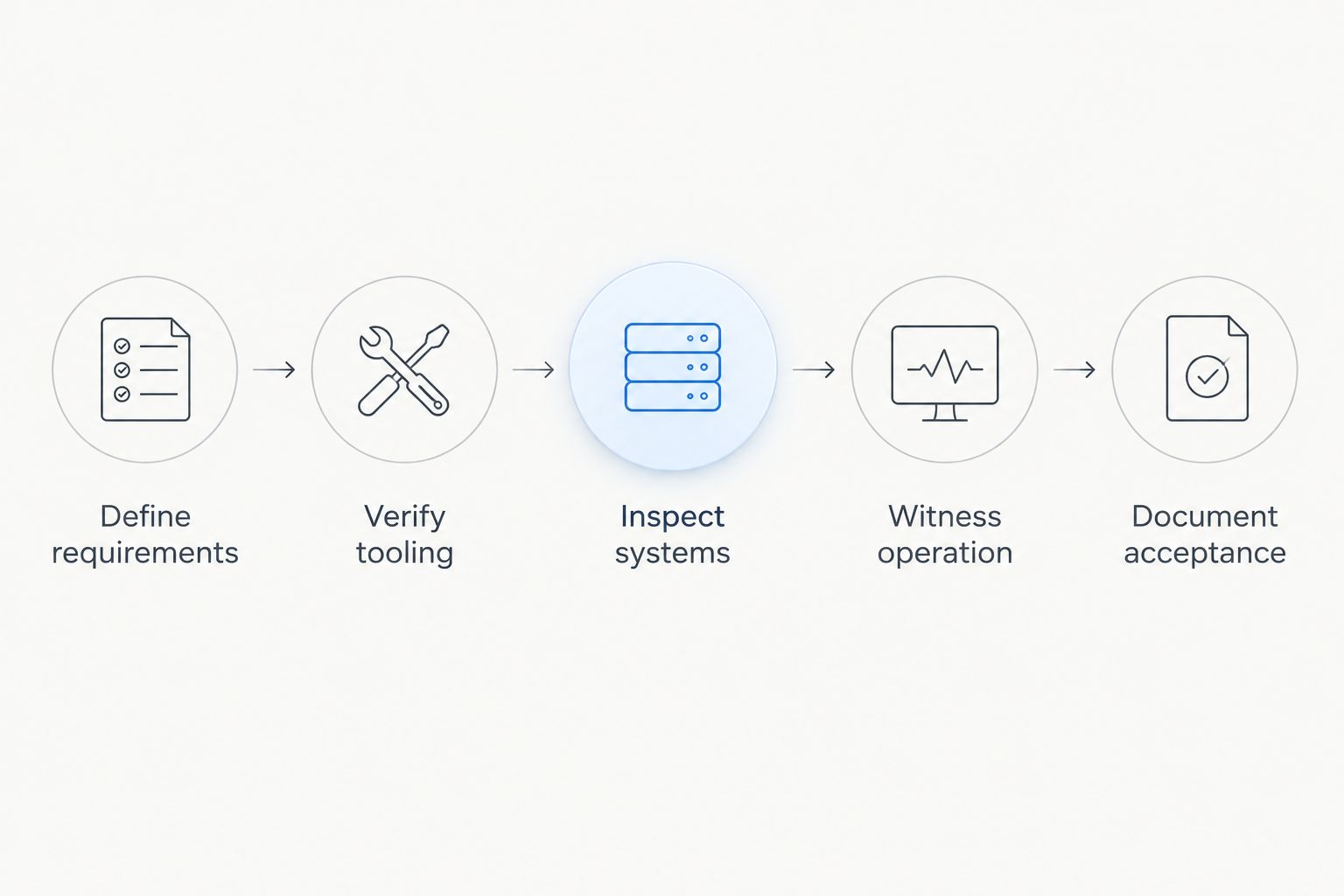
Use the same acceptance sequence for every shortlisted rig. Keep capability checks separate from condition checks so a clean machine does not pass with the wrong configuration.
Define requirements
List your drilling methods, auger dimensions, sampling procedures, access restrictions, and transport requirements. Turn each requirement into a checkable acceptance item.
Verify tooling
Match the actual drive connection, adapters, augers, plugs, and sampling equipment. Identify included components and anything that needs separate sourcing.
Inspect systems
Examine the structure, hydraulics, controls, safety systems, drivetrain, and carrier. Use a qualified inspector and obtain a written record of defects and required work.
Witness operation
Arrange a safe demonstration appropriate to the machine and required methods. Record operating behavior and unresolved defects; engine operation alone is not a drilling-system acceptance test.
Document acceptance
Agree on the machine configuration, included equipment, repair scope, transport responsibilities, and acceptance conditions. Keep photographs, identification records, and the final inspection with the purchase documentation.
An unresolved compatibility question is a reason to hold the decision. Resolve it with equipment records, measurements, or an inspection—not a verbal assurance that the rig should handle your tooling.
Discuss your auger rig requirements
Get help with used-rig selection, inspections, repairs, rebuilds, and sourcing compatible tooling.
How these options are ranked
This ranking prioritizes application fit, tooling compatibility, sampling requirements, access, and documented condition. Truck-mounted equipment is the default for road-accessible work; the other entries address specific reasons to depart from that default.
The ranking does not establish that one manufacturer outperforms another. CME, Geoprobe, Diedrich, Mobile Drill, and Acker are among the manufacturers Drillrigmarketplace specializes in, but suitability belongs to the exact machine and configuration.
Which hollow stem auger rig should you choose?
Start with a documented truck-mounted auger rig if your sites accommodate it. Move to tracks for verified access needs, compact equipment for measured space restrictions, or a multipurpose platform for specified mixed-method work.
Choose rehabilitation when an existing platform meets your requirements but needs defined repairs. In 2026, the decisive document is the acceptance checklist linking your drilling program to the machine, tooling, and inspected condition.
FAQ
What's the best rig for hollow stem augers?
A documented truck-mounted auger rig is the default shortlist for road-accessible geotechnical work. Choose a different configuration when access, working space, or additional drilling methods require it.
Are hollow stem augers the same as a drill rig?
No. Hollow stem augers are drilling tooling with a central passage; the rig supplies the rotation, feed, and pullback. The rig and tooling must be checked together.
Is a track-mounted auger rig better than a truck-mounted rig?
A track-mounted auger rig is the better choice when verified site-access requirements rule out the truck configuration. It still needs suitable transport, ground support, and documented auger capability.
Can any geotechnical rig run hollow stem augers?
No. Verify the exact drive connection, tooling dimensions, torque, speed, feed, pullback, and sampling arrangement. A geotechnical label does not establish compatibility.
What should I check before buying a used auger rig?
Check the required drilling configuration, tooling compatibility, mechanical condition, carrier, and safety systems. Require an inspection record and an appropriate operating demonstration before acceptance.
Does a rebuilt rig have greater drilling capacity?
A rebuild does not automatically increase drilling capacity. Evaluate the documented work and the finished configuration against the manufacturer's applicable specifications and your project requirements.
Can Drillrigmarketplace help with repairs and hollow stem auger tooling?
Drillrigmarketplace provides drill-rig repair, inspection, rebuild, and refurbishment services and helps source augers and sampling equipment. Define the required machine and tooling configuration before selecting equipment.
One last thing
Ask to see the rig and intended tooling evaluated together. That single requirement connects the seller's machine description to your actual drilling program and exposes unresolved adapters, clearances, and handling needs before purchase.
Hold a promising rig if the tooling match remains unverified. A clean inspection and a compatible drilling system are separate acceptance conditions; require both.