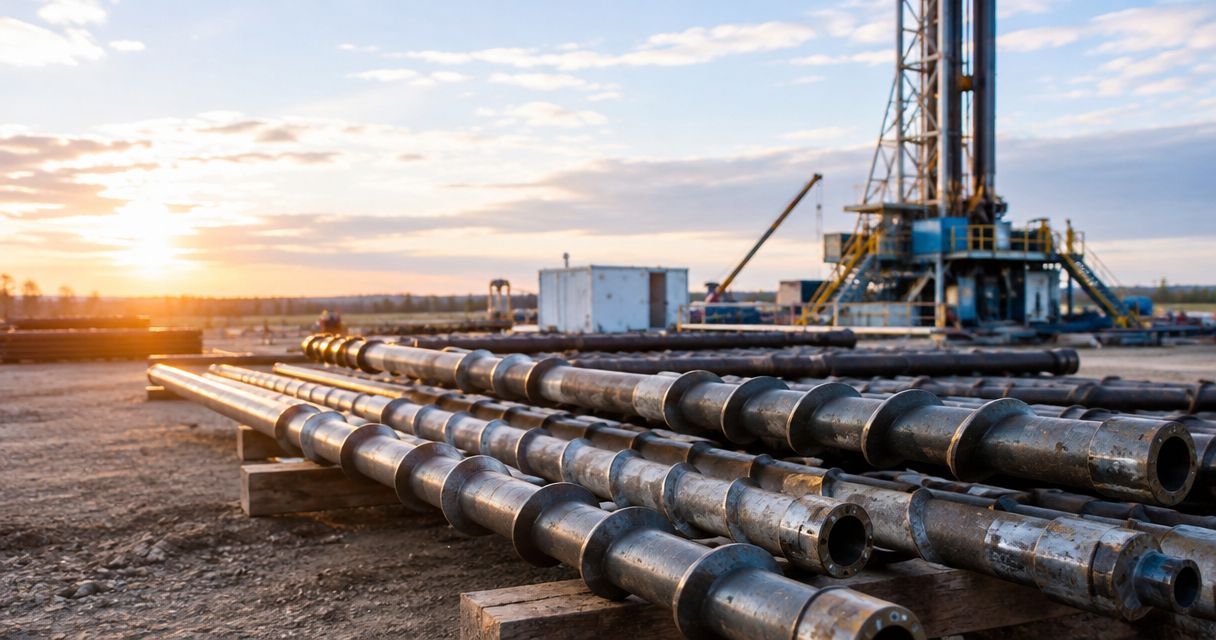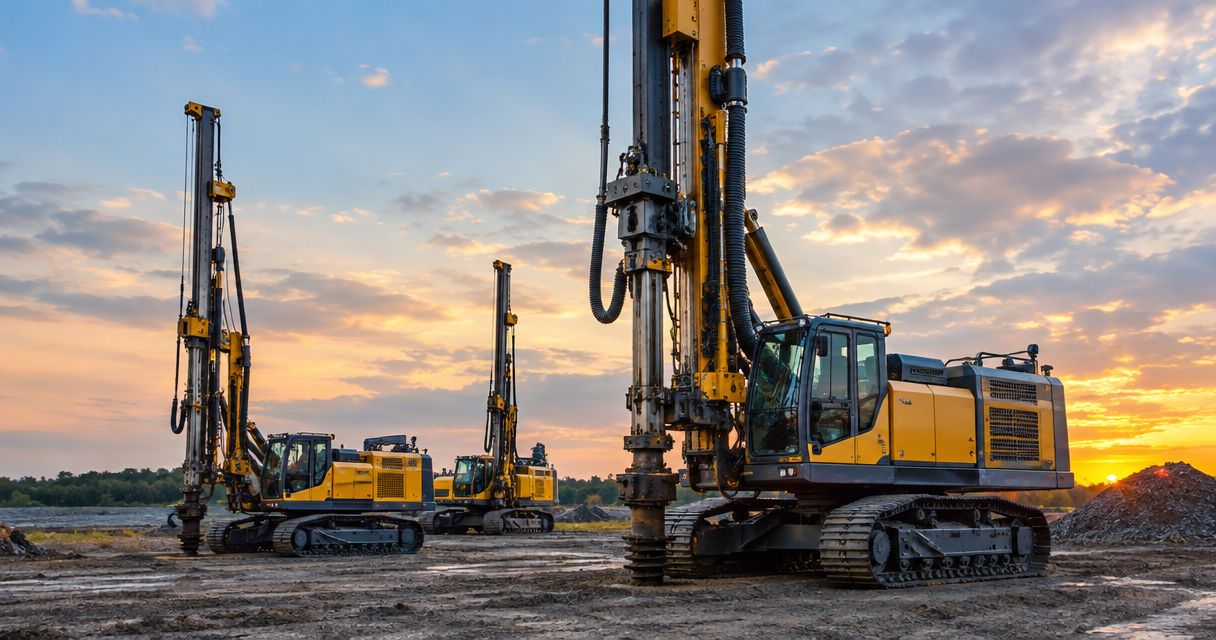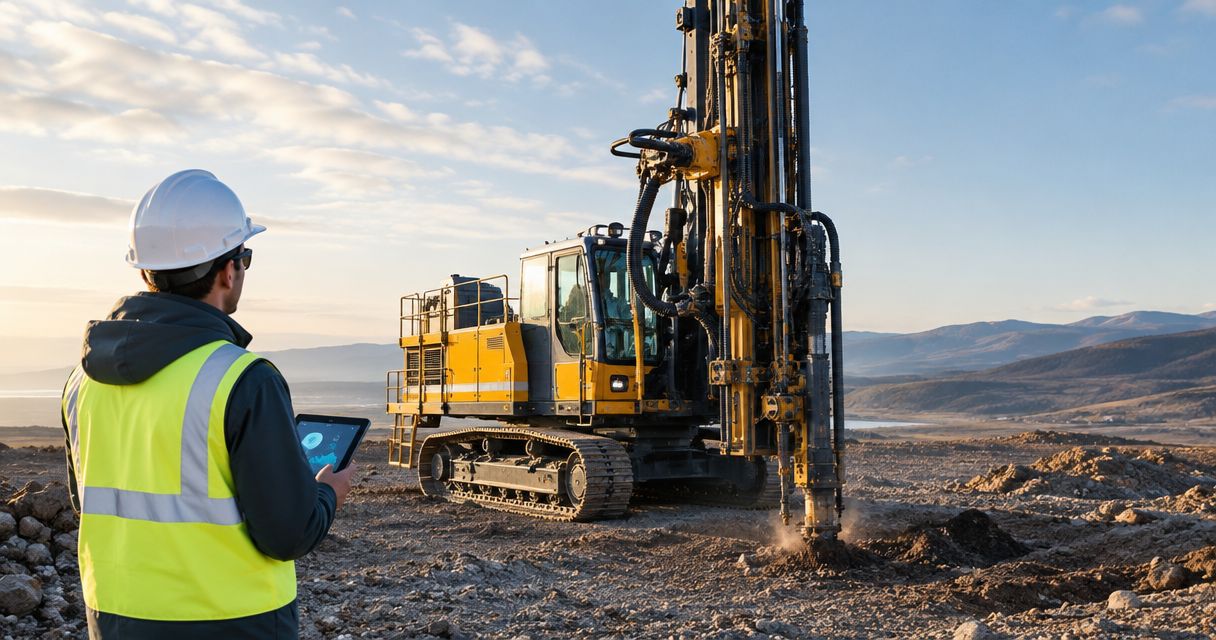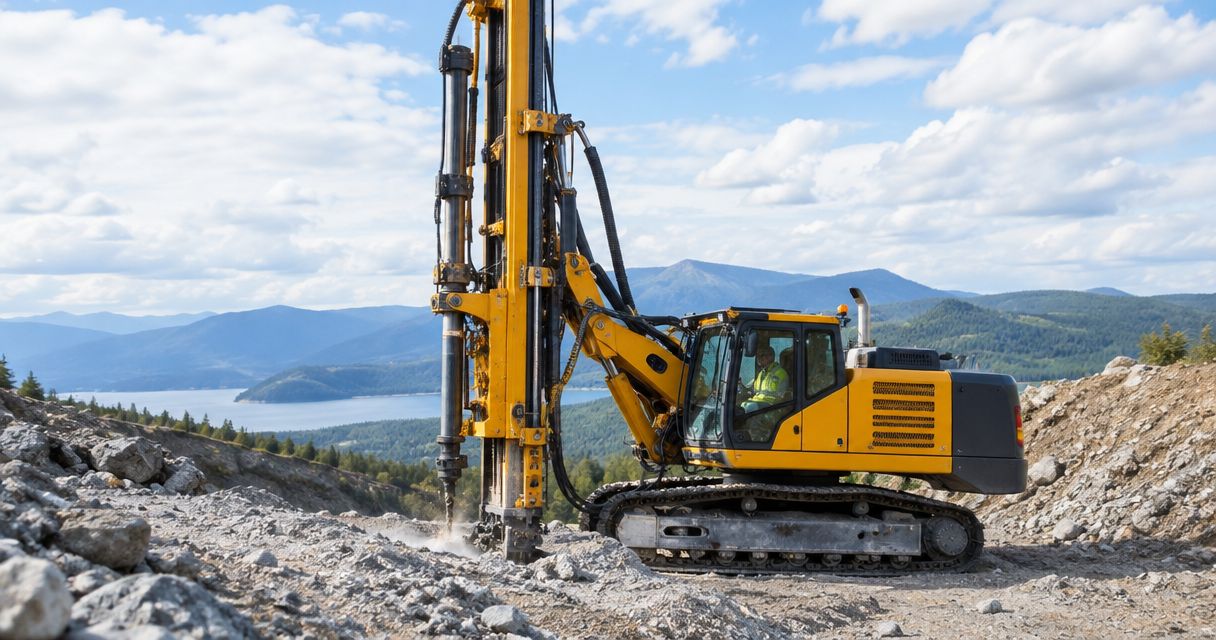
Best overall for mixed geotechnical work: a track-mounted auger rig with verified sampling capabilities. Best for environmental sampling: a tracked direct-push rig. Best for rock investigation: a tracked diamond-core rig. This 2026 guide compares used tracked drilling rig configurations by drilling method, access requirements, and inspection priorities; Drill Rig Marketplace is best for contractors who want used drill rig brokerage and repair support from one provider.
- Choose a tracked drilling rig by drilling method first, then inspect its carrier and installed equipment.
- Track-mounted auger rigs are the default shortlist for geotechnical work requiring augers and soil sampling.
- Tracked direct-push rigs suit environmental sampling where ground conditions support the method.
- Drill Rig Marketplace combines used drill rig brokerage with inspection, repair, and rebuild services.
Why this matters
Tracks solve an access problem, not a drilling-method problem. A carrier that reaches your boring location still needs the tooling, feed system, and drilling equipment required to complete the work.
For a used purchase in 2026, separate machine condition from job suitability. A mechanically sound direct-push rig is not automatically a substitute for a rock-coring rig, and a capable drilling package does not excuse a worn undercarriage. Buy the configuration your contracts require, then judge the individual machine.
This guide ranks 5 rig configurations rather than specific listings. The order reflects distinct applications, not a claim that one manufacturer or machine outperforms every alternative.
What makes the best tracked drilling rig?
Use these 6 selection criteria before comparing manufacturers:
- Method fit: Match the installed drilling system to augering, direct push, diamond coring, water well drilling, or sonic drilling.
- Site access: Check actual machine dimensions, operating clearance, ground conditions, and the manufacturer's travel restrictions.
- Carrier condition: Inspect tracks, rollers, sprockets, final drives, and the frame. Evaluate travel separately from drilling operation.
- Drilling-system condition: Examine the mast, feed assembly, rotary head or percussion system, clamps, hydraulics, and controls.
- Tooling compatibility: Confirm connections and compatibility for the augers, rods, casing, and sampling equipment you intend to use.
- Repair support: Establish how you will obtain technical information, parts, inspection work, and repairs for the exact machine.
Do not rank a used rig by manufacturer name alone. An inspection must establish what the particular machine has installed, what works, and what needs attention.
Used tracked drilling rigs at a glance
| Rank and configuration | Best for | Standout capability | Key limitation |
|---|---|---|---|
| 1. Track-mounted auger rig | Geotechnical soil investigation | Auger drilling with compatible sampling equipment | Auger capability alone does not establish rock-coring capability |
| 2. Tracked direct-push rig | Environmental soil sampling | Advances compatible sampling tools by direct push | Dense material and rock restrict the method |
| 3. Tracked diamond-core rig | Rock investigation and exploration | Retrieves rock core through a coring system | Requires suitable core tooling and fluid management |
| 4. Tracked rotary water well rig | Water well work with off-road access | Carries a rotary drilling system to the boring location | Pumps, compressors, and support equipment require separate verification |
| 5. Tracked sonic rig | Investigations requiring sonic sampling | Uses high-frequency vibration to advance tooling | Specialized equipment requires method-specific inspection |
The table compares drilling configurations, not manufacturer-wide specifications. For your 2026 shortlist, require documentation for the exact model, carrier, drilling head, and installed accessories.
1. Track-mounted auger rig: best for geotechnical soil investigation
A track-mounted auger rig combines a tracked carrier with equipment for auger drilling. Depending on its installed systems and tooling, it can support soil investigation and sampling tasks. Verify each required sampling method rather than treating the word geotechnical as a complete specification.
Track-mounted auger rig pros:
- Fits projects that call for auger drilling in suitable ground.
- Supports soil sampling when equipped with compatible sampling systems.
- Provides tracked access where a truck-mounted configuration does not suit the site.
Track-mounted auger rig cons:
- Auger tooling does not establish suitability for rock drilling.
- Carrier wear adds a separate inspection requirement beyond the drilling package.
Best for: Contractors whose recurring geotechnical work requires augers and soil sampling.
Inspect the rotary head, feed assembly, mast, winches, and auger connections. Ask for a demonstration of the sampling functions your work requires, not just a demonstration that the engine starts and the head rotates. Check how tooling is handled and secured during operation.
Verdict: Buy for verified auger-and-sampling work; skip machines whose required capabilities are only assumed.
2. Tracked direct-push rig: best for environmental soil sampling
A tracked direct-push rig advances compatible tooling into the ground using force and, where equipped, percussion. Environmental investigation often uses this method to collect soil samples and install compatible sampling tools. The achievable work depends on ground conditions and the machine's actual configuration.
Tracked direct-push rig pros:
- Fits environmental sampling programs designed around direct-push methods.
- Advances compatible sampling tools without relying on conventional rotary drilling for that operation.
- Offers a tracked configuration for sites where access determines machine choice.
Tracked direct-push rig cons:
- Dense formations, obstructions, and rock can prevent tool advancement.
- Direct-push capability alone does not establish auger or rock-coring capability.
Best for: Environmental contractors with defined sampling requirements and suitable ground conditions.
Inspect the percussion system if fitted, feed components, tool clamps, and mast alignment. Demonstrate tool advancement and retrieval using the correct equipment. If your contracts also require augering, confirm the installed rotary equipment rather than assuming every direct-push machine includes it.
Verdict: Buy for method-matched environmental sampling; skip it as a universal replacement for rotary drilling.
3. Tracked diamond-core rig: best for rock investigation
A tracked diamond-core rig uses a rotating core barrel and diamond cutting equipment to recover rock core. Its tracked carrier addresses movement around the site; the coring system determines whether it fits your investigation. Match the drilling package to the specified core system and anticipated formation.
Tracked diamond-core rig pros:
- Fits projects that require physical rock core for examination.
- Supports exploration and engineering investigations specified around coring.
- Combines a coring package with tracked site access.
Tracked diamond-core rig cons:
- Requires compatible rods, barrels, bits, and fluid-handling equipment.
- Coring capability does not establish suitability for every soil-sampling task.
Best for: Exploration contractors and engineering teams whose deliverable is rock core.
Inspect spindle condition, feed operation, rod clamps, and any fitted breakout equipment. Confirm what fluid-handling equipment accompanies the machine and what your crew must supply separately. Treat published capabilities as configuration-dependent: identify the exact equipment to which each specification applies.
Verdict: Buy when rock-core recovery is the primary task; hold until tooling compatibility and fluid support are confirmed.
4. Tracked rotary water well rig: best for off-road well drilling
A tracked rotary water well rig carries a rotary drilling system on a tracked undercarriage. Depending on the equipment installed, the drilling process can involve fluid circulation or compressed air. Neither system should be assumed from the carrier or the water well label.
Tracked rotary water well rig pros:
- Matches well-drilling projects that require a rotary drilling system.
- Provides tracked movement between suitable off-road drilling locations.
- Supports a job-specific drilling setup when the necessary equipment is included.
Tracked rotary water well rig cons:
- Compressors, pumps, and other support equipment need separate compatibility checks.
- A tracked carrier still needs a transport and unloading plan between projects.
Best for: Water well contractors whose sites justify tracked access and whose drilling requirements match the installed system.
Inspect the rotary head, feed, clamps, mast, and fluid or air connections. Confirm equipment scope in writing: identify what belongs to the rig, what is separate, and what is excluded. Review setup requirements alongside the site's working area and supporting vehicles.
Verdict: Buy for a defined well-drilling method and access need; hold until the complete operating setup is verified.
5. Tracked sonic rig: best for sonic sampling programs
A tracked sonic rig uses high-frequency vibration to advance compatible drilling tooling. It belongs on your shortlist when the investigation specifically calls for sonic drilling or sampling. Evaluate the sonic system as specialized equipment, not simply another rotary head mounted on tracks.
Tracked sonic rig pros:
- Fits investigations designed around sonic drilling and sampling.
- Combines specialized tooling advancement with tracked access.
- Provides an alternative drilling method where the project specification calls for sonic equipment.
Tracked sonic rig cons:
- The sonic head and related systems require method-specific inspection.
- Tooling and operating requirements differ from conventional auger setups.
Best for: Contractors with sonic work, suitable tooling, and personnel prepared to operate the equipment.
Inspect the sonic head, isolation components, mast, clamps, and hydraulic systems against the manufacturer's requirements. Request maintenance records covering the sonic equipment itself. A travel demonstration or ordinary rotary-head check does not verify sonic-system condition.
Verdict: Buy for an established sonic application; skip it when tracked access is your only reason for choosing the machine.
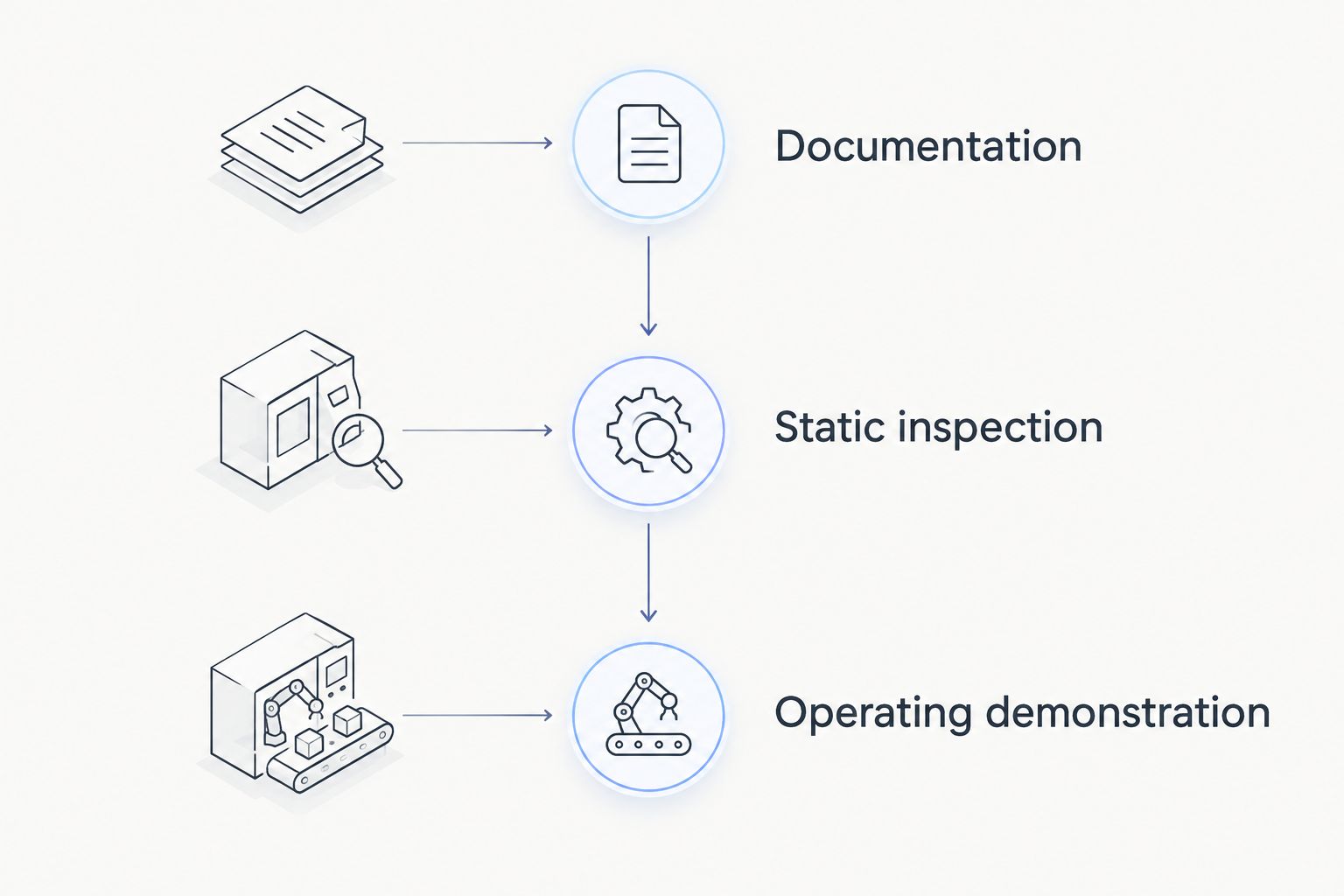
Inspect a used tracked drilling rig in 3 stages
A useful inspection separates documentation, physical condition, and operating behavior. Keep these stages distinct so a clean appearance does not substitute for a demonstrated function.
Documentation
Confirm machine identity, installed equipment, maintenance records, and any documented modifications. Compare the seller's equipment description with the machine itself. Record which tooling and accessories form part of the proposed purchase.
Static inspection
Inspect the carrier, frame, mast, hoses, cylinders, wiring, guards, and tooling connections with the equipment safely secured. Look for damage, leaks, repairs, and wear that require further evaluation. Follow the manufacturer's procedures for access and isolation; never enter a crush zone to complete a visual check.
Operating demonstration
Have a qualified operator demonstrate travel and the relevant drilling functions under safe conditions. Observe both directions of travel and the functions your intended work requires. Record faults and unresolved checks separately from satisfactory operation.
Do not accept a startup video as proof of drilling readiness. For a 2026 purchase, ask for evidence that connects the exact machine to your intended work. Drill Rig Marketplace offers inspections, hydraulic repairs, electrical and safety-system repairs, and complete rebuilds; define the inspection scope before authorizing work.
How the configurations are ranked
This 2026 ranking follows method fit first, then access, condition, tooling, and support. The auger configuration leads for the stated mixed geotechnical use case, not because auger rigs win every drilling task. Direct push, diamond core, rotary water well, and sonic equipment each occupy a separate application slot.
The ranking does not score specific listings, manufacturers, or individual machine condition. Your inspection determines whether a particular used rig belongs on the final shortlist.
Which tracked drilling rig should you choose?
Choose a track-mounted auger rig if your recurring work is geotechnical soil investigation with verified auger and sampling requirements. Choose direct push for suitable environmental sampling work, diamond core for rock-core recovery, a rotary water well configuration for matched well-drilling work, or sonic equipment for a defined sonic program.
Before committing in 2026, write down the required method, tooling, access conditions, and unresolved inspection items. Give the same brief to every seller. Drill Rig Marketplace helps buyers source used rigs, tooling, transportation, and equipment financing, alongside its repair and rebuild services.
Discuss your tracked rig requirements
Match your drilling method, tooling needs, and inspection scope to a used rig.
FAQ
What's the best tracked drilling rig for geotechnical work?
A track-mounted auger rig is the default shortlist when your geotechnical work requires augering and compatible soil sampling. Confirm the individual machine's installed sampling systems and condition before choosing it.
Is a tracked drilling rig better than a truck-mounted rig?
A tracked drilling rig is the better choice when the site's access requirements justify a tracked carrier. Compare transport, unloading, working clearance, and drilling capability separately; tracks do not determine the drilling method.
Can a tracked direct-push rig drill through rock?
Do not select a direct-push rig for rock drilling based on direct-push capability alone. Rock work requires suitable drilling equipment and tooling, which must be verified on the specific machine.
What should I inspect before buying a used tracked drill rig?
Inspect documentation, physical condition, and operation as separate stages. Include the undercarriage, drilling systems, controls, safety equipment, and tooling connections, with a qualified operator demonstrating the required functions.
Does a tracked rig need separate transport equipment?
Plan how the tracked rig will be loaded, secured, transported, and unloaded between projects. Confirm the machine's actual dimensions and weight against the proposed transport equipment and applicable requirements.
Can one tracked rig handle augering, direct push, and coring?
A tracked rig handles multiple methods only when its installed equipment and compatible tooling support them. Require documentation and demonstrations for each method rather than relying on a general multipurpose description.
Does Drill Rig Marketplace repair used tracked drilling rigs?
Drill Rig Marketplace operates a drill rig repair and rebuild facility in Beaver, West Virginia. Its services include inspections, hydraulic repairs, electrical and safety-system repairs, drivetrain repairs, preventive maintenance, and complete rebuilds.
One last thing
A rebuilt drilling package does not prove the tracked carrier is in equivalent condition. Treat the carrier and the drilling system as separate acceptance decisions. Ask the inspector to identify unresolved items in each before you approve the purchase.