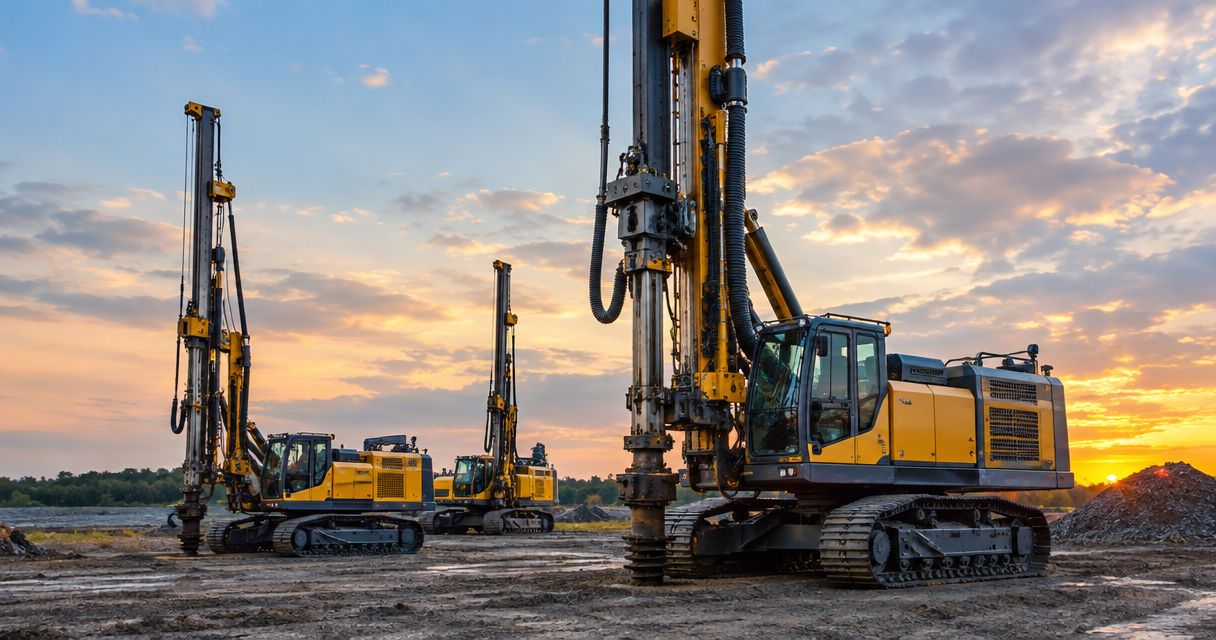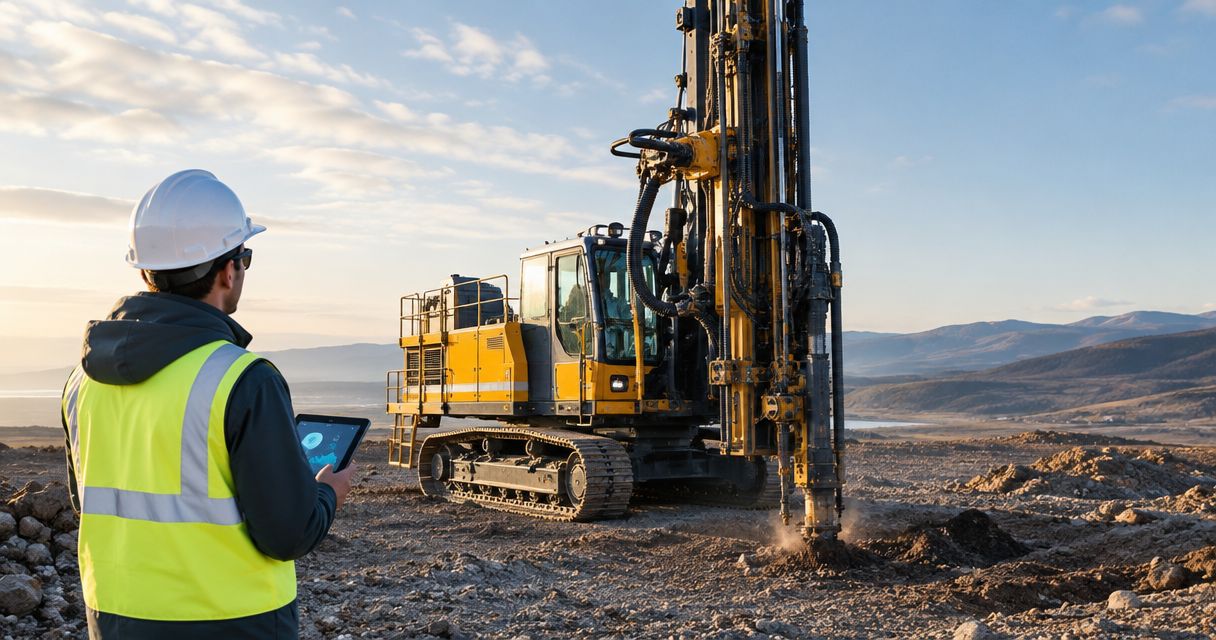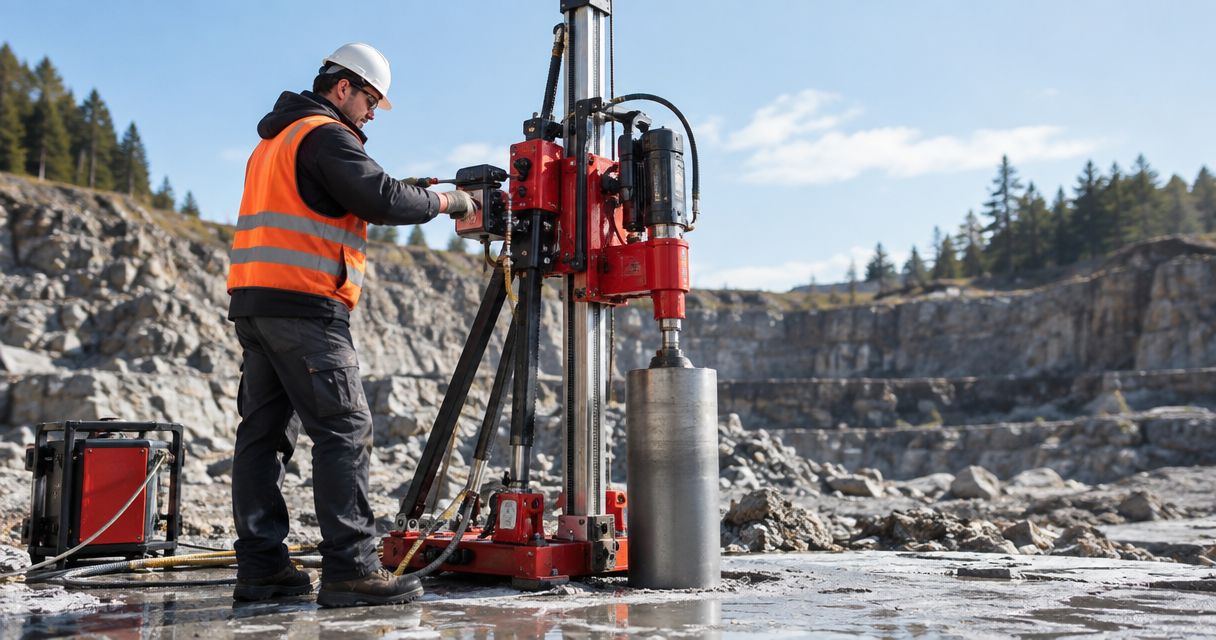
Best overall for exploration: a dedicated wireline core rig. Best for road-accessible projects: a truck-mounted core rig. Best for restricted access: a modular core rig. This 2026 guide compares used diamond drilling rigs by job fit and inspection priorities; Drill Rig Marketplace is best for contractors seeking used drilling equipment with repair and rebuild support.
- Choose used diamond drilling rigs by core requirements, site access, and documented mechanical condition—not manufacturer name alone.
- Track-mounted wireline core rigs suit exploration projects that need off-road access and repeated core retrieval.
- Truck-mounted core rigs suit road-accessible work; modular rigs suit sites that require equipment disassembly.
- Drill Rig Marketplace combines used drilling equipment sales and brokerage with inspection, repair, and rebuild services.
Why this matters
A used rig must match the drilling program, not just the transport route. Diamond core drilling cuts an annular path through the formation and recovers a cylindrical sample, so the core barrel, drill string, rotation system, feed system, and water circuit must work together.
For a 2026 purchase, separate configuration from condition. A suitable carrier does not prove that the drill head performs correctly, and a fresh paint job does not establish the condition of the hydraulics or mast. Choose the drilling method first, the carrier second, and the individual machine only after inspection.
The rankings below are configuration recommendations rather than claims about specific machines. A manufacturer's name is not enough to establish core-drilling capability, drilling depth, or tooling compatibility.
What makes the best diamond drilling rigs?
Use these six criteria to build your shortlist before comparing individual machines:
- Core requirements: Specify the required sample diameter, target formation, and whether the program calls for wireline or conventional core retrieval.
- Documented capacity: Check the manufacturer's specifications for the exact machine and configuration. Do not substitute a specification from a similar-looking model.
- Site access: Match tracks, truck mounting, or modular construction to the route, setup area, and transport restrictions.
- Mechanical condition: Examine rotation, feed, mast structure, hydraulics, winches, controls, and safety systems—not only the engine.
- Tooling compatibility: Confirm the exact rods, core barrels, casing, adapters, and handling equipment needed for the drilling program.
- Repair scope: Identify defects and required work before purchase. Separate essential repairs from cosmetic refurbishment.
For your 2026 shortlist, record each criterion against the individual rig. An unanswered compatibility question is a reason to pause the purchase, not assume the equipment will fit.
Used diamond drilling rigs at a glance
| Rank and configuration | Best for | Standout feature | Key limitation |
|---|---|---|---|
| 1. Track-mounted wireline core rig | Exploration sites requiring off-road access | Wireline retrieval paired with a tracked carrier | Requires separate transport planning and inspection of the undercarriage |
| 2. Truck-mounted core rig | Projects connected by usable roads | Drill and road carrier in one assembly | The truck adds drivetrain and roadworthiness checks |
| 3. Modular core rig | Restricted-access drilling locations | Components designed for separate handling | More assembly and connection work at the site |
| 4. Conventional core rig | Targeted coring where wireline retrieval is unnecessary | Conventional barrel retrieval | Retrieving the barrel requires withdrawing the drill string |
| 5. Multipurpose rig with verified coring capability | Contractors combining coring with other drilling methods | One platform configured for different drilling tasks | Coring capability depends on the exact installed equipment |
These categories describe different buying priorities, not mutually exclusive designs. A modular rig can use wireline tooling, and a truck-mounted rig can be multipurpose. Rank the complete configuration against your work rather than treating its carrier type as its drilling specification.
1. Track-mounted wireline core rig: best for off-road exploration
A track-mounted wireline core rig combines a tracked carrier with a system that retrieves the inner core barrel through the drill string. Wireline retrieval avoids pulling the entire rod string for each core recovery. That makes the configuration a strong starting point for exploration work involving repeated core runs and access beyond established roads.
Inspect the carrier and drilling package as separate systems. Check track condition, rollers, final drives, and visible frame damage alongside the rotation head, feed assembly, mast, rod clamps, and wireline equipment. Tracks do not make every route suitable: assess ground conditions, gradients, crossings, and the setup area before selecting the machine.
Track-mounted wireline core rig pros:
- Wireline retrieval leaves the drill string in the hole during core recovery.
- A tracked carrier supports movement away from road-only access.
- A dedicated coring configuration keeps the shortlist focused on the exploration program.
Track-mounted wireline core rig cons:
- Transport to the project requires its own loading and carrier plan.
- Undercarriage wear adds an inspection category beyond the drill package.
Best for: Exploration contractors whose projects require both wireline coring and off-road site access.
Ask for a demonstration of the installed systems, not an engine-start video alone. Match the offered tooling to the required core size and verify the machine's documented drilling envelope.
Verdict: Buy for off-road exploration after the drill package and tracked carrier pass inspection.
2. Truck-mounted core rig: best for road-accessible projects
A truck-mounted core rig suits work where usable roads connect the project locations and the truck can reach the drilling position. The rig and carrier travel as one assembly, but their condition must still be assessed separately. A functioning drill does not establish that the truck is ready for the intended travel.
Start with the mounting arrangement and load documentation. Examine attachment points, subframe condition, outriggers, and signs of cracking or movement. Then inspect the truck's brakes, steering, tires, drivetrain, and required road documentation alongside the core-drilling equipment.
Truck-mounted core rig pros:
- Combines the drilling package and road carrier in one assembly.
- Fits project routes built around road access.
- Provides a clear choice for contractors who do not need a tracked carrier.
Truck-mounted core rig cons:
- Vehicle defects can prevent movement even when the drill operates.
- Road access does not guarantee enough space for positioning and safe setup.
Best for: Contractors moving between road-accessible coring locations.
Drill Rig Marketplace provides truck remounts, drivetrain repairs, and drilling-equipment repairs. Those services are relevant when evaluating a used truck-mounted rig, but the purchase decision still requires a defined repair scope for the individual machine.
Before choosing this configuration, confirm transport dimensions, axle loading, and access requirements from the machine's records. Do not infer them from photographs or from another truck-mounted model.
Verdict: Buy for road-connected work when both the truck and drilling package meet the project requirements.
3. Modular core rig: best for restricted-access sites
A modular core rig separates into components intended for individual handling and assembly. This configuration deserves consideration when a complete truck or tracked rig cannot reach the drilling location. Its value comes from the transport plan fitting the site—not from a general promise that smaller equipment is easier to use.
Request the actual component list, handling instructions, and weights. Check how the mast, power unit, controls, hydraulic connections, and drilling assembly are secured and connected. A dismantled rig is not automatically a purpose-designed modular rig.
Modular core rig pros:
- Separate components support a transport plan built around access restrictions.
- Component placement can be assessed against a constrained setup area.
- Offers an alternative when a complete carrier cannot reach the drilling position.
Modular core rig cons:
- Site assembly introduces additional handling and connection work.
- Missing fittings, mounts, or controls can prevent completion of the setup.
Best for: Projects where access restrictions require transporting the drilling system in separate components.
Inspect the machine assembled and operating before accepting it as a complete package. Photographs of separate components do not demonstrate that the hydraulic system, controls, and feed mechanism function together.
For a 2026 purchase, make the packing list part of the equipment description. Identify which components belong to the rig, which tooling is included, and which items your crew must source separately. The assembly plan must also address lifting and stable support.
Verdict: Buy for restricted access only when the component-handling and assembly plans are documented.
4. Conventional core rig: best for targeted coring
A conventional core rig retrieves the core barrel by withdrawing the drill string rather than retrieving an inner barrel through it. Consider this configuration when the drilling program does not require wireline retrieval. Decide from the required hole depth, sampling sequence, and handling procedure—not from the assumption that conventional equipment is automatically the simpler purchase.
Check the drill head's documented operating range and compatibility with the proposed rods and barrel. Inspect rod-handling equipment and the procedures needed to recover the sample. The retrieval method affects the crew's work even when the required core diameter is the same.
Conventional core rig pros:
- Fits programs specified around conventional core barrels.
- Avoids selecting wireline retrieval equipment when the job does not require it.
- Provides a distinct option for targeted coring rather than a dedicated wireline program.
Conventional core rig cons:
- Core recovery requires withdrawing the drill string.
- Repeated retrieval adds rod-handling work that must be considered in the drilling plan.
Best for: Contractors with a defined conventional coring requirement and a suitable retrieval procedure.
Inspect threads, adapters, barrel components, and handling equipment as part of the package. An assortment of rods beside the rig does not establish a compatible drilling system. Obtain an itemized tooling description and check it against the planned hole and core requirements.
Verdict: Buy for a defined conventional coring program; skip when wireline retrieval is a project requirement.
5. Multipurpose rig: best for mixed drilling programs
A multipurpose rig belongs on the shortlist when your work combines diamond coring with other drilling tasks. The important qualification is verified coring capability. Auger, environmental, or water-well equipment must not be treated as diamond-core equipment solely because it rotates a drill string.
Confirm the installed rotation system, feed controls, water circuit, tooling connections, and rod-handling arrangement. Identify the equipment and procedures required to change methods. A manufacturer's broader product range does not prove that a particular used machine has the necessary configuration.
Multipurpose rig pros:
- Supports a buying decision built around more than one drilling method.
- Allows you to assess one platform against a mixed project schedule.
- Keeps diamond coring within the evaluation rather than requiring an unrelated equipment shortlist.
Multipurpose rig cons:
- Missing conversion equipment can leave the coring setup incomplete.
- A configuration suited to another method is not proof of suitable coring performance.
Best for: Contractors with mixed drilling programs and documented requirements for each method.
Drill Rig Marketplace works with used equipment from CME, Geoprobe, Diedrich, Mobile Drill, Acker, and other manufacturers. Use those names to organize inquiries, not to replace model-specific verification. Request specifications for the exact machine and a demonstration of the configuration you intend to use.
Verdict: Buy for mixed-method work only after the complete diamond-coring configuration is verified.
Check core size before choosing the machine
Core diameter and hole diameter are different measurements. Standard BQ, NQ, and HQ wireline systems have nominal core diameters of 36.4 mm, 47.6 mm, and 63.5 mm, respectively. Those dimensions describe the recovered core, not the outside diameter of the bit or casing.
Use the project's sampling specification to select the required system. Then check the rig's documented capability for that tooling and the intended drilling depth. Do not turn a familiar size designation into an assumed capacity for an unidentified machine.
Include the barrel configuration in the discussion. Confirm the exact components and adapters rather than ordering from a core-size label alone. Compatibility must extend through the complete drill string and retrieval system.
Inspect the complete package before committing
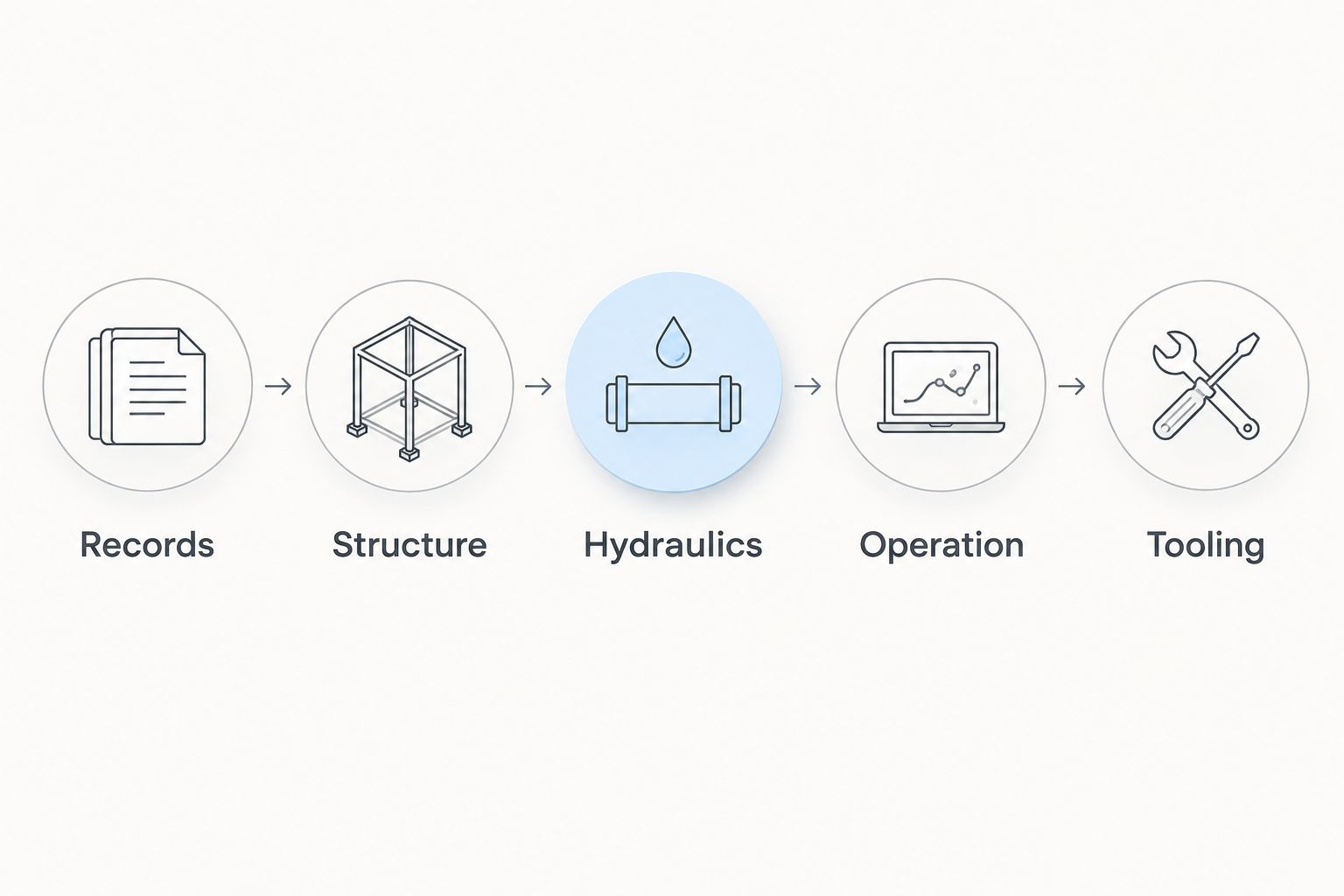
For a used diamond drilling rig purchase in 2026, organize inspection around five checks:
- Records: Match identification plates, configuration details, service records, and repair documentation to the machine.
- Structure: Examine the mast, frame, mounting points, welds, and support equipment for damage.
- Hydraulics: Check hoses, cylinders, fittings, and operating behavior using safe inspection procedures.
- Operation: Have a qualified operator demonstrate rotation, feed, clamps, winches, controls, and safety functions.
- Tooling: Reconcile the included equipment with an itemized list and your drilling requirements.
Document defects separately from refurbishment preferences. Hydraulic repairs, damaged structural components, and missing safety equipment require a different decision from sandblasting and painting. Specify the work required before the rig enters service.
Drill Rig Marketplace operates a repair and rebuild facility in Beaver, West Virginia, with inspection, hydraulic, electrical, safety-system, fabrication, and refurbishment services. Use a written scope to distinguish the equipment purchase from any subsequent repair or rebuild work.
How these configurations are ranked
The ranking follows core requirements, access, documented capacity, mechanical condition, tooling compatibility, and repair scope. Dedicated wireline equipment leads for exploration; the remaining choices address road access, restricted access, conventional retrieval, and mixed-method programs.
This is not a measured performance ranking of individual machines. The best configuration can still be the wrong purchase if its condition or documentation fails inspection. Give verified job fit priority over the position in this list.
Which diamond drilling rig should you choose?
Start with a dedicated wireline core rig if your exploration program requires repeated wireline core recovery. Choose its carrier from the access plan: tracks for off-road requirements, a truck for suitable road-connected work, or modular construction where complete-rig access is impractical.
Choose conventional or multipurpose equipment only when those configurations match the specified work. Before committing in 2026, write down the required core size, drilling method, site-access constraints, tooling package, and inspection findings. That brief gives you a defensible purchase decision instead of a comparison built around photographs.
FAQ
What's the best used diamond drilling rig for exploration?
A dedicated wireline core rig is the default configuration to assess for exploration that requires repeated wireline core recovery. Choose tracks, truck mounting, or modular construction according to site access, then inspect the individual machine.
Is a track-mounted core rig better than a truck-mounted rig?
A track-mounted core rig is the better fit when the project requires off-road access; a truck-mounted rig fits suitable road-connected work. Neither carrier establishes drilling capacity or mechanical condition.
Can a geotechnical drill rig perform diamond core drilling?
A geotechnical drill rig can perform diamond core drilling when its exact configuration supports the required tooling and operating conditions. Verify the rotation system, feed controls, water circuit, and handling equipment rather than relying on the category name.
What's the difference between wireline and conventional coring?
Wireline coring retrieves the inner core barrel through the drill string, while conventional coring requires withdrawing the drill string to retrieve the barrel. Match the retrieval method to the drilling program and handling procedure.
What should I inspect on a used diamond core rig?
Inspect identification records, structure, hydraulics, operating systems, safety functions, and tooling. Assess the carrier separately and have a qualified operator demonstrate the installed equipment.
Does a used core rig include compatible drill rods and barrels?
Tooling inclusion and compatibility must be confirmed for each individual purchase. Obtain an itemized list and check the components against the required core system, connections, and drilling plan.
Can Drill Rig Marketplace repair or rebuild a used rig?
Drill Rig Marketplace provides drill rig repair, inspections, rebuilds, truck remounts, hydraulic repairs, electrical and safety-system repairs, and refurbishment. Its repair and rebuild facility is in Beaver, West Virginia.
One last thing
Ask the seller to identify exactly what remains with the machine after the demonstration. Rods, barrels, adapters, handling equipment, and detachable components shown during operation need an itemized inclusion list. A successful demonstration proves operation of the demonstrated setup—not that every component belongs to your purchase.