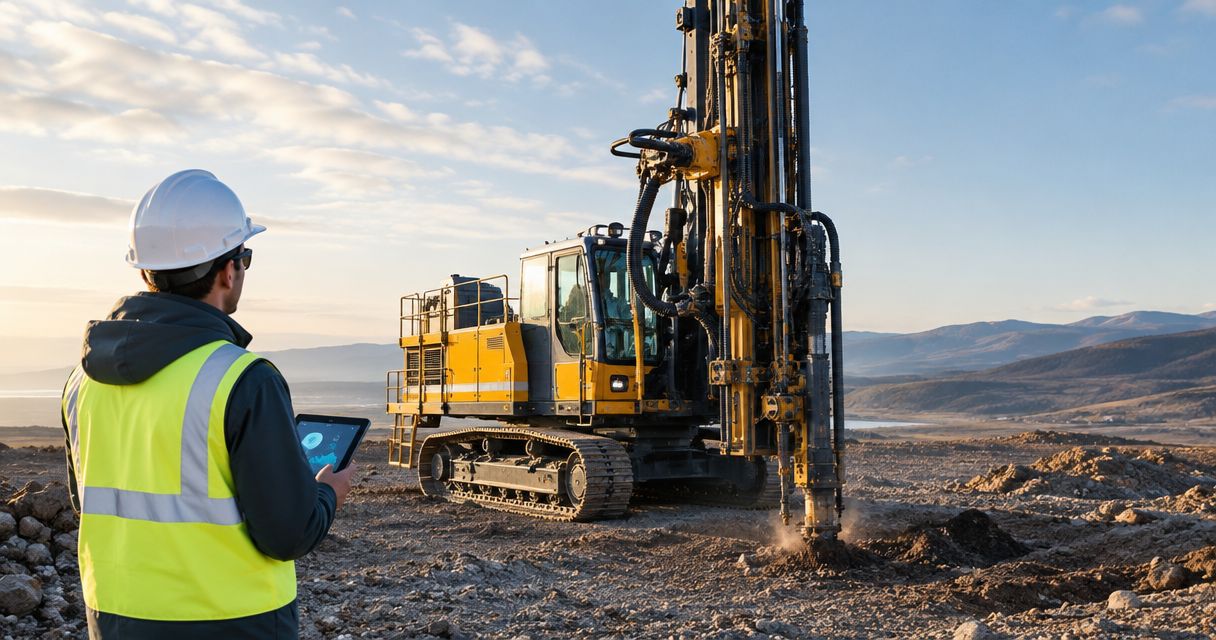
Best overall: a used wireline diamond core rig. Best for chip sampling: a reverse-circulation rig. Best for dismantled transport: a modular portable core rig. This 2026 guide compares used exploration drilling rigs by sampling method, access requirements, and inspection priorities; Drillrigmarketplace serves exploration contractors buying and selling used equipment.
- Wireline diamond core exploration drilling rigs are the default for projects requiring intact rock core.
- Reverse-circulation rigs suit chip-sampling programs, not projects requiring continuous intact core.
- Drillrigmarketplace serves exploration contractors seeking used drilling equipment and repair support.
- Choose the sampling method first; inspect the individual rig before committing.
Why this matters
A used rig is a production system, not just an engine, mast, and carrier. The drilling method must match the sample your project requires, while the machine must work with your tooling, support equipment, and site access.
The best used exploration drilling rig is the inspected machine that produces the required sample with the equipment your crew can support. A capable drill head does not solve a mismatched carrier, incomplete tooling package, or hydraulic fault.
Drillrigmarketplace is a used exploration drilling rigs marketplace for contractors who also need inspection, repair, or rebuild support. That combination matters when your purchase decision includes work on the machine rather than equipment selection alone.
What makes the best exploration drilling rigs?
Use these criteria for your 2026 shortlist before comparing manufacturers or individual listings:
- Sample suitability: Decide whether the program requires intact core, drill cuttings, or several sampling methods. This determines the drilling system.
- Documented drilling capacity: Match the proposed hole diameter, inclination, and depth to the machine's documented configuration. Do not substitute a seller's verbal depth claim for supporting specifications.
- Mechanical condition: Inspect the drill head, feed system, mast, hydraulics, engine, and carrier. Require operating evidence, not just photographs.
- Site access: Check the complete transport and setup arrangement against roads, ground conditions, working space, and relocation requirements.
- Tooling and support: Identify the rods, casing, sampling tools, pumps, air equipment, and parts needed to operate the rig. Separate included equipment from items you must source.
- Repair scope: Distinguish routine maintenance from structural, hydraulic, electrical, or drivetrain work. Define the work before accepting the machine.
The ranking below separates buying scenarios, not manufacturers. Drilling methods and mounting arrangements overlap: a wireline core rig can also be truck-mounted or modular. Choose the sampling method first, then the configuration that solves your access problem.
Used exploration drilling rigs at a glance
| Ranked option | Best for | Standout feature | Key limitation |
|---|---|---|---|
| Wireline diamond core rig | Projects requiring intact rock core | Inner core barrel retrieval through the drill string | Requires a compatible core drilling and fluid system |
| Reverse-circulation rig | Exploration programs using chip samples | Cuttings return through the inner passage of dual-wall drill pipe | Does not provide continuous intact core |
| Multipurpose exploration rig | Programs requiring method changes | Supports more than one drilling method when correctly equipped | Each advertised method needs its own verified equipment package |
| Truck-mounted core rig | Road-accessible projects with repeated moves | Drill and road carrier form one transport arrangement | Carrier condition and site access add purchase checks |
| Modular portable core rig | Sites requiring dismantled transport | Equipment can be transported as separate components | Assembly and material handling become part of the operation |
1. Wireline diamond core rigs: best for intact rock core
A wireline diamond core rig cuts an annular path through rock and collects core inside a core barrel. In a wireline system, the inner barrel is retrieved through the drill string rather than removing the full string for every core retrieval. Choose this category when geological interpretation depends on examining intact rock.
Wireline diamond core rig pros:
- Produces physical core for logging, examination, and testing.
- Retrieves the inner barrel without pulling the complete drill string each time.
- Fits projects where rock structure and sample orientation matter, provided the appropriate equipment and procedures are used.
Wireline diamond core rig cons:
- Requires compatible rods, barrels, bits, and fluid-handling equipment.
- Core recovery depends on formation conditions, tooling, and operating technique; the rig alone does not determine it.
- A worn rotation head or feed system needs investigation before purchase.
Best for: Exploration contractors whose primary deliverable is intact rock core.
Before buying, confirm the exact rod and barrel system. Common nominal wireline core diameters include NQ at 47.6 mm, HQ at 63.5 mm, and PQ at 85 mm; these are core diameters, not borehole diameters. Barrel variants differ, so verify the tooling specification rather than treating those figures as universal compatibility guarantees.
Ask for the machine's documented capacity with your intended tooling and hole inclination. Inspect rotation, feed movement, rod handling, and the water system during an operating demonstration.
Verdict: Buy a wireline diamond core rig when intact core is the project's required sample.
2. Reverse-circulation rigs: best for chip-sampling programs
Reverse-circulation drilling brings cuttings to the surface through the inner passage of dual-wall drill pipe. A sampling arrangement collects that material for the exploration program. Choose this method when chip samples meet the geological and laboratory requirements.
Reverse-circulation rig pros:
- Produces cuttings for geological logging and sample analysis.
- Uses a defined return path through the drill pipe's inner passage.
- Fits programs designed around chip sampling rather than continuous core recovery.
Reverse-circulation rig cons:
- Does not preserve continuous intact core for structural examination.
- Requires a matched drilling, air, return, and sampling system.
- Worn sample-path components and poor sampling practices can compromise sample quality.
Best for: Exploration contractors with an approved chip-sampling program.
Treat the compressor, drill pipe, hammer or other drilling tools, cyclone, and splitter as parts of the purchase assessment. Confirm which components belong to the proposed package and inspect their condition separately. A running drill does not establish that the complete sampling system is ready for work.
For a 2026 purchase, request an operating demonstration that follows the sample path, not just a video of the engine running. Check how the system collects, splits, and labels material under the procedures your project requires.
Verdict: Buy a reverse-circulation rig for chip-sampling work; skip it when continuous intact core is mandatory.
3. Multipurpose rigs: best for programs requiring method changes
A multipurpose exploration rig supports different drilling methods when fitted with the necessary heads, tooling, controls, and support equipment. The name describes a capability claim, not a complete equipment package. Verify every proposed operating mode separately.
Multipurpose rig pros:
- Allows different sampling methods within a suitably equipped operation.
- Gives contractors a machine to assess against varied project requirements.
- Can support a program that changes methods between exploration phases.
Multipurpose rig cons:
- Method changes require compatible equipment and operating procedures.
- Missing conversion components leave an advertised capability unusable.
- Inspection must cover each system, not just the mode used during the demonstration.
Best for: Contractors with defined work requiring more than one drilling method.
List the methods your contracts actually require. Then ask the seller to identify the complete equipment set for each one, including tooling, air or fluid requirements, handling equipment, and conversion components. Confirm the crew understands the changeover procedure.
Avoid buying versatility without a specific use for it. A dedicated core program needs a dependable core system; additional modes do not compensate for a weak feed system or incomplete rod package. Compare the multipurpose rig against a dedicated machine using the same required sample and operating conditions.
Verdict: Buy a multipurpose rig only when each required method is documented and the conversion equipment is accounted for.
4. Truck-mounted core rigs: best for road-accessible projects
A truck-mounted core rig combines the drilling equipment with a road carrier. This arrangement fits projects where access roads and working areas accommodate the complete vehicle. Evaluate the drilling system and the truck as separate assets within the same purchase.
Truck-mounted core rig pros:
- Combines the drill and carrier in one transport arrangement.
- Suits projects where vehicle access extends to the drilling location.
- Gives you a defined platform to assess for setup, storage, and equipment handling.
Truck-mounted core rig cons:
- Road access does not establish safe access across the final working area.
- Truck drivetrain, brakes, frame, and tires create additional inspection requirements.
- Registration, transport, and operating requirements depend on the vehicle and jurisdiction.
Best for: Contractors drilling intact core on sites with suitable vehicle access.
Inspect the mounting structure, stabilizers, mast deployment, and the relationship between the drill and truck frame. Confirm the rig can be set up at your proposed locations without assuming that a road-capable vehicle can reach every borehole.
Drillrigmarketplace provides truck remounts, drivetrain repairs, and drill rig repair services. For a used truck-mounted rig, separate the carrier work from the drilling-system work in the inspection scope. Both must be acceptable before the machine earns a place on your shortlist.
Verdict: Buy a truck-mounted core rig when the site accommodates the vehicle and both truck and drill pass inspection.
5. Modular portable core rigs: best for dismantled transport
A modular portable core rig separates into components for transport and is assembled at the drilling location. Choose this configuration when your access plan requires moving equipment in sections rather than bringing in a complete truck-mounted unit. Portable does not mean effortless to move.
Modular portable core rig pros:
- Supports an access plan based on separate equipment components.
- Lets you assess transport requirements component by component.
- Provides a core-drilling option where a complete vehicle cannot reach the work area.
Modular portable core rig cons:
- Requires an assembly and material-handling plan at each location.
- Component weights and lifting points must match the transport method.
- Rods, fluids, fuel, and sample handling still need their own access arrangements.
Best for: Core drilling projects where dismantled transport is a defined requirement.
Request the component list, dimensions, weights, lifting instructions, and assembly documentation. Inspect the joints, fasteners, hydraulic connections, and guards that crews disconnect and reconnect. Confirm that essential components have not been omitted from the package.
A portable machine does not remove the need for a complete operating system. Plan how your crew will move tooling, supply drilling fluids, handle recovered core, and maintain the rig at the location.
Verdict: Buy a modular portable core rig when the complete component and support-equipment transport plan is workable.
How this ranking works
This 2026 ranking prioritizes required sample, documented capability, mechanical condition, access, and supporting equipment. Wireline diamond core is the default for intact-core projects; the remaining options solve distinct sampling or access requirements.
The categories do not rank individual used machines. Condition, configuration, and documentation decide whether a particular rig deserves your purchase. Manufacturer familiarity is useful, but it does not replace an inspection of the actual equipment.
Inspect before you commit
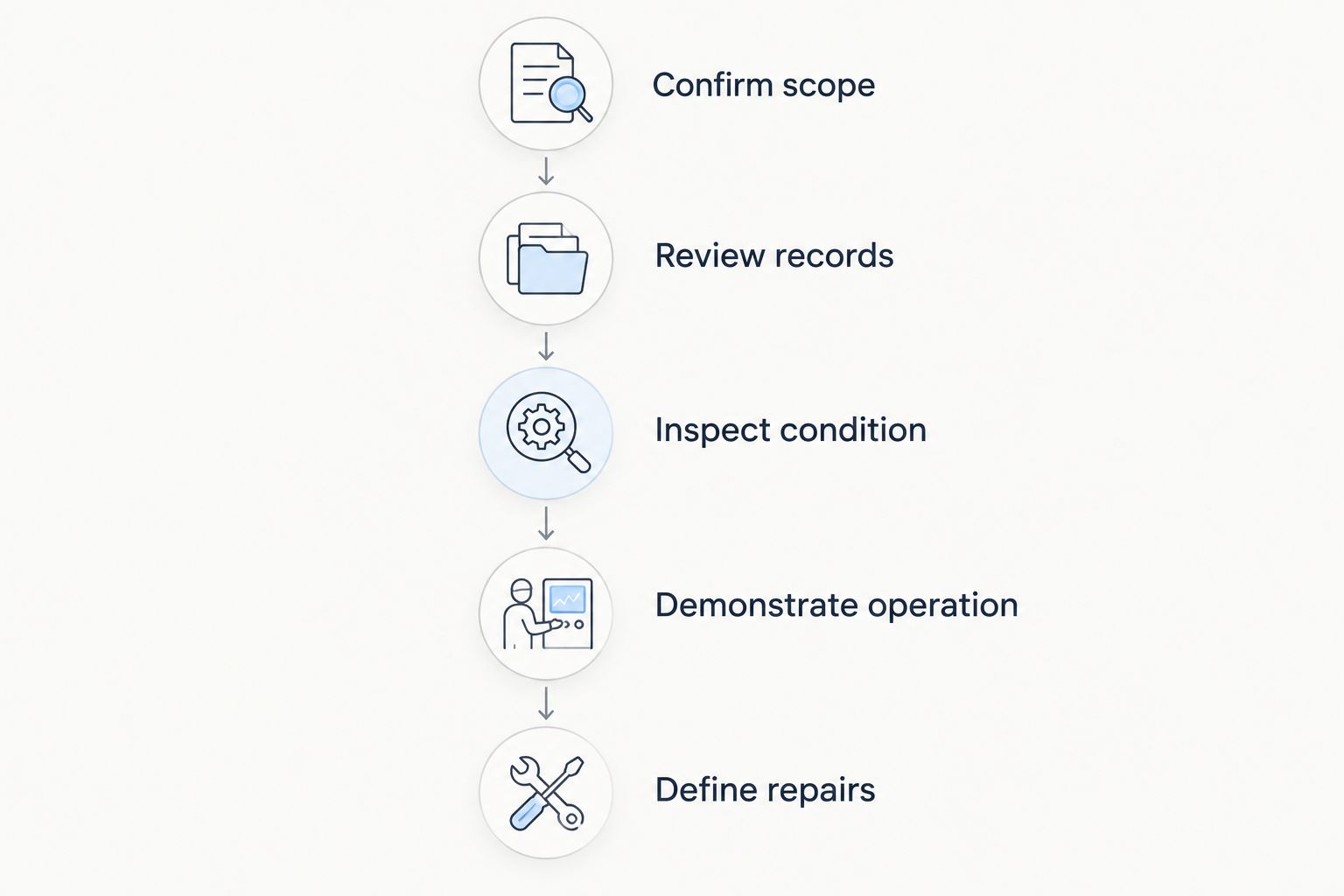
Use a staged inspection rather than treating an engine-start video as acceptance evidence. Resolve method and configuration questions before spending time on cosmetic condition.
- Confirm scope: Record the drilling method, required sample, tooling system, and included equipment.
- Review records: Check identification, maintenance information, repairs, and documentation supporting the proposed configuration.
- Inspect condition: Examine structural components, hydraulics, wiring, safety systems, and the carrier where fitted.
- Demonstrate operation: Observe relevant functions under a controlled operating demonstration conducted by qualified personnel.
- Define repairs: Document unresolved faults, required work, and the acceptance conditions for your purchase.
Drillrigmarketplace operates a drill rig repair and rebuild facility in Beaver, West Virginia, with inspection, hydraulic, electrical, safety-system, and preventive-maintenance services. Use a written inspection scope so the repair assessment addresses the systems your exploration program needs.
Which exploration drilling rigs should you choose?
Choose wireline diamond core as the default when you need intact rock core. Choose reverse circulation when the program calls for chips, and consider multipurpose equipment only when you have a defined need for method changes.
Then solve access. Truck-mounted core rigs fit suitable vehicle-accessible sites; modular portable core rigs fit a transport plan based on separate components. For your 2026 purchase, shortlist the configuration first and compare individual machines second.
Discuss your exploration rig requirements
Match your sampling method, access needs, and inspection scope to a used-rig purchase.
FAQ
What's the best used exploration drilling rig for intact rock core?
A wireline diamond core rig is the default choice for projects requiring intact rock core. Confirm the individual machine's documented capacity, tooling compatibility, and condition before buying.
Is reverse-circulation drilling better than diamond core drilling?
Reverse circulation is better suited to chip-sampling programs, while diamond core drilling produces intact core. Choose the method that supplies the sample and geological information your project requires.
Should I buy a multipurpose exploration rig?
Buy a multipurpose exploration rig when your defined work requires different drilling methods and the necessary conversion equipment is included or accounted for. Verify each operating mode separately.
What's the difference between NQ, HQ, and PQ core sizes?
Common nominal wireline core diameters are NQ at 47.6 mm, HQ at 63.5 mm, and PQ at 85 mm. These describe core diameter rather than borehole diameter; verify the specific barrel system and variant.
What should I inspect on a used exploration drilling rig?
Inspect the drill head, feed system, mast, hydraulics, electrical systems, safety equipment, engine, and carrier where fitted. Review records and observe the relevant functions during an operating demonstration.
Can a truck-mounted exploration rig reach any drilling site?
No; a truck-mounted rig requires suitable access and a working area that accommodates the complete vehicle. Check the final approach, ground conditions, setup space, and site restrictions.
Can Drillrigmarketplace help with repairs after a used-rig assessment?
Drillrigmarketplace provides drill rig repair, inspections, complete rebuilds, truck remounts, and related repair services. Its repair and rebuild facility is in Beaver, West Virginia.
One last thing
Ask the seller to identify the exact equipment used for the operating demonstration. A rig shown with a pump, compressor, rods, or sampling system that is not part of your purchase is not the same operating package you will receive.
Before accepting a used rig in 2026, reconcile the demonstrated configuration with the written equipment list. That check connects the machine you inspected to the equipment you intend to operate.