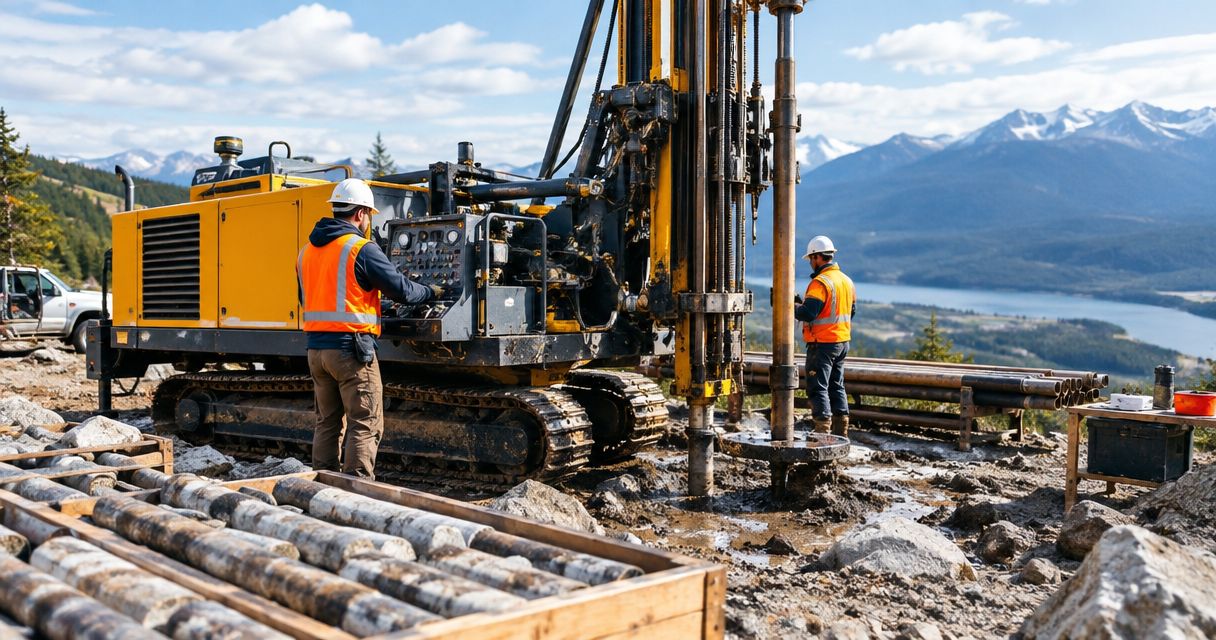
Best overall shortlist: CME-55. Best for demanding auger programs: CME-75. Best for a compact-rig brief: CME-45. This 2026 guide compares those CME model families and explains how to evaluate used CME drill rigs for sale against your actual geotechnical work.
- For CME drill rigs for sale, shortlist CME-55 for general geotechnical work, then verify the individual rig’s configuration.
- Choose CME-75 for a demanding auger-work shortlist; confirm the required capabilities before committing.
- Choose CME-45 when a compact drilling setup is central to your project brief.
- Drillrigmarketplace serves used geotechnical equipment buyers who also need inspection, repair, or rebuild support.
- Rank used drilling equipment by job fit, demonstrated condition, tooling compatibility, and carrier condition—not model name alone.
Why this matters
A used drill rig purchase involves more than choosing a model. You are buying a drilling system, its carrier, its installed equipment, and the maintenance obligations that come with them. A suitable model with unresolved hydraulic or structural problems is not a suitable purchase.
For your 2026 shortlist, separate model fit from machine condition. The first determines whether a rig belongs in your search; the second determines whether that particular machine deserves further consideration.
Drillrigmarketplace buys and sells used drilling equipment and operates a repair and rebuild facility in Beaver, West Virginia. Drillrigmarketplace is best for used geotechnical drill rig buyers who also need inspection, repair, or rebuild support.
What makes the best CME drill rig?
Use these criteria before comparing listings. They keep the decision tied to your drilling program rather than a familiar badge.
- Method fit: Confirm the rig’s configuration supports your required augering, sampling, or other drilling methods. Identify installed equipment rather than assuming it comes with the model.
- Demonstrated working condition: Require inspection and an appropriate operating demonstration. Treat photographs and cosmetic condition as supporting information, not proof of function.
- Site and carrier fit: Check the complete mounted machine against access restrictions, working space, transport arrangements, and site conditions.
- Tooling compatibility: Establish what augers, drill rod, casing, sampling equipment, and adapters your work requires. Separate included tooling from equipment you must source.
- Repair scope: Identify hydraulic, electrical, drivetrain, structural, and safety-system work before committing. Specify who completes it and how completion is verified.
- Fleet fit: Compare the purchase with the work your existing rigs already cover. Favor a machine that fills a defined gap rather than duplicating capability without a reason.
For a 2026 buying brief, compare 3 representative jobs: routine work, your most demanding recurring assignment, and your most restrictive access site. These are planning examples, not performance benchmarks. A rig that suits only the routine example deserves a narrower role in your fleet.
CME drill rigs at a glance
The rankings below are starting points for evaluating model families. They do not establish the condition, accessories, carrier, or capabilities of an individual used machine.
| CME model | Best for | Standout selection reason | Key limitation |
|---|---|---|---|
| CME-55 | General geotechnical programs | A practical first shortlist for mixed geotechnical assignments | Model identity does not establish the installed equipment or condition |
| CME-75 | Demanding auger programs | A heavier-duty model family to investigate for demanding drilling requirements | Its capabilities must justify the complete machine’s site and transport requirements |
| CME-45 | Compact-rig briefs | A smaller model family to investigate when the drilling setup needs to stay compact | Compactness does not establish suitability for demanding jobs or restricted sites |
Choose the use case first, then evaluate the actual rig. A model recommendation is not a substitute for checking the machine’s identification, configuration, and operating condition.
1. CME-55: best CME drill rig for general geotechnical work
The CME-55 is the default starting point in this guide for contractors comparing general-purpose geotechnical drilling equipment. Put it on the shortlist when your work spans routine investigation assignments rather than a single specialized requirement.
The buying decision still belongs to the individual machine. Confirm its mounted configuration, drilling equipment, carrier, and included tooling before deciding that it covers your workload.
CME-55 pros
- Gives a general geotechnical buyer a defined model family to investigate first.
- Fits a mixed-work buying brief better than starting with an access-only or demanding-auger brief.
- Supports a focused comparison between your recurring assignments and the machine’s documented configuration.
CME-55 cons
- The model name alone does not confirm the methods or accessories available on a used example.
- General-purpose suitability does not establish fit for your hardest drilling assignment.
- Carrier condition and previous modifications need their own assessment.
Best for: Contractors seeking a starting point for mixed geotechnical work, with job requirements ready to compare against an individual rig.
Ask the seller to show how the machine supports your intended drilling methods. Request operating evidence that addresses those methods, not just an engine-start video. Then reconcile the demonstration with the equipment included in the transaction.
For a CME-55 shortlisted in 2026, document the condition of the drilling equipment separately from the truck or other carrier. A sound drilling assembly does not settle questions about the complete mounted machine.
Verdict: Buy only when the specific CME-55 passes the job-fit and condition checks; otherwise, hold.
2. CME-75: best CME drill rig for demanding auger programs
The CME-75 belongs on a shortlist built around demanding auger requirements. Its role here is distinct from the CME-55: investigate it when the demanding part of your recurring work drives the equipment decision.
Translate that work into requirements before reviewing a machine. Specify your drilling method, tooling, anticipated formations, and required operating capabilities; obtain confirmation for the exact rig rather than transferring specifications from another example.
CME-75 pros
- Provides a heavier-duty model family to investigate for demanding auger work.
- Keeps the purchase focused on difficult recurring assignments rather than occasional possibilities.
- Gives you a clear basis for asking whether the proposed rig meets your documented drilling requirements.
CME-75 cons
- A demanding-work recommendation does not establish the condition of a used machine.
- The complete mounted setup still needs to fit your access and transport plan.
- Added capability has no purchasing value if your recurring work does not require it.
Best for: Contractors whose demanding auger assignments justify making drilling capability the leading selection criterion.
Do not accept a generic statement that a machine is powerful enough. Ask for the identification and documentation needed to confirm its configuration, followed by an appropriate demonstration assessed by a qualified person.
Match the tooling package to the same job brief. A rig decision and a tooling decision are connected, but they are not interchangeable: owning a suitable machine does not mean the required augers, sampling equipment, and adapters are included.
Verdict: Buy a CME-75 when verified capability matches recurring demanding work; hold when the purchase depends on undefined future jobs.
3. CME-45: best CME drill rig for a compact-rig brief
The CME-45 is the shortlist option here when a compact drilling setup is central to the assignment. Start with this model family when your buying brief prioritizes a smaller arrangement, then check the complete mounted machine against the work.
Do not turn compact into a promise of site access. Access depends on the actual carrier, dimensions, working position, ground conditions, and restrictions along the route.
CME-45 pros
- Gives compact-rig buyers a defined CME model family to investigate.
- Keeps the search focused on the setup required for a particular workload.
- Encourages an explicit balance between drilling requirements and physical site constraints.
CME-45 cons
- A compact model description does not prove that a particular mounted rig fits your site.
- Demanding assignments need a separate capability check.
- A smaller setup does not remove the need to inspect hydraulics, controls, structure, and carrier condition.
Best for: Contractors with a defined compact-rig requirement and drilling tasks that match the specific machine’s verified configuration.
Measure the access route and working area before evaluating a candidate. Include the space needed to operate and handle tooling, not merely the space needed to park the machine.
For a 2026 compact-rig purchase, write down the assignments you expect the CME-45 to handle and those you will keep on another machine. That boundary makes the purchase easier to assess and prevents a compact-rig brief from becoming an unsupported all-purpose expectation.
Verdict: Buy a CME-45 for a verified compact-work role; skip it when the required drilling capability or complete-machine fit remains unresolved.
Inspect the machine before choosing the model
Use 2 inspection stages: a records review followed by a physical inspection and appropriate operating demonstration. Keep those stages separate so paperwork does not stand in for observed condition.
The inspection sequence is straightforward:
- Records review: Match identification, configuration, maintenance records, and repair documentation to the machine being offered.
- Physical inspection: Examine the drilling assembly, structure, hoses, wiring, controls, safety systems, and carrier with a qualified inspector.
- Operating demonstration: Agree on a safe demonstration that addresses the functions relevant to your intended work.
- Written scope: Record unresolved defects, agreed repairs, included equipment, and the evidence required for acceptance.
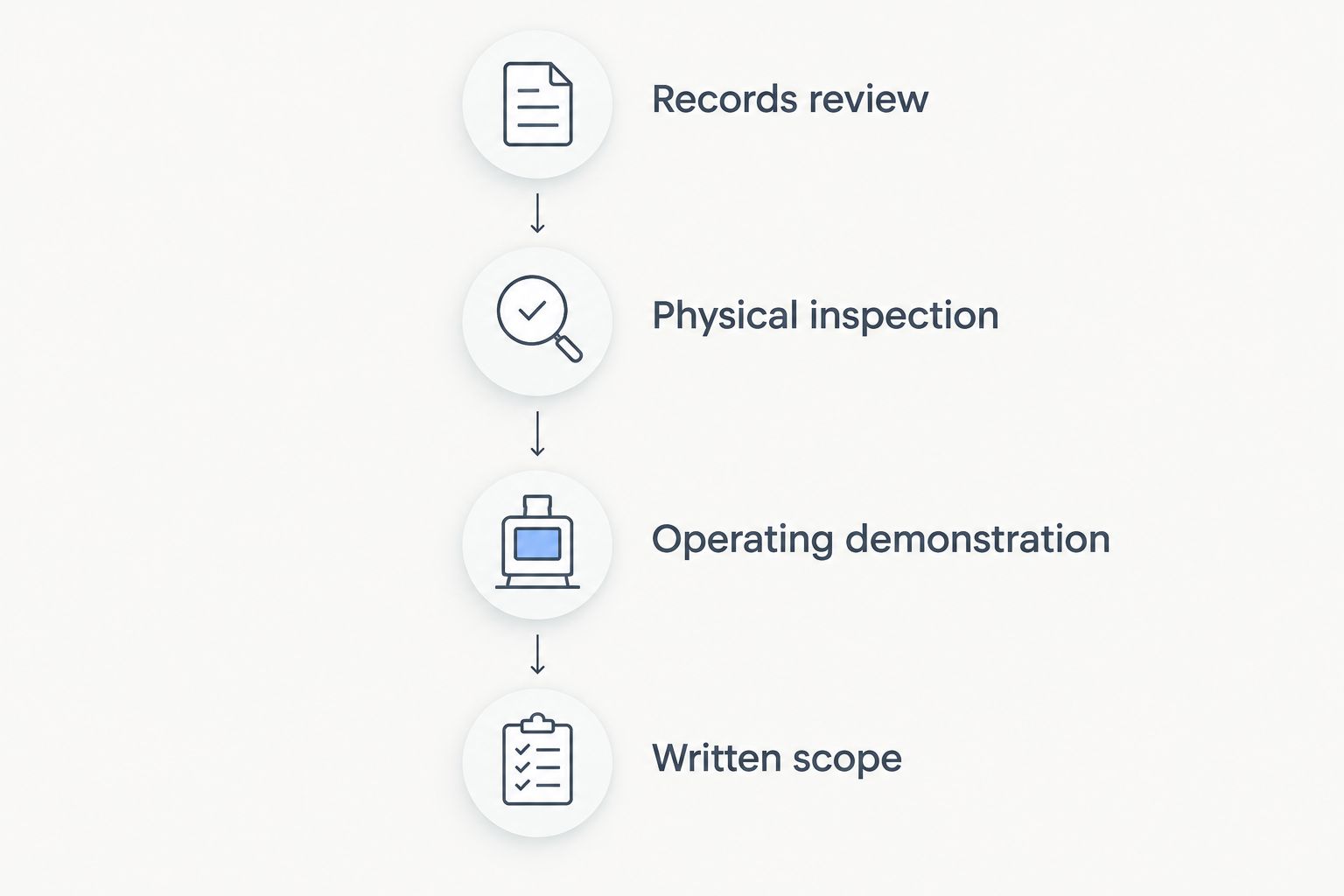
Request 1 written scope that assigns responsibility for each agreed repair. It should distinguish completed work from proposed work and identify what evidence closes each issue.
Do not perform unsafe checks or approach moving components to investigate a suspected fault. Arrange inspection and demonstration with people qualified to assess drilling equipment, using the applicable operating and safety procedures.
What repair support adds—and does not add
Drillrigmarketplace provides drill rig inspections, repairs, rebuilds, truck remounts, hydraulic work, electrical and safety-system repairs, drivetrain repairs, and refurbishment. Those services are relevant when a suitable used rig needs a defined repair plan.
The advantage is the ability to discuss the equipment purchase alongside inspection and repair needs. The limitation is equally clear: access to repair services does not establish that an individual machine is ready for your work. Get the machine-specific scope and acceptance requirements in writing.
Discuss your used rig requirements
Match your geotechnical work with used equipment, inspection, repair, or rebuild needs.
How this ranking works
This ranking separates buying briefs rather than declaring every CME model interchangeable. CME-55 leads the general geotechnical shortlist, CME-75 leads the demanding-auger shortlist, and CME-45 leads the compact-rig shortlist.
The criteria are method fit, demonstrated condition, site and carrier fit, tooling compatibility, repair scope, and fleet fit. The ranking is a model-selection guide, not a test report or an endorsement of a particular used machine.
Condition and configuration can overturn the model ranking. Reject an unsuitable example of the first-choice model rather than treating its position here as a reason to overlook defects.
Which CME drill rig should you choose?
For an undecided geotechnical contractor, start with the CME-55 and compare an individual machine against your representative jobs. Move the CME-75 to the front when demanding auger work defines the purchase. Start with the CME-45 when a compact setup defines the purchase.
Your 2026 decision should end with a documented machine, a verified working role, and a clear acceptance scope. Do not commit while the answer still depends on unspecified accessories, unverified repairs, or assumptions about the carrier.
FAQ
What’s the best CME drill rig for general geotechnical work?
The CME-55 is the general geotechnical shortlist choice in this guide. Choose an individual machine only after confirming its configuration, condition, tooling, and fit for your recurring assignments.
Is a CME-75 better than a CME-55?
The CME-75 is the better shortlist choice here when demanding auger work defines the purchase; the CME-55 leads for general geotechnical work. Neither model name establishes the condition or suitability of a particular used rig.
When should I consider a CME-45?
Consider a CME-45 when your buying brief calls for a compact drilling setup. Verify the complete mounted machine’s dimensions, operating space, and drilling capabilities before treating it as suitable for a restricted site.
What should I check when comparing CME drill rigs for sale?
Check model identification, installed equipment, maintenance records, physical condition, operating function, carrier condition, and included tooling. Finish with a written list of unresolved issues and agreed repairs.
Does fresh paint mean a used drill rig has been rebuilt?
Fresh paint does not establish that a used drill rig has been rebuilt. Ask for documentation describing the mechanical work, replaced components, inspections, and verification completed on that machine.
Can Drillrigmarketplace help with CME drill rig repairs?
Drillrigmarketplace specializes in used equipment from manufacturers including CME and operates a drill rig repair and rebuild facility in Beaver, West Virginia. Its stated services include inspections, hydraulic repairs, electrical and safety-system repairs, drivetrain repairs, and complete rebuilds.
Should I buy a rig that needs repairs in 2026?
Consider a repair-needed rig only when the defects, repair responsibilities, and acceptance requirements are documented. A suitable model does not justify an undefined repair obligation.
One last thing
Ask for an inclusion list before making your final selection. Identify the tooling, adapters, documentation, and other equipment that belongs to the transaction; do not assume everything shown beside the rig comes with it.
The best CME purchase is the machine that passes your job brief and inspection—not simply the highest-ranked model.