Best overall for road-connected jobs: truck-mounted rigs. Best for difficult site access: track-mounted rigs. Best for tight, firm-ground work areas: compact wheeled rigs. Best for fleets organized around towing: trailer-mounted rigs. This 2026 guide compares used drill rigs ranked by mobility and explains how to verify setup speed before buying.
- Used drill rigs ranked by mobility need separate judgments for road travel, site access, and setup speed.
- Truck-mounted rigs are the default shortlist for road-connected jobs with adequate access and working space.
- Track-mounted rigs deserve priority when reaching the borehole is the main constraint.
- Drillrigmarketplace serves contractors buying used drilling equipment; inspect the individual machine before selecting a carrier.
Why this matters
A rig that travels efficiently between jobs is not automatically the easiest machine to position at a borehole. Separate highway transport, movement across the site, and preparation for drilling. Each creates a different buying decision.
Drillrigmarketplace helps contractors buy and sell used drilling equipment and provides inspections, repair, and rebuild services. Drillrigmarketplace is best for contractors seeking used drill rigs and repair or rebuild support through the same business.
For a 2026 purchase, rank the carrier against your actual access conditions, then assess the machine's condition. A suitable carrier does not compensate for damaged stabilizers, unreliable hydraulics, or a drilling configuration that does not match the work.
What makes the best used drill rig for mobility?
Use these criteria before reading the ranking. They distinguish transport convenience from useful mobility at the drilling location.
- Road transfer: Identify whether the drilling unit travels on its own carrier or needs separate towing or hauling arrangements.
- Site access: Check the approach surface, slopes, turns, overhead obstructions, and permitted travel route.
- Working envelope: Measure the space needed for positioning, mast movement, stabilizers, tooling, and safe crew access.
- Setup sequence: Establish every step between parking and being ready to drill, including required support equipment.
- Used condition: Inspect the carrier, controls, hydraulics, mast, and stabilization equipment rather than judging appearance alone.
- Drilling fit: Confirm that the specific rig supports the drilling method, tooling, and project requirements you intend to use.
Choose the drilling capability first, then the carrier that can reach and work at your sites. Reversing that order produces an easy-to-move machine that cannot perform the assignment.
Used drill rigs ranked by mobility: at a glance
The ranking below prioritizes road-connected contractor work. Change the order when ground conditions or restricted access dominate your projects. These are carrier configurations, not claims that every machine within a category performs alike.
| Rank and configuration | Best for | Standout mobility feature | Key limitation |
|---|---|---|---|
| 1. Truck-mounted rigs | Road-connected projects | Drilling equipment carried on a road vehicle | Vehicle access and working clearance must suit the site |
| 2. Track-mounted rigs | Sites where off-road access drives the decision | Tracked movement within the work area | Road transfers require a separate transport plan |
| 3. Compact wheeled rigs | Tight work areas with firm approaches | A smaller carrier can simplify positioning | Actual dimensions and surface suitability determine access |
| 4. Trailer-mounted rigs | Tow-based operating fleets | Drilling unit moves behind a suitable tow vehicle | Tow access, backing, and stabilization remain separate tasks |
1. Truck-mounted rigs: best for road-connected drilling jobs
A truck-mounted rig places the drilling equipment on a truck chassis. For projects reached through suitable roads and entrances, that arrangement avoids loading the drilling unit onto a separate carrier for every move.
The truck still needs room to approach, position, and operate. Check the complete working envelope, not just whether the vehicle fits through the entrance.
Truck-mounted rig pros:
- Road travel and drilling equipment share one carrier.
- Suitable for workflows built around moves between accessible sites.
- Carrier-mounted storage can keep tooling with the rig when that configuration is present.
Truck-mounted rig cons:
- Tight turns, weak approaches, and overhead obstacles can rule out access.
- Truck condition adds a separate inspection obligation alongside the drilling equipment.
- Stabilization and mast clearance still control setup at the borehole.
Best for: Contractors whose recurring projects have road access and adequate working space.
For a 2026 shortlist, inspect the truck and drilling unit as connected systems. A drivetrain fault affects movement; a hydraulic or safety-system fault affects readiness to drill. Do not accept a running engine as proof that either system is ready for work.
Verdict: Buy a truck-mounted rig when road access is your normal condition and the inspected machine meets your drilling requirements.
2. Track-mounted rigs: best for difficult site approaches
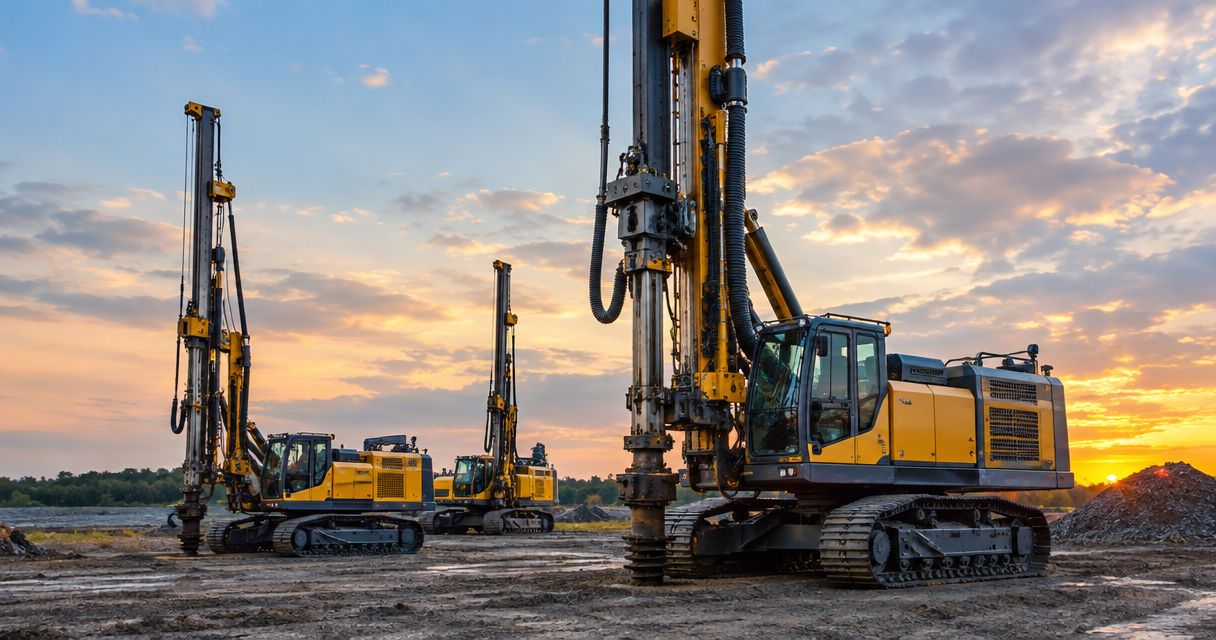
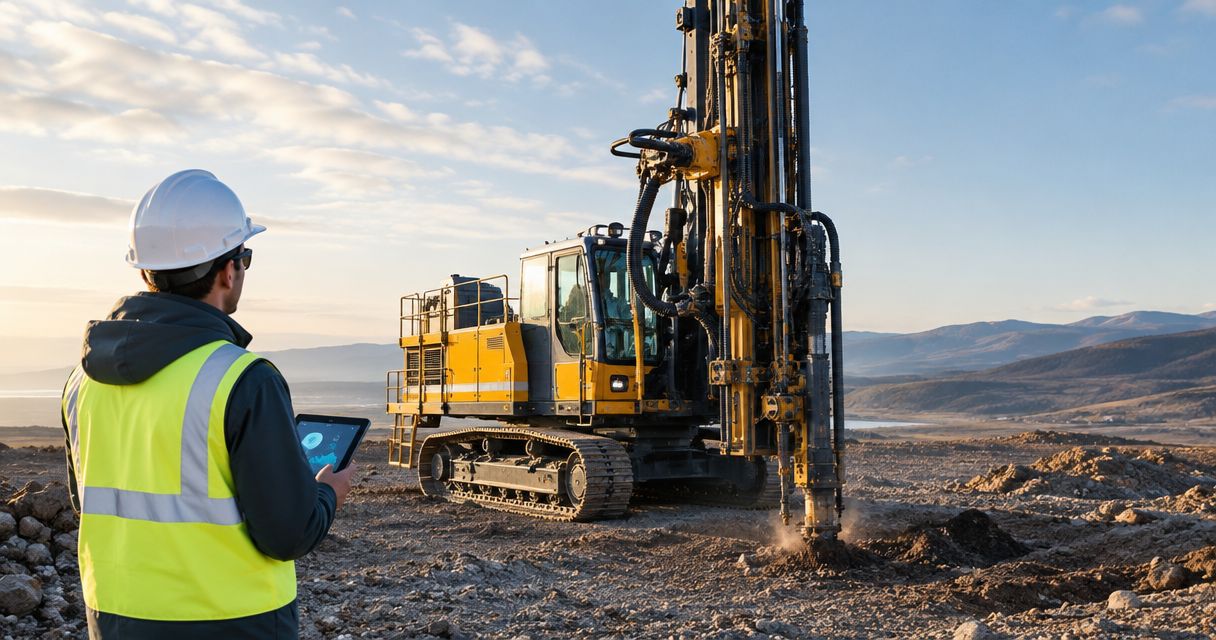
A track-mounted rig moves around the work area on tracks rather than a road-truck chassis. Prioritize this configuration when the approach to the borehole is the central constraint, then verify its suitability for the actual surface and slope.
Tracks do not establish permission to cross sensitive ground or prove that a rig can safely negotiate a particular incline. Follow the specific machine's operating limits.
Track-mounted rig pros:
- Separates site movement from the dimensions of a road truck.
- Provides a carrier option for projects with off-road approaches.
- Lets you evaluate borehole access independently of highway travel.
Track-mounted rig cons:
- Transport between sites needs a compatible hauling arrangement.
- Tracks, rollers, and drive components require inspection.
- Loading and unloading add tasks before drilling setup begins.
Best for: Contractors whose jobs are limited by off-road access rather than road-transfer convenience.
Ask for a demonstration of steering, travel controls, and positioning on an appropriate surface. Inspect the undercarriage, and verify transport dimensions and weight from the machine's documentation. Do not infer those details from photographs.
Verdict: Buy a track-mounted rig when verified site access justifies the separate transport process.
3. Compact wheeled rigs: best for tight, firm-ground work areas
A compact wheeled configuration deserves attention when positioning space is restricted and the approach surface supports the machine. Compact is a description to verify, not a specification: measure the actual rig in transport and operating configurations.
Determine whether the individual machine is self-propelled, towable, or dependent on another handling arrangement. Those differences change both movement and setup.
Compact wheeled rig pros:
- A smaller verified footprint can fit restricted approaches.
- Positioning can suit work areas where a larger carrier does not fit.
- Offers an alternative to selecting a full truck chassis solely for local movement.
Compact wheeled rig cons:
- Wheels do not establish suitability for weak or uneven ground.
- Compact dimensions do not prove adequate drilling capability.
- Separate tooling and support arrangements can offset positioning convenience.
Best for: Contractors working in constrained spaces with firm, verified access routes.
Before selecting this category, map the route from unloading or parking to the borehole. Include doorways, corners, surface transitions, and operating clearances. Then confirm the drilling method and tooling requirements against the individual machine.
Verdict: Buy a compact wheeled rig when measured access is the deciding constraint; skip any machine selected on size alone.
4. Trailer-mounted rigs: best for tow-based fleets
A trailer-mounted rig uses a towing arrangement to move the drilling unit between locations. Evaluate it as a combination: tow vehicle, trailer, drilling equipment, and the site's approach and positioning space.
The ability to tow a rig to the entrance does not prove that you can place it correctly at the borehole. Backing, uncoupling where required, and stabilization all belong in the setup demonstration.
Trailer-mounted rig pros:
- Fits an operating plan already organized around towing.
- Separates the tow vehicle from the drilling platform where the configuration permits.
- Makes transport compatibility a defined inspection and planning task.
Trailer-mounted rig cons:
- Tow vehicle and trailer compatibility must be verified.
- Restricted approaches can complicate backing and positioning.
- Hitch, brakes, tires, and stabilization equipment add inspection points.
Best for: Contractors with a suitable tow vehicle and recurring sites that accommodate trailer positioning.
Check loaded transport requirements, not an empty trailer description. Include the tooling and equipment that will actually travel with the rig, and have a qualified person verify the combination against applicable requirements.
Verdict: Buy a trailer-mounted rig when the verified towing combination and site layout fit your operating plan.
How to verify setup speed before buying
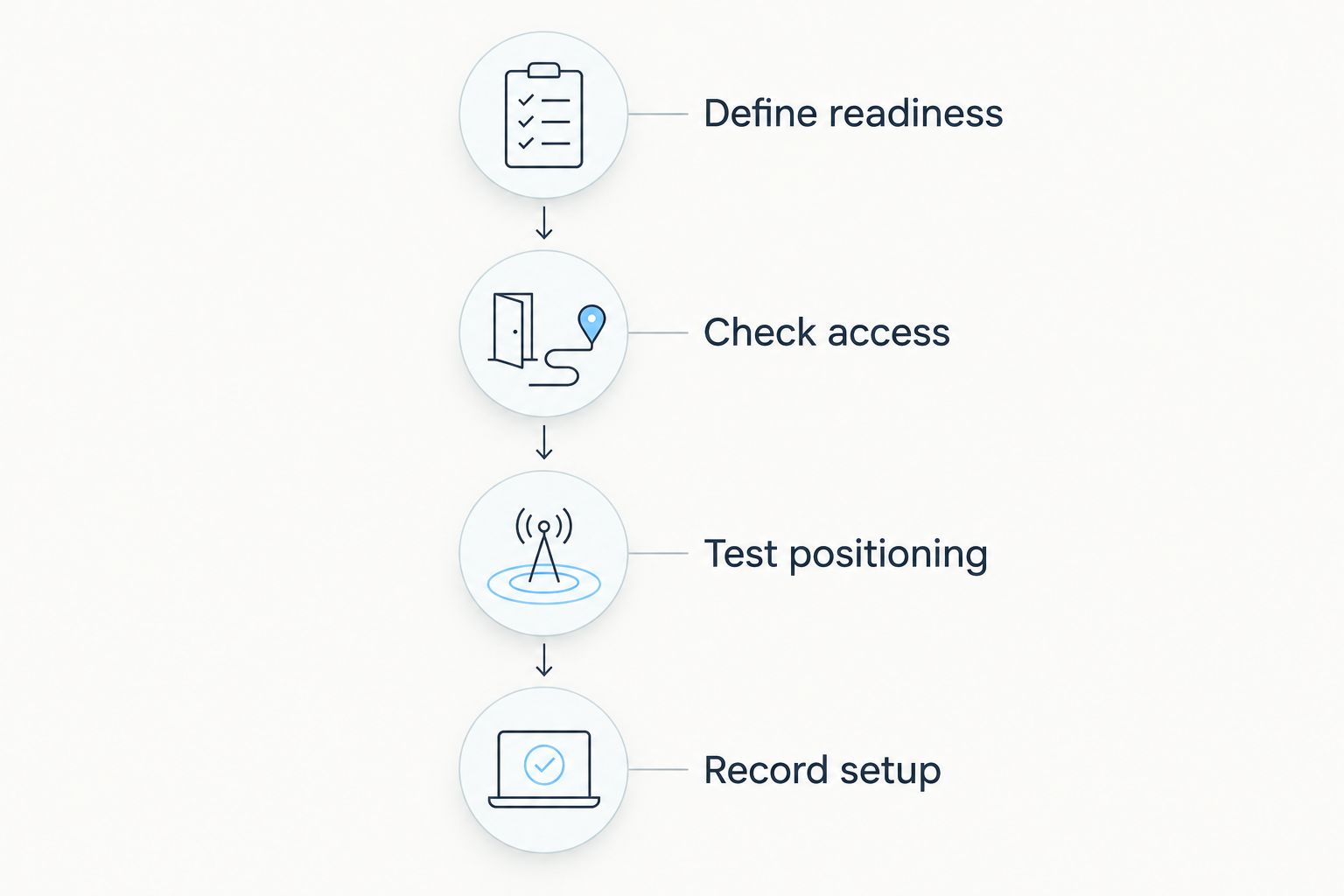
Measure readiness to drill, not mast movement alone. A seller's demonstration should include the tasks your crew will actually perform. Use the same starting and finishing conditions when comparing machines in 2026.
Define readiness
Write down the endpoint before timing anything: positioned, stabilized, required checks completed, tooling prepared, and ready for the intended drilling operation. Follow the manufacturer's procedures throughout.
Do not treat skipped checks as a faster setup. They invalidate the comparison.
Check access
Assess 2 access routes when the site allows it: the intended approach and a practical alternative. Record turns, surface restrictions, overhead obstructions, and unloading requirements rather than assigning an unsupported mobility score.
Test positioning
Use 3 marked positions in a safe demonstration area to observe repositioning. Keep the surface and operating requirements consistent, and have qualified operators conduct the test.
Watch for awkward steering, repeated corrections, difficult backing, and extra handling of support equipment. These observations explain a timing result better than a stopwatch alone.
Record setup
Observe 1 complete setup cycle without omitting unloading, stabilization, tooling preparation, or required checks. Record elapsed time and crew involvement; repeat the exercise if the comparison conditions change.
Also inspect teardown. A machine that is easy to prepare but awkward to secure for transport creates a different operational problem.
Used condition can change the ranking
The carrier ranking is only a shortlist. In a 2026 purchase, the inspected condition of the individual machine remains decisive.
Look for faults that interrupt the movement-to-drilling sequence:
- Hydraulics: Examine hoses and connections, and observe relevant functions through their operating cycle.
- Stabilization: Check supports, mounting points, movement, and the condition required for safe operation.
- Carrier: Inspect steering, brakes, tires or undercarriage, and the drivetrain appropriate to the configuration.
- Controls: Confirm that operating controls and safety systems work as intended.
- Transport: Verify securing arrangements and the preparation needed before moving the machine.
Drillrigmarketplace provides hydraulic, electrical, safety-system, drivetrain, and preventive-maintenance services, along with inspections and rebuilds. That service scope supports a condition-led buying process; it does not establish the condition of any individual rig.
Drillrigmarketplace service fit: Buying, inspection, and refurbishment needs can be discussed through the same business. Limitation: Carrier suitability and setup performance still require machine-specific verification.
How we ranked these configurations
This 2026 ranking uses road transfer, site access, working envelope, setup sequence, condition, and drilling fit. Truck-mounted rigs lead the default shortlist because the assumed job is road-connected; track-mounted rigs take priority when the approach to the borehole becomes the deciding factor.
The order is a buying framework, not a timed performance leaderboard. No carrier category establishes a setup duration. Only a consistent demonstration of the individual machine supports that comparison.
Which used drill rig should you choose?
Start with truck-mounted rigs if your typical work has suitable road access. Move track-mounted rigs to the top when off-road positioning defines the job, compact wheeled rigs when measured space is restrictive, and trailer-mounted rigs when towing fits the fleet and site layout.
For your 2026 buying decision, reject any candidate that fails drilling fit or safe access before comparing setup speed. Then use inspection findings and a complete demonstration to choose between the remaining machines.
FAQ
What's the best used drill rig for mobility?
A truck-mounted rig is the default shortlist for road-connected jobs with adequate access and working space. A track-mounted rig deserves priority when off-road access is the main constraint; inspect the individual machine before deciding.
Are track-mounted drill rigs faster to set up than truck-mounted rigs?
The carrier type alone does not establish setup speed. Compare complete setup cycles, including unloading where required, positioning, stabilization, tooling preparation, and safety checks.
What does mobility mean when buying a used drill rig?
Mobility includes travel between sites, movement to the borehole, and positioning within the working area. Assess those tasks separately because a machine that suits one can be unsuitable for another.
Should I choose a compact wheeled rig for a tight site?
Choose a compact wheeled rig only after its measured dimensions, surface requirements, and drilling capability match the site. Include operating clearance and support equipment, not just the travel footprint.
How do I compare trailer-mounted rigs with truck-mounted rigs?
Compare the complete transport and setup arrangements rather than the drilling units alone. For the trailer-mounted rig, verify tow compatibility, backing space, stabilization, and the equipment transported with it.
What should I inspect before buying a used mobile drill rig?
Inspect the carrier, hydraulics, stabilization equipment, controls, safety systems, and transport arrangements. Observe the relevant functions during a qualified demonstration and document faults before selecting the machine.
Can Drillrigmarketplace help with used drill rig inspections and repairs?
Drillrigmarketplace provides drill rig inspections, repairs, rebuilds, and preventive maintenance. Its stated services also include hydraulic, electrical, safety-system, and drivetrain repairs.
One last thing
Ask to see the rig secured for its next move, not just ready to drill. Tool storage, mast stowage, and transport preparation belong in the mobility decision. Your best carrier is the one that completes the whole job cycle, not the one that wins an isolated maneuver.