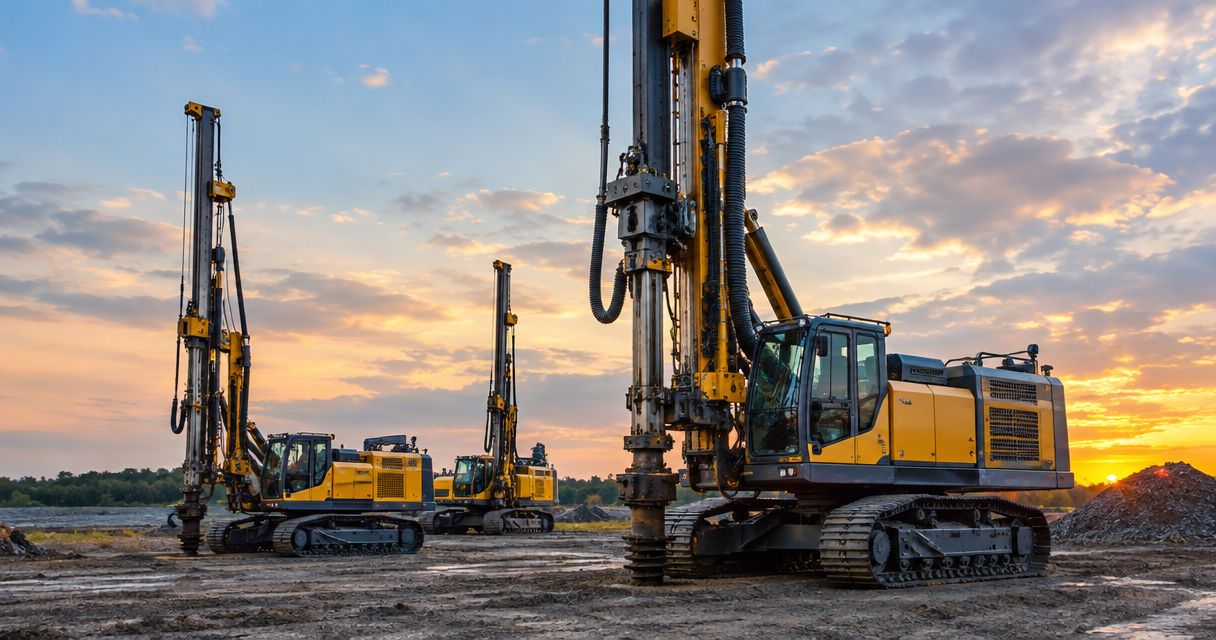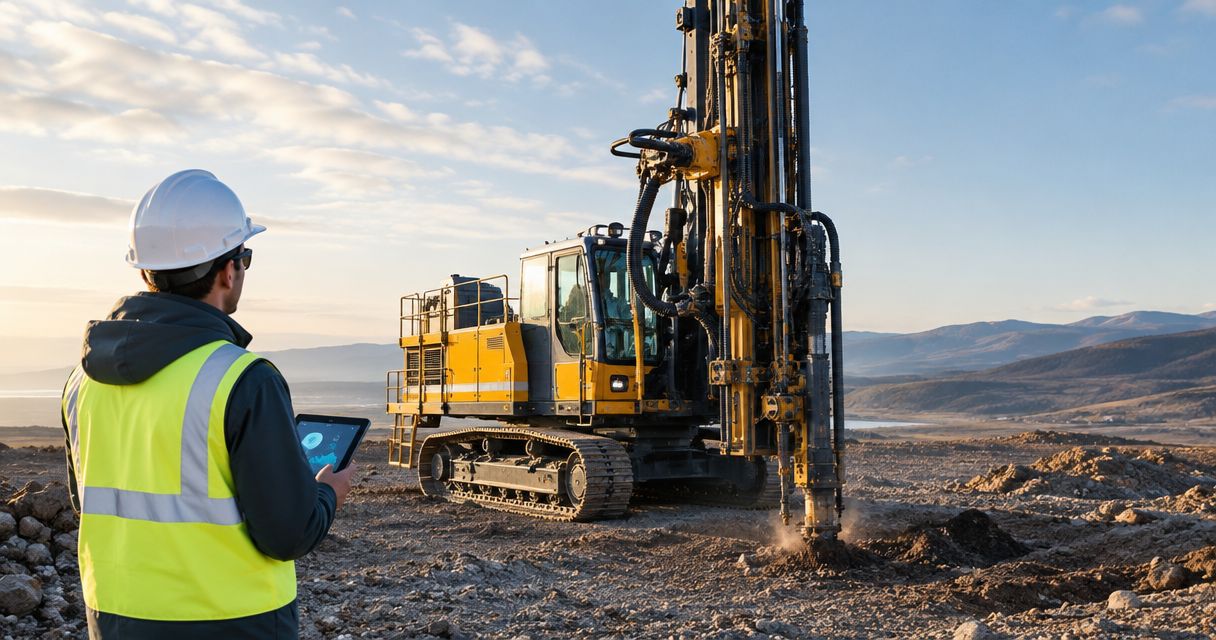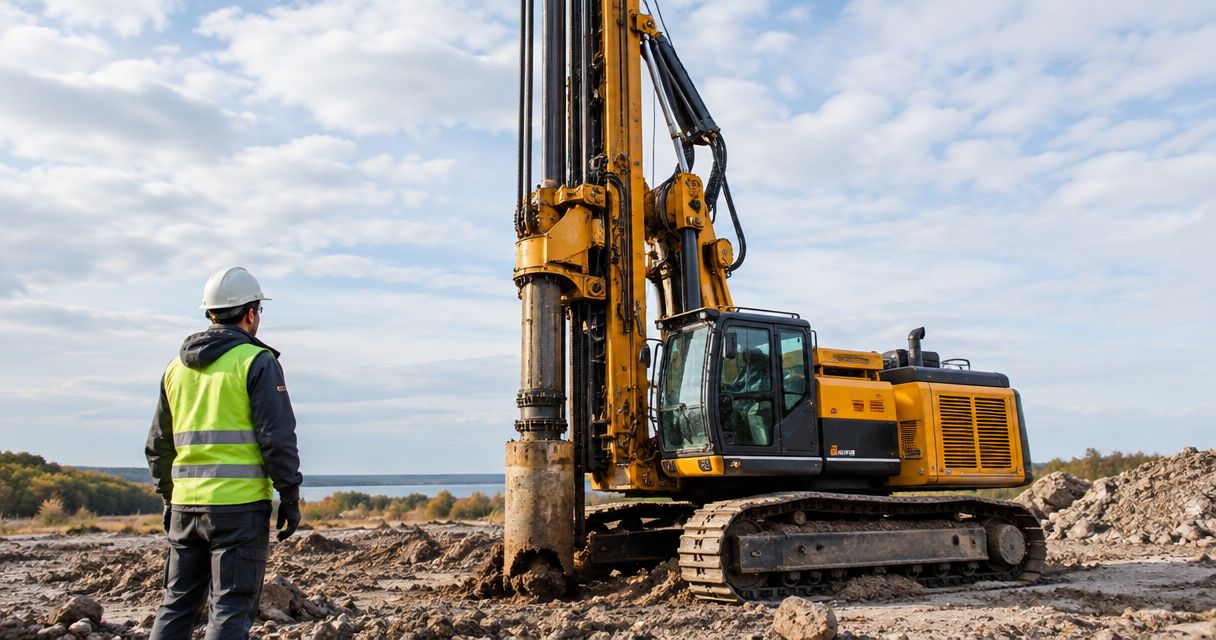
Best overall: a documented rebuilt geotechnical rig matched to your contracts. Best for restricted access: a rebuilt track-mounted rig. Best for retaining an existing drilling platform: a truck remount with targeted repairs. This 2026 guide compares rebuilt drill rigs for sale by job fit and rebuild evidence; Drillrigmarketplace provides used equipment brokerage, inspections, repairs, rebuilds, and truck remounts.
- Choose rebuilt drill rigs for sale by drilling method, rebuild records, and demonstrated condition—not fresh paint.
- Drillrigmarketplace suits contractors seeking used drill equipment brokerage alongside repair and rebuild services.
- Truck remounts address carrier replacement; track-mounted rigs address site access. Neither choice proves drilling-system condition.
- Direct-push and core-drilling configurations belong on different shortlists because they serve different drilling objectives.
Why this matters
A rebuild is a scope of work, not a uniform condition grade. An engine repair, hydraulic overhaul, truck remount, and cosmetic refurbishment address different problems. You need to know which work the seller completed and which components remain untouched.
For a budget-conscious contractor buying in 2026, the decision is not simply rebuilt versus used. It is whether the machine can perform your contracted work without an unresolved mechanical problem, missing tooling, or an unsuitable carrier becoming your next project.
Drillrigmarketplace is best for contractors seeking used drill equipment brokerage alongside repair and rebuild services. Its Beaver, West Virginia facility handles inspections, complete rebuilds, hydraulic repairs, electrical and safety-system repairs, drivetrain repairs, fabrication, and truck remounts. Those services support the evaluation process; they do not establish the condition of any individual rig.
What makes the best rebuilt drill rig
Use these criteria before you compare manufacturers or equipment descriptions:
- Contract fit: Match the drilling method, sampling objective, tooling, and access requirements to work you actually perform.
- Rebuild scope: Require a component-level description of completed work, rather than accepting the word rebuilt alone.
- Operating evidence: Request a demonstration of the functions your jobs depend on, using a safe procedure and qualified personnel.
- Carrier condition: Evaluate the truck or track undercarriage separately from the drilling assembly.
- Tooling compatibility: Confirm connections, tooling condition, and included equipment before treating a rig as job-ready.
- Repair responsibility: Establish who handles unresolved defects and additional work before you authorize the purchase.
For your 2026 shortlist, collect 3 documents: the rebuild scope, supporting repair records, and an equipment-and-tooling list. These are purchasing requirements, not a certification standard. Missing paperwork is a reason to investigate further—not proof that a machine is defective.
Rebuilt drill rigs at a glance
These rankings compare configurations and purchase strategies, not specific machines currently offered for sale. A manufacturer's name cannot substitute for an inspection, and no configuration wins every job.
| Ranked option | Best for | Standout feature | Key limitation |
|---|---|---|---|
| Documented rebuilt geotechnical rig | Contractors replacing a rig for established geotechnical work | Rebuild scope can be matched to recurring drilling and sampling tasks | Suitability still depends on the individual rig and tooling |
| Truck remount with targeted repairs | Owners retaining a drilling assembly while addressing its carrier | Separates carrier replacement from drilling-system repairs | A remount does not prove the drilling assembly is rebuilt |
| Rebuilt track-mounted rig | Contractors whose sites require tracked access | Track carrier offers a different access configuration from a truck | Undercarriage and transport requirements need separate review |
| Rebuilt direct-push rig | Environmental contractors whose sampling plans specify direct-push methods | Method-specific configuration for direct-push sampling | Not a substitute for every rotary or auger drilling assignment |
| Rebuilt core-drilling rig | Exploration contractors whose work requires core recovery | Configuration centered on core-drilling work | Drilling depth and tooling suitability require machine-specific confirmation |
1. Documented rebuilt geotechnical rig: best for recurring contracts
A documented rebuilt geotechnical rig is the default shortlist choice when your established contracts already define the drilling methods you need. Start with that work specification, then evaluate the candidate's drilling assembly, hydraulic system, carrier, safety functions, and tooling.
CME, Diedrich, Mobile Drill, and Acker are among the manufacturers Drillrigmarketplace works with. That establishes a sourcing context—not a claim that any manufacturer, model, or rebuilt machine is automatically the best purchase.
Documented rebuilt geotechnical rig pros:
- Lets you evaluate the rig against familiar contract requirements.
- Gives component-level repair records a clear role in your decision.
- Supports a tooling review tied to your existing drilling methods.
Documented rebuilt geotechnical rig cons:
- A broad geotechnical description does not establish specific capabilities.
- Repaired components do not establish the condition of untouched systems.
- Included tooling still needs inspection and compatibility checks.
Best for: Contractors replacing equipment for established geotechnical assignments, rather than entering an unfamiliar drilling method.
Ask the seller to distinguish replaced, repaired, inspected, and untouched components. Those categories mean different things. A repaired hydraulic component and a newly installed hydraulic component should not disappear into the same vague rebuild description.
Verdict: Buy only when the documented work and operating demonstration match your contracts.
2. Truck remount with targeted repairs: best for retaining your rig
A truck remount moves a drilling assembly onto another truck. It belongs on this list as an alternative to replacing the entire machine, not as proof of a complete rebuild.
Evaluate the drilling assembly and proposed carrier as separate systems. Then review how mounting, hydraulic connections, electrical connections, and applicable transport requirements affect the finished equipment.
Truck remount pros:
- Addresses the carrier without automatically replacing the drilling assembly.
- Creates a defined opportunity to inspect mounting and related connections.
- Allows necessary drilling-system repairs to be specified separately.
Truck remount cons:
- Retains drilling-system problems unless the repair scope addresses them.
- Requires fabrication and installation details to be reviewed.
- Does not eliminate inspection of the replacement truck.
Best for: Equipment owners considering carrier replacement while retaining a drilling assembly that merits further use.
For a 2026 remount decision, ask for separate scopes covering the truck, mounting work, and drilling equipment. This prevents a carrier project from being mistaken for a full mechanical refurbishment. Drillrigmarketplace offers truck remounts, fabrication, drivetrain repairs, and hydraulic and electrical repairs; the written scope should identify which services your project requires.
Verdict: Hold until the drilling assembly's condition and the remount scope are established.
3. Rebuilt track-mounted rig: best for access-driven work
A rebuilt track-mounted drill rig belongs on your shortlist when site access makes the carrier configuration a deciding factor. Compare the actual machine's dimensions, ground conditions, setup needs, and transport arrangements with your project requirements.
Tracks do not establish suitability for every slope, surface, or restricted site. The drilling system and undercarriage each need their own evaluation.
Rebuilt track-mounted rig pros:
- Gives you a carrier configuration to evaluate against restricted-site work.
- Allows access requirements to guide the equipment shortlist.
- Keeps carrier selection distinct from drilling-method selection.
Rebuilt track-mounted rig cons:
- Undercarriage wear remains a separate mechanical concern.
- Transport and unloading arrangements need planning.
- Access suitability does not prove drilling capability.
Best for: Contractors whose recurring work has access constraints that justify evaluating a tracked carrier.
Request photographs and inspection findings for the tracks, rollers, drive components, and mounting structure where applicable. Ask the operator to demonstrate travel and setup functions safely. A drilling-head demonstration alone does not answer questions about the carrier.
Verdict: Buy when both the access requirements and undercarriage condition support the choice.
4. Rebuilt direct-push rig: best for specified environmental sampling
A rebuilt direct-push rig is a method-specific choice for environmental work that calls for direct-push sampling. Your sampling plan should drive the decision; a compact carrier or recognizable manufacturer name should not.
Geoprobe is among the manufacturers named in the marketplace's equipment focus. Evaluate the individual machine's configuration and tooling rather than assuming every machine from a manufacturer performs the same work.
Rebuilt direct-push rig pros:
- Aligns equipment selection with a defined sampling method.
- Makes sampling-tool compatibility a central purchasing question.
- Supports a demonstration based on the functions your field crews use.
Rebuilt direct-push rig cons:
- Does not replace every auger, rotary, or core-drilling configuration.
- Sampling accessories require separate condition checks.
- Method suitability depends on the assignment and site conditions.
Best for: Environmental contractors buying against sampling plans that specify direct-push methods.
Ask which sampling equipment is included and which equipment you must source separately. Confirm connections and operating requirements against the relevant equipment documentation. Do not treat a collection of rods or samplers as a compatible package without checking it.
Verdict: Buy for defined direct-push work; skip as an assumed all-purpose drilling replacement.
5. Rebuilt core-drilling rig: best for exploration programs
A rebuilt core-drilling rig is the appropriate shortlist category when your exploration work requires core recovery. The decision turns on the individual drilling system, tooling, support equipment, and your program requirements.
A rebuild description cannot establish drilling depth, core size, or suitability for a formation. Confirm those requirements through the machine's documentation and a qualified technical review.
Rebuilt core-drilling rig pros:
- Centers the purchase on a specific exploration objective.
- Makes core-drilling tooling and support requirements explicit.
- Gives the operating demonstration a defined technical purpose.
Rebuilt core-drilling rig cons:
- Requires machine-specific confirmation of operating capabilities.
- Supporting equipment remains part of the purchase evaluation.
- Is not the default choice for unrelated sampling methods.
Best for: Exploration contractors with a defined core-drilling program and equipment specification.
Verdict: Buy when the documented configuration fits the core program; hold when capability claims remain unverified.
How we ranked these rebuilt drill rig options
The ranking prioritizes contract fit, documented rebuild scope, operating evidence, carrier condition, tooling compatibility, and repair responsibility. The first option is the default for established geotechnical work; the remaining options serve distinct carrier, access, sampling, and exploration needs.
This 2026 guide does not assign model-level performance scores or rank machines by appearance. A lower-ranked configuration becomes your first choice when its use case matches your contracts.
Inspect before you commit
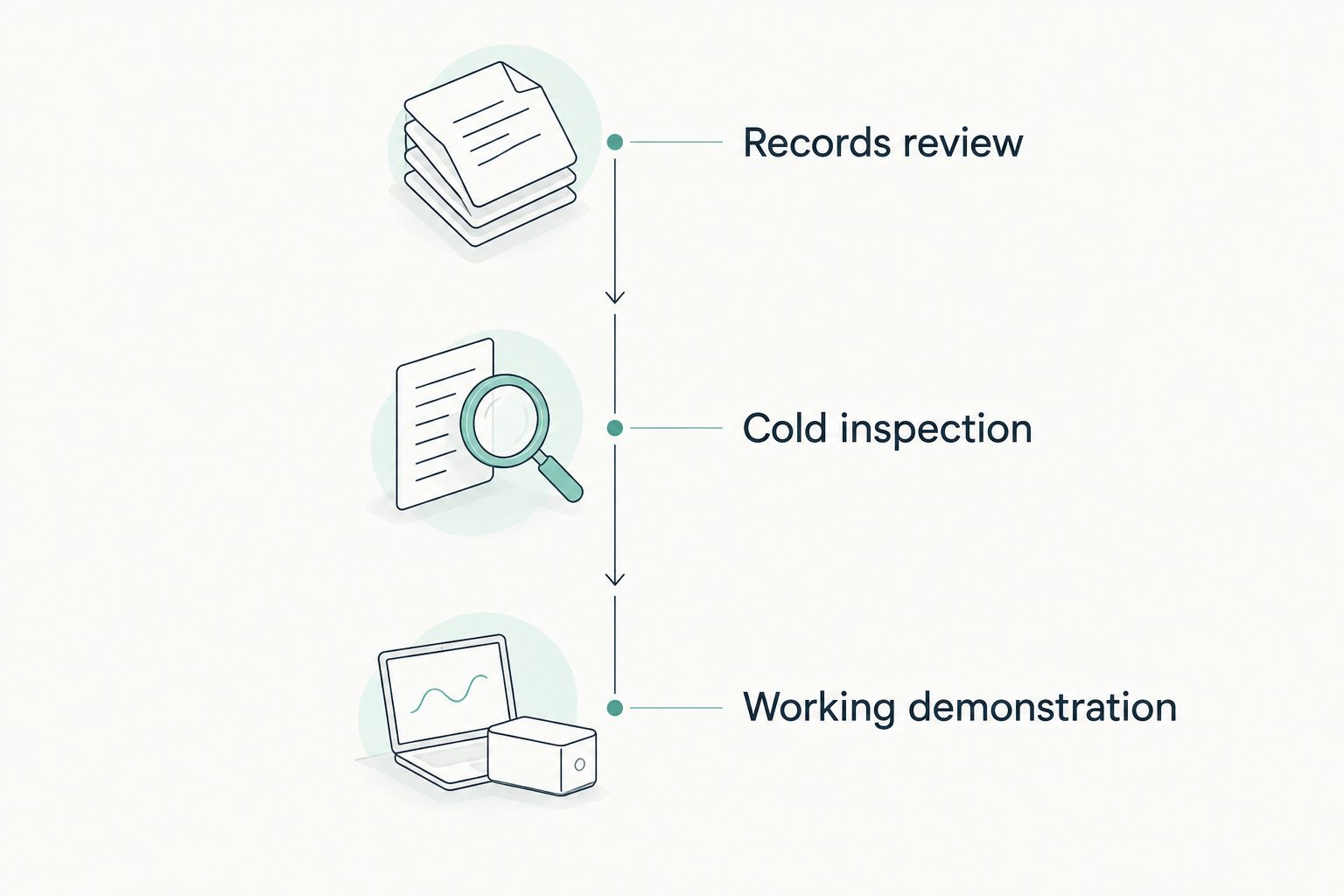
Plan 2 inspections for your buying process: a stationary inspection and a working demonstration. The stationary review examines condition and records; the demonstration checks the functions needed for your work. Neither replaces the other.
Records review
Compare the rebuild scope with supporting records and the included-equipment list. Identify unresolved defects, excluded work, and any components whose condition has not been established.
Cold inspection
Arrange a safe inspection before operation with a qualified technician. Review accessible hoses, connections, structures, fluid condition, carrier components, and safety equipment using the relevant procedures.
Working demonstration
Have qualified personnel demonstrate the agreed functions under safe conditions. Record what was demonstrated, what was not demonstrated, and what requires further investigation.
Finish with 1 written acceptance checklist that separates accepted condition from unresolved work. Assign responsibility for each unresolved item before committing. Do not assume a seller's rebuild description includes your requested repairs.
Discuss your rebuild requirements
Ask about inspections, rebuilds, truck remounts, and used drill equipment brokerage.
Which rebuilt drill rig should you choose?
Choose the documented rebuilt geotechnical rig if your current contracts already define its required work. Choose a remount when retaining your drilling assembly is the objective, a tracked configuration when access drives the decision, direct push for specified environmental sampling, or core drilling for a defined exploration program.
For a 2026 purchase, stop comparing configurations once the job requirement rules one out. Spend the remaining effort on the actual candidate's records, inspection, tooling, and unresolved repairs. A category match gets a rig onto your shortlist; evidence gets it through acceptance.
FAQ
What's the best way to compare rebuilt drill rigs for sale?
Compare rebuilt drill rigs for sale by contract fit, written rebuild scope, demonstrated condition, carrier condition, and tooling compatibility. Compare individual machines only after identifying the drilling method your work requires.
Does rebuilt mean every component is new?
No. A rebuild description does not establish that every component is new. Ask the seller to identify components that were replaced, repaired, inspected, or left untouched.
Is a truck remount the same as a complete drill rig rebuild?
No. A truck remount addresses installation of the drilling assembly on another carrier. Repairs to the drilling system must be identified separately in the agreed scope.
Should I choose a track-mounted or truck-mounted rebuilt rig?
Choose the carrier that fits your site's access and transport requirements. Inspect the carrier separately from the drilling system, and confirm the actual machine's suitability rather than relying on its configuration alone.
Can one rebuilt rig handle environmental and exploration work?
Do not assume one rebuilt rig handles both assignments. Confirm each required drilling method, sampling objective, tooling connection, and operating capability against the individual machine's documentation.
What should I request before inspecting a rebuilt rig?
Request the written rebuild scope, supporting repair records, and included-equipment list. Use those documents to identify inspection priorities and functions that need demonstration.
Does Drillrigmarketplace repair and rebuild used drill equipment?
Yes. Drillrigmarketplace operates a repair and rebuild facility in Beaver, West Virginia. Its stated services include inspections, complete rebuilds, truck remounts, hydraulic repairs, electrical and safety-system repairs, drivetrain repairs, and fabrication.
One last thing
Separate cosmetic refurbishment from mechanical work on the acceptance checklist. Sandblasting and painting describe surface work; they do not establish the condition of a hydraulic pump, drivetrain, or safety system. Ask for those systems to be addressed by their own records and inspection findings.