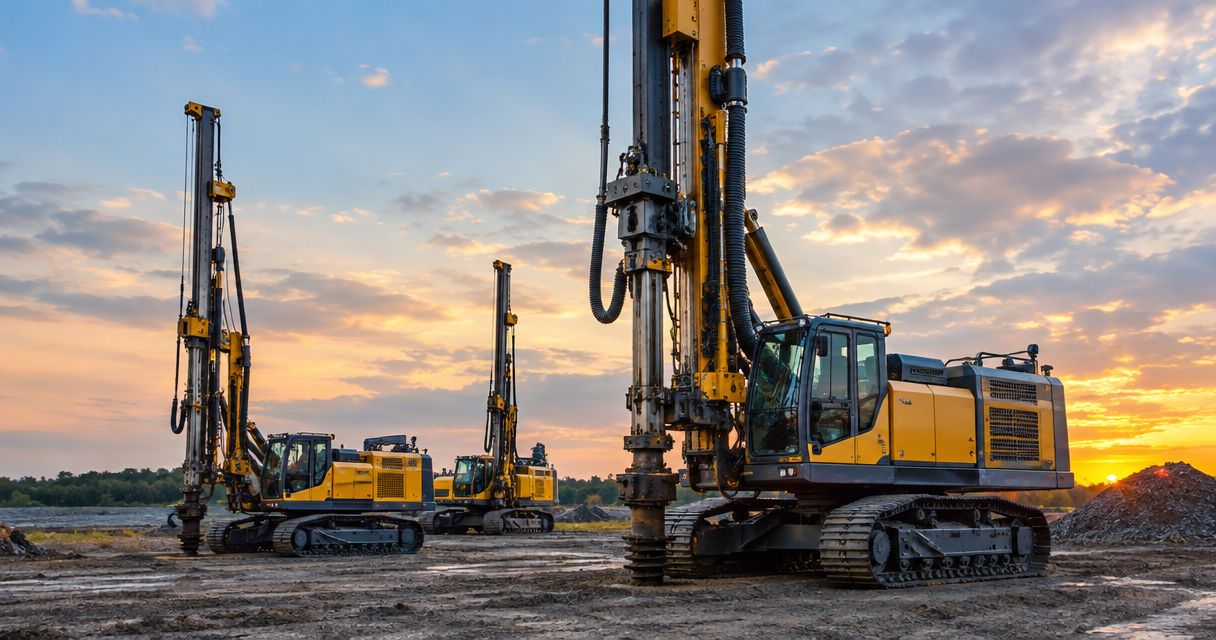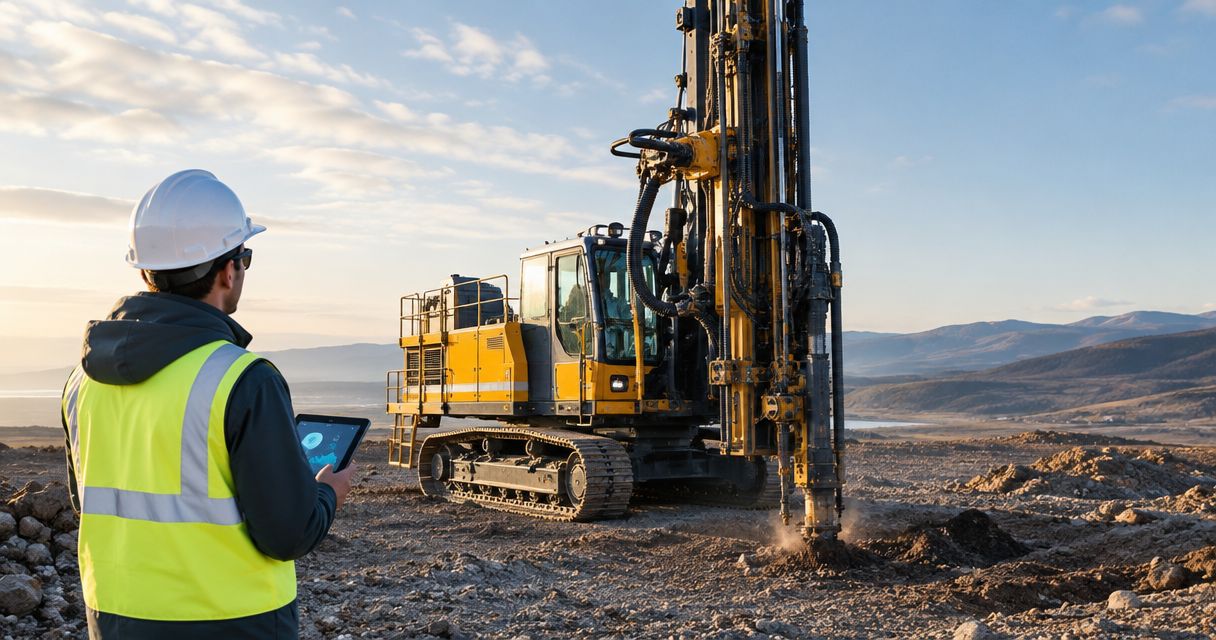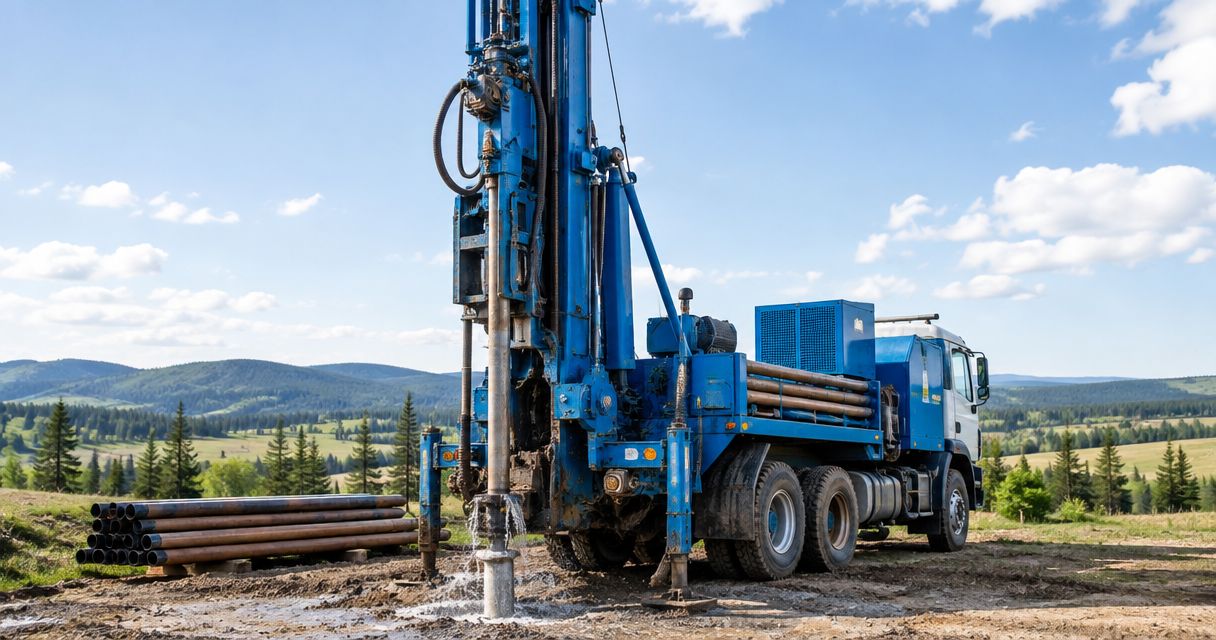
Best overall for sedimentary formations: a mud rotary rig. Best for competent rock: an air rotary rig. Best for difficult casing advancement: a dual rotary rig. If you are comparing a used water well drill rig for sale in 2026, Drill Rig Marketplace is a fit for contractors who need used-equipment sourcing and repair support together.
- Choose a water well drill rig for sale by geology, casing requirements, access, and inspected condition—not manufacturer alone.
- Mud rotary rigs suit sedimentary formations; air rotary rigs suit competent rock when configured for the required drilling method.
- Dual rotary rigs address casing advancement; cable tool rigs suit contractors already equipped for percussion drilling.
- Drill Rig Marketplace combines used water well equipment sourcing with inspection, repair, and rebuild services.
Why this matters
A used rig is a drilling system, not just a mast and an engine. The carrier, rotation system, feed system, circulation equipment, tooling, and casing plan must work together. A machine that runs in the yard still needs verification against your actual work.
For a 2026 purchase, start with your recurring formations and completed-well requirements. Then evaluate the individual machine. A familiar manufacturer does not make an unsuitable configuration the right purchase.
This guide compares 5 rig configurations, not unverified individual listings. Each recommendation identifies a distinct application so you can narrow your search before arranging an inspection.
What makes the best used water well drill rig?
Use these 6 selection criteria before comparing makes or model names:
- Formation fit: Match the drilling method to the rock, sediment, and unstable intervals you expect to encounter.
- Casing capability: Confirm how the rig advances, handles, and supports the casing your well design requires.
- Working capacity: Verify documented rotation, feed, pullback, and lifting capabilities against the planned drill string and tooling.
- Circulation package: Evaluate the mud pump, compressor, hoses, and associated equipment as part of the drilling system.
- Site access: Check carrier dimensions, setup clearance, ground conditions, and transportation requirements against actual jobsites.
- Mechanical condition: Inspect hydraulic, electrical, structural, drivetrain, and safety systems, then define the required repairs.
Treat these criteria as gates rather than points to average. Strong appearance cannot offset an unsuitable drilling method. Equally, suitable drilling capability does not excuse a damaged mast or an unresolved safety fault.
Used water well rigs at a glance
| Rig configuration | Best for | Standout capability | Key limitation |
|---|---|---|---|
| Mud rotary rig | Recurring sedimentary-formation work | Fluid circulation supports drilling and cuttings removal | Requires drilling-fluid handling and cleanup |
| Air rotary rig | Competent-rock water wells | Air circulation paired with appropriate rotary or hammer tooling | Compressor requirements must match the application |
| Dual rotary rig | Difficult casing advancement | Separate casing and drill-string rotation | More interacting systems to inspect and maintain |
| Cable tool rig | Established percussion-drilling operations | Repeated tool impact with separate material removal | Stop-and-start drilling and bailing workflow |
| Compact rotary rig | Access-constrained jobsites | Smaller working footprint | Access advantages do not establish drilling capacity |
1. Mud rotary rig: best for sedimentary-formation work
A mud rotary rig rotates the drill string while circulating drilling fluid through the system. The fluid carries cuttings out of the borehole and supports borehole stability when correctly selected and managed. This is the starting configuration to evaluate when your recurring water well work involves unconsolidated formations.
Do not evaluate the rig separately from its fluid-handling equipment. A drilling-fluid program also needs suitable mixing, circulation, solids handling, and site arrangements. Confirm what equipment belongs with the machine and what your crew must supply separately.
Mud rotary rig pros:
- Provides a drilling method suited to many sedimentary-formation applications.
- Uses drilling fluid to support cuttings removal and borehole management.
- Lets you assess pump, tooling, and fluid-handling requirements as one working package.
Mud rotary rig cons:
- Requires active drilling-fluid management rather than engine operation alone.
- Adds fluid handling, containment, and cleanup responsibilities at the site.
- Borehole completion and development must account for the drilling-fluid program.
Best for: Water well contractors whose regular workload includes unconsolidated formations and who have the crew and equipment to manage drilling fluids.
Verdict: Buy a mud rotary configuration when sedimentary-formation work defines your workload and the complete circulation package passes inspection.
2. Air rotary rig: best for competent-rock water wells
An air rotary rig uses compressed air for circulation and cuttings removal. Depending on its configuration, it works with rotary tooling or a down-the-hole hammer. Competent-rock drilling is the distinct use case to evaluate here.
The compressor deserves the same attention as the rig. Confirm its documented output against the selected tooling and planned operating conditions. An engine that starts cleanly does not establish that the compressor and drilling package can perform the intended work.
Air rotary rig pros:
- Supports rock-drilling methods when equipped with suitable tooling.
- Provides air circulation for removing cuttings from the borehole.
- Fits contractors whose equipment and crew already support air drilling.
Air rotary rig cons:
- Compressor capability limits the usable drilling package.
- Air, dust, and discharge require appropriate site controls.
- Unstable formations still require a specific casing and borehole-support plan.
Best for: Contractors focused on competent-rock wells with an established compressor, tooling, and casing strategy.
When comparing air rotary rigs in 2026, inspect compressor service records alongside the rig records. Check hoses, connections, controls, and the equipment supplied with the machine. Separate confirmed capabilities from assumptions based on its previous owner's work.
Verdict: Buy an air rotary configuration for a rock-focused workload after verifying the compressor and tooling requirements.
3. Dual rotary rig: best for difficult casing advancement
A dual rotary rig uses separate rotation systems for casing and the drill string. That configuration addresses projects where casing advancement is a central part of the drilling challenge, rather than an occasional supporting task.
Inspect the casing drive as a working system. Its gripping components, controls, alignment, and documented operating capabilities matter alongside the upper rotation system. Confirm compatibility with the casing and tooling your crew intends to use.
Dual rotary rig pros:
- Makes casing advancement part of the rig's drilling configuration.
- Separates casing rotation from drill-string rotation.
- Provides a distinct option for work involving unstable or difficult overburden.
Dual rotary rig cons:
- Adds interacting mechanical and hydraulic systems to inspect.
- Requires a crew familiar with the configuration and its operating procedures.
- Offers little selection advantage if your work does not require its casing capability.
Best for: Water well contractors whose recurring projects demand active casing advancement through challenging formations.
Avoid choosing a dual rotary rig simply because it appears more capable. Write down the casing problem it must solve, then verify the machine against that requirement. A specialized configuration belongs on a shortlist only when its specialty serves your contracts.
Verdict: Buy a dual rotary configuration when casing advancement is a recurring requirement; skip it when that capability has no defined job.
4. Cable tool rig: best for established percussion operations
A cable tool rig drills through repeated lifting and dropping of a tool string. Material removal occurs through a separate bailing process rather than continuous rotary circulation. It is a different operating workflow, not a substitute chosen solely because a machine looks mechanically straightforward.
An experienced cable tool crew is the strongest reason to consider this configuration. Evaluate the lifting and spudding mechanisms, ropes or cables, sheaves, brakes, mast, and tooling against the manufacturer's requirements and the planned work.
Cable tool rig pros:
- Fits contractors with established percussion-drilling skills.
- Provides a distinct drilling method without rotary circulation as its defining process.
- Supports a purchasing decision centered on familiar tooling and operating procedures.
Cable tool rig cons:
- Requires separate drilling and material-removal stages.
- Depends on percussion-specific tooling and crew competence.
- Does not replace an air or mud rotary package without changing the workflow.
Best for: Contractors already operating cable tool equipment who want a machine compatible with their established methods.
For a 2026 purchase, verify how the rig fits the rest of your equipment fleet. Familiarity is useful only when the specific machine, tooling, and safety systems are serviceable.
Verdict: Buy a cable tool rig for an established percussion operation; skip it as an unfamiliar substitute for rotary equipment.
5. Compact rotary rig: best for access-constrained sites
A compact rotary rig puts access and setup space at the center of the purchasing decision. The configuration deserves consideration when entrances, working areas, or carrier access restrict the equipment you can bring to a site.
Compact describes the footprint, not the drilling capability. Verify the actual drilling method, feed and pullback ratings, mast arrangement, tooling compatibility, and circulation equipment. Include support vehicles and equipment in your access assessment; the rig is not the entire site setup.
Compact rotary rig pros:
- Gives access-constrained projects a distinct equipment category to evaluate.
- Allows you to compare setup requirements against restricted working areas.
- Helps separate carrier-access needs from drilling-method needs.
Compact rotary rig cons:
- A smaller footprint does not prove suitability for your well design.
- Supporting compressors, pumps, tooling, and handling equipment still need space.
- Working capacities require verification rather than inference from machine size.
Best for: Contractors with documented site-access restrictions and well requirements that match the machine's verified capabilities.
Verdict: Buy a compact rotary configuration when access is the limiting factor and its documented working capabilities meet the job; otherwise skip it.
How the configurations are ranked
The order starts with formation fit, then moves to specialized casing, established percussion workflows, and restricted access. It is an application-based ranking, not a claim that one machine outperforms every other machine.
Mechanical condition remains a separate purchase gate. An inspected rig suited to your workload outranks a more specialized rig with unresolved faults. Use the table to select a configuration, then inspect the individual unit.
Inspect the machine before choosing the seller's listing
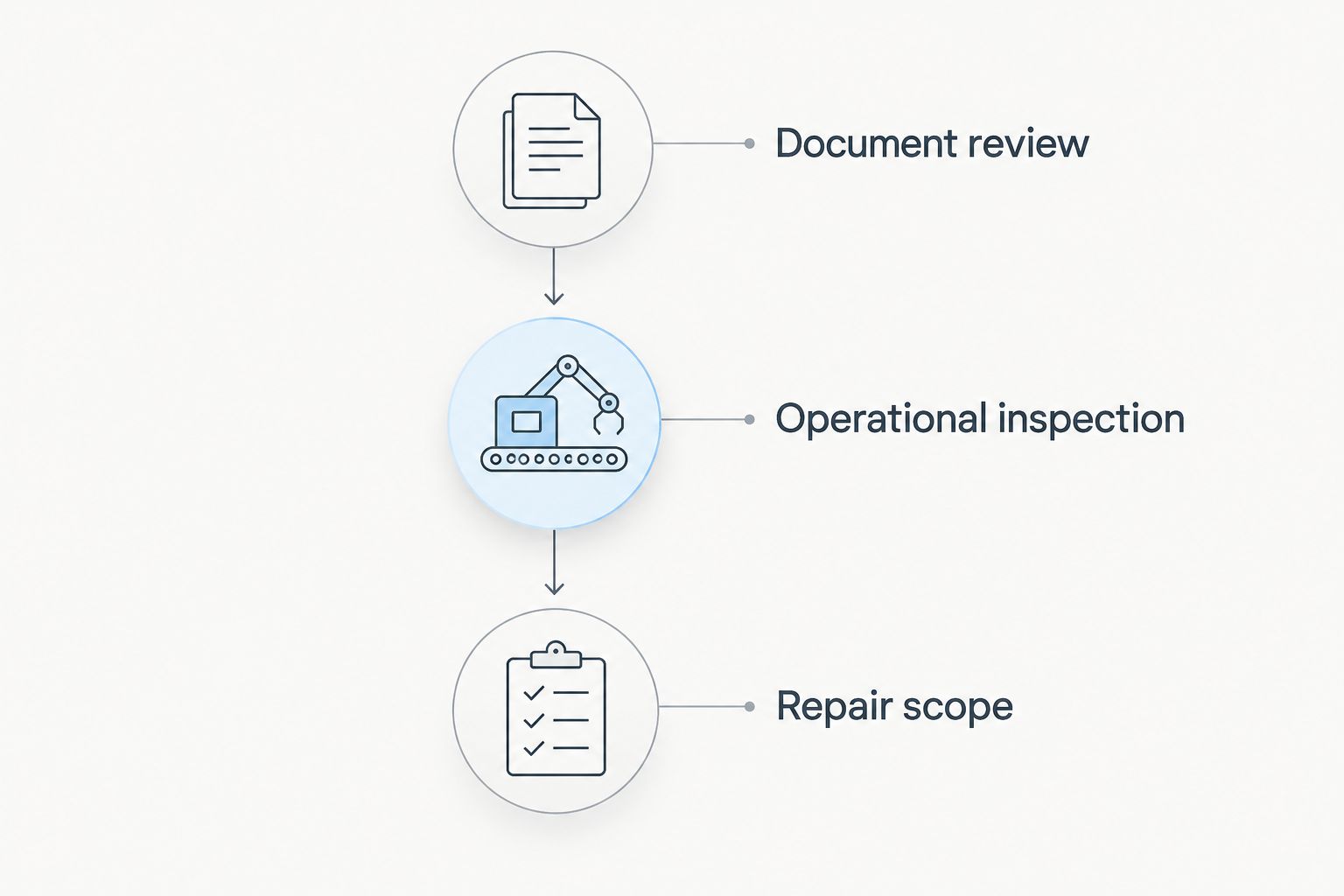
Use 3 inspection stages to connect the description, the operating machine, and the repair decision:
- Document review: Confirm identification, recorded specifications, ownership documentation, service history, included equipment, and known modifications.
- Operational inspection: Have a qualified inspector assess the carrier, mast, rotation, feed, hydraulics, electrical controls, safety systems, and circulation equipment.
- Repair scope: Put identified faults, required work, tooling needs, and acceptance checks into a written scope before committing.
Keep transport readiness separate from drilling readiness. A carrier inspection addresses the vehicle; a drilling-system inspection addresses the machinery that performs the work. Both belong in the purchase decision.
Drill Rig Marketplace provides inspections, repairs, rebuilds, truck remounts, and hydraulic, electrical, safety-system, and drivetrain work through its facility in Beaver, West Virginia. That makes the company relevant when your used water well rig purchase also requires a defined repair plan.
The buyer's responsibility remains specific: verify the individual machine. Marketplace and repair services do not replace documented specifications, an inspection, or agreement on what work is included.
Which used water well rig should you choose?
Choose mud rotary as the default for a sedimentary-formation workload, not as a universal winner. Choose air rotary for competent rock, dual rotary for recurring casing-advancement problems, cable tool for an established percussion operation, and compact rotary when access governs the decision.
For your 2026 shortlist, describe the job before naming the manufacturer: formation, casing, drilling method, working capacity, access, and required support equipment. Drill Rig Marketplace is best for water well contractors who want used-equipment sourcing and repair support from the same service company.
Discuss your used rig requirements
Match your drilling application with equipment sourcing, inspection, and repair support.
FAQ
What's the best used water well drill rig for sale in 2026?
The best used water well drill rig is the inspected machine that matches your formations, casing plan, and working requirements. Mud rotary is the starting configuration for sedimentary-formation work; air rotary is the starting configuration for competent rock.
Is an air rotary rig better than a mud rotary rig?
Air rotary is the better fit for competent-rock applications that suit its tooling and compressor package. Mud rotary is the better starting point for sedimentary formations requiring a drilling-fluid program; neither method wins across every formation.
When should I consider a dual rotary water well rig?
Consider a dual rotary rig when casing advancement is a recurring drilling requirement. Verify the casing drive, upper rotation system, controls, and compatibility with your planned casing before purchasing.
Can a compact drill rig handle my water well work?
A compact rig is suitable only when its documented capabilities match your well requirements. Check drilling method, feed, pullback, tooling, circulation equipment, and the space needed for the complete working setup.
What should I inspect before buying a used water well rig?
Inspect the carrier, mast, rotation and feed systems, hydraulics, electrical controls, safety systems, and circulation equipment. Review identification, service records, modifications, and included equipment, then define a written repair scope.
Should I buy a cable tool rig instead of a rotary rig?
Choose a cable tool rig when your crew and equipment already support percussion drilling. Its separate drilling and bailing workflow changes how the work is performed, so it is not a direct replacement for rotary equipment.
Does Drill Rig Marketplace repair used water well rigs?
Drill Rig Marketplace provides drill rig repair, inspections, complete rebuilds, and truck remounts at its Beaver, West Virginia facility. Its stated services also include hydraulic, electrical, safety-system, and drivetrain repairs.
One last thing
For a 2026 purchase, inspect the equipment that supports the drilling method as closely as the rig itself. A suitable mast and rotation system cannot compensate for an unsuitable compressor, mud pump, casing arrangement, or tooling package. Approve the working system, not just the machine.