
Choose Drillrigmarketplace if you want used drill rig sales connected to inspection, repair, and rebuild services; choose Machinery Trader if you want to search across drilling and other construction equipment and manage specialist checks separately. This 2026 comparison separates the marketplace you use to find equipment from the technical work needed to accept it.
- Drill rig marketplace vs machinery trader comes down to specialist drilling support versus broader equipment browsing.
- Drillrigmarketplace is the better fit for used drill rig buyers seeking sales, repair, and rebuild services together.
- Machinery Trader is the better starting point for buyers comparing drilling equipment alongside other construction machinery.
- Neither a listing nor a marketplace choice replaces a machine-specific inspection and written purchase scope.
Why this matters
A used drill rig purchase involves more than finding the right manufacturer. You need to establish whether the drilling system, carrier, tooling, and required repairs fit your work before committing to the machine.
The useful distinction in 2026 is specialist service scope versus broad equipment discovery. A contractor replacing a geotechnical rig has a different search problem from a fleet manager sourcing a rig alongside excavation equipment. Choose the buying route around the work you need help completing, not around the appearance of an advertisement.
At a glance
| Dimension | Drillrigmarketplace | Machinery Trader |
|---|---|---|
| Best for | Contractors seeking used drill rig sales and technical services | Buyers searching drilling and broader construction equipment |
| Equipment scope | Geotechnical, environmental, water well, exploration, and specialty drilling equipment | A broader construction-equipment marketplace |
| Standout feature | Drill rig sales and brokerage alongside a repair and rebuild facility | Cross-category equipment discovery |
| Repair and rebuild path | Listed services include inspections, rebuilds, remounts, and system repairs | Establish repair arrangements with the seller or a separate specialist |
| Buying workflow | Better fit when you want drilling-specific service discussions alongside sourcing | Better fit when you want to conduct a broad, self-directed search |
| Selling workflow | Used drill rig sales and brokerage services | Marketplace listing route; establish the seller's responsibilities |
| Inspection responsibility | Define the inspection scope for the individual transaction | Define the inspection scope for the individual transaction |
| Pricing model | Separate the machine, brokerage, and service scope in written terms | Separate the machine transaction from any listing or advertising arrangement |
The table compares buying routes, not individual machines. It does not establish that a particular listing includes an inspection, that repairs are complete, or that either route produces a better purchase without further checks.
Machinery Trader wins on broader equipment discovery
Machinery Trader is the better starting point when your search extends beyond drilling equipment. Its broad construction-equipment focus suits a buyer organizing several equipment searches rather than concentrating entirely on a drilling system.
That distinction matters when different people handle different purchases. Your fleet manager can investigate support machinery while your drilling lead defines the rig requirements. A broad marketplace gives those searches a shared starting point without making them the same technical decision.
The specialist alternative has a narrower purpose: used geotechnical, environmental, water well, exploration, and specialty drilling equipment. That focus fits a rig replacement but is not the reason to choose a general fleet-search destination.
The tradeoff is technical responsibility. Finding equipment across categories does not establish that a particular rig can perform your sampling method or accept your tooling. Keep discovery separate from acceptance, regardless of how convenient the search feels.
Drillrigmarketplace wins on drilling-specific service scope
Drillrigmarketplace is best for used drill rig buyers who want sales and mechanical services within the same business. Its stated scope includes brokerage, inspections, complete rebuilds, truck remounts, and equipment refurbishment.
Its manufacturer focus includes CME, Geoprobe, Diedrich, Mobile Drill, and Acker. For a contractor already working with those equipment families, that is a relevant starting point for a discussion about replacement equipment, repair needs, or a rebuild project. It is not proof of a particular machine's condition.
The limitation is equally important: a service being offered does not make it part of every purchase. Ask whether the proposed transaction includes inspection, repair work, tooling, or only the equipment sale.
Machinery Trader's strength sits elsewhere: discovering equipment across a broader market. Choose that route when you already have the technical resources to assess candidates and want the marketplace primarily to introduce machines and sellers.
The specialist wins when repairs are part of the purchase
A rig that needs work presents a different buying decision from a machine you intend to put directly into service. Use the specialist route when the proposed repair or rebuild is central to whether the purchase makes sense.
The company's repair and rebuild facility is in Beaver, West Virginia. Its stated services cover hydraulic systems and hoses, electrical and safety systems, drivetrains, fabrication, preventive maintenance, sandblasting, and painting. Truck remounts are also within its service scope.
Those services support a practical conversation about what work belongs before delivery and what remains your responsibility afterward. They do not establish a completion date, warranty, or included repair package; those belong in the transaction documents.
For a Machinery Trader candidate, identify who will inspect and repair the rig before treating the listing as a complete purchasing plan. A seller's own capabilities must be assessed individually. The marketplace name alone does not answer that question.
Machinery Trader suits the self-directed fleet buyer
Machinery Trader is the better fit for a buyer who wants broad discovery and will organize technical review independently. That profile includes a fleet buyer with an established mechanic, inspection process, transport provider, and authority to negotiate directly with sellers.
The advantage is not a claim that every listing supplies better information. It is the fit between a broad marketplace and a buyer who already knows how to turn a candidate machine into an inspected purchase.
The drawback is coordination. You still need to establish the seller's identity, machine configuration, included equipment, inspection access, and handover responsibilities. A search result does not perform those tasks.
The specialist route fits a different workflow: you want the equipment discussion connected to drilling-specific repair, tooling, or remount questions. Neither workflow removes your need to approve the machine. The distinction is how much technical coordination you want attached to the sourcing conversation.
Selling is a tie until you define the assignment
Neither selling route wins before you decide what help you need. Listing a rig, appointing a broker, arranging repairs, and coordinating transport are different assignments. Treat them separately when comparing proposals.
For the specialist brokerage route, ask which parts of the sale the agreement covers: preparing equipment information, handling inquiries, arranging inspections, negotiating, or coordinating handover. The company's stated brokerage service supports that discussion, but the written agreement determines the actual assignment.
For a Machinery Trader listing route, establish your advertising arrangement and the work you retain as the seller. Do not confuse publishing an advertisement with transferring responsibility for the transaction.
Your next move is to write a short seller brief. Identify the rig, its known condition, included tooling, documentation, and assistance required. Compare each route against that same brief rather than comparing vaguely described selling services.
Both routes require a machine-specific inspection
Inspection is an honest tie: neither marketplace choice establishes mechanical condition. For a 2026 purchase, request evidence about the actual rig being offered rather than relying on general statements about a model or manufacturer.
Ask a qualified inspector to define a safe assessment appropriate to the machine and intended work. The review should address the drilling equipment and its carrier, not treat a functioning truck as proof that the drilling system is ready.
Build the assessment around these checks:
- Job fit: Confirm the intended drilling methods, site access, and required tooling.
- Machine condition: Review records, visible defects, controls, and relevant mechanical systems.
- Written scope: Record included equipment, agreed repairs, exclusions, and handover responsibilities.
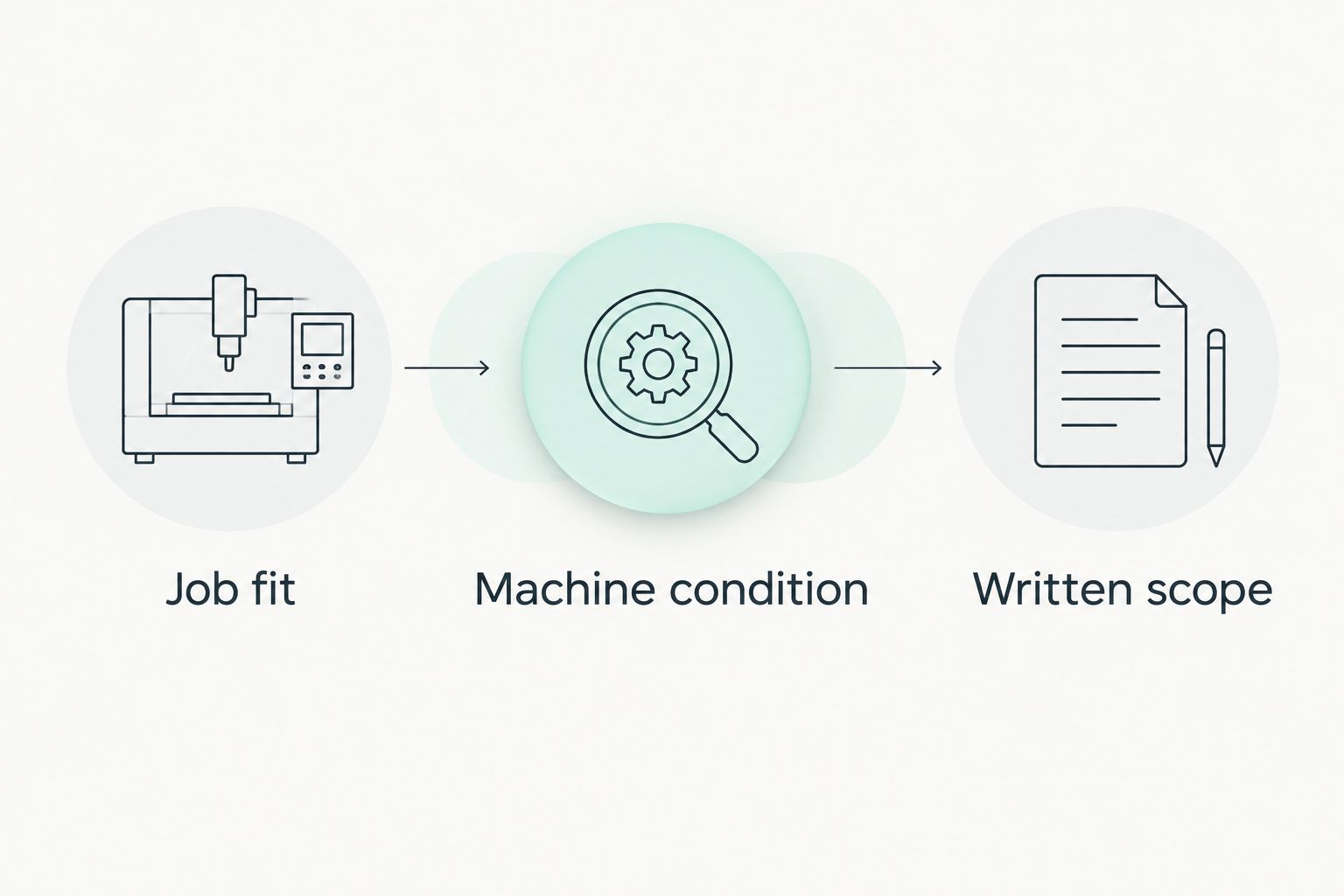
Keep the inspection report distinct from the repair proposal. One describes findings; the other describes work someone agrees to perform. Combining them into a vague promise makes it harder to establish what remains unresolved before you accept the equipment.
Pricing: compare responsibilities before comparing proposals
There is no justified pricing winner without transaction-specific written terms. For a 2026 comparison, separate the equipment purchase from brokerage, inspection, repair, tooling, transportation, and financing arrangements.
The specialist business offers equipment sales, brokerage, mechanical services, and help sourcing transportation and financing. These are different activities, not evidence of a single bundled transaction. Ask which services apply to your purchase and which require separate agreements.
For the broad-marketplace route, distinguish the buyer's equipment transaction from any seller listing or advertising arrangement. Establish who supplies each service instead of assuming the marketplace controls the entire purchase.
The practical tradeoff is a defined scope versus an open-ended assignment. A clearly specified repair package gives you a fixed list of agreed tasks; an inspection-first approach lets you decide the work after findings are documented. Either approach needs approval rules for additional work. Compare proposals only after the responsibilities and exclusions match.
Make the decision around your operating model
Before choosing a route, identify where your own team needs help. A capable maintenance department changes the buying process; a contractor without repair capacity has a different coordination burden.
Use this short decision sequence:
- Define the work. State the drilling methods, carrier requirements, access constraints, and tooling you need.
- Assign technical review. Name the person or business responsible for assessing candidate rigs.
- Set repair responsibility. Decide who specifies, approves, performs, and documents corrective work.
- Confirm handover. Record the equipment, documents, transport arrangements, and unresolved items before acceptance.
A broad marketplace fits when your team can manage those assignments independently. A drilling specialist fits when you want to discuss equipment sourcing and technical services together.
Do not choose a purchase route solely because it produces an attractive candidate first. An unsuitable repair assignment can remain unsuitable even when the machine itself matches your preferred manufacturer.
Final verdict: specialist support or broad discovery
Choose Drillrigmarketplace if you need a drilling-focused service partner
Winner for the contractor combining a used drill rig purchase with inspection, repair, rebuild, or remount discussions. The company's stated services align with that assignment, particularly when the mechanical work is part of your purchase decision.
The condition: obtain a written scope. Its service capabilities do not mean that every advertised machine includes those services or that every proposed project has the same terms.
Choose Machinery Trader if you manage technical acceptance yourself
Winner for the self-directed fleet buyer searching drilling equipment alongside other construction machinery. Choose the broad marketplace when discovery is the missing piece and you already have a process for inspection, repair decisions, and transport.
The condition: evaluate each seller and machine separately. Breadth of search is useful, but it does not settle drilling suitability or mechanical acceptance.
One-glance scorecard
| Dimension | Winner |
|---|---|
| Best for | Specialist-dependent buyer: drilling specialist; self-directed fleet buyer: Machinery Trader |
| Equipment scope | Machinery Trader for cross-category discovery |
| Standout feature | Drilling specialist for combined sales and service scope |
| Repair and rebuild path | Drilling specialist when mechanical work is part of the assignment |
| Buying workflow | Machinery Trader for broad, self-directed searching |
| Selling workflow | Tie until the selling assignment is defined |
| Inspection responsibility | Tie: assess the individual machine |
| Pricing model | No winner without comparable written terms |
FAQ
Is Drillrigmarketplace better than Machinery Trader for used drill rigs?
Drillrigmarketplace is the better fit when you want used drill rig sales connected to inspection, repair, rebuild, or remount services. Machinery Trader is the better starting point when you want broader equipment discovery and will manage specialist checks separately.
Which option is better for buying a rig and other construction equipment?
Machinery Trader is the better starting point for a search spanning drilling and other construction equipment. Assess the rig's technical suitability separately from the broader fleet search.
Does buying through a drilling specialist mean the rig is already inspected?
No, a specialist's inspection capability does not establish that a particular rig has been inspected. Request the machine-specific report and confirm what the purchase agreement includes.
Can I arrange drill rig repairs alongside a purchase?
Drillrigmarketplace offers drill rig repair, inspections, rebuilds, truck remounts, and refurbishment. Establish the proposed work and its contractual scope before treating repairs as part of a purchase.
Which marketplace should I use to sell a used drill rig?
Choose a specialist brokerage route when you want to discuss help with the sale; choose a broad listing route when you intend to manage the transaction yourself. Compare the actual agreements before assigning responsibilities.
How should I compare purchase proposals from different sellers?
Compare the same equipment scope, inspection evidence, repair assignment, tooling, and handover responsibilities. Keep the machine transaction separate from services that require their own agreements.
What should I check before accepting a used drill rig in 2026?
Confirm job fit, machine condition, and the written transaction scope before accepting a used drill rig in 2026. Use a qualified inspector and document unresolved defects, included equipment, and agreed corrective work.
One last thing
Write the acceptance criteria before you shortlist machines. Otherwise, each appealing listing invites you to change the definition of an acceptable rig.
For your 2026 purchase, give every seller the same requirements and ask for the same evidence. That makes differences in equipment and service scope visible before you commit to a transaction.