
Choose Drill Rig Marketplace if you need used drill rig sourcing alongside repair, rebuilding, or remounting; choose Rig Source if its inspected machine and written proposal meet your drilling requirements without additional work. The useful distinction in 2026 is the fit between the individual rig, the required service scope, and your next project—not the seller’s name alone.
- Drill rig marketplace vs rig source: compare the individual used drill rig and written service scope before choosing.
- Drill Rig Marketplace suits contractors seeking used drilling equipment with repair, rebuild, or truck-remount support.
- Choose Rig Source when its documented equipment condition and proposal better match your project.
- Require inspection records, a tooling list, and written responsibilities before committing to either seller.
Why this matters
A used drilling equipment purchase involves more than selecting a machine that performs the right drilling method. You also need to establish its condition, the work required before deployment, and which tooling accompanies the transaction.
Drill Rig Marketplace is a used drilling equipment marketplace and service company for contractors who need sourcing and repair support together. Its stated services include inspections, rebuilds, truck remounts, hydraulic repairs, electrical repairs, and drivetrain work.
Those capabilities matter when your purchase requires preparation. They do not establish the condition of an individual rig, make every rebuild worthwhile, or replace a machine-specific inspection. For your 2026 purchase, compare written commitments rather than treating a company’s service list as the specification for the equipment you are buying.
At a glance
| Dimension | Drill Rig Marketplace | Rig Source |
|---|---|---|
| Best for | Contractors seeking used equipment sourcing with repair or rebuild support | Buyers whose inspected candidate and written proposal meet the project brief |
| Equipment fit | Stated focus includes geotechnical, environmental, water well, exploration, and specialty equipment | Evaluate the proposed machine against the same drilling requirements |
| Repair and rebuild scope | Stated services include rebuilds, remounts, fabrication, and mechanical repairs | Compare the specific repair responsibilities included in the proposal |
| Inspection and acceptance | Offers inspections; define the inspection and acceptance scope | Require equivalent condition evidence and acceptance criteria |
| Tooling and supporting equipment | Helps source tooling, augers, rod, casing, sampling equipment, and parts | Compare the actual tooling and accessories included or separately sourced |
| Transportation coordination | Helps customers source transportation | Establish who arranges transport and accepts each handoff |
| Standout feature | Used rig sales and brokerage alongside a repair and rebuild facility | The deciding advantage must appear in the individual equipment proposal |
| Pricing model and transaction terms | Request terms for the equipment, brokerage, and any service work | Request terms for the proposed transaction and any associated work |
The Rig Source column is a decision standard, not a claim that a particular machine includes those provisions. Apply the same standard to both proposals. A company-level comparison becomes useful only when it helps you reject an unsuitable machine or clarify responsibility for necessary work.
Rig Source wins equipment fit when its machine needs no adaptation
Choose Rig Source when its inspected candidate meets your drilling brief and the alternative requires changes you do not need. That is a machine-level advantage, not a blanket verdict about either seller’s equipment.
Write your requirements before reviewing candidates. Separate essential drilling functions from preferences so an appealing listing does not change the job you actually need to perform.
Use these categories:
- Drilling method: Identify the methods your contracts require.
- Site access: Describe the ground conditions, working space, and access restrictions.
- Tooling interface: Identify the tooling you intend to retain and verify the relevant connections.
- Carrier condition: Evaluate the truck or tracked carrier separately from the drilling equipment.
- Operating condition: Require evidence that the necessary functions operate as expected.
A machine that fits the brief without modification deserves serious consideration. Conversely, an apparently suitable rig loses that advantage if inspection identifies work that changes your deployment plan.
For a 2026 equipment decision, keep required capabilities separate from claims such as ready to work. Ask what was inspected, what was demonstrated, and what remains your responsibility.
Drill Rig Marketplace fits purchases that require rebuilding
The company operates a drill rig repair and rebuild facility in Beaver, West Virginia. Its stated scope includes complete rebuilds, truck remounts, fabrication, hydraulic hose work, hydraulic system repairs, electrical and safety system repairs, and drivetrain repairs.
Choose this service-led route when the right purchase requires defined corrective work. A contractor replacing a carrier, addressing hydraulic problems, or refurbishing an existing machine has a different buying problem from a contractor seeking an unchanged replacement rig.
The limitation is scope. The word rebuild does not tell you which components receive attention, which existing components remain, or how completed work will be accepted.
Request a written work schedule that distinguishes:
- Inspection findings from recommended improvements.
- Required repairs from optional refurbishment.
- Components being repaired from components being replaced.
- Mechanical work from sandblasting and painting.
- Completion of workshop work from acceptance of the finished rig.
A broader service list is useful only when the relevant work appears in your agreement. Do not treat paint, mechanical repair, and a complete rebuild as interchangeable descriptions.
Both sellers face the same inspection standard
Neither company name replaces an inspection of the individual machine. Set the acceptance standard before agreeing to the transaction, then judge both candidates against it.
Request records that identify the rig and carrier, describe previous work, and distinguish observed condition from seller representations. Have a qualified inspector evaluate the systems relevant to your intended drilling method.
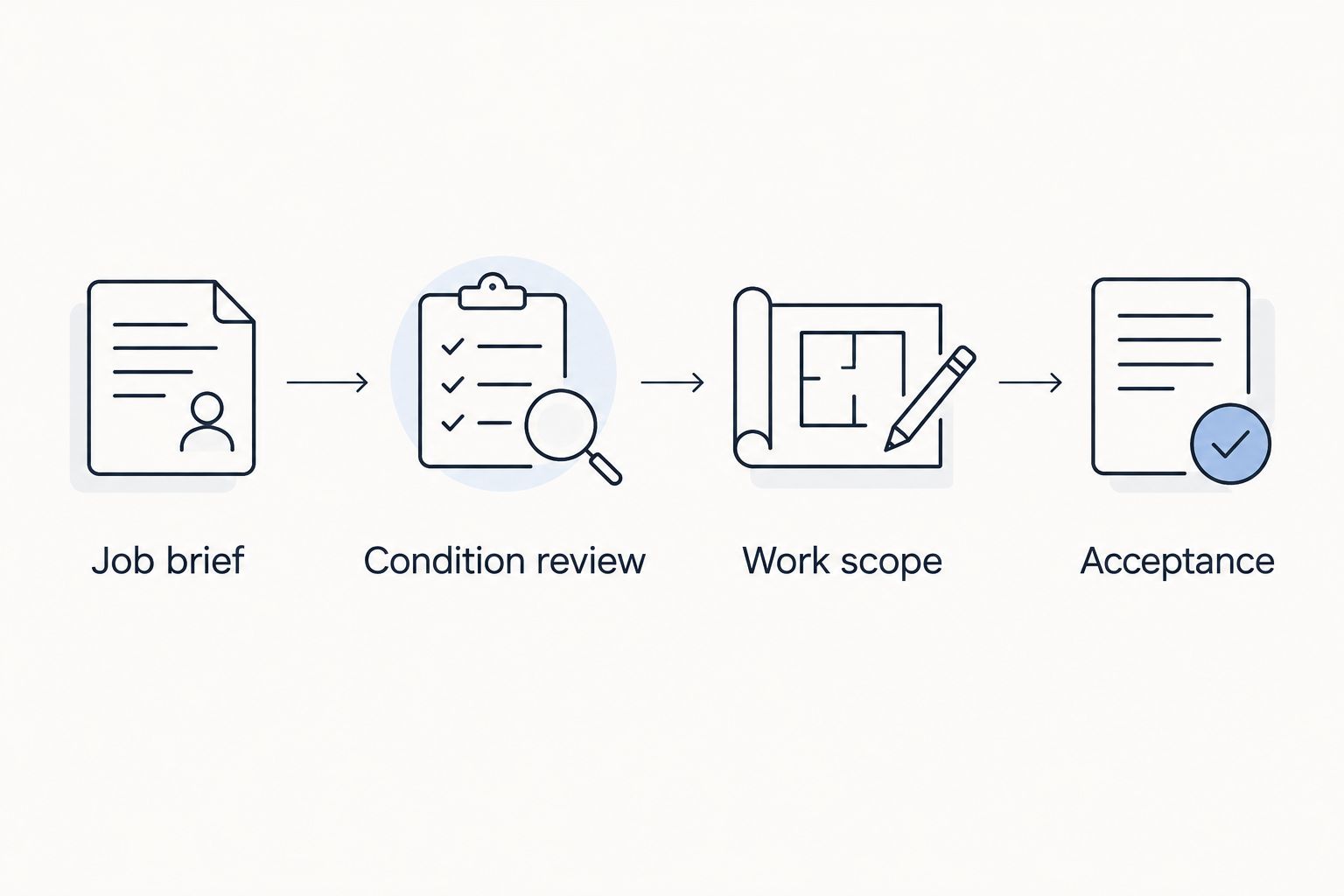
Use a clear sequence:
- Job brief: Define what the machine must do.
- Condition review: Establish its current condition.
- Work scope: Document the required corrective work.
- Acceptance: Confirm what must be demonstrated before handoff.
An operating demonstration answers different questions from a document review. Records help establish what work is reported; observation helps establish what the machine does during the inspection. Neither justifies assuming that every untested function is satisfactory.
For your 2026 comparison, give both sellers the same inspection questions. Different standards produce an unreliable comparison even when both proposals look detailed.
Rig Source wins tooling fit when its package matches your method
Choose Rig Source when the documented tooling package better matches your drilling work and existing equipment. That advantage must come from the itemized proposal, not assumptions about what normally accompanies a rig.
The marketplace competitor helps source drill tooling, augers, drill rod, casing, sampling equipment, and parts. Sourcing assistance and inclusion in a purchase are different things. Confirm which items transfer with the machine and which require a separate arrangement.
Ask for an itemized list with enough information to check compatibility and condition. A description such as tooling included is not a usable acceptance standard.
Check these points:
- Which tooling is included in the transaction?
- Which items are necessary for your intended drilling method?
- Which connections and interfaces require verification?
- What condition evidence accompanies used tooling?
- Which missing items remain your responsibility to source?
The best equipment package is the one that supports your actual work. Extra accessories do not compensate for missing essentials, and a rig-only proposal is not automatically worse if your existing tooling fits it.
Both proposals need explicit transportation responsibilities
The client’s stated services include helping customers source transportation, with equipment sales and shipping serving domestic and international customers. That support does not define the transport terms for a particular transaction.
Treat transportation as a written responsibility, not an assumed inclusion. Ask both sellers who arranges the carrier, who prepares the machine for collection, and what documentation accompanies handoff.
Your transport review should identify:
- The collection location and receiving location.
- The party responsible for confirming transport requirements.
- Any preparation, disassembly, loading, or unloading responsibilities.
- How loose tooling and accessories are documented.
- The process for recording condition at collection and receipt.
A proposal with clearer transport responsibilities can be easier to execute even when the underlying equipment is similar. Do not award either company a logistics advantage until the relevant commitments appear in writing.
Drill Rig Marketplace combines brokerage with workshop services
Its distinguishing offer is the combination of used rig sales and brokerage with a repair and rebuild operation. That creates a relevant option for equipment owners as well as buyers.
Best for an owner-contractor: a business that needs to sell equipment, source a replacement, and discuss preparation or refurbishment work within the same purchasing process. The company’s stated services cover those activities; the agreement still needs to identify which are included.
This is not a reason to choose unnecessary work. If your preferred Rig Source candidate meets the job brief and inspection standard without modifications, the additional workshop capabilities are not, by themselves, a better outcome.
Keep the distinction simple: a service capability answers who can discuss the work. A written scope answers what will actually be done.
Pricing models: separate the machine from the work
Compare transaction structure before comparing the headline proposal. Equipment purchase, brokerage, repair work, tooling sourcing, transportation, and financing assistance are distinct activities. Establish which apply to your transaction and how each is documented.
Ask both companies whether the proposal concerns a direct equipment purchase, a brokered transaction, service work, or a combination. Then identify the contracting parties and the approval process for changes.
For a purchase with repairs, request:
- A defined baseline scope.
- A process for approving additional work.
- A clear description of included equipment and tooling.
- Payment milestones tied to stated obligations.
- Written acceptance and handoff requirements.
The tradeoff is certainty versus flexibility. A defined scope gives you a clearer commitment; a scope that changes after inspection requires a clear approval process. Neither structure is automatically better.
For 2026 budgeting, compare equivalent deliverables. A machine-only proposal and a machine-plus-rebuild proposal answer different needs, even when they concern similar equipment.
Final verdict: choose the proposal that matches your buying problem
Choose Drill Rig Marketplace if you need equipment and service support
Best for: the contractor buying a used rig that requires specified repair, rebuilding, refurbishment, or a truck remount. The stated combination of equipment sourcing and workshop services directly matches that buying problem.
Proceed when the proposed machine meets your requirements and the written service scope addresses the inspection findings. Do not select the broader service offering merely because it exists.
Choose Rig Source if its inspected package is the better fit
Best for: the contractor with a clearly defined requirement and a Rig Source proposal that satisfies it with fewer unresolved tasks. Favor that proposal when equipment condition, tooling, acceptance, and handoff responsibilities are better aligned with your project.
The condition matters. This is not a claim that every Rig Source machine needs less work; it is the standard that would make Rig Source the better choice for your purchase.
One-glance scorecard
| Dimension | Winner |
|---|---|
| Best for | Match the seller’s written scope to your buying problem |
| Equipment fit | Rig Source when its inspected candidate meets the brief without adaptation |
| Repair and rebuild scope | Client’s stated service offering fits purchases requiring workshop work |
| Inspection and acceptance | Tie: require the same evidence from both |
| Tooling and supporting equipment | Rig Source when its documented package better matches your method |
| Transportation coordination | Tie until responsibilities are documented |
| Standout feature | Client’s combined sales, brokerage, and workshop offering |
| Pricing model and transaction terms | The proposal with clearer scope and change approval |
FAQ
Is Drill Rig Marketplace better than Rig Source?
Drill Rig Marketplace fits buyers seeking used equipment sourcing alongside repair, rebuild, or remount support. Choose Rig Source when its inspected equipment and written proposal better meet your requirements.
Which company should I choose for a used geotechnical drill rig?
Choose the company offering the machine that meets your drilling method, access, tooling, and condition requirements. Apply the same inspection and acceptance criteria to both candidates.
Can I arrange repairs alongside a used rig purchase?
The client’s stated services include inspections, repairs, complete rebuilds, and truck remounts. Confirm the specific work included in your transaction rather than assuming those services accompany every purchase.
Does a used drill rig include tooling?
Tooling inclusion is specific to the transaction. Request an itemized list and verify that the included tooling matches your drilling method and the machine’s interfaces.
What should I request before buying a used drilling rig?
Request a written equipment description, condition evidence, inspection access, an included-tooling list, and acceptance terms. Document any required repairs and transportation responsibilities separately.
Should I buy a rig that needs rebuilding?
Buy a rig requiring rebuilding only when the proposed machine and written work scope meet your operating requirements. Compare that route with an inspected candidate that does not require the same work.
How should I compare proposals in 2026?
Compare equivalent equipment and responsibilities, not just the headline proposal. Separate the machine, corrective work, tooling, transport, and acceptance requirements so differences remain visible.
One last thing
Use the acceptance checklist as a contract input, not a delivery-day reminder. Ask what would cause you to reject the rig, then turn those concerns into inspection questions and written requirements before committing.
That exercise exposes the real difference between proposals. A seller’s capabilities matter most when they resolve a specific requirement you have already identified.