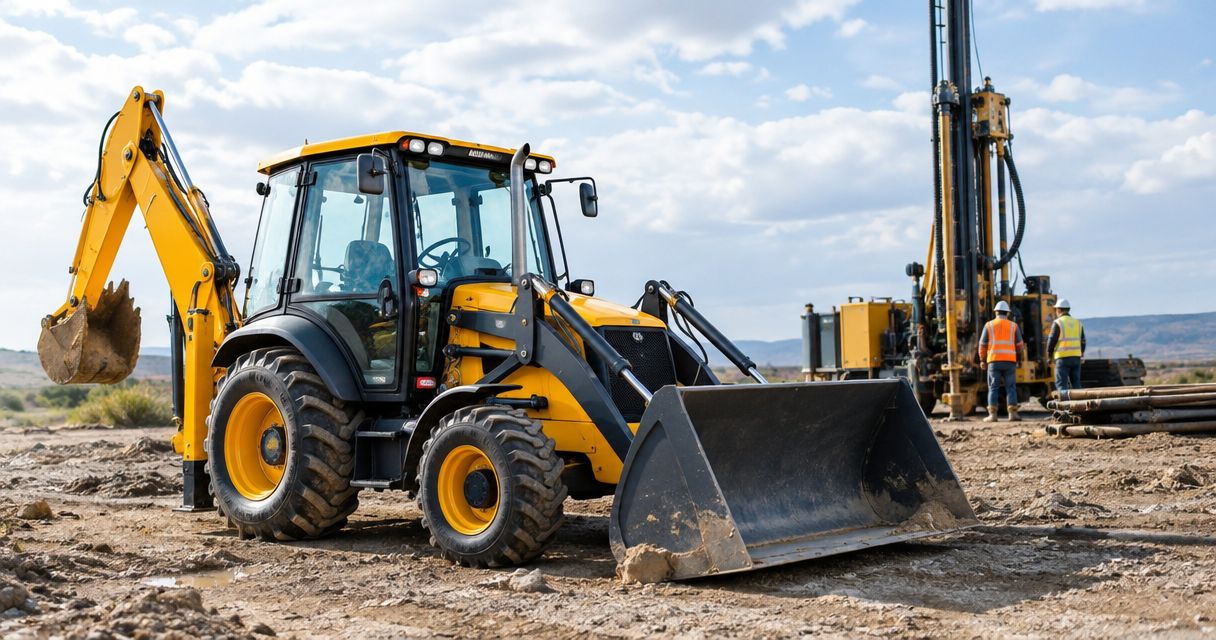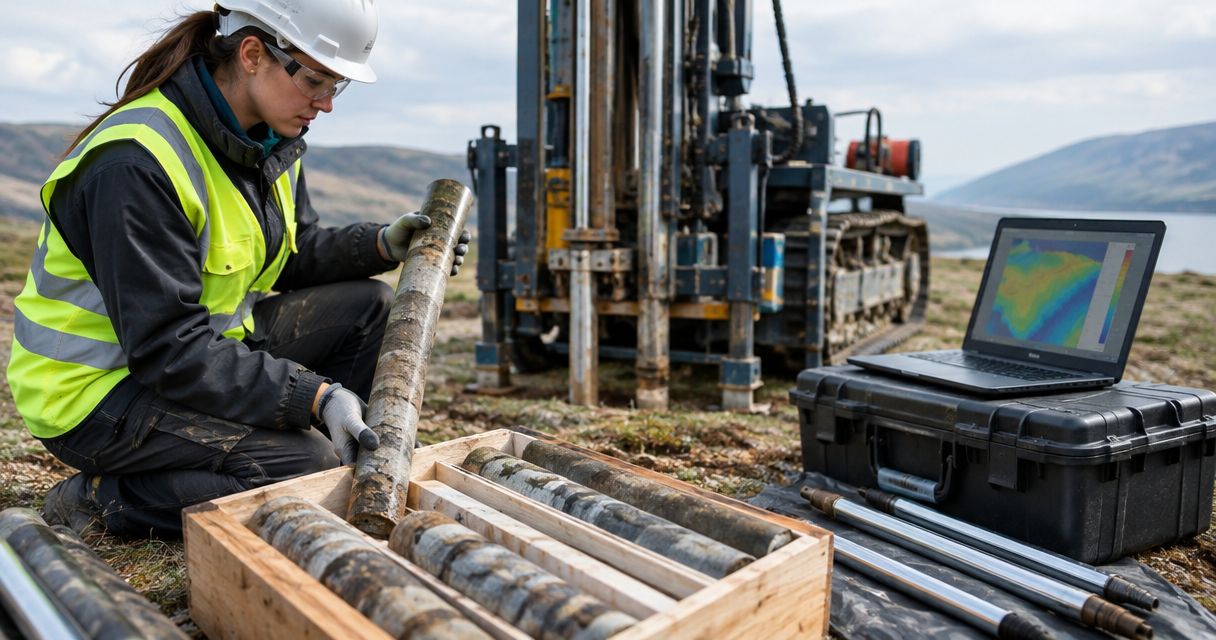
Best default for routine soil investigation: a split-spoon sampler. Best for cohesive-soil laboratory specimens: a thin-wall tube sampler. Best for fragile rock: a triple-tube core barrel. This 2026 guide compares sampling and coring tools for geotechnical drilling by formation, specimen requirements, and rig compatibility—not by manufacturer name.
- Split-spoon samplers are the default sampling and coring tools for geotechnical drilling programs requiring SPT data.
- Thin-wall tubes suit cohesive-soil laboratory specimens; piston samplers add control for soft, sensitive soils.
- Double-tube barrels suit competent rock; triple-tube barrels add protection for fractured or weak rock.
- Drill Rig Marketplace helps source sampling equipment, drill tooling, rod, and casing; confirm compatibility before ordering.
Why this matters
Choose the required sample before choosing the tool. A disturbed soil sample can support identification, but it does not preserve the structure needed for every strength or consolidation test. A recovered rock cylinder is not automatically an adequate record of the rock mass, either.
Drill Rig Marketplace helps drilling professionals source sampling equipment and associated tooling. That sourcing support is useful when you need matching rod, casing, and connections; the investigation specification still determines which sampling method is acceptable.
For a 2026 investigation, write down the required field tests, laboratory tests, anticipated formations, and sample-handling procedure before selecting a tooling package. This prevents a technically usable attachment from becoming the wrong sampling method.
What makes the best sampling and coring tools?
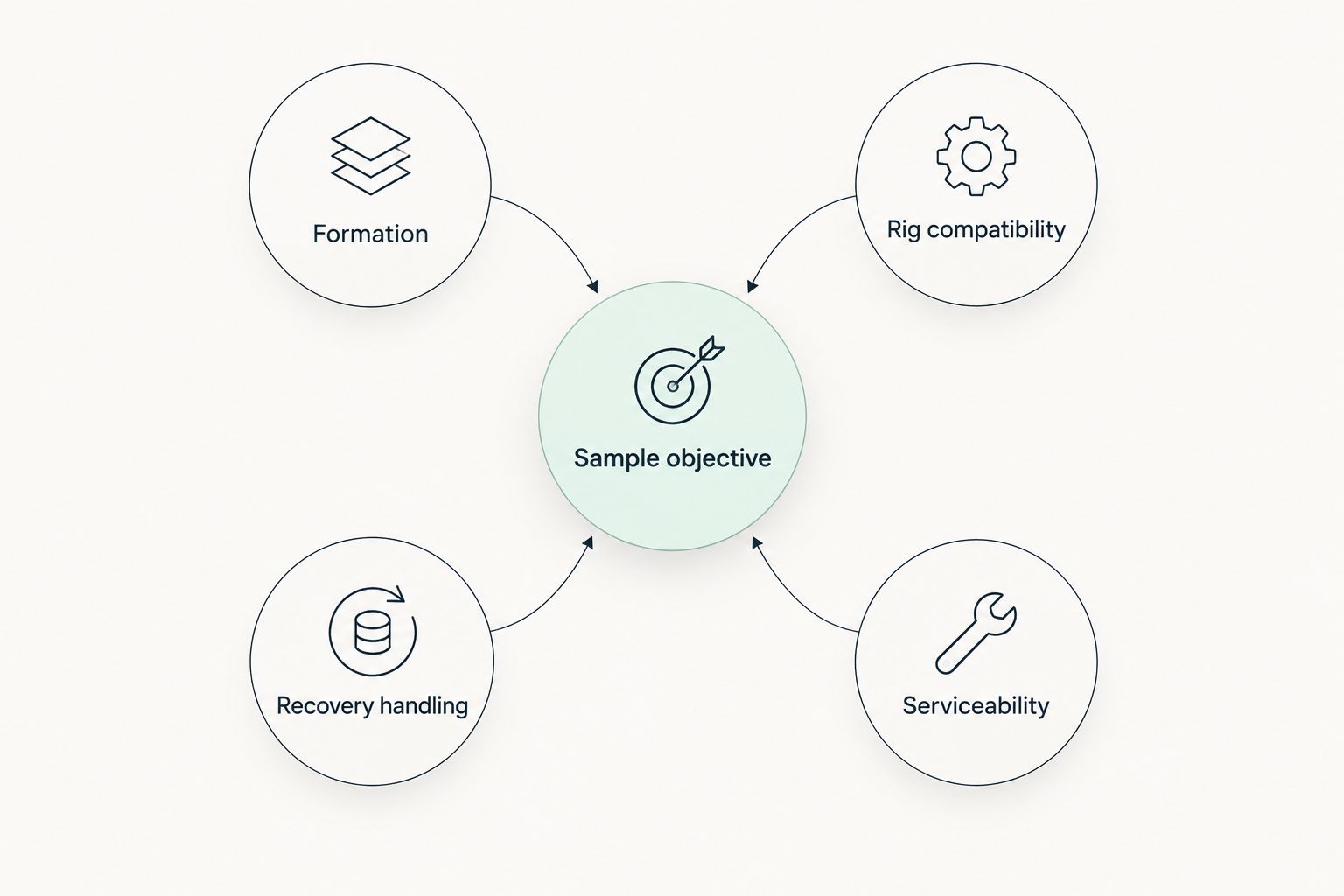
Judge each option against these criteria before reading the ranking:
- Formation: Match the cutting or penetration method to cohesive soil, granular soil, competent rock, or fractured rock.
- Sample objective: Separate disturbed identification samples, laboratory specimens, penetration measurements, and rock-core records.
- Rig compatibility: Confirm connections, clearances, feed control, rotation, fluid delivery, and retrieval equipment.
- Recovery handling: Assess how the specimen enters the tool, stays inside it, and leaves it without additional damage.
- Serviceability: Check cutting edges, retainers, seals, bearings, and replacement components—not just the outer body.
The best 2026 choice satisfies the investigation's acceptance requirements and the rig's operating limits. A familiar tool that cannot preserve the required specimen is the wrong choice.
Sampling and coring tools at a glance
These are equipment categories, not interchangeable products. Wireline describes a retrieval system; double-tube and triple-tube describe barrel arrangements, so a wireline system can incorporate either arrangement.
| Rank and tool | Best for | Standout feature | Key limitation |
|---|---|---|---|
| 1. Split-spoon sampler | Routine soil investigation requiring SPT | Opens lengthwise for sample examination | Produces disturbed samples |
| 2. Thin-wall tube sampler | Cohesive-soil laboratory specimens | Push sampling with a thin cutting wall | Poor fit for gravel and hard inclusions |
| 3. Piston sampler | Soft, sensitive cohesive soils | Controls soil entry with a piston | Requires correct operation and more setup |
| 4. Double-tube core barrel | Competent-rock coring | Separates the inner core container from the outer cutting assembly | Less protective than triple-tube systems for fragile core |
| 5. Triple-tube core barrel | Weak, fractured, or weathered rock | Adds a removable liner for handling | Additional components and handling requirements |
| 6. Wireline coring system | Repeated core retrieval in deeper holes | Retrieves the inner assembly through the drill string | Requires a matched wireline equipment system |
1. Split-spoon sampler: best for routine SPT soil investigations
A split-spoon sampler collects a disturbed soil sample while supporting the Standard Penetration Test when used with the prescribed equipment and procedure. Its barrel separates lengthwise, allowing you to inspect and remove the recovered material.
Under ASTM D1586/D1586M, the standard sampling drive covers 18 inches, divided into 6-inch increments. The reported SPT blow count uses the final 12 inches, subject to the standard's termination and reporting provisions. Treat those dimensions as procedure requirements, not proof that any hammer-and-sampler combination produces comparable results.
Split-spoon sampler pros:
- Collects material for visual description and identification.
- Supports a specified penetration-testing procedure.
- Opens for direct examination of the recovered sample.
Split-spoon sampler cons:
- Driving disturbs the specimen's original structure.
- Gravel, obstructions, and equipment differences complicate interpretation.
Best for: Contractors completing soil investigations that explicitly require SPT measurements and disturbed samples.
Inspect the shoe, barrel, threads, and retention arrangement. Also verify the hammer system and reporting requirements; the sampler alone does not define the test.
Verdict: Buy for specified SPT work; skip as the sole tool for structure-sensitive laboratory specimens.
2. Thin-wall tube sampler: best for cohesive-soil laboratory specimens
A thin-wall tube sampler pushes a cutting tube into suitable soil to recover a relatively undisturbed specimen. The word relatively matters: penetration, stress relief, extraction, transport, and laboratory preparation can all alter the material.
Thin-wall sampling is associated with ASTM D1587/D1587M for fine-grained soils. Confirm the specification's required tube geometry and procedure rather than accepting a tube solely because its nominal diameter fits the rig.
Thin-wall tube sampler pros:
- Preserves cohesive-soil structure better than driven split-spoon sampling under suitable conditions.
- Collects specimens for laboratory programs requiring reduced disturbance.
- Allows a defined sample interval to remain inside a protective tube.
Thin-wall tube sampler cons:
- Gravel and hard inclusions damage cutting edges or disrupt entry.
- Poor pushing, extraction, or handling can negate the sampling advantage.
Best for: Cohesive-soil investigations requiring specimens for appropriate strength, consolidation, or other structure-sensitive tests.
Inspect the cutting edge and tube straightness. Specify sealing, orientation, identification, and transport requirements before the crew begins sampling.
Verdict: Buy for suitable cohesive soils; skip where coarse inclusions prevent controlled penetration.
3. Piston sampler: best for soft, sensitive cohesive soils
A piston sampler uses a piston within the sampling assembly to control soil entry during the sampling operation. Designs differ, so the crew must understand how the selected piston moves or remains positioned relative to the tube.
This category belongs in the decision tree when soft or sensitive cohesive soil requires more entry control than a basic open tube provides. It is not a universal substitute for every thin-wall sampling operation.
Piston sampler pros:
- Controls entry into the sampling tube.
- Helps limit unwanted material entering before the intended sampling stroke.
- Provides a method suited to demanding soft-soil specimen requirements.
Piston sampler cons:
- Incorrect piston positioning compromises the sample.
- Seals, controls, and assembly procedures add maintenance and operating demands.
Best for: Soft-soil programs where specimen quality justifies a controlled piston-sampling method.
Check seals, piston movement, and the full operating sequence before mobilization. Give the laboratory the sampling-method record, not just the sample label.
Verdict: Buy when the specified soft-soil method requires piston control; hold if the crew cannot execute the procedure correctly.
4. Double-tube core barrel: best for competent-rock coring
A double-tube core barrel uses an outer cutting assembly and a separate inner tube to receive rock core. In swivel-head configurations, the inner tube is isolated from the outer assembly's rotation, reducing direct rotational disturbance of the core.
For competent rock, this arrangement provides a practical starting point. Match the bit, core lifter, fluid path, and barrel configuration to the formation rather than treating the barrel as a complete solution by itself.
Double-tube core barrel pros:
- Separates the core container from the outer cutting assembly.
- Provides an established arrangement for recovering competent-rock core.
- Supports examination of recovered rock for lithology and discontinuities.
Double-tube core barrel cons:
- Weak or fractured material still breaks or washes away.
- Blockage and worn retention components reduce recovery.
Best for: Rock investigations dominated by competent formations where a removable liner is not required by the sampling plan.
Check bearing condition, core-lifter fit, bit wear, and fluid routing. Rig selection matters too; the used diamond-core drilling rig guide covers the equipment category supporting this work.
Verdict: Buy for competent-rock programs; hold when fragile intervals require additional handling protection.
5. Triple-tube core barrel: best for fragile-rock specimen handling
A triple-tube core barrel adds a liner inside the inner barrel, providing another layer of support for the recovered core. Depending on the design, the liner allows you to remove and examine the specimen with less direct manipulation.
This is the stronger category choice for weak, weathered, or fractured rock when preserving the recovered arrangement matters. It does not eliminate losses caused by inappropriate fluid delivery, bit selection, or drilling technique.
Triple-tube core barrel pros:
- Supports fragile material during removal and transfer.
- Reduces direct handling of loose core fragments.
- Helps preserve the recovered sequence for examination.
Triple-tube core barrel cons:
- Liners and additional components create more handling tasks.
- Formation washout and drilling-induced breakage remain possible.
Best for: Geotechnical rock investigations where weak intervals and fragment relationships require careful preservation.
Specify liner handling and core-box transfer before drilling. A well-recovered run loses value when fragments are rearranged during unloading.
Verdict: Buy for fragile-core handling requirements; skip the assumption that an extra tube guarantees complete recovery.
6. Wireline coring system: best for repeated retrieval in deeper holes
A wireline coring system retrieves the inner core assembly through the drill string using a compatible retrieval assembly. You do not need to withdraw the entire string for each routine core retrieval, although servicing or changing outer components still requires other operations.
Wireline is a workflow choice, not a separate promise of specimen quality. Select the appropriate barrel arrangement within the system and verify the rods, latch, overshot, cable, and retrieval equipment together.
Wireline coring system pros:
- Retrieves the inner assembly without pulling the complete drill string each run.
- Keeps the outer drilling assembly in the hole during routine retrieval.
- Supports repeated coring operations where retrieval logistics matter.
Wireline coring system cons:
- Components must belong to a compatible system.
- Retrieval faults require correct diagnosis and recovery procedures.
Best for: Programs with repeated core runs where full-string withdrawal creates unnecessary handling.
Verdict: Buy when the drilling program and rig justify wireline retrieval; hold if system compatibility remains unresolved.
How the ranking works
This 2026 ranking starts with routine soil-investigation needs, then separates tools by specimen objective and formation. It ranks application fit—not manufacturer quality, field-tested performance, or a universal recovery rate.
Split-spoon sampling is the default only for programs requiring its testing and sampling functions. Thin-wall and piston sampling address different cohesive-soil requirements; double-tube, triple-tube, and wireline choices address rock recovery and retrieval.
Drill Rig Marketplace is best for drilling contractors who need help sourcing sampling equipment alongside drill tooling, rod, and casing. Sourcing assistance does not replace the engineer's sampling specification or the manufacturer's compatibility documentation.
Which sampling and coring tools should you choose?
For your 2026 tooling order, make the selection in this sequence:
- Define the deliverable: Specify the field measurement, laboratory specimen, or rock-core record required.
- Identify the formation: Separate soil sampling from rock coring and flag difficult intervals.
- Confirm the system: Check the rig, rod connections, casing clearance, fluid arrangement, and retrieval method.
- Plan the handling: Define sealing, orientation, transport, liner removal, and core-box procedures.
If you are undecided, start with the investigation specification—not a universal sampler kit. Choose a split-spoon sampler for required SPT work, a thin-wall tube for suitable cohesive-soil specimens, and a double-tube barrel for competent rock. Move to piston sampling or triple-tube coring when specimen requirements demand those functions.
When asking Drill Rig Marketplace for sourcing assistance, provide the rig details, existing tooling connections, target formation, and required sampling method. Those details turn a general equipment request into a compatibility check.
Source your sampling equipment
Provide your rig details, tooling connections, formation, and required sampling method.
FAQ
What's the best sampling tool for a routine geotechnical investigation?
A split-spoon sampler is the default when the investigation requires SPT measurements and disturbed soil samples. Use a separate suitable method when laboratory tests require preserved soil structure.
Is a thin-wall tube better than a split-spoon sampler?
A thin-wall tube is better for suitable cohesive-soil specimens that need reduced disturbance. A split-spoon sampler serves a different purpose: driven sampling and SPT measurements under the specified procedure.
When should I choose a piston sampler?
Choose a piston sampler when soft or sensitive cohesive soil requires controlled sample entry under the investigation's sampling plan. Correct piston operation and specimen handling remain essential.
Is triple-tube coring better than double-tube coring?
Triple-tube coring is the stronger choice when fragile core needs liner-supported handling. Double-tube coring remains an appropriate category for competent rock when the specification does not require that added protection.
Does wireline coring guarantee better rock samples?
No, wireline describes how the inner assembly is retrieved, not a guaranteed sample-quality improvement. Barrel configuration, drilling technique, formation, and handling still determine the recovered specimen's condition.
Can I use any sampler on my existing drill rig?
No, you must confirm compatibility across the sampler, connections, rod, casing clearance, rig controls, and supporting equipment. Matching one thread does not establish compatibility for the complete operation.
What should I send Drill Rig Marketplace when sourcing tools?
Send Drill Rig Marketplace your rig details, existing tooling connections, anticipated formation, and required sampling method. Include the investigation's specimen and handling requirements so the sourcing request describes the actual application.
One last thing
A full core box does not prove a good rock-quality record. Rock Quality Designation distinguishes qualifying sound core pieces from total recovery; recognize drilling-induced breaks before interpreting the recovered material. Keep run depths, recovery records, and handling notes with the core so the engineer can assess what the drilling process changed.