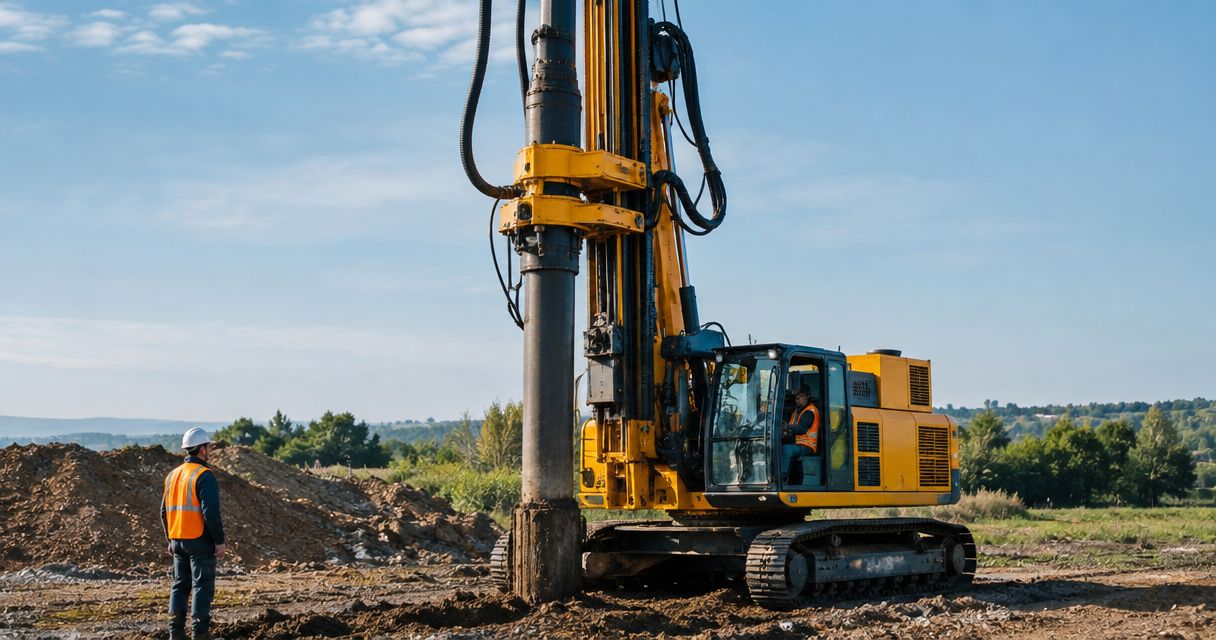
Best overall: an inspected sonic rig with a compatible tooling package. Best for restricted access: a compact crawler-mounted sonic rig. Best for road-based work: a truck-mounted sonic rig. This 2026 guide ranks buying configurations for contractors comparing sonic drill rigs for sale, with inspection and repair support from Drillrigmarketplace.
- For sonic drill rigs for sale, choose an inspected package matched to your sampling, casing, and access requirements.
- Compact crawler-mounted sonic rigs suit restricted access; truck-mounted configurations suit work organized around road access.
- Drillrigmarketplace serves used drilling equipment buyers and provides inspections, repairs, and rebuilds.
- Treat sonic-head condition, tooling compatibility, and documented operation as purchase gates, not finishing details.
Why this matters
A used sonic rig is a drilling system, not just a carrier with a mast. The sonic head, hydraulic system, feed mechanism, tooling, casing, and handling equipment must work together for your intended method.
For a 2026 purchase, begin with the jobs you need to complete. A machine that fits the access route but cannot support your required sampling setup is the wrong purchase. So is a capable drilling package that cannot enter the site or travel within the applicable transport limits.
Drillrigmarketplace is a buying and repair resource for contractors comparing used sonic drill rigs. Its services include inspections, hydraulic repairs, electrical and safety-system repairs, drivetrain repairs, and complete rebuilds. Use that support to investigate condition and define repair scope, not as a substitute for proving that the machine fits your work.
What makes the best used sonic drill rig?
Use these criteria before comparing machines. Manufacturer reputation alone does not establish the condition or suitability of an individual used rig.
- Method fit: Confirm the required sample type, borehole diameter, casing arrangement, and drilling method against the exact rig configuration.
- Sonic-head condition: Require operating evidence and a qualified inspection of the head, its mounting, controls, and associated hydraulic circuits.
- Tooling compatibility: Identify the rod, casing, core barrels, adapters, and handling components included in the transaction. Verify that they belong together.
- Access and transport: Check measured dimensions, operating weight, ground conditions, transport arrangements, and carrier documentation.
- Serviceability: Identify the exact head and component models, their service requirements, and a repair route before committing.
- Condition evidence: Favor maintenance records, a meaningful operating demonstration, and a written defect list over fresh paint or an undocumented refurbishment claim.
Separate mandatory requirements from preferences. If environmental sampling requires a particular casing and sample-handling arrangement, that requirement takes priority over carrier style. If the route into the site excludes the machine, drilling capability cannot rescue the choice.
Used sonic drill rigs at a glance
These 2026 rankings describe configurations to evaluate, not specific models or individual machines. Each option has a distinct buying purpose; the inspection determines whether a particular rig qualifies.
| Ranked configuration | Best for | Standout advantage | Key limitation |
|---|---|---|---|
| Inspected complete sonic package | Contractors establishing a matched drilling system | Rig and tooling evaluated together | Included equipment still needs item-by-item verification |
| Compact crawler-mounted sonic rig | Work with restricted site access | Carrier configuration suited to evaluating confined routes | Compact dimensions do not establish drilling capacity |
| Truck-mounted sonic rig | Projects organized around road access | Drilling equipment mounted on a road-going carrier | Truck condition and road compliance add another inspection scope |
| Larger crawler-mounted sonic rig | Jobs requiring substantial tooling and casing handling | Configuration to evaluate for handling-intensive work | Transport and site access need close scrutiny |
| Sonic rig rebuild candidate | Owners with workshop support and a defined repair plan | Opportunity to restore a suitable underlying platform | Unknown defects can expand the project scope |
1. Inspected complete package: best for establishing sonic capability
An inspected complete sonic package is the default choice for a contractor building a working drilling system. Evaluate the rig alongside its actual rod, casing, sampling tools, adapters, and handling equipment rather than treating those components as separate purchases.
Complete does not mean suitable. Ask for an itemized equipment list and compare it with the intended drilling method. A collection of tooling is not a matched package until the interfaces, dimensions, condition, and operating requirements are checked.
Complete sonic package pros:
- Allows the machine and drilling tools to be evaluated as one system.
- Makes missing adapters and handling components easier to identify before purchase.
- Supports a demonstration using the tooling you intend to operate.
- Gives the inspector a defined scope beyond the carrier and engine.
Complete sonic package cons:
- Included tooling can be worn, mismatched, or unsuitable for your method.
- A strong carrier inspection does not establish sonic-head condition.
- An operating demonstration does not prove performance in every formation.
Best for: Contractors establishing sonic capability who need a coordinated equipment package rather than a bare rig.
Verdict: Buy an inspected complete package when the machine, tooling, and intended method are demonstrably compatible.
2. Compact crawler-mounted sonic rig: best for restricted access
A compact crawler-mounted configuration belongs on your shortlist when access controls the equipment choice. Evaluate the actual machine against gates, corners, overhead obstructions, slopes, and the working area around the proposed borehole.
Do not interpret compact as light, low-impact, or automatically suitable for sensitive ground. Obtain the machine's measured dimensions and operating weight, then assess the route and drilling position. Confirm room for the mast, tooling, support equipment, and safe handling—not just room to drive through.
Compact crawler-mounted sonic rig pros:
- Makes site-entry dimensions a clear early selection criterion.
- Provides a configuration to evaluate for work away from road access.
- Can align the buying decision with constrained drilling locations when measurements confirm fit.
Compact crawler-mounted sonic rig cons:
- Restricted machine dimensions do not establish adequate feed or handling capability.
- Tracks do not remove ground-bearing, slope, or surface-protection requirements.
- Carrier access does not guarantee enough room to operate the drilling system.
Best for: Contractors whose jobs depend on reaching confined or restricted drilling locations.
Verdict: Buy only after checking both the travel envelope and the operating envelope. Skip any machine that fits the entrance but not the work area.
3. Truck-mounted sonic rig: best for road-based projects
A truck-mounted sonic configuration suits a buying process centered on road access and a vehicle-mounted drilling platform. Inspect the drilling equipment and truck as separate systems, then assess their integration.
Review the chassis, drivetrain, brakes, steering, mounting structure, and applicable vehicle documentation. Confirm the configured vehicle's dimensions and weights against the intended routes and jurisdictional requirements. Road suitability does not establish stable setup at the drilling location; that needs its own assessment.
Truck-mounted sonic rig pros:
- Combines a drilling platform with a road-going carrier.
- Gives road-based contractors a familiar carrier inspection framework.
- Allows chassis service needs to be distinguished from drilling-system repairs.
Truck-mounted sonic rig cons:
- Adds truck condition and vehicle compliance to the purchase review.
- Requires suitable access and setup conditions at the borehole.
- Chassis or mounting defects can interrupt an otherwise usable drilling system.
Best for: Contractors whose project locations and operating model favor a road-going drilling platform.
Verdict: Buy when both the truck and sonic system pass inspection. Hold when the carrier's documentation or mechanical condition remains unresolved.
4. Larger crawler-mounted sonic rig: best for handling-intensive work
A larger crawler-mounted sonic rig is a configuration to evaluate when the job requires substantial tooling, casing, and handling equipment. Size alone proves nothing. Check the exact machine's documented feed, mast, lifting, and tooling limits against the planned operation.
Work backward from the drilling plan. Establish the required casing arrangement and handling procedure, then determine whether the rig supports them safely. Include the space and equipment needed to move tooling around the machine.
Larger crawler-mounted sonic rig pros:
- Provides a configuration to assess for handling-intensive drilling programs.
- Encourages the buyer to evaluate mast, feed, and tooling-handling capability together.
- Can suit a defined demanding application when documented limits match the job.
Larger crawler-mounted sonic rig cons:
- Requires careful transport planning using actual dimensions and weights.
- Can be excluded by confined access or limited operating space.
- A larger footprint does not prove better sampling results or mechanical condition.
Best for: Contractors with a defined casing and tooling-handling requirement that a smaller configuration does not meet.
Verdict: Buy for a documented operating requirement, not because a larger machine looks more capable.
5. Sonic rig rebuild candidate: best for repair-ready owners
A sonic rig rebuild candidate is appropriate when you already have a repair strategy and the underlying configuration fits your work. It is not the default choice for a contractor needing a ready-to-operate drilling system.
Drillrigmarketplace operates a repair and rebuild facility in Beaver, West Virginia. Its stated services include hydraulic, electrical, safety-system, and drivetrain repairs, fabrication, refurbishment, and complete rebuilds. For a sonic candidate, confirm the specific head-service scope and component requirements before defining the project.
Sonic rig rebuild candidate pros:
- Allows repairs to be organized around a defined operating requirement.
- Gives an owner a route to retain or restore a suitable platform.
- Makes documented defects the basis of a repair plan rather than an after-purchase surprise.
Sonic rig rebuild candidate cons:
- Hidden defects can expand the agreed repair scope.
- Parts identification and component support must be resolved before work begins.
- Cosmetic refurbishment does not establish mechanical readiness.
Best for: Equipment owners with repair support, a written scope, and no unresolved question about the rig's intended role.
Verdict: Hold until inspection, component identification, and the rebuild scope are complete. Skip a candidate whose core configuration does not fit your work.
Inspect the system before choosing the carrier
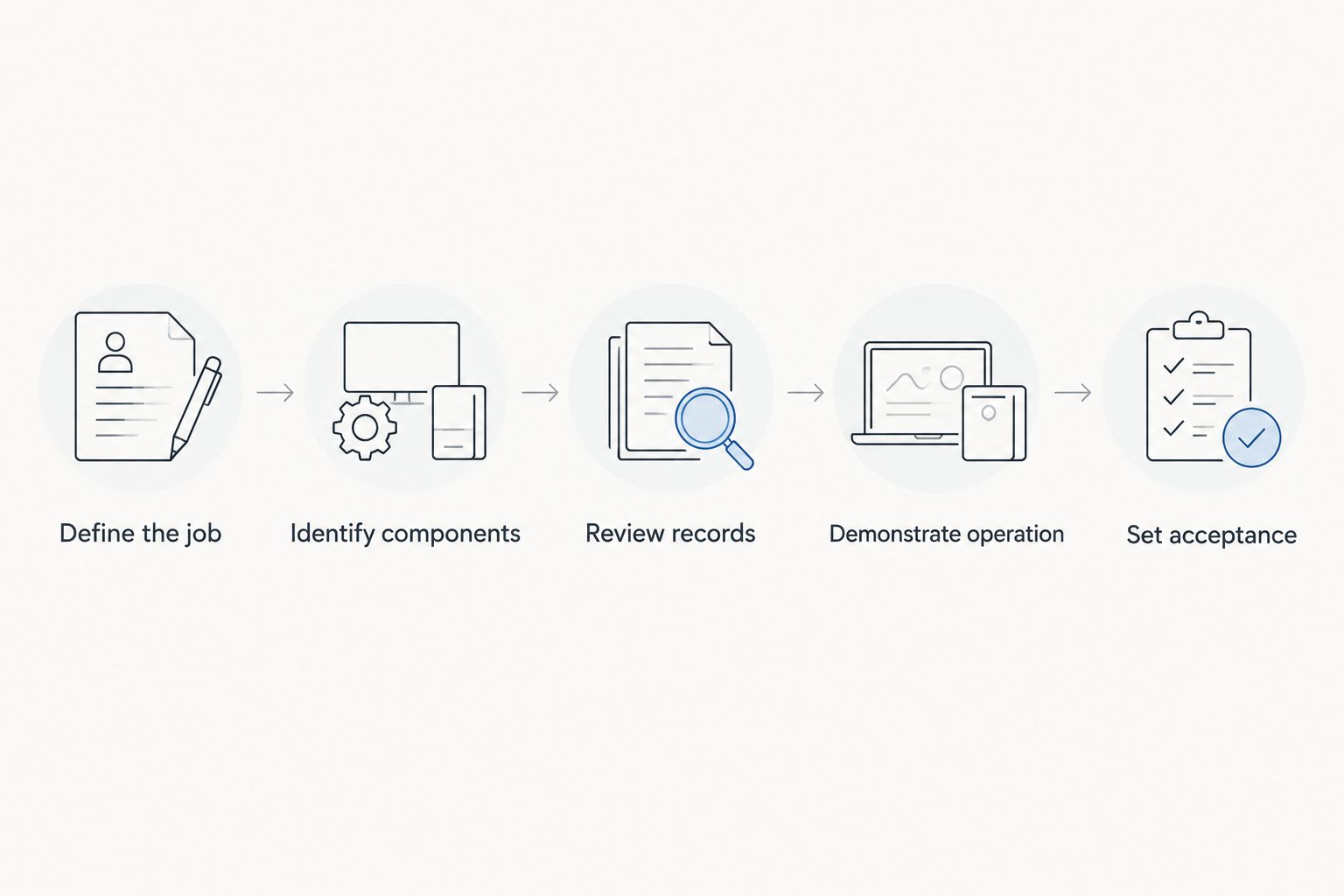
For a 2026 evaluation, follow a sequence that exposes fundamental problems before discussing refurbishment. A rig should progress through each gate; a failure sends it back for clarification or repair planning.
- Define the job: Record the sampling method, casing arrangement, access constraints, and required tooling.
- Identify components: Confirm the machine identity, sonic-head model, carrier, hydraulic components, and included tools.
- Review records: Compare maintenance and repair documents with the machine's current condition.
- Demonstrate operation: Have qualified personnel demonstrate the relevant controls and drilling functions under appropriate conditions.
- Set acceptance: Record defects, agreed repairs, included equipment, and the evidence required before accepting the machine.
Keep the demonstration tied to the purchase decision. Watching the engine run is not equivalent to observing the sonic system operate. Ask the inspector to distinguish what was demonstrated, what was examined, and what still requires investigation.
Drillrigmarketplace helps customers source tooling, parts, transportation, and equipment financing alongside its used-equipment sales and brokerage work. Bring a defined requirement and equipment list to that conversation so the discussion stays focused on the full drilling system.
Discuss your sonic rig requirements
Match your drilling method, access constraints, and inspection needs to a used-equipment purchase.
How the configurations rank
The 2026 ranking prioritizes method fit, condition evidence, tooling compatibility, access, transport, and serviceability. An inspected complete package ranks first because it makes the whole drilling system the purchase unit; the remaining options address specific operating constraints.
This is a configuration-based buying guide, not a claim that one manufacturer or model outperforms another. Apply the criteria to individual machines. A well-documented rig that fits your work outranks a poorly documented machine with a more attractive specification sheet.
Which used sonic drill rig should you choose?
Choose an inspected complete sonic package unless a specific access, transport, or handling requirement points elsewhere. Move to a compact crawler configuration when restricted access governs the job, or a truck-mounted configuration when road-based operation governs the carrier choice.
Choose a larger crawler configuration only for a documented equipment-handling requirement. Treat a rebuild candidate as a repair project with a defined scope, not as an operating rig whose defects you will sort out later.
FAQ
What's the best option when comparing sonic drill rigs for sale?
An inspected sonic rig with a compatible tooling package is the default choice. Confirm method fit, sonic-head condition, access, and included equipment before choosing the individual machine.
Is a compact crawler-mounted sonic rig better than a truck-mounted rig?
A compact crawler configuration is the better candidate when restricted site access governs the purchase; a truck-mounted configuration suits a road-based operating requirement. Compare actual dimensions, setup needs, and carrier condition rather than relying on the configuration name.
What should I inspect on a used sonic drill rig?
Inspect the sonic head, hydraulic system, feed mechanism, mast, controls, safety systems, carrier, and tooling. Use qualified personnel and document which functions were demonstrated and which require further investigation.
Does included tooling make a used sonic rig a complete package?
Included tooling makes a complete package only when it matches the rig and intended drilling method. Verify the rod, casing, barrels, adapters, handling components, and their condition against an itemized list.
Should I buy a sonic drill rig that needs rebuilding?
Buy a rebuild candidate only with a suitable underlying configuration and a defined repair plan. Resolve component identity, service support, defects, and acceptance requirements before committing.
Can Drillrigmarketplace help with used sonic drilling equipment?
Drillrigmarketplace provides used drilling equipment sales and brokerage, inspections, repairs, rebuilds, and help sourcing tooling and parts. Discuss the specific sonic-head requirements and service scope for the machine you are evaluating.
What matters most when buying a used sonic rig in 2026?
Documented condition and fit for your drilling method matter most in 2026. Carrier style, appearance, and included accessories do not replace a system-level inspection and meaningful operating evidence.
One last thing
Ask for the tooling list before arranging the final inspection. A rig can demonstrate mechanical operation yet still lack the adapters, casing, or sampling components required for your jobs. Make those interfaces part of acceptance—not a problem discovered during mobilization.