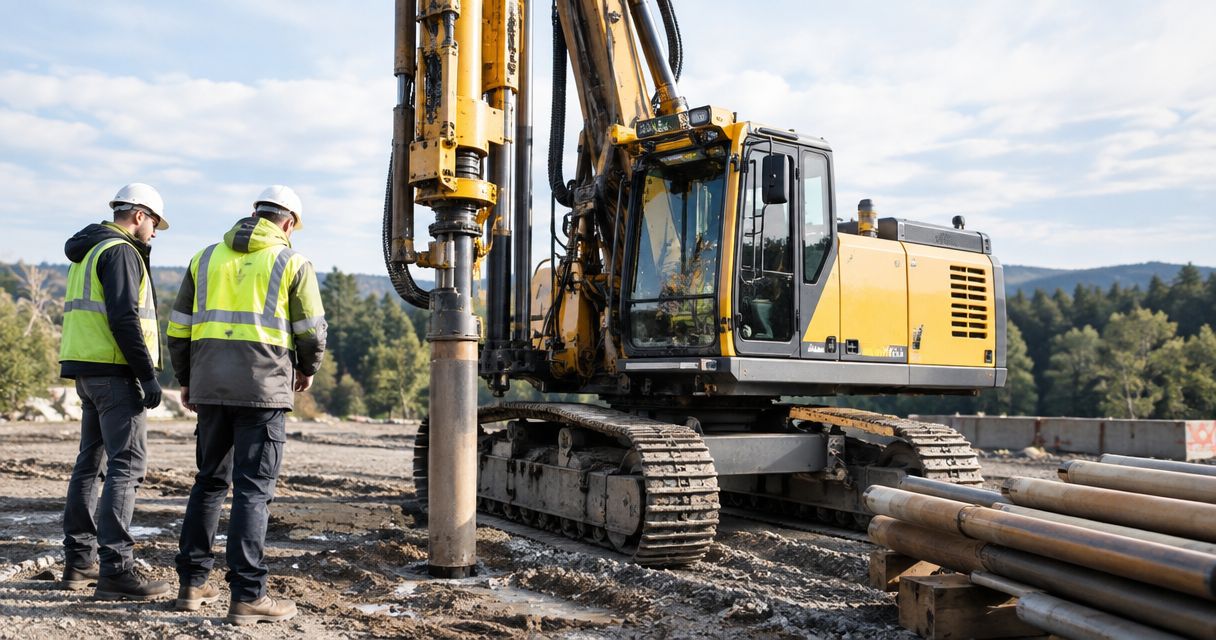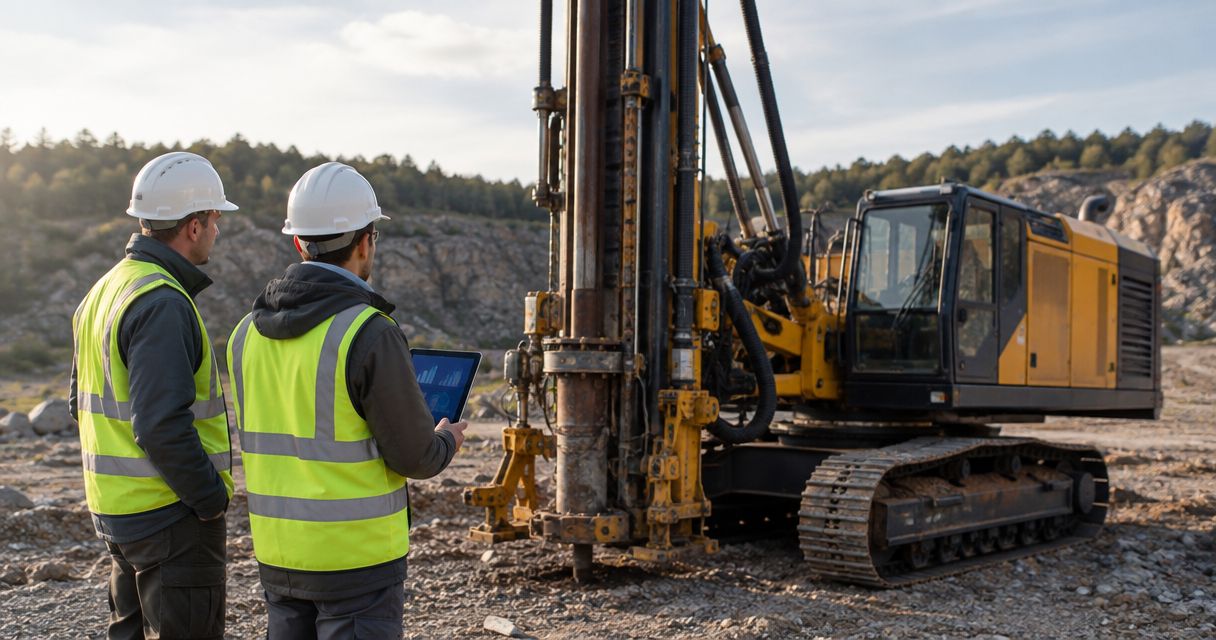
A used geotechnical drill rig requires a machine-specific quote in 2026; the model name alone does not establish what you should pay. Your purchase budget also needs to cover inspection, required repairs, missing tooling and transportation—not just the equipment transaction. Compare rigs against the same drilling scope and documented condition before choosing one.
- How much does a used geotechnical drill rig cost? Get a machine-specific quote, not a model-only estimate.
- Compare used drill rigs by condition, included tooling, carrier condition and transportation requirements.
- Drill Rig Marketplace suits contractors seeking used geotechnical drilling equipment and repair support.
- Separate required mechanical work from cosmetic refurbishment before approving a purchase.
Why this matters
The useful comparison is the equipment you can put to work, not the rig described in the headline. A machine with incomplete tooling or unresolved hydraulic problems creates a different buying decision from an inspected rig with a documented repair scope.
Start with an inspection-to-rebuild workflow. Establish what needs attention before deciding whether to buy the machine, negotiate the scope or evaluate another rig.
For a 2026 purchase, keep the equipment quote, inspection findings and work requirements together. That gives you a decision record instead of a collection of listings that describe different packages.
How much does a used geotechnical drill rig cost in 2026?
The cost of a used geotechnical drill rig depends on the particular machine, its condition and what the transaction includes. Ask for a written equipment quote and a separate account of everything needed to prepare it for your work. An asking amount does not establish mechanical condition or confirm that the required tools are included.
Use the following breakdown when requesting a quote. Each category needs an explicit inclusion, exclusion or separate scope—not an assumption.
| Budget category | What to establish | What the equipment quote does not answer by itself |
|---|---|---|
| Drill rig | Exact machine, configuration and included equipment | Whether it matches your drilling program |
| Inspection | Systems checked, findings and unresolved questions | Whether a demonstration covered the relevant functions |
| Mechanical work | Hydraulic, electrical, safety and drivetrain repairs | Which defects need correction before operation |
| Carrier work | Truck condition and any proposed remount scope | Whether the carrier needs separate attention |
| Tooling | Augers, drill rod, casing and sampling equipment included | What you still need to source |
| Transportation | Pickup, destination and loading responsibilities | What moving the equipment involves |
| Financing | Written financing terms, if applicable | The terms that apply to your transaction |
Keep the equipment description attached to the quote. If the seller changes what is included, request an updated document so that you are not comparing different packages under the same machine name.
How to build a usable purchase budget
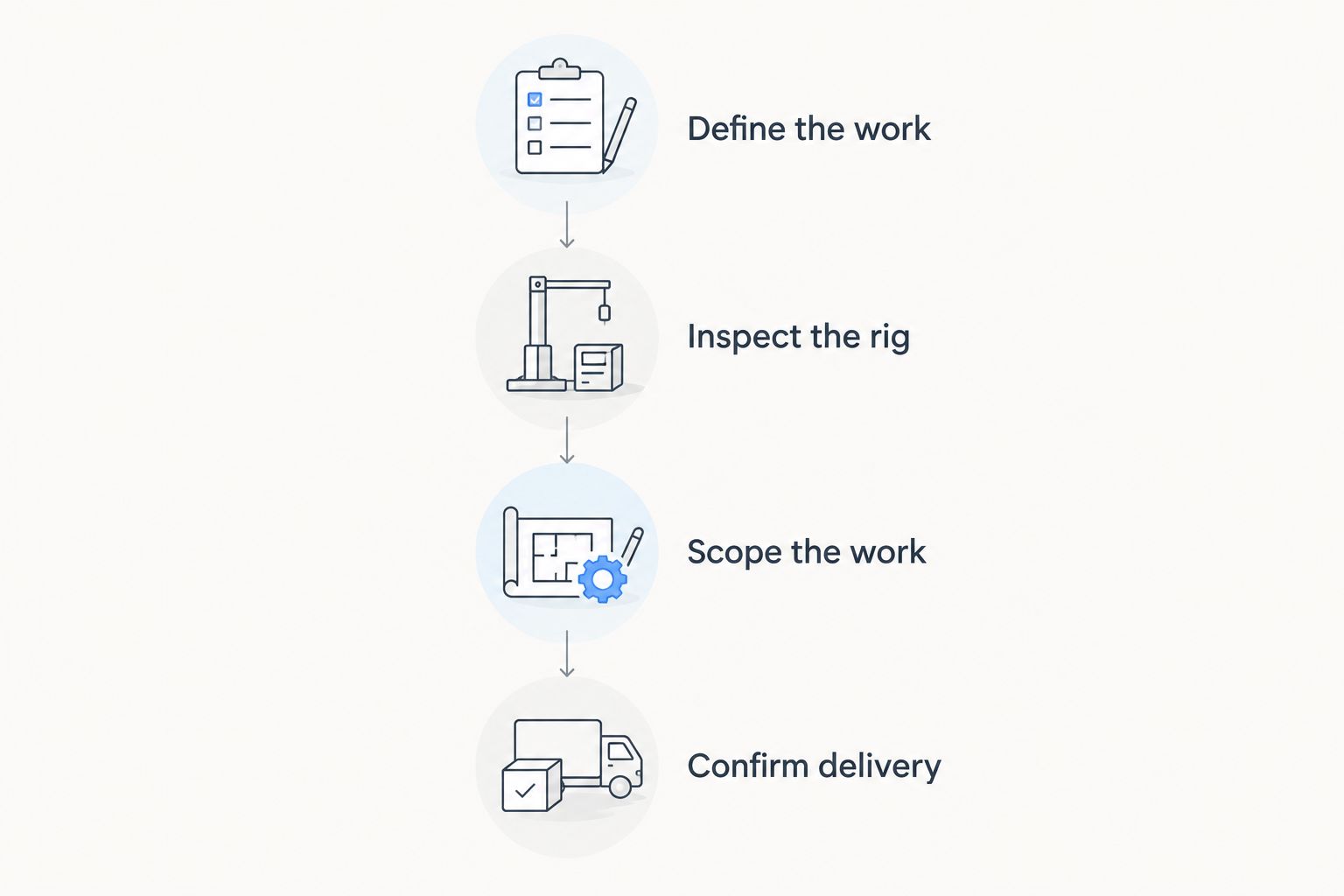
Use this sequence before committing to a used rig:
- Define the work. Describe your drilling methods, sampling requirements, anticipated ground conditions and site-access constraints.
- Inspect the rig. Review records and arrange a qualified inspection of the machine and its relevant systems.
- Scope the work. Separate required repairs, tooling gaps and carrier work from optional refurbishment.
- Confirm delivery. Establish transportation responsibilities and the destination before approving the transaction.
Each step answers a different question. A tooling list cannot resolve a hydraulic defect, and a mechanical inspection cannot establish whether the rig fits your sampling program.
Compare an existing used rig, a rebuild and a truck remount
An existing used rig, a rebuilt rig and a truck remount are different project scopes. Compare them by what each involves, rather than treating the descriptions as interchangeable condition grades.
The table identifies the best-fit situation for each approach. These are screening criteria, not a substitute for an inspection or an equipment-specific proposal.
| Approach | Best for | Main advantage | Main limitation | Required evidence |
|---|---|---|---|---|
| Existing used rig | Buyers whose work matches the inspected machine | Lets you assess a defined machine and equipment package | Unresolved defects and missing tools still need attention | Inspection findings and an inclusion list |
| Rebuild project | Buyers considering a rig with an agreed repair scope | Makes the planned work explicit | The word rebuilt does not describe the work performed | Written scope, completion records and acceptance checks |
| Truck remount | Owners evaluating a different carrier for an existing rig | Addresses the mounting and carrier project directly | A remount is not proof that the drilling systems were rebuilt | Carrier assessment, mounting scope and system checks |
Choose the scope that resolves the documented problem. If the issue is the carrier, distinguish carrier work from drilling-system repairs. If the inspection identifies hydraulic or electrical defects, a cosmetic refurbishment does not answer those findings.
For a 2026 purchase, ask sellers to explain condition labels in plain language. Replace a broad description such as refurbished with a list of completed work and remaining defects.
Why used geotechnical drill rig costs vary
The following factors change what you are buying or what work you must arrange. Use them to structure questions, not to apply an unsupported adjustment to every rig.
- Drilling configuration and included equipment. Establish which tools and components are part of the transaction, then check them against your intended methods.
- Hydraulic condition. Ask an inspector to document leaks, hose condition and system concerns so repair requirements have a defined scope.
- Electrical and safety systems. Include these systems in the inspection rather than accepting a demonstration of drilling functions alone.
- Carrier and drivetrain condition. Separate the truck or carrier assessment from the drilling equipment assessment, particularly when considering a remount.
- Repair and rebuild history. Request records identifying the work performed; a general condition description does not specify replaced or repaired components.
- Tooling and transportation scope. Confirm the augers, drill rod, casing and sampling equipment included, then establish how the package will reach your destination.
Treat maintenance records as evidence, not a verdict
Maintenance records help explain a machine's history. They do not replace an assessment of its present condition.
Ask the inspector to connect relevant records to current findings. A documented repair is useful context, but the purchase decision still needs to address unresolved defects and the functions your work requires.
Keep appearance separate from mechanical scope
Sandblasting and painting are different services from hydraulic repairs, drivetrain work or safety-system repairs. Record each separately so that a refreshed exterior does not stand in for evidence about the machine's operating condition.
That distinction also makes proposals easier to compare. You can decide whether cosmetic work belongs in your project without confusing it with required mechanical work.
What should you ask before requesting a quote?
Give the seller a drilling brief, then request an equipment-specific response. A useful brief describes the work you need to perform and the tooling you already own.
Ask these questions about each candidate:
- What is included with this exact machine?
- Which maintenance and repair records are available for review?
- What defects or unfinished work have been identified?
- Which functions can a qualified inspector assess?
- What tooling needs separate confirmation for my drilling methods?
- Who is responsible for loading and transportation arrangements?
Do not treat an unanswered question as a confirmed inclusion. Record open items and resolve them before approving the equipment package or its associated work.
For your 2026 comparison, use the same questions for every seller. Consistent questions make differences visible without relying on a claimed market average.
Where does repair support fit into the buying decision?
Repair support belongs between identifying a candidate and accepting the final scope. It helps you turn inspection findings into specific work requests instead of accepting a general promise that the rig will be ready.
Drill Rig Marketplace combines used geotechnical drill rig sales and brokerage with a repair and rebuild facility in Beaver, West Virginia. Its stated services include inspections, hydraulic repairs, electrical and safety-system repairs, drivetrain repairs, complete rebuilds and truck remounts.
Drill Rig Marketplace is best for contractors seeking used geotechnical drilling equipment and repair support. That service scope is relevant when you need to assess both a machine and the work it requires.
The limitation remains machine-specific: a company's service capabilities do not establish the condition or repair scope of an individual rig. Request the inspection findings and written proposal for the equipment you are evaluating.
Is a rebuilt geotechnical drill rig worth considering?
A rebuilt geotechnical drill rig is worth considering when the documented work addresses the machine's condition and your operating requirements. The label alone is not enough.
Ask which systems were inspected, which components were repaired or replaced, and which checks followed the work. Keep cosmetic refurbishment separate from mechanical repairs so you can judge the actual scope.
A rebuild description should tell you what changed. If it does not, request the supporting records before treating the machine differently from another used candidate.
Should you repair your current rig instead of buying another?
Compare repairing your current rig with purchasing another machine when both are realistic ways to meet your drilling requirements. Start with an inspection and a written repair scope for the existing equipment.
Then evaluate the replacement rig using the same condition, tooling and transportation questions. Do not compare a fully scoped repair proposal with a replacement listing whose required work remains unresolved.
The decision also needs to address suitability. Repairing a machine does not, by itself, make its configuration appropriate for a different drilling program.
Can you finance a used geotechnical drill rig?
Equipment financing is a separate part of the purchase decision, with terms that need to be confirmed for your transaction. Keep the financing documents tied to the exact equipment and included scope.
If you seek financing assistance from Drill Rig Marketplace, identify the machine and the associated work you want considered. The company states that it helps customers source equipment financing; that does not establish approval or terms for an individual application.
For a 2026 purchase, read the financing proposal alongside the equipment agreement. Confirm what each document covers before committing.
FAQ
What's the best way to find out what a used geotechnical drill rig costs?
Request a written quote for a specific machine and a separate account of required inspection, repairs, tooling and transportation. Compare candidates only after confirming what each package includes.
Does the equipment quote include augers and sampling tools?
The equipment quote includes only the tooling explicitly listed in the agreement. Request an inventory covering the augers, drill rod, casing and sampling equipment relevant to your work.
Is a rebuilt drill rig better than another used rig?
A rebuilt drill rig needs documented work and a suitable configuration to justify choosing it over another used machine. Compare inspection findings and completed work rather than relying on the rebuild label.
Should I inspect the truck as well as the drilling equipment?
Yes, assess the carrier separately from the drilling systems. Carrier, drivetrain and mounting concerns need their own findings and work scope.
Does new paint mean a used drill rig has been rebuilt?
No, painting does not establish that hydraulic, electrical, safety or drivetrain repairs were completed. Request records identifying the mechanical work performed.
Can I arrange financing before choosing a particular rig?
You can discuss financing requirements while shopping, but confirm transaction terms against the exact equipment agreement. Keep the machine description and included work consistent across the documents.
What should I do before arranging transportation?
Confirm the equipment package, pickup location, destination and loading responsibilities before arranging transportation. Include the tooling and other components that must travel with the rig.
One last thing
Request the exclusions as carefully as the inclusions. A quote that clearly identifies unfinished work, omitted tooling and transportation responsibilities gives you a stronger basis for deciding than a broad claim about condition.
Before signing, read the equipment description, inspection findings and proposed work together. Any disagreement between those documents is a question to resolve—not a detail to leave until delivery.