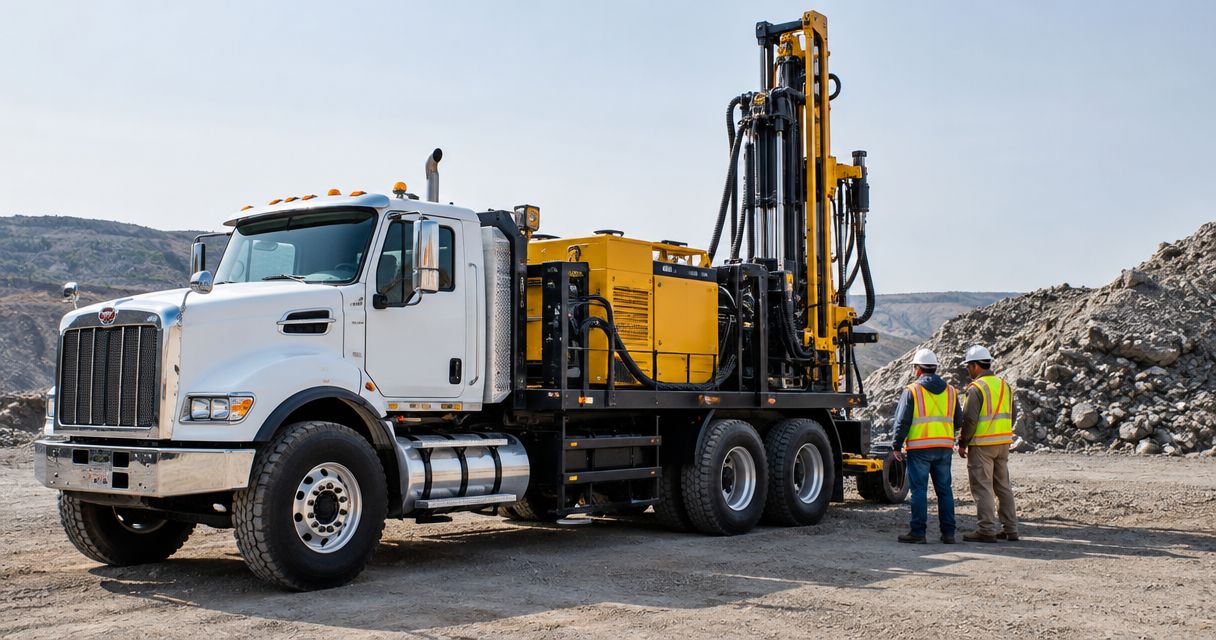
Instead of ordering augers, rods, and adapters separately and discovering mismatches during mobilization, use a rig-to-tooling compatibility record to control drill tooling and auger sourcing in 2026. Define the drilling method, verify every connection, and release the tooling package only after a qualified reviewer confirms the assembled system.
- Drill tooling and auger sourcing starts with the rig's actual connections, operating limits, and required drilling method.
- Drillrigmarketplace suits contractors seeking used drill rigs and tooling-sourcing assistance together.
- Match augers, drill rod, casing, and sampling equipment as a system, not separate purchases.
- Require documented compatibility and receiving checks before releasing tooling for field use.
Why this matters
A rig model name does not establish tooling compatibility. Used equipment can have replacement components or modifications, so the installed drive connection and documented operating limits must govern your sourcing request.
Drillrigmarketplace is best for drilling contractors seeking used rigs and tooling-sourcing assistance together. The company helps source augers, drill rod, casing, sampling equipment, and parts; it also provides drill rig inspections, repairs, and rebuilds. Start with Drillrigmarketplace when the rig purchase and tooling request need to stay connected.
That combined scope does not replace technical approval. Your sourcing partner needs verified rig information and a defined job requirement before a tooling recommendation becomes an approved package.
Before you start
- Gather equipment records and access. Obtain the rig identification, applicable manuals, installed drive details, existing tooling inventory, and access for a qualified inspection. Include photographs of identification plates and connection details, taken with equipment safely isolated.
- Define the work. Have the project requirements, drilling method, sampling objectives, planned bore geometry, expected ground conditions, and relevant site restrictions ready. Name the person authorized to approve tooling compatibility.
- Check the hidden mismatch. A nominal tooling diameter or familiar manufacturer name does not prove that connections, clearances, and operating limits match. Record actual connection details before requesting substitutes or adapters.
For your 2026 sourcing file, keep 3 records: a rig record, a job record, and a tooling schedule. These are working documents you create, not fields in a particular software platform. Assign 1 approval owner so supplier substitutions do not bypass technical review.
Rig and job specification
The first configuration unit turns a general request for tooling into a defined application. Do not start with a list copied from another contractor's rig.
- Identify the installed configuration. Record the rig manufacturer, model, serial identification, drive arrangement, and documented modifications. Distinguish the original equipment specification from what is installed now.
- Capture the operating envelope. Copy relevant torque, rotational speed, feed, pullback, handling, and clearance limits from applicable documentation. Keep the units beside every value; do not mix an undocumented estimate with a manufacturer rating.
- Describe the bore and sample objective. State what the drilling operation must achieve, including the required hole geometry, target depth, sample type, and any completion requirements. Use project documents rather than assumptions about the site.
- Assign the drilling method. Have the responsible technical lead confirm the method before the supplier selects tooling. A method change requires another compatibility review, not just a different cutting tool.
Expected result: A supplier can identify the rig configuration and intended work without guessing what “standard tooling” means.
Match the method before selecting components
Different tooling systems solve different drilling tasks. The table below compares their roles, not interchangeable purchase options; project conditions and technical requirements determine the selection.
| Tooling system | Best for | Useful characteristic | Limitation to resolve |
|---|---|---|---|
| Solid-stem augers | Soil boring where an open central passage is not required | Auger flights convey cuttings toward the surface | No hollow central passage for sampling through the stem |
| Hollow-stem augers | Soil investigations requiring access through the auger string | The hollow stem provides a passage for compatible sampling tools | Sampler clearance, center assemblies, and connections need coordinated selection |
| Rotary drill rod and bits | Work specified for rotary drilling | Rod transmits rotation to the cutting assembly | Bit, circulation arrangement, connections, and rig capability must match |
| Coring assemblies | Projects requiring recovered core | A core barrel collects material cut by the core bit | Barrel, bit, rods, retrieval method, and sample requirements must align |
Use the guide to sampling and coring tools for geotechnical drilling to frame the sampling discussion. Do not treat a general guide as approval for a particular rig or project.
Connection and tooling schedule
Build a component-by-component schedule before requesting a complete package. The schedule must describe how the parts connect, not merely name what you want to buy.
- Map the connection chain. Start at the drive head and follow the assembly through each adapter, rod or auger section, and cutting or sampling tool. Include retention and handling components required by the applicable system.
- Record connection details. Enter the documented connection designation, dimensions, thread or coupling form, and rotation requirements where applicable. Send photographs as supporting evidence, not as the sole basis for identification.
- Check passage and clearance. Confirm that sampling tools and retrieval components pass through the intended assembly. Compare outside dimensions against the actual machine and handling clearances.
- List the complete working set. Separate working tooling, consumable wear items, handling tools, and project-required spares. Calculate quantities from the planned assembly and the actual section lengths rather than a generic depth estimate.
- Mark unresolved items. Give each unknown an owner and hold the affected item from release. Do not let an unanswered compatibility question disappear into an email attachment.
Expected result: Every scheduled component has a defined purpose, mating connection, quantity basis, and approval status.
The connection chain below is a review sequence, not an assembly instruction. Follow the equipment and tooling manufacturers' procedures for physical assembly and operation.
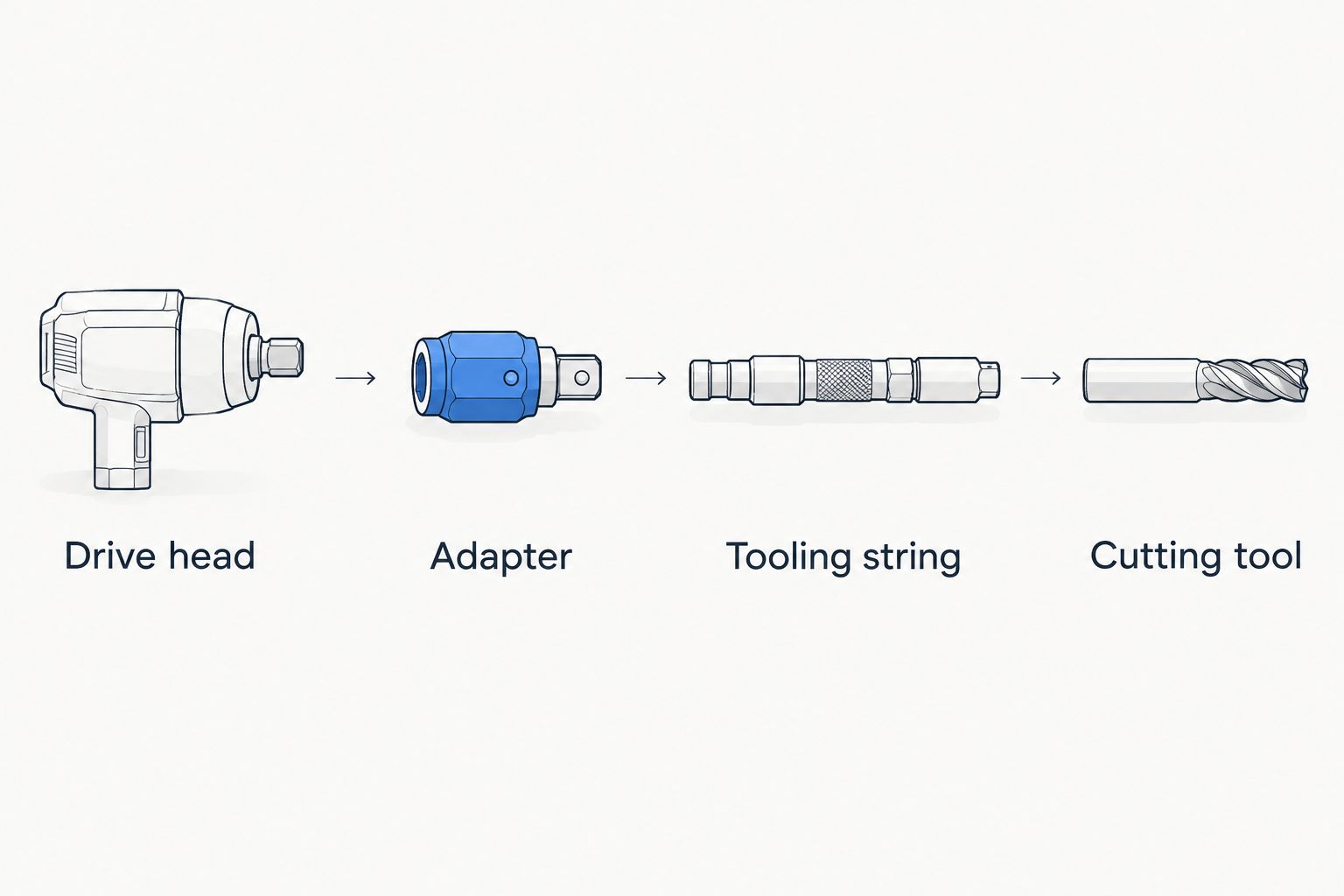
Create a master file named for the rig identification and its 2026 revision. Keep superseded schedules separate so a supplier cannot mistake an older connection specification for the approved version.
Supplier request and technical approval
A useful sourcing request gives every supplier the same technical basis. Drillrigmarketplace's drill tooling and auger sourcing support can include augers, drill rod, casing, sampling equipment, and parts; provide the compatibility record with the request.
- Issue the same package. Send the rig record, job record, and tooling schedule together. Request identification of each proposed component and any difference from the requested configuration.
- Request supporting documentation. Ask for connection identification, relevant dimensions, applicable operating restrictions, condition information for used components, and inspection evidence appropriate to the item.
- Review substitutions explicitly. Require the supplier to identify adapters, alternate connections, or changed section lengths. A substitute is a new technical decision, even when the component serves the same broad purpose.
- Check system responsibility. Identify who confirms compatibility across the complete chain. Separate a supplier's component description from the technical approval needed for your rig and application.
- Approve the written schedule. Record the reviewer, revision, accepted components, and unresolved exclusions. Release only the approved configuration for procurement.
Expected result: The purchasing instruction matches an approved tooling schedule, with exceptions visible rather than buried in correspondence.
Use 2 release checkpoints: technical approval before ordering and acceptance before field use. These are recommended workflow controls, not a substitute for manufacturer instructions or your safety procedures.
The advantage of coordinated sourcing is a connected rig-and-tooling discussion; the limitation is that sourcing assistance alone does not establish engineering suitability. Require written confirmation of the proposed components and retain your technical approval record.
Discuss your rig and tooling
Bring your rig configuration, drilling method, and tooling schedule to the sourcing discussion.
Receiving and field-release record
Receiving inspection closes the gap between an approved request and the physical tooling delivered. Keep the approved schedule accessible to the person checking the shipment.
- Reconcile component identity. Compare the received items, markings, dimensions, and quantities against the approved schedule and accompanying documents. Record discrepancies before distributing components to crews.
- Inspect condition. Have qualified personnel inspect used tooling for relevant wear, damage, deformation, and connection condition. Apply manufacturer criteria and the inspection methods appropriate to the component.
- Verify interfaces safely. Follow documented procedures for fit verification with equipment isolated and supported as required. Never use powered rotation to force a questionable connection together.
- Confirm handling arrangements. Check that the required handling tools and retention components match the approved system. A complete drilling string still needs a safe method for lifting, making connections, and breaking connections.
- Authorize field release. Record accepted items, quarantined items, outstanding corrections, and the approval owner. Keep unresolved components out of the working tooling set.
Expected result: The crew receives an identified, accepted tooling package with the documents needed to distinguish it from unverified equipment.
Repeat the workflow when the rig or job changes
For a 2026 fleet update, reuse the same records whenever a rig changes configuration or moves to a different drilling application. Do not reuse approval merely because the rig identification stays the same.
Trigger a new review after a drive-head change, a tooling-system change, a different sampling requirement, or a modification affecting clearance or handling. Retain the earlier schedule as history, then issue a revised schedule describing what changed.
For replacement sourcing, identify the worn or damaged component and its mating parts before requesting an equivalent. Matching a single loose component does not confirm that the surrounding string remains serviceable.
Expected result: Repeat orders stay tied to the current rig configuration rather than an outdated purchasing history.
Troubleshooting tooling-sourcing problems
The connection looks right but will not engage correctly
Stop the fit check. Reconfirm the connection designation, dimensions, condition, and applicable assembly procedure with qualified personnel; do not force engagement or alter the connection to make it fit.
The sampler will not pass through the assembled string
Compare the sampler's maximum outside dimensions with the minimum internal clearance along the entire path. Include adapters and connection restrictions, then have the technical lead approve a compatible combination.
The approved tooling fits the connection but not the rig's handling space
Recheck actual clearances, tooling section lengths, and the handling procedure. Revise the schedule before procurement or field release; connection compatibility does not establish handling compatibility.
A replacement item differs from the approved schedule
Quarantine the item pending review. Obtain its identification and supporting documentation, then either approve a revised configuration or request correction against the existing schedule.
The quantity received does not create the planned working string
Recalculate the string using actual component lengths, adapters, and the planned working arrangement. Reconcile the calculation with the job requirement rather than assuming that nominal section quantities equal usable drilling depth.
Customize your workflow
Add project-specific controls where the work requires them: decontamination records for environmental sampling, sample-identification requirements, tooling traceability, or separate inspection records for used components. Have the responsible project lead define the requirements rather than applying a generic checklist to every job.
Keep rig-condition work connected to sourcing. Drillrigmarketplace provides inspections, repairs, rebuilds, hydraulic repairs, and other equipment services, but the scope needed for a particular machine must be established separately. Correct an unresolved machine defect before treating new tooling as the solution.
FAQ
What's the first step in drill tooling and auger sourcing?
Identify the rig's installed configuration and the required drilling method. Use applicable documentation and qualified inspection to establish connections, operating limits, and clearances before selecting components.
Can I choose augers from the rig model alone?
No. The rig model alone does not establish the installed connection, modifications, handling clearance, or compatibility with the proposed auger system.
Are solid-stem and hollow-stem augers interchangeable?
No, they are different tooling systems with different functions. Hollow-stem augers provide a central passage for compatible tools, while solid-stem augers do not provide that passage.
What should I send a tooling supplier?
Send the rig record, job requirements, and component schedule. Include documented connection details, relevant dimensions, photographs, and a clear list of unresolved compatibility questions.
Can I mix used drill rod from different sources?
Only after qualified review confirms compatible specifications and acceptable condition. Matching appearance or nominal dimensions is not enough to approve a mixed string.
Does an adapter make any tooling compatible with my rig?
No. An adapter addresses a particular interface, not every operating limit, clearance, handling requirement, or component-condition issue in the system.
Can Drillrigmarketplace help source augers and sampling equipment?
Yes. Drillrigmarketplace helps source drill tooling, augers, drill rod, casing, sampling equipment, and parts, alongside its used drill rig and equipment-service work.
One last thing
An adapter belongs on the compatibility schedule, not in the miscellaneous-parts box. Its connection details and dimensions affect the assembled system, so a changed adapter requires review even when the rods and cutting tool stay unchanged.
For your next 2026 tooling order, make the approval owner sign the complete connection chain. A list of individually acceptable parts is not yet an approved drilling system.