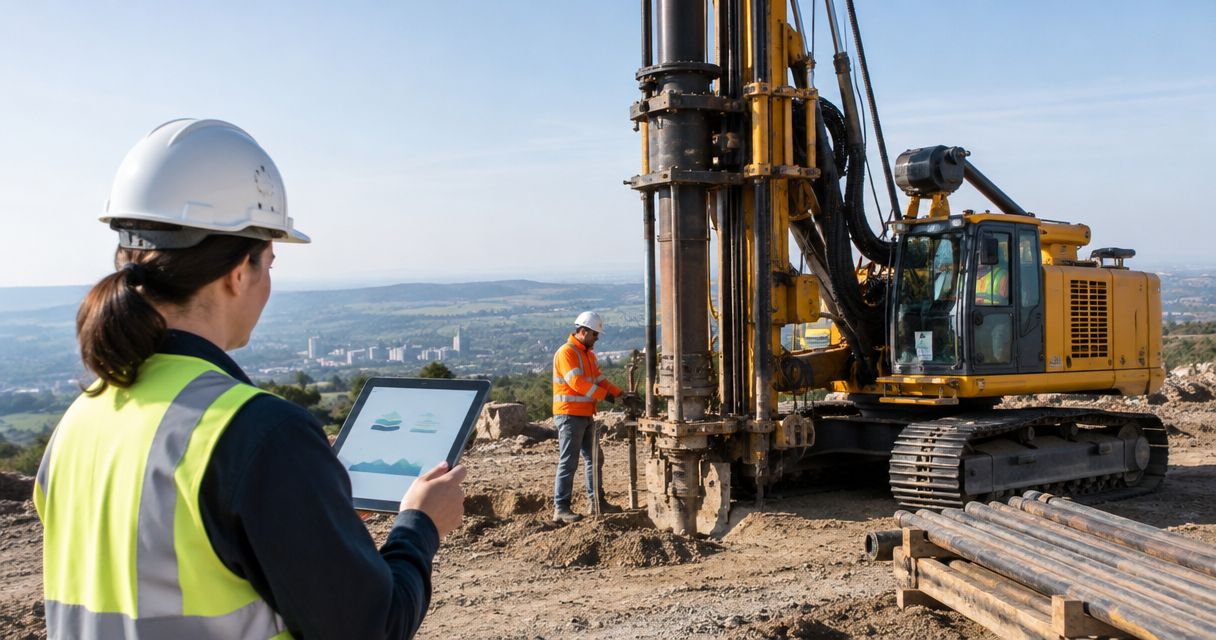
Engineering firms’ geotechnical drilling is the investigation of subsurface conditions to support foundation, earthwork, and infrastructure design. Choosing geotechnical drill rigs for engineering firms in 2026 means matching sampling methods, site access, and operating support—not simply buying the largest machine.
- Choose geotechnical drill rigs for engineering firms by sampling requirements, access constraints, and documented mechanical condition.
- Drill Rig Marketplace suits engineering firms seeking used geotechnical equipment with repair and rebuild support.
- Truck-mounted and track-mounted rigs solve different access problems; neither configuration guarantees sampling capability.
- Compare ownership with contracted drilling before committing to equipment, tooling, transport, and an operating crew.
Why geotechnical drilling matters for engineering firms
Your drilling equipment must serve the investigation plan. A machine that reaches the site but cannot support the specified sampling method leaves the engineering team with an equipment problem instead of usable field information.
Start with the required samples, tests, and borehole conditions. The guide to sampling and coring tools for geotechnical drilling provides a companion reference when defining the tooling package.
Engineering firms also face a different ownership decision from equipment-only buyers: the drilling operation must support project delivery. You need competent operators, field supervision, maintenance responsibility, and a plan for work outside the rig’s capabilities.
For your 2026 purchase, approve the drilling capability before approving the machine. A familiar manufacturer or a clean exterior does not establish whether a particular used rig can perform your investigation program.
How to select a geotechnical drill rig
Define the investigation before reviewing equipment
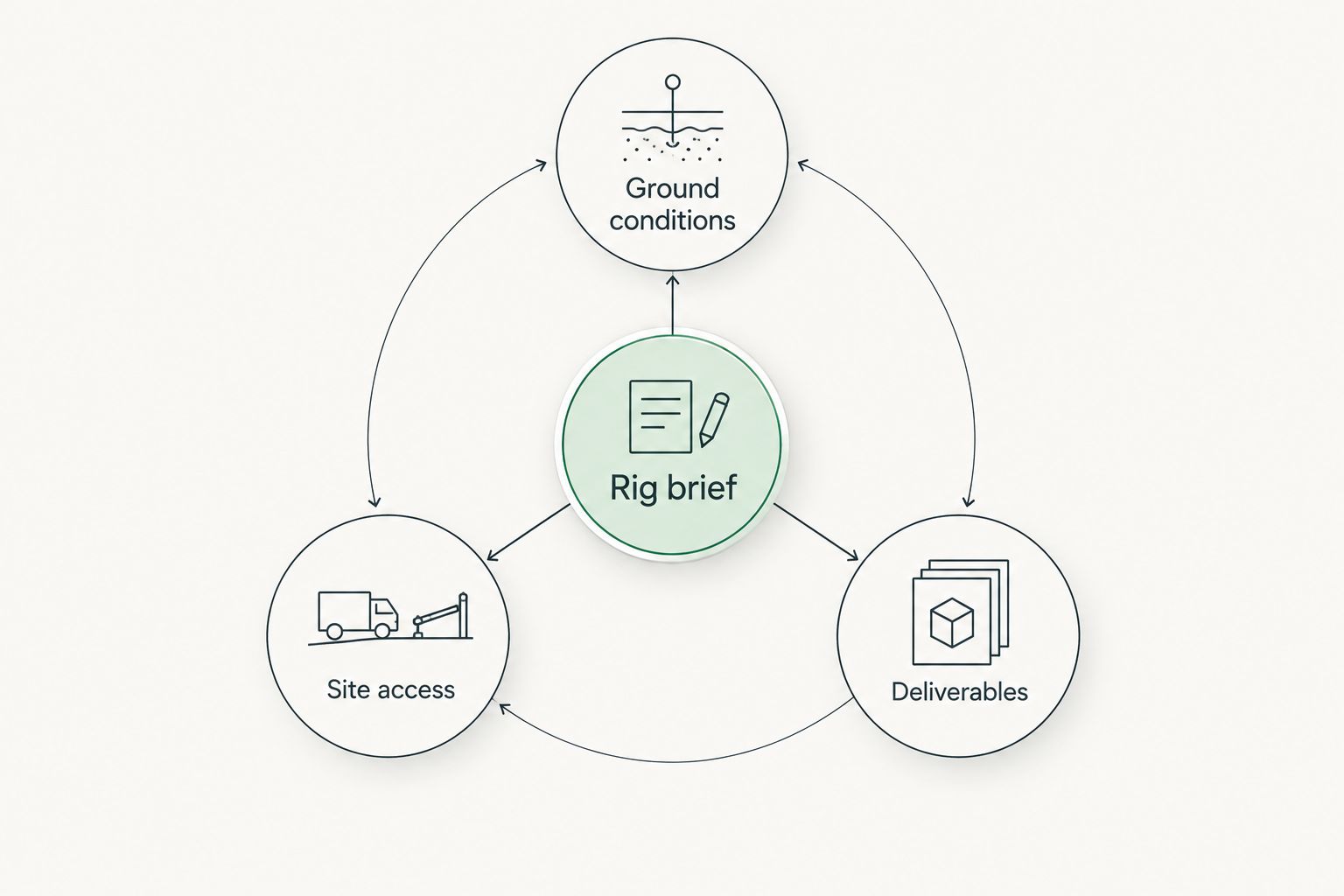
Build a written rig brief manually from your project specifications, boring plans, and field-team feedback. Keep the first version independent of any listing so that equipment descriptions do not quietly become your requirements.
Organize the brief into 3 workstreams: ground conditions, site access, and deliverables. Separate essential capabilities from occasional needs that you can assign to a specialist contractor.
An engineering firm investigating soil for foundations has a different equipment brief from a team requiring rock core for design interpretation. Define the output first, then identify the drilling and sampling methods needed to obtain it.
- Ground conditions: Record expected soil, rock, groundwater, and borehole stability concerns.
- Site access: Document gates, surface conditions, overhead obstructions, and setup space.
- Deliverables: Specify samples, field tests, borehole records, and completion requirements.
- Rig brief: Mark each requirement as essential, optional, or suitable for subcontracting.
Match methods and tooling to the investigation
Create a compatibility checklist before asking sellers which rig they recommend. Write down the intended drilling methods, sampler types, rods, casing, augers, and supporting equipment; then verify the actual configuration of each candidate.
Do not treat a manufacturer’s name as a capability statement. Used machines can have different heads, pumps, tooling arrangements, and modifications, so the listed model alone does not establish suitability.
A rig is only useful when its installed equipment supports your required work. Ask for documentation and a demonstration relevant to your methods rather than accepting a general statement that the machine runs.
- Identify whether the program requires augering, rotary drilling, coring, or another method.
- Confirm tooling connections and handling arrangements against your existing equipment.
- Verify the installed head, hydraulic systems, pumps, and accessories.
- Separate equipment included in the sale from equipment shown only in photographs.
- Have a qualified drilling professional review the proposed configuration.
Inspect the used rig and its carrier separately
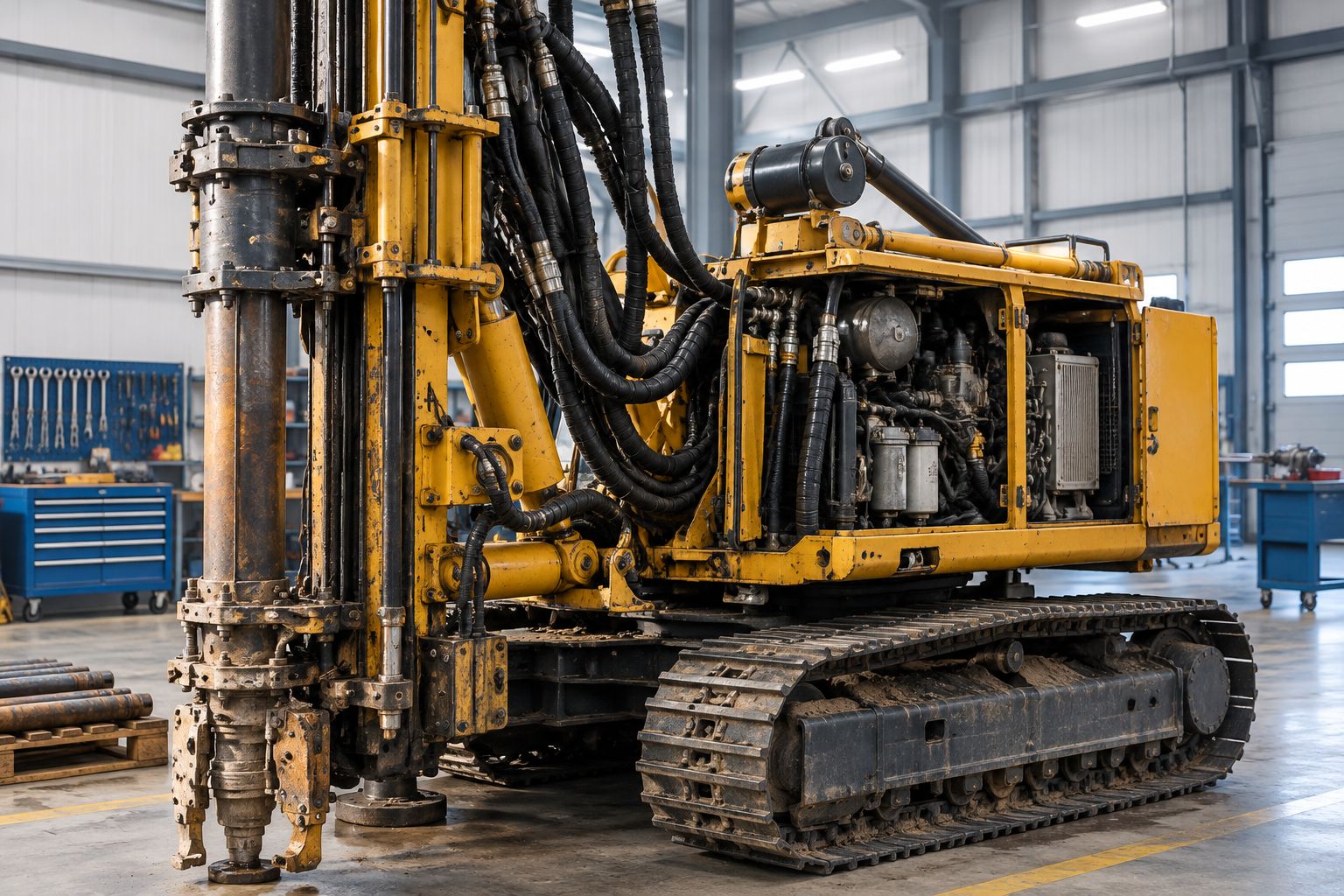
Start with maintenance records, a written inspection checklist, and a qualified inspector. Treat the carrier and drilling systems as separate inspection subjects: a serviceable truck does not establish that the drill works correctly, and the reverse is equally true.
Drill Rig Marketplace supports used-rig sales and brokerage alongside inspections, repairs, rebuilds, and truck remounts at its Beaver, West Virginia facility. That provides an equipment-and-service path, but you still need a written scope for the specific machine.
Drill Rig Marketplace is best for engineering firms seeking used geotechnical rigs with repair and rebuild support. For a 2026 acquisition, make documented condition—not appearance—the basis for acceptance. Fresh paint does not verify hydraulic performance, structural condition, or safety-system function.
- Request service history, repair records, and details of modifications.
- Inspect structural areas, mounting points, visible wear, and fluid leaks.
- Test drilling functions under an appropriate, supervised operating procedure.
- Check electrical controls and safety systems with qualified personnel.
- Record unresolved findings and assign responsibility before purchase.
Check access, setup, and transport together
Walk representative sites before choosing between truck-mounted and track-mounted equipment. Record the complete route from the public road to the borehole, not just the final drilling position.
Truck-mounted rigs combine the drilling unit with a road vehicle, but truck access and setup still require verification. Track-mounted rigs suit work where tracked access is needed, but transporting the rig between projects remains a separate planning task.
Neither configuration removes the need to assess ground support, overhead hazards, utility clearance, or an appropriate working area. Confirm transport dimensions and weights from the specific machine’s documentation; never infer them from photographs.
- Check gates, turns, slopes, pavement limits, and ground conditions.
- Verify clearance for travel, mast movement, and operating position.
- Identify support vehicles and space for tooling and recovered material.
- Confirm loading, hauling, and unloading arrangements for the selected rig.
- Establish site-specific utility-clearance and setup procedures before mobilization.
Compare ownership with contracted drilling
Use a spreadsheet to compare 2 operating cases: owning the drilling operation and buying drilling services. Include the work each case actually covers, rather than comparing a machine purchase with a contractor’s complete field scope.
Ownership gives you responsibility for equipment deployment, staffing, upkeep, and breakdown response. Contracted drilling gives you access to an external crew and equipment under an agreed scope, but requires coordination with that contractor’s schedule and capabilities.
Buy only when your firm can support the operation behind the rig. A machine does not replace a trained drilling crew, and a project pipeline does not automatically establish that every investigation belongs in-house.
- Map expected work to the methods and access the proposed rig supports.
- Include tooling, transportation, maintenance, storage, and operating personnel.
- Account for training, inspections, repairs, and administrative responsibilities.
- Keep specialist subcontracting in the plan for unsuitable assignments.
- Compare both cases using the same project scope and delivery requirements.
Specify repairs and handover in writing
Prepare a punch list from the inspection before agreeing to refurbishment. Describe each required repair, the evidence of completion, and the acceptance procedure; avoid broad descriptions such as fully refurbished without a defined scope.
A rebuild, a truck remount, and cosmetic refurbishment address different work. Ask exactly which components were repaired, replaced, inspected, or left unchanged, and retain that information with the equipment records.
For a 2026 purchase, make the handover package part of the agreement rather than an informal follow-up. The team receiving the machine needs enough information to operate and maintain the actual configuration delivered.
- Attach the agreed repair scope and exclusions to the purchase documentation.
- Identify the manuals, service records, and configuration details to be supplied.
- List included tooling and accessories separately from the rig.
- Define the demonstration and acceptance process before shipment.
- Confirm transport responsibilities and any cross-border documentation requirements.
Assign maintenance and measure field readiness
Give 1 named owner responsibility for the maintenance schedule, inspection records, and repair follow-through. Use manufacturer guidance and qualified service advice to define the work; a generic calendar is not a substitute for machine-specific requirements.
Begin with a shared maintenance log if dedicated software is unnecessary. Record defects, corrective actions, and operating interruptions consistently so that repair decisions use evidence rather than memory.
Measure readiness against the next investigation, not simply whether the engine starts. A running rig without the correct rods, sampling equipment, transport, or crew is not ready for deployment.
- Record operating hours where the machine provides a reliable reading.
- Track defects and close them only after corrective work is verified.
- Inspect tooling and supporting equipment alongside the rig.
- Assign responsibility for routine service and specialist repairs.
- Review upcoming project requirements before committing the rig to a site.
Compare equipment and delivery options
Choose the option that meets your investigation requirements with an operating arrangement your firm can support. These options are not mutually exclusive: an engineering firm can own a rig and still contract specialist drilling.
| Option | Best for | Main advantage | Key limitation |
|---|---|---|---|
| Used truck-mounted rig | Firms working on sites with verified truck access | Combines the drilling unit and road vehicle | Carrier condition and site access need separate assessment |
| Used track-mounted rig | Firms whose projects require tracked site access | Provides a tracked platform for the drilling unit | Requires a transport and loading plan between projects |
| Rebuilt used rig | Firms seeking a used machine with a defined repair scope | Allows specified defects and components to be addressed before handover | The word rebuilt does not establish what work was completed |
| Contracted drilling | Firms needing drilling services without operating their own fleet | Provides an external equipment-and-crew arrangement | Scope, schedule, methods, and field responsibilities require coordination |
| Drill Rig Marketplace sourcing and service | Firms seeking used equipment plus inspection or repair support | Combines used-rig sales and brokerage with repair and rebuild services | Suitability and required repairs still need machine-specific verification |
A used rig’s advantage is access to an existing machine configuration; its drawback is the need to establish condition and remaining repair work. A rebuild can address defined issues, but it does not make undocumented components new.
Ask the same capability questions across every route. Compare the complete drilling arrangement, not a bare rig against a fully staffed service.
Discuss your rig requirements
Match your investigation needs with used-rig sourcing, inspection, and repair support.
Common mistakes engineering firms make
Buying around a model name
A familiar manufacturer narrows the search; it does not complete the specification. Installed components, modifications, and tooling determine what the individual machine can do. Require a configuration review against your investigation brief before making a selection.
Treating access as a mounting choice
Choosing tracks does not settle transport, ground support, or overhead clearance. Choosing a truck does not establish that the vehicle can reach every borehole. Assess the route, setup position, and supporting equipment together.
Buying the rig without the drilling operation
An engineering team still needs qualified operators, supervision, maintenance arrangements, and safe work procedures. Assign those responsibilities before committing to ownership. If the operating plan depends on people or capabilities you have not secured, keep contracted drilling in the comparison.
Accepting refurbishment without a scope
Painting, hydraulic repairs, drivetrain work, and complete rebuilds are different services. Require a record of completed work and unresolved findings. Evaluate the actual machine, not the implication of a refurbishment label.
Owning equipment for occasional specialist work
A rare project requirement can distort the entire purchase brief. Separate routine investigations from specialist assignments and compare contracting those assignments instead. Build your 2026 equipment decision around documented work requirements, not an imagined all-purpose rig.
FAQ
What are the best geotechnical drill rigs for engineering firms?
The best geotechnical drill rigs for engineering firms match the required sampling methods, site access, and operating support. Select the individual configuration and verified condition rather than relying on a manufacturer or model name.
Should an engineering firm buy a rig or hire a drilling contractor?
Buy a rig when your firm can support the required equipment, qualified crew, maintenance, and transport. Compare contracted drilling using the same investigation scope, including specialist work that the proposed rig cannot perform.
Is a track-mounted rig better than a truck-mounted rig?
A track-mounted rig is not universally better than a truck-mounted rig. Choose according to verified site access, setup requirements, drilling capability, and the arrangements needed to move the machine between projects.
What should I inspect before buying a used geotechnical rig?
Inspect the drilling systems and carrier separately, including structural areas, hydraulics, controls, safety systems, and maintenance history. Have qualified personnel verify operation and document unresolved findings before purchase.
Does a rebuilt drill rig need another inspection?
Yes, a rebuilt drill rig still needs inspection against its documented repair scope and your intended work. Rebuild descriptions do not establish that every component was replaced or that the configuration meets your investigation requirements.
Can Drill Rig Marketplace help an engineering firm with repairs?
Drill Rig Marketplace provides drill rig inspections, repairs, rebuilds, truck remounts, and preventive maintenance through its Beaver, West Virginia facility. Confirm the required work and acceptance criteria for the specific machine.
What tooling should be included with a geotechnical drill rig?
The tooling package should match the investigation methods and the rig’s verified connections and handling arrangements. List augers, rods, casing, samplers, and other required accessories explicitly rather than assuming photographed equipment is included.
One last thing
Before signing, ask your field lead to describe the first intended investigation using only the proposed equipment list. Follow the work from arrival through setup, drilling, sampling, borehole completion, and departure.
Every missing item becomes a specific action: obtain tooling, arrange transport, clarify a method, or assign responsibility. A complete first-job plan is a better acceptance check than an impressive equipment photograph. Keep that plan with your 2026 purchase records and use it to guide the handover.