Best overall: an inspected, complete cable tool rig matched to your drilling program. Best for frequent road moves: a truck-mounted rig. Best for an owner with rebuild capability: a mechanically assessed project rig. This 2026 guide ranks buying configurations for contractors comparing cable tool drilling rigs for sale, not individual machines or live listings.
- For cable tool drilling rigs for sale, prioritize inspected condition and a complete tooling package over appearance.
- Truck-mounted cable tool rigs suit road-based mobilization; trailer-mounted rigs require a separate towing and setup assessment.
- Drill Rig Marketplace suits used drilling equipment buyers who also need inspection, repair, or rebuild support.
- Buy a rebuild project only after defining structural condition, missing components, and the repair scope.
Why this matters
A cable tool rig raises and drops a drilling tool string to break formation, with a bailer used to remove cuttings. Buying one means evaluating a working system: the machine, cable, tooling, casing-handling equipment, and carrier must fit the job together.
Drill Rig Marketplace is best for contractors seeking used drilling equipment sourcing alongside inspection and repair support. You can start your equipment search with Drill Rig Marketplace, which buys and sells used drill rigs and operates a repair and rebuild facility in Beaver, West Virginia.
For a 2026 purchase, separate the drilling-method decision from the individual-machine decision. First establish that cable tool drilling fits your work. Then judge each candidate by condition, tooling, transport requirements, and the repairs needed before deployment.
What makes the best used cable tool drilling rig?
Use these criteria before choosing a configuration. A suitable mounting arrangement cannot compensate for an unsafe mast or an incomplete drilling package.
- Job fit: Match the intended borehole, formation, casing work, and site restrictions to documented machine capabilities.
- Mechanical condition: Inspect the mast, hoisting system, brakes, bearings, drive components, and controls. Cosmetic refurbishment is not proof of mechanical condition.
- Tooling completeness: Identify the drill tools, bailer, cable, handling equipment, and casing tools included with the sale.
- Carrier suitability: Assess the truck, trailer, or skid independently from the drilling machinery. Transport and drilling create different demands.
- Repairability: Establish how required parts, technical documentation, and qualified repair work will be obtained before committing.
- Demonstrated operation: Require an appropriate operational inspection under qualified supervision. A machine that starts has not demonstrated every critical function.
Write down your intended work before reviewing listings. That gives you a consistent basis for rejecting unsuitable equipment instead of changing your requirements to match an appealing machine.
Used cable tool rigs at a glance
These options describe purchasing priorities, not mutually exclusive equipment classes. A truck-mounted rig can also be complete and inspected; the ranking identifies the reason you would choose it.
| Rank and option | Best for | Standout buying criterion | Key limitation |
|---|---|---|---|
| 1. Inspected, complete rig | Contractors adding working capability | Verified operation and an itemized tooling package | Inspection still needs to establish job suitability |
| 2. Truck-mounted rig | Frequent road-based mobilization | Drilling equipment and carrier travel together | Truck condition adds a separate inspection burden |
| 3. Trailer-mounted rig | Contractors using a separate tow vehicle | Carrier choice remains separate from the rig | Towing compatibility and site setup need careful review |
| 4. Rig documented for casing work | Contractors prioritizing casing installation | Evidence that handling equipment suits the intended casing | Suitability depends on documented limits, not machine appearance |
| 5. Assessed rebuild project | Owners with repair capability | A defined scope before purchase | Hidden damage and missing components can expand the work |
1. Inspected, complete rig: best for adding working capability
An inspected, complete rig is the default choice when you want to add cable tool drilling without first organizing a major restoration. Complete means the equipment package matches your intended work, not merely that the seller describes the machine as operational.
Ask for an itemized list of included tools and attachments. Confirm their condition and compatibility rather than assuming that equipment photographed beside the rig transfers with it.
Inspected, complete rig pros:
- Gives you a clearer starting point for planning deployment.
- Lets you assess the machine and tooling as one working package.
- Supports a purchase decision based on demonstrated functions.
Inspected, complete rig cons:
- An inspection does not establish suitability for every borehole or formation.
- Included tooling still needs individual examination.
- An operational demonstration does not replace structural assessment.
For your 2026 shortlist, define completeness against the jobs you intend to perform. A package can be complete for one contractor and inadequate for another.
Best for: Contractors who need working equipment rather than a restoration project.
Verdict: Buy when inspection, tooling, and job requirements agree.
2. Truck-mounted rig: best for frequent road-based mobilization
A truck-mounted cable tool rig carries the drilling machinery on a road vehicle. This arrangement suits contractors whose mobilization plan centers on driving the rig between jobs.
Evaluate the truck and the drilling equipment separately. A sound drilling mechanism does not establish the condition of the brakes, steering, tires, frame, or drivetrain.
Truck-mounted rig pros:
- Keeps the drilling machine and its carrier together during travel.
- Fits a mobilization plan built around a dedicated rig truck.
- Allows you to assess the installed mounting arrangement directly.
Truck-mounted rig cons:
- Carrier repairs can prevent movement even when the rig works.
- Vehicle compliance and transport suitability require separate checks.
- Truck access requirements can rule out otherwise suitable sites.
Ask a qualified inspector to assess frame condition and attachment points, especially around repaired or modified areas. Review access to the drilling controls and the stability provisions used during operation.
Best for: Contractors making frequent road moves with a dedicated drilling vehicle.
Verdict: Buy only after both the truck and drilling equipment pass inspection.
3. Trailer-mounted rig: best for separate towing arrangements
A trailer-mounted cable tool rig separates the drilling equipment from the towing vehicle. Choose this configuration when your transport plan already accounts for a suitable tow vehicle, trailer handling, and site positioning.
Do not assume a trailer-mounted machine is easier to place on every site. Access, turning space, ground conditions, and the manufacturer's setup requirements still determine whether the arrangement works.
Trailer-mounted rig pros:
- Keeps the towing vehicle separate from the drilling machinery.
- Lets you evaluate transport equipment as a distinct part of the purchase.
- Fits operations that already manage trailer-based equipment moves.
Trailer-mounted rig cons:
- Requires verification of towing compatibility and loaded configuration.
- Trailer brakes, tires, bearings, and frame add inspection tasks.
- Positioning and stabilization need their own site plan.
Prepare 2 logistics plans: transport and site setup. The transport plan addresses moving the loaded equipment; the setup plan addresses positioning, stabilizing, and operating it safely.
Best for: Contractors with an established towing arrangement and a clear setup procedure.
Verdict: Buy when the complete transport and setup arrangement fits your work.
4. Rig documented for casing work: best for casing-focused jobs
For casing-focused work, prioritize a cable tool rig whose documented capabilities and handling equipment match your intended casing program. Do not treat a larger-looking machine as proof of suitable lifting or handling capacity.
Examine the equipment used to handle, drive, or extract casing, where applicable. Have the inspector check its condition and verify that the intended procedure stays within documented equipment limits.
Rig documented for casing work pros:
- Directs the purchase toward a specific operating requirement.
- Encourages inspection of casing tools alongside the rig.
- Gives you a basis for rejecting unsuitable equipment early.
Rig documented for casing work cons:
- Requires usable documentation for the relevant machine and attachments.
- Worn or missing casing equipment can leave the package incomplete.
- Casing suitability alone does not establish overall drilling suitability.
Before purchasing in 2026, give the seller your intended casing requirements in writing. Ask for evidence of compatibility, not a general assurance that the machine has handled similar work.
Best for: Contractors whose purchase decision depends on a defined casing program.
Verdict: Hold until the machine and casing equipment are verified against your requirements.
5. Assessed rebuild project: best for owners with repair capability
A rebuild project is a machine purchased with known work remaining. It belongs on your shortlist only when you can assess the required repairs and organize the parts, labor, and technical support.
Drill Rig Marketplace provides used drilling equipment sales and brokerage alongside inspections, complete rebuilds, truck remounts, hydraulic repairs, and drivetrain repairs. Establish the proposed scope for the individual rig before treating any repair plan as settled.
Assessed rebuild project pros:
- Lets you define repairs around the intended work.
- Creates an opportunity to inspect systems during disassembly.
- Suits an owner who already manages equipment restoration.
Assessed rebuild project cons:
- Disassembly can reveal damage not visible during an initial inspection.
- Missing documentation or components can complicate the scope.
- The machine remains a project until required repairs and checks are complete.
Separate cosmetic work from operational repairs. Sandblasting and painting serve a different purpose from correcting structural, braking, electrical, or drive-system defects.
Best for: Equipment owners with repair capability and a defined restoration plan.
Verdict: Skip unless inspection supports a clear repair scope.
How to inspect a used cable tool rig before buying
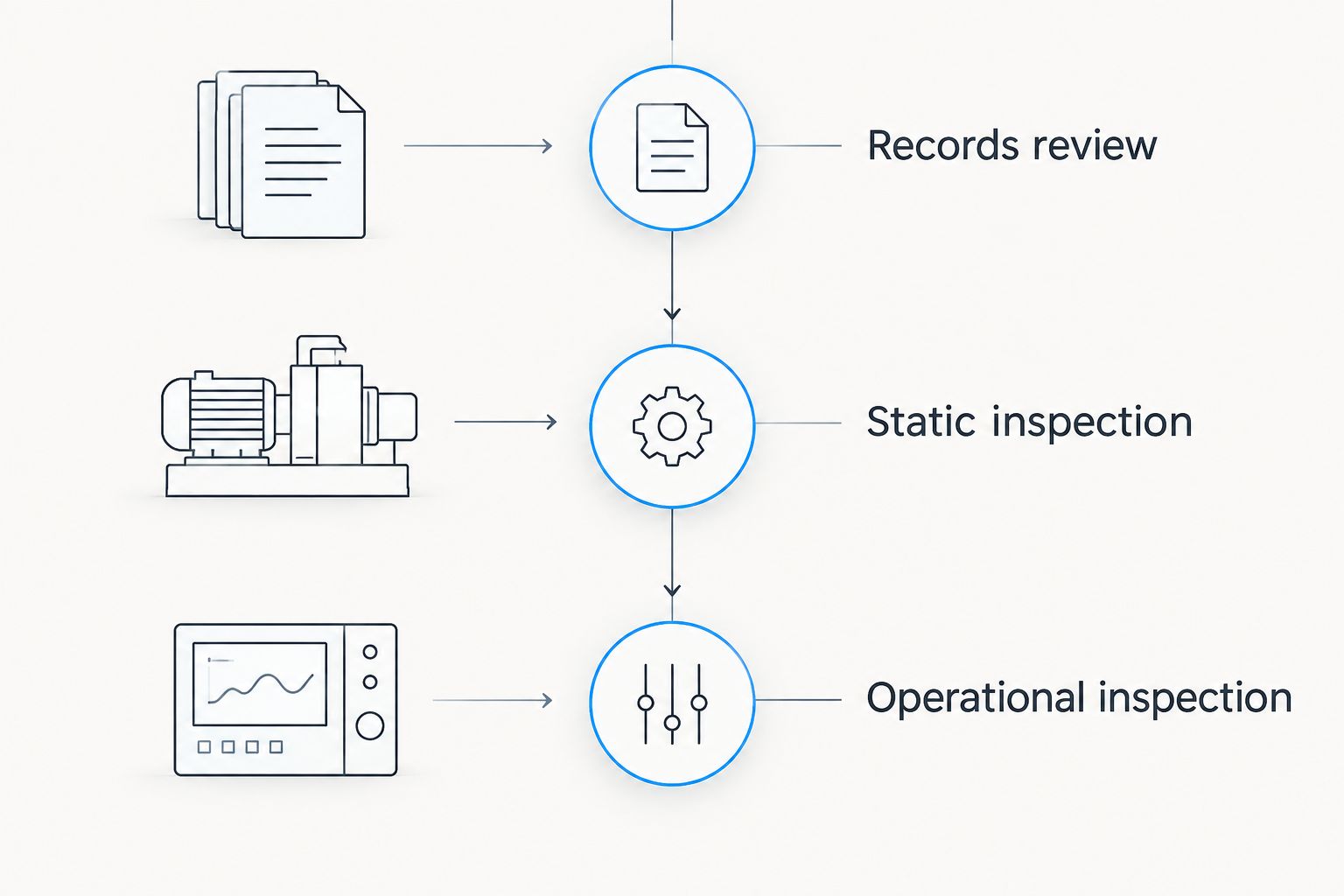
Use 3 inspection stages: records review, static inspection, and operational inspection. Qualified personnel should conduct machine checks using appropriate procedures; a sales visit is not a reason to bypass guarding or approach moving equipment.
Records review
Request 4 document groups: identification records, service records, equipment specifications, and an included-equipment list. Check that the records describe the actual machine and carrier, including relevant modifications.
Identification matters when sourcing parts or interpreting manuals. Service records explain reported work, while the equipment list establishes exactly what the transaction includes.
Static inspection
Inspect the mast, frame, mounting points, drums, sheaves, wire rope, guards, controls, and accessible drive components with the equipment secured. Look for corrosion, cracking, distorted components, damaged rope, and evidence of repairs that require further assessment.
Inspect the carrier independently. Record defects clearly enough that a repair provider can assess them without relying on a seller's summary.
Operational inspection
Have qualified personnel demonstrate the appropriate drilling, hoisting, braking, and control functions. Follow the applicable operating procedures and keep observers outside hazardous areas.
A demonstration should answer specific questions raised during the earlier stages. Document unresolved issues instead of treating a short run as blanket approval.
For a 2026 purchase, keep the inspection findings attached to the exact machine identification. Photos, repair proposals, and sale documents should all describe the same equipment package.
How these options are ranked
The ranking prioritizes job fit, demonstrated condition, tooling completeness, carrier suitability, and repairability. An inspected, complete package takes the default position because it puts those questions ahead of restoration work.
The remaining options serve distinct purchasing priorities. Truck mounting addresses road moves; trailer mounting addresses separate towing; casing-focused selection addresses a defined operating requirement; a rebuild project addresses an owner's repair capability.
Configuration is a filter, not a condition rating. A well-documented trailer rig can be a better purchase for your operation than an unsuitable truck-mounted machine.
Which used cable tool drilling rig should you choose?
Choose an inspected, complete rig unless your operation has a clear reason to prioritize another configuration. Then apply the same condition and documentation checks to every candidate.
If you are still choosing a drilling method, resolve that question before buying tooling or arranging transport. The best cable tool rig for your business is the one that fits the intended work and has an acceptable, documented condition—not the one with the most appealing photographs.
Drill Rig Marketplace supports used drilling equipment buyers with sourcing, inspections, repair, and rebuild services. Discuss the individual machine, intended work, and unresolved inspection items together.
Discuss your drill rig requirements
Explain your intended drilling work, tooling requirements, and inspection or repair needs.
FAQ
What's the best used cable tool drilling rig to buy?
An inspected, complete cable tool rig matched to your intended work is the best default choice. Verify mechanical condition, tooling, carrier suitability, and documented capabilities before purchasing.
Where should I start looking for cable tool drilling rigs for sale?
Start with a used drilling equipment marketplace and a written description of your requirements. Drill Rig Marketplace buys and sells used drill rigs and provides inspection, repair, and rebuild services; discuss your cable tool requirements directly.
Is a truck-mounted cable tool rig better than a trailer-mounted rig?
Truck mounting is the better fit for a transport plan based on a dedicated rig truck; trailer mounting fits a separate towing arrangement. Inspect the carrier and confirm site access before choosing either configuration.
What should I inspect before buying a used cable tool rig?
Review records, inspect the secured machine, and arrange an appropriate operational inspection by qualified personnel. Include the mast, hoisting components, brakes, controls, carrier, and tooling in the assessment.
What tooling should come with a used cable tool rig?
The included tooling should match your intended drilling and casing work. Obtain an itemized list covering the relevant drill tools, bailer, cable, handling equipment, and casing tools, then verify condition and compatibility.
Should I buy a cable tool rig that needs rebuilding?
Buy a rebuild project only when inspection supports a defined repair scope and you can organize the work. Structural defects, missing components, and uncertain parts sourcing need resolution before committing.
Does fresh paint mean a used drill rig is in good condition?
Fresh paint does not establish mechanical or structural condition. Inspect repaired areas and assess the operating systems independently from cosmetic refurbishment.
One last thing
Ask for the included-equipment list before arranging transport. A rig purchase and a usable drilling package are not automatically the same thing: confirm which tools, attachments, and documentation actually transfer to you.
Make the equipment list part of the transaction, not an assumption based on photographs. That recommendation matters as much for an inspected machine as for a rebuild project.