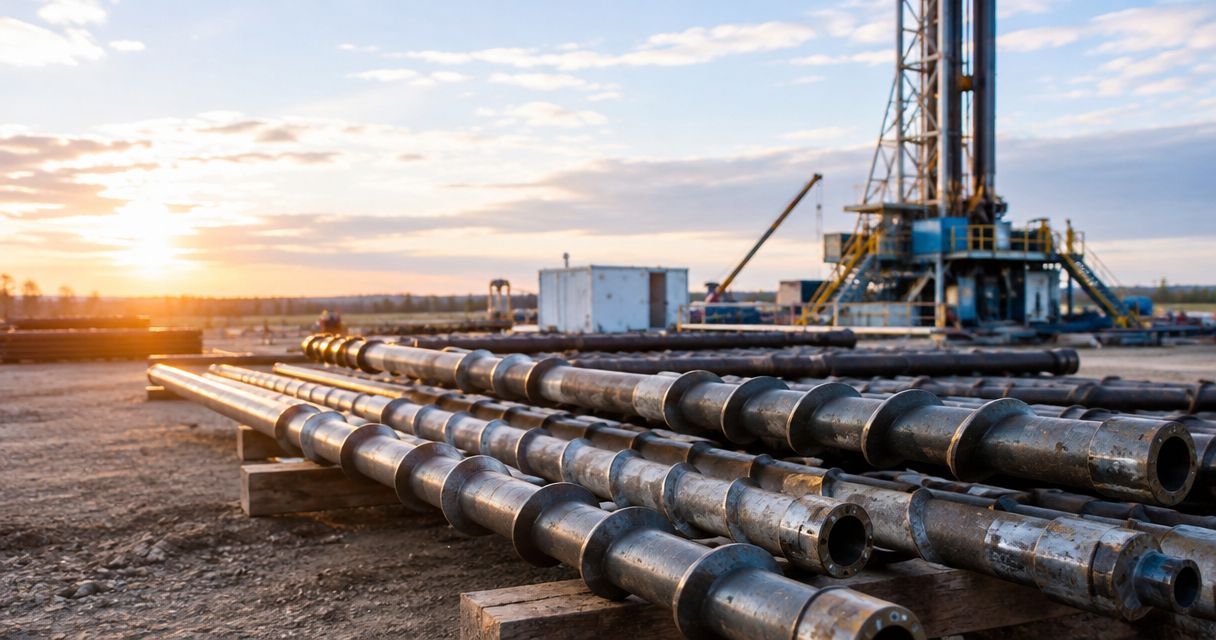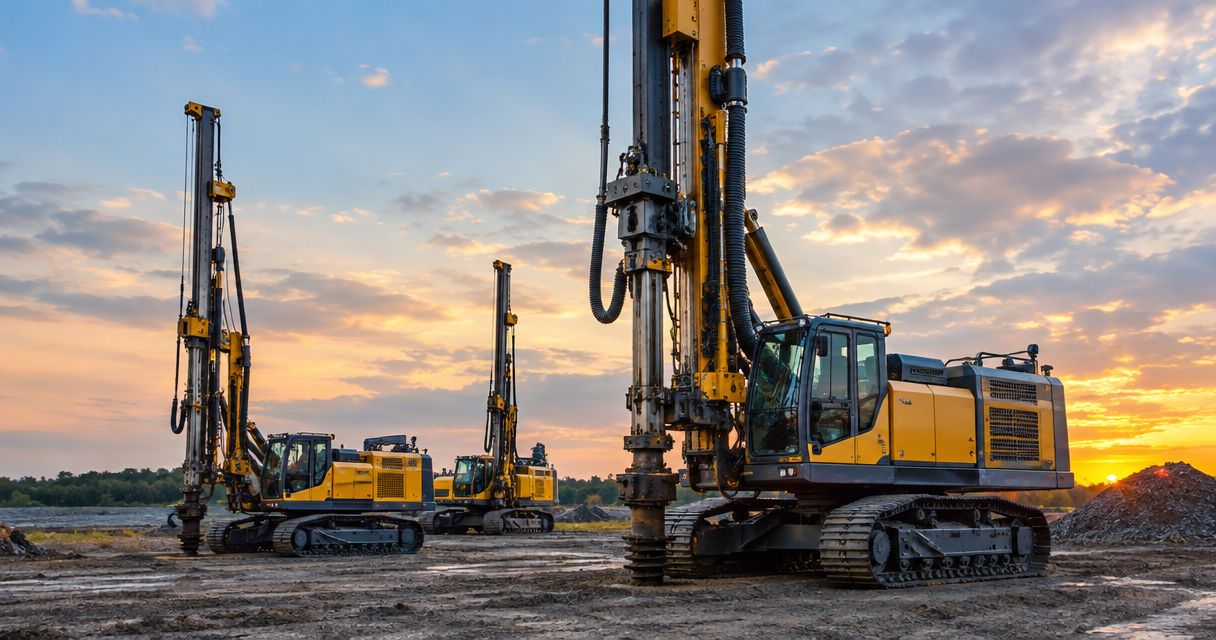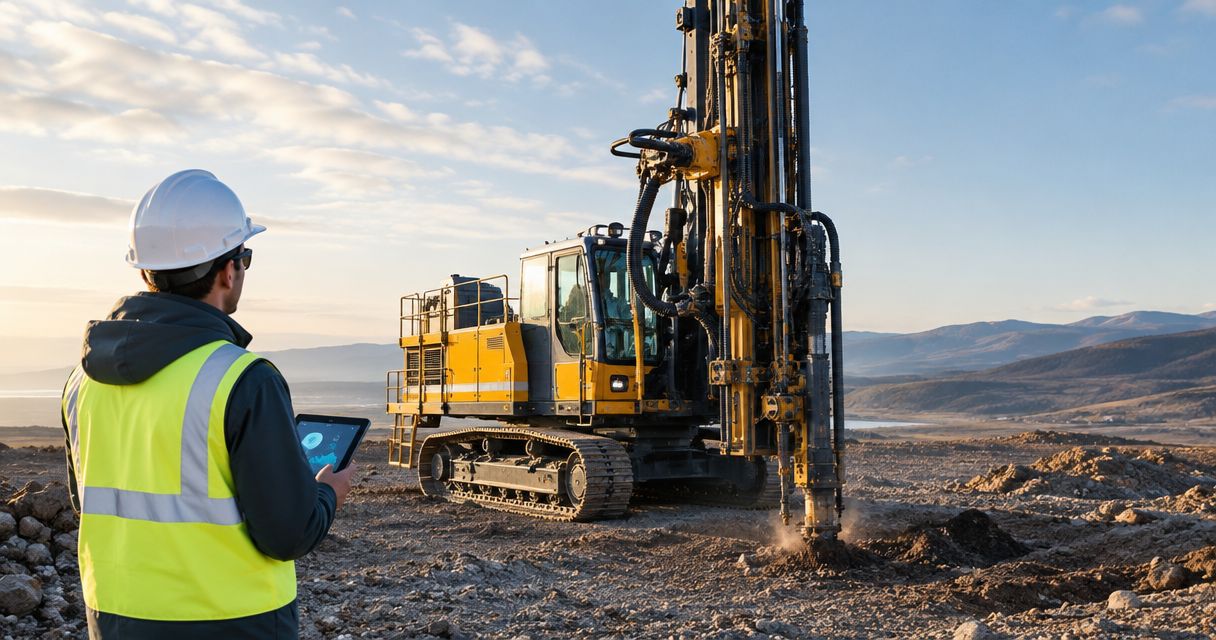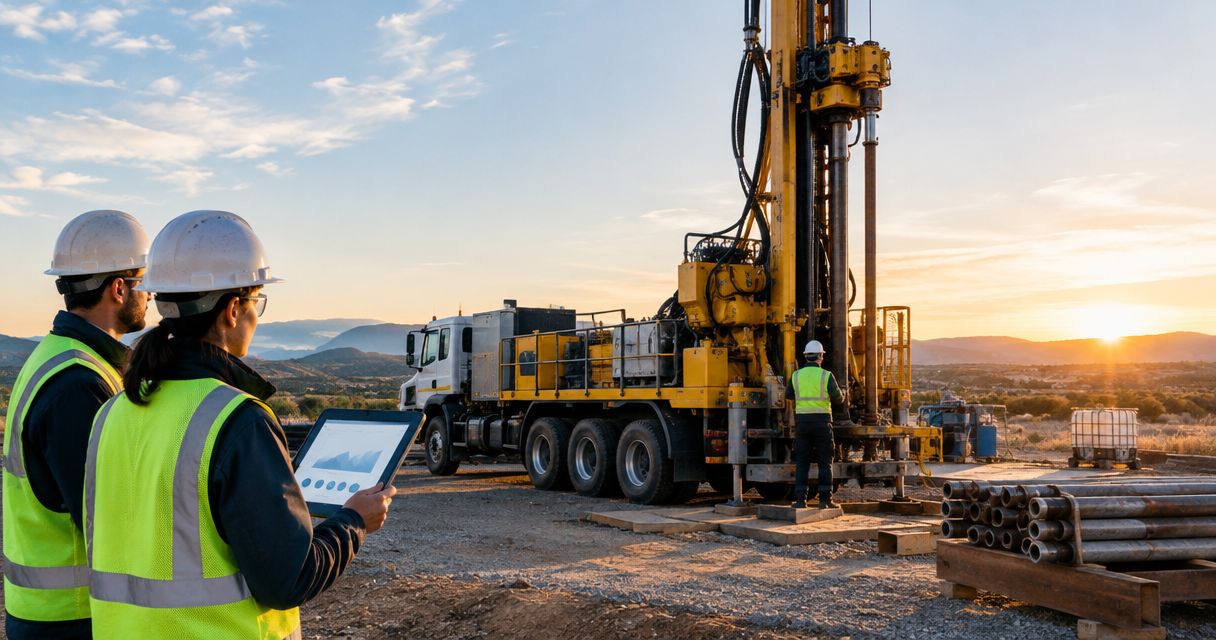
Best overall for public-works soil investigations: an inspected geotechnical auger rig. Best for environmental sampling: a direct-push rig; best for bedrock characterization: a diamond-core rig. This 2026 guide compares used drill rigs for government drilling programs by mission, inspection requirements, and operating limitations, with equipment sourcing and repair support from Drillrigmarketplace.
- Choose used drill rigs for government drilling programs by drilling method, sample requirements, and documented equipment condition.
- Geotechnical auger rigs are the default shortlist for public-works soil investigations, not every government drilling assignment.
- Direct-push rigs suit environmental sampling; diamond-core rigs suit programs requiring recovered bedrock core.
- Drillrigmarketplace supports government equipment buyers with used drill rig sales, inspections, repairs, and rebuilds.
Why this matters
A government drilling program needs an equipment specification that matches the work and an acceptance process that establishes condition. A familiar manufacturer name answers neither question. The individual rig, installed tooling, carrier, and maintenance history determine whether the purchase fits your program.
For your 2026 procurement, separate method suitability from mechanical condition. A mechanically sound water-well rig is not automatically the right tool for collecting environmental samples. An appropriate geotechnical rig still needs inspection before acceptance.
Drillrigmarketplace is best for government buyers seeking used drill rigs with inspection, repair, and rebuild support. Its services include equipment brokerage, tooling sourcing, transportation assistance, and repairs at its Beaver, West Virginia facility. Procurement approval and technical acceptance remain your agency's responsibilities.
What makes the best government drilling rig
Use these criteria before comparing manufacturers or individual machines:
- Mission fit: Identify whether you need soil samples, environmental samples, production wells, or recovered rock core. Specify the required method rather than treating all drilling as interchangeable.
- Verified configuration: Confirm the installed head, mast, feed system, handling equipment, and tooling interfaces. A model designation does not establish the configuration of a used machine.
- Demonstrated condition: Require an inspection and an operating demonstration addressing hydraulics, controls, structural condition, drivetrain, and safety systems.
- Deployment fit: Check access, transport requirements, setup space, ground conditions, and the carrier's condition against your actual project sites.
- Support fit: Establish how your team will obtain parts, service documentation, tooling, and qualified repairs for the specific machine.
- Acceptance evidence: Define the records and demonstration your agency needs before acceptance. Keep condition findings and corrective work in the purchase file.
Write down 3 borehole profiles before building your shortlist: a routine assignment, a difficult assignment, and an assignment the rig must not be expected to perform. Describe the required depth, formation, sample, access, and tooling for each. These are planning profiles, not manufacturer performance ratings.
Used government drilling rigs at a glance
The ranking below gives each equipment class a different assignment. It does not claim that one class replaces the others or that every used machine within a class has the same capabilities.
| Rank and equipment class | Best for | Standout capability | Key limitation |
|---|---|---|---|
| 1. Geotechnical auger rig | Public-works soil investigations | Auger drilling and compatible geotechnical sampling configurations | Soil-focused configuration does not establish bedrock capability |
| 2. Direct-push rig | Environmental soil and groundwater investigations | Advances compatible sampling tools without conventional rotary drilling | Dense formations and bedrock restrict direct-push advancement |
| 3. Rotary water-well rig | Government water-supply well programs | Rotary drilling configured for well construction | Sampling and completion capability depend on installed equipment |
| 4. Diamond-core rig | Bedrock and geological characterization | Recovers rock core with compatible coring equipment | Requires a coring-specific tooling and operating plan |
| 5. Sonic rig | Programs specifying sonic sampling | Uses vibration to advance compatible drilling and sampling tools | Specialized equipment requires method-specific support |
For a 2026 purchase, treat this table as a routing decision. Select the equipment class first, then compare individual rigs against the same written acceptance criteria.
1. Geotechnical auger rig: best for public-works soil investigations
A geotechnical auger rig is the default shortlist for an agency investigating soils beneath roads, structures, and other public infrastructure. Depending on its configuration, the machine supports auger drilling and associated sampling operations. Confirm every required sampling method against the specific rig and tooling package.
CME, Diedrich, Mobile Drill, and Acker are manufacturers named in Drillrigmarketplace's equipment specialization. That establishes sourcing relevance, not interchangeable specifications. Compare the actual installed equipment rather than assuming machines from these manufacturers perform the same work.
Geotechnical auger rig pros:
- Aligns with soil-investigation assignments rather than a production-well specification.
- Supports a tooling-centered specification for the sampling methods your agency requires.
- Lets you compare machines against defined borehole and access requirements.
Geotechnical auger rig cons:
- An auger configuration alone does not establish suitability for competent bedrock.
- Carrier access, tooling compatibility, and sampling equipment still require individual verification.
Best for: Transportation departments, public-works teams, and government engineering programs whose recurring assignments involve soil investigations.
Inspect the auger connections, handling equipment, mast, feed components, and sampling accessories as a system. Do not accept a rig-only description when your program needs a complete working package. Verdict: Buy an inspected geotechnical auger rig when soil investigation is the primary mission.
2. Direct-push rig: best for environmental sampling
Direct-push equipment advances compatible tools into the ground without conventional rotary drilling. It is a relevant shortlist for environmental programs collecting soil or groundwater samples where formation conditions support the method. Sample collection, well installation, and tool recovery requirements must each appear in your specification.
Geoprobe is among the manufacturers Drillrigmarketplace specializes in. For a used direct-push machine, verify the installed equipment and sampling interfaces; the brand name alone does not establish what the machine can collect or install.
Direct-push rig pros:
- Fits a method-specific environmental sampling scope.
- Supports targeted tooling selection for the samples your project requires.
- Provides an alternative to rotary drilling where direct-push advancement is appropriate.
Direct-push rig cons:
- Dense formations and bedrock restrict advancement and require a different drilling plan.
- Worn tools, incompatible sampling equipment, or incomplete accessories undermine the package's usefulness.
Best for: Environmental agencies and government remediation programs using direct-push sampling in suitable formations.
For a 2026 shortlist, document how the program will handle refusal and recover tools. Do not turn an access advantage or a familiar machine into a claim that the rig handles every subsurface condition. Verdict: Buy for a defined direct-push scope; skip as a universal replacement for rotary equipment.
3. Rotary water-well rig: best for water-supply well programs
A rotary water-well rig belongs on the shortlist when the government assignment is drilling and constructing water-supply wells. The required circulation method, formation conditions, hole dimensions, and completion plan determine the configuration. Verify the supporting equipment as carefully as the drilling unit.
A used machine's description must distinguish included equipment from equipment you need to source separately. Pumps, compressors, rod handling, casing handling, and tooling all affect whether the proposed package matches the assignment.
Rotary water-well rig pros:
- Matches a well-construction mission instead of a soil-sampling-first mission.
- Allows selection around the circulation method your drilling plan requires.
- Supports a package specification covering drilling, handling, and completion equipment.
Rotary water-well rig cons:
- A water-well designation does not establish compatibility with every formation or completion design.
- Supporting equipment and carrier repairs can expand the required preparation work.
Best for: Government water-resource teams and public agencies undertaking water-supply well construction.
Check whether the demonstration covers the circulation equipment and handling systems, not just engine operation. A running engine is evidence of engine operation, not proof of a complete drilling system. Verdict: Buy when the verified configuration matches the well-construction plan.
4. Diamond-core rig: best for bedrock characterization
A diamond-core rig uses compatible diamond drilling and core-recovery equipment to obtain rock core. It is the appropriate shortlist when the program needs recovered bedrock for geological description or engineering evaluation. The core specification and recovery method must guide the equipment selection.
Check the drilling head, feed system, rod handling, core tooling, and fluid system against your intended work. A listing described as an exploration rig still needs configuration verification before it becomes a government bedrock-investigation purchase.
Diamond-core rig pros:
- Directly addresses assignments requiring recovered rock core.
- Supports specifications based on the required core tooling and handling method.
- Separates bedrock characterization from soil-focused equipment selection.
Diamond-core rig cons:
- Requires coring-specific tooling, operating knowledge, and sample handling.
- Does not automatically replace the equipment needed for routine soil sampling or well completion.
Best for: Geological surveys, infrastructure teams, and government exploration programs requiring rock core.
For your 2026 evaluation, include the core barrel and associated tooling in the inspection scope. Do not assess the drilling machine while leaving the sample-recovery equipment outside the purchase decision. Verdict: Buy when recovered bedrock core is a required deliverable.
5. Sonic rig: best for programs specifying sonic sampling
Sonic drilling uses vibration to advance compatible drilling and sampling tools. Shortlist a sonic rig when your project specifies the method and your team has a defined operating and support plan. It is a specialized choice, not the default recommendation for an undefined government workload.
Inspect the drilling system, tooling connections, handling equipment, and supporting components as one package. Verify that the inspection provider understands the machine's sonic system and has an appropriate operating procedure.
Sonic rig pros:
- Fits projects that explicitly require sonic drilling or sampling.
- Supports a method-specific specification for tooling and sample collection.
- Gives programs another drilling approach where the project design calls for it.
Sonic rig cons:
- Requires specialized operating knowledge and service support.
- Method suitability does not remove the need to verify sample requirements and ground conditions.
Best for: Government investigation programs with a documented sonic-method requirement and qualified operators.
Ask for maintenance records addressing the specialized drilling system, not only the carrier and engine. An incomplete support plan is a reason to pause procurement even when the method fits. Verdict: Hold until operating capability, inspection scope, and repair support are established.
How the equipment classes are ranked
The ranking starts with public-works soil investigations as the default assignment, then separates environmental sampling, water-well construction, rock coring, and sonic-method projects. Each class wins its own use case; this is not a manufacturer leaderboard or a report of comparative field testing.
The criteria are mission fit, verified configuration, demonstrated condition, deployment, support, and acceptance evidence. A lower-ranked class becomes the first choice when its use case matches your program.
Inspect the drilling system and carrier separately
Keep 2 inspection scopes in the procurement file: the drilling system and the carrier. A sound drilling unit does not establish that a truck or tracked carrier is ready for deployment, and a sound carrier does not establish drilling performance.
Use this sequence to keep selection and acceptance connected:
- Mission fit: Confirm the required method, samples, formations, and site access.
- Configuration check: Reconcile installed equipment and included tooling with the written specification.
- Condition inspection: Record structural, hydraulic, electrical, drivetrain, and safety-system findings.
- Operating demonstration: Observe relevant functions under the seller's documented safe operating procedure.
- Acceptance record: Document findings, agreed corrective work, and acceptance requirements.
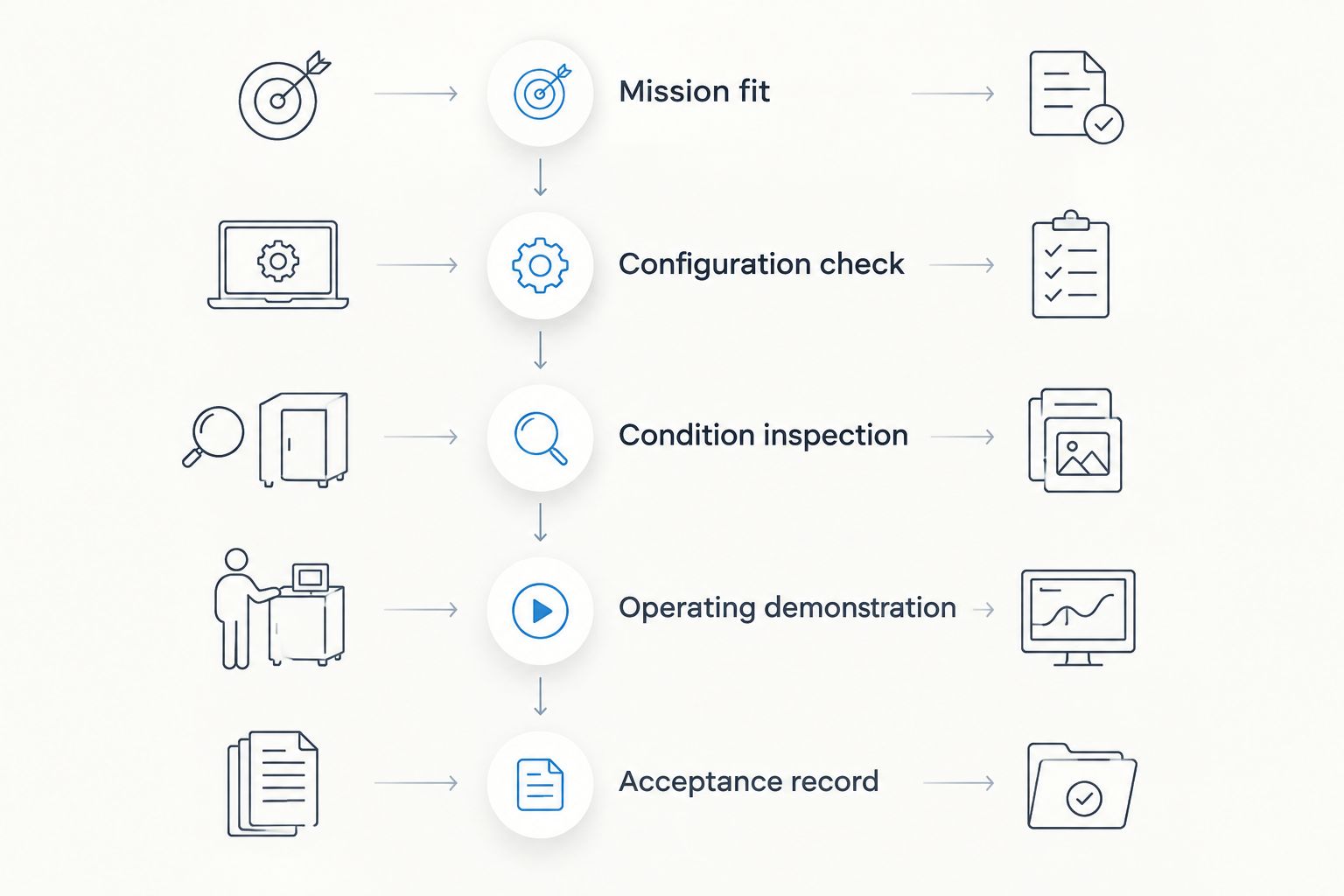
Require 1 written acceptance plan before committing to a machine. Name the required demonstration, responsible reviewers, unresolved findings, and corrective work. Use the plan to prevent a seller's description from becoming your acceptance standard.
Drillrigmarketplace provides used drill rig inspections, repairs, rebuilds, truck remounts, and hydraulic, electrical, and drivetrain repairs. Define the requested service scope explicitly; a service offering does not establish that a particular machine has already received that work.
Which government drilling rig should you choose?
Choose an inspected geotechnical auger rig for a soil-investigation-first program. Choose direct push for a defined environmental sampling scope, rotary equipment for water-well construction, and diamond core for required bedrock recovery. Choose sonic only when the method and support plan are established.
For a mixed 2026 workload, identify the recurring assignment before selecting a general-purpose machine. Keep specialized work outside the equipment's promised scope unless the actual configuration and operating demonstration support it.
FAQ
What's the best used drill rig for a government drilling program?
An inspected geotechnical auger rig is the default shortlist for a government program focused on soil investigations. Environmental sampling, water-well construction, and bedrock coring require different equipment selections.
Should a government agency choose a truck-mounted or track-mounted rig?
Choose the carrier that fits the program's access and transport requirements. Inspect the carrier separately from the drilling system, and verify transport arrangements before acceptance.
Is a direct-push rig better than an auger rig for environmental work?
A direct-push rig is the better shortlist when the sampling scope and formations support direct-push advancement. An auger rig serves a different drilling method, so the required samples and ground conditions decide the choice.
Can one used drill rig handle soil sampling and rock coring?
Accept that capability only after verifying the specific configuration and required tooling. A manufacturer's name or general rig description does not establish support for both methods.
What should an agency request before accepting a used drill rig?
Request configuration records, an inspection, a relevant operating demonstration, and a written acceptance plan. Document included tooling and agreed corrective work rather than relying on a running-engine demonstration.
Should an agency buy a rebuilt rig instead of an unrepaired machine?
Choose based on documented condition and the scope of completed work, not the rebuilt label alone. Ask which systems were repaired, what findings remain, and how the machine will demonstrate the required functions.
Does Drillrigmarketplace support government used-equipment buyers?
Drillrigmarketplace serves government agencies and provides used drill rig sales, brokerage, inspections, repairs, and rebuilds. It also helps source tooling, parts, transportation, and equipment financing.
One last thing
Write the acceptance plan before reviewing listings. That reverses a common purchasing trap: adapting the program to a machine that looks appealing. Your 2026 specification should let you reject an unsuitable rig without debating its manufacturer, appearance, or seller's description.