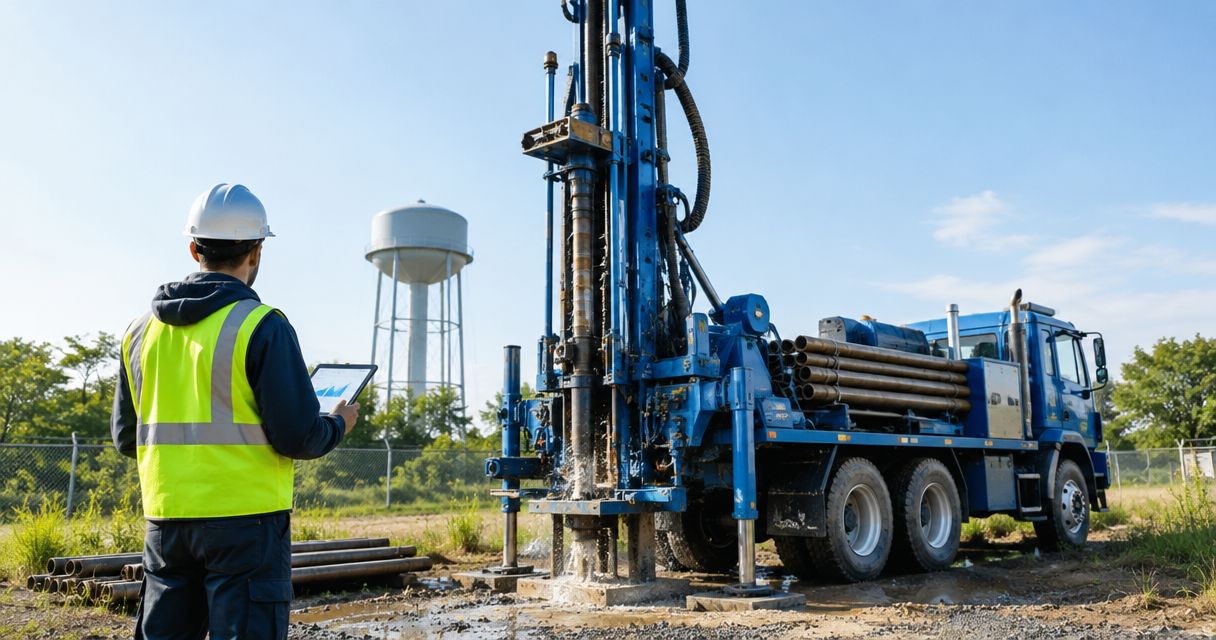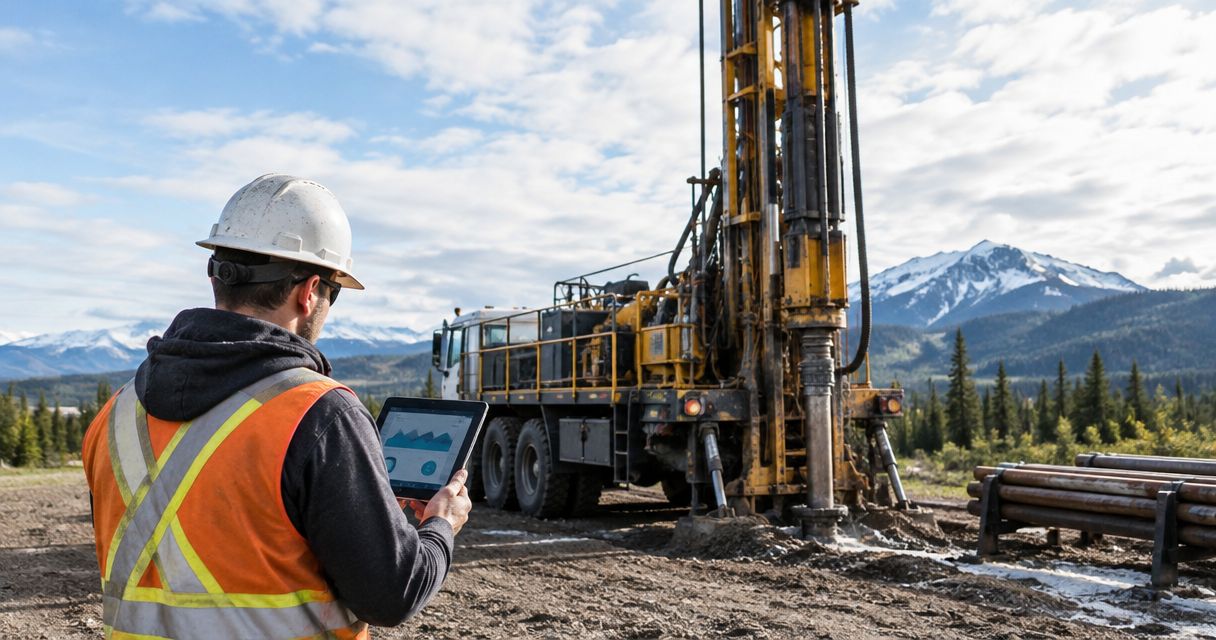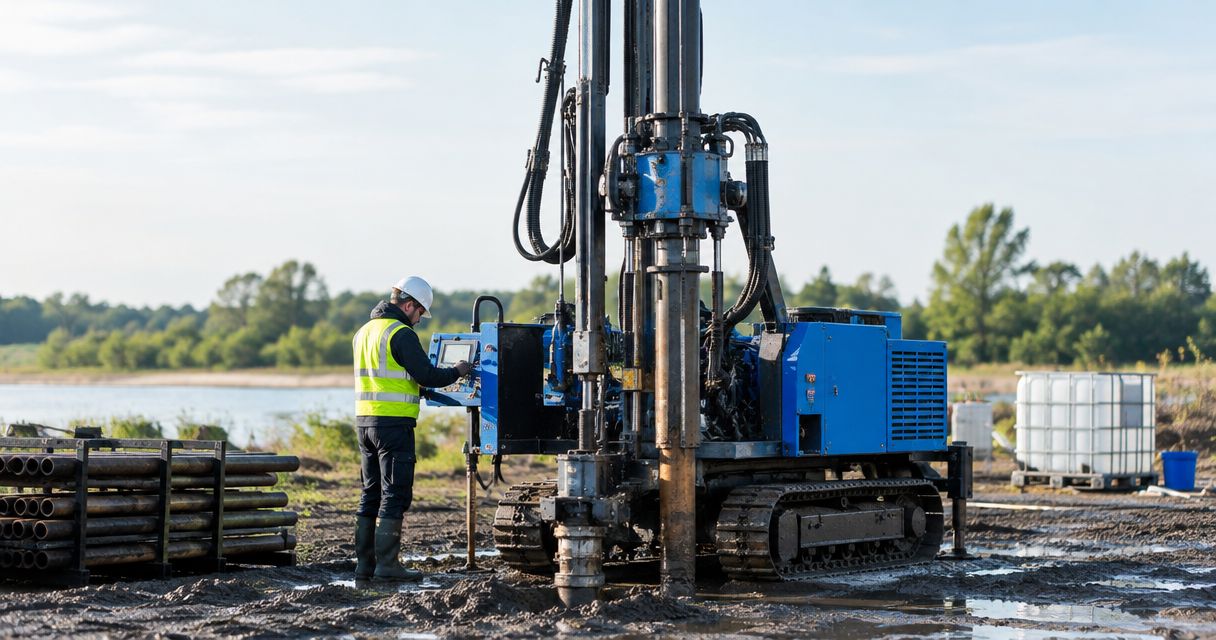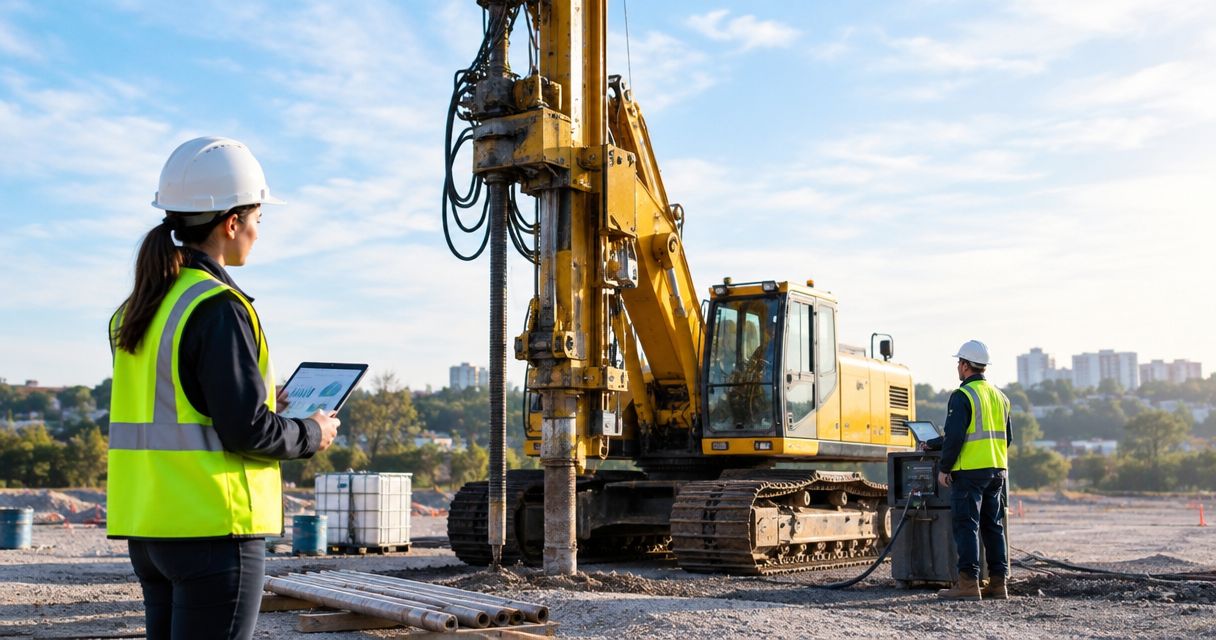
Foundation testing firms’ drilling equipment is the machinery used to advance investigation boreholes and recover subsurface samples with the aim of supporting foundation design decisions. The right drill rig for foundation testing firms in 2026 matches the specified investigation methods, site access, and sampling equipment—not simply the deepest advertised drilling capability.
- Choose a drill rig for foundation testing firms around sampling methods, site access, and verified mechanical condition.
- Drillrigmarketplace suits foundation testing firms seeking used geotechnical drilling equipment alongside repair and rebuild services.
- Truck-mounted and track-mounted rigs solve different access problems; neither replaces method-specific equipment checks.
- Inspect the complete drilling system, including tooling, sampling equipment, carrier, hydraulics, and safety controls.
Why drilling equipment matters for foundation testing firms
Foundation investigations must produce information the engineer can use. A rig that reaches the required depth but cannot support the specified sampling or testing method does not meet that objective. Rig capability and investigation quality are related, but they are not interchangeable.
Foundation testing firms also face a particular purchasing problem: the drilling machine, sampling system, and site conditions must work together. Urban infill sites, active construction areas, and locations with overhead restrictions impose different equipment requirements. The same purchase can affect field execution, sample handling, transport, and maintenance.
For your 2026 equipment plan, start with investigation requirements rather than a manufacturer shortlist. The guide to geotechnical drill rigs for engineering firms covers the related engineering-firm use case; the steps below focus on selecting equipment for foundation investigations.
How to choose a foundation investigation drill rig
Define the investigation methods first
Write a method schedule before reviewing machines. Separate borehole advancement from sample collection and in-situ testing: a machine’s ability to turn augers does not establish that its sampling equipment meets the project specification.
For conventional standard penetration testing under ASTM D1586/D1586M, a complete sampler drive covers 18 inches. The initial 6 inches serve as seating penetration; the blows for the following 12 inches determine the uncorrected N-value. Refusal and incomplete penetration require separate reporting under the applicable procedure. Owning a suitable rig does not establish that the hammer system or test execution complies.
Build your requirements around the work you actually perform:
- Identify required methods, such as hollow-stem augering, rotary drilling, or rock coring.
- List the samples and field tests required by the investigation specification.
- Record expected ground conditions, groundwater conditions, and target depths.
- Confirm hammer, sampler, and tooling requirements with the responsible engineer.
- Separate routine requirements from occasional work you can subcontract.
Measure access before choosing the carrier
A carrier is part of the drilling system, not a secondary purchase detail. Truck-mounted equipment connects drilling capability with a road-going vehicle, while track-mounted equipment provides a different approach to movement around a site. Neither configuration proves suitability for weak ground, steep slopes, or restricted access.
For each representative site, record the route from the unloading point to the borehole. Include gates, turns, overhead obstacles, working platforms, and space for support equipment. A compact machine still needs room for safe setup and tooling handling.
Use a measured site-access sheet rather than photographs alone:
- Measure entrance width, overhead clearance, and the narrowest turning location.
- Identify ground-bearing requirements and obtain appropriate platform guidance.
- Record operating height separately from transport height.
- Allow working space for rods, augers, samples, water, and spoil handling.
- Confirm transport dimensions and loading arrangements for the exact machine.
Match the complete equipment package
Create a spreadsheet listing the rig, carrier, drilling tools, sampling equipment, and support equipment separately. Mark each item as included, excluded, or requiring verification. This manual check prevents a machine description from becoming an assumed equipment package.
Drillrigmarketplace provides used drill rig sales and brokerage, repair and rebuild services, and help sourcing tooling, sampling equipment, parts, and transportation. That makes the company relevant when your purchase involves more than the drilling machine itself. The remaining work is machine-specific: confirm condition, included equipment, and compatibility rather than treating the service range as proof of suitability.
Drillrigmarketplace is best for foundation testing firms seeking used drill rigs and repair services from one company.
For a 2026 purchase, reconcile these details before accepting a package description:
- Match tool connections and dimensions to the proposed drilling system.
- Check rotation, feed, pullback, and lifting requirements against documented ratings.
- Identify required pumps, compressors, or fluid-handling equipment.
- Confirm the exact sampling and hammer equipment included.
- List missing tools, adapters, guards, and support equipment separately.
Inspect the machine beyond its appearance
Start with maintenance records, an inspection checklist, and a qualified mechanic familiar with drilling equipment. Inspect both the drilling functions and the carrier. Fresh paint does not establish hydraulic condition, structural integrity, or the condition of the truck beneath a mounted rig.
Drillrigmarketplace operates a repair and rebuild facility in Beaver, West Virginia, with services including hydraulic, electrical, safety-system, drivetrain, and fabrication work. Those capabilities provide a route for addressing identified defects. They do not establish what work a particular machine has received; request a machine-specific record.
An operating demonstration should follow the manufacturer’s instructions and an agreed safe procedure. Keep personnel clear of rotating equipment, suspended loads, and pressurized systems.
- Review service records, identification details, and documented repairs.
- Inspect accessible structural areas for damage and previous modifications.
- Check hydraulic operation, leaks, hose condition, and abnormal movement.
- Verify guards, emergency controls, and other fitted safety systems.
- Inspect carrier brakes, steering, tires or tracks, and mounting condition.
- Record defects and obtain a written repair scope before acceptance.
Verify sampling performance separately
Mechanical operation and testing performance need separate acceptance criteria. A rig can rotate and feed normally while the sampling arrangement remains unsuitable for the specified investigation. Confirm the complete system rather than relying on a general demonstration video.
For SPT work, review the hammer arrangement, maintenance history, and energy documentation required by the project. Do not assume an automatic hammer produces a particular energy ratio. For rock coring, check the proposed barrel, bits, rods, fluid system, and sample-handling arrangements against the investigation requirements.
Your 2026 acceptance record should identify what was demonstrated and what still requires verification:
- Compare the sampling configuration with the project specification.
- Request relevant hammer inspection and energy-measurement records.
- Verify sampler, rod, and accessory condition before field deployment.
- Confirm core barrel and bit compatibility where coring is required.
- Record demonstration conditions and unresolved limitations in writing.
Plan transport, maintenance, and crew readiness
Build the deployment plan before committing to ownership. List the transport arrangements, operator requirements, maintenance tasks, and support equipment needed to put the rig to work. A drilling machine is not a complete field operation.
A used rig also needs a support plan that matches its actual condition. Identify who will diagnose faults, obtain parts, and perform repairs. Drillrigmarketplace offers preventive maintenance, refurbishment, truck remounts, and help sourcing transportation; confirm the scope appropriate to the specific equipment rather than assuming every task belongs in the purchase.
Keep responsibility explicit:
- Confirm hauling arrangements and applicable transport requirements.
- Review operator training needs for the exact controls and equipment.
- Establish maintenance tasks using the manufacturer’s documentation.
- Identify parts sources and repair responsibilities before mobilization.
- Plan sample storage, spill response, spoil handling, and site protection.
Set written acceptance criteria
Turn the purchasing checklist into an acceptance document. State what must be demonstrated, which documents must be delivered, and which defects require correction. Agree on how unresolved items will be handled before equipment changes hands.
Use a simple sequence: Method fit, Site access, Condition review, and Acceptance test. Each stage answers a different question; passing one does not compensate for failing another.
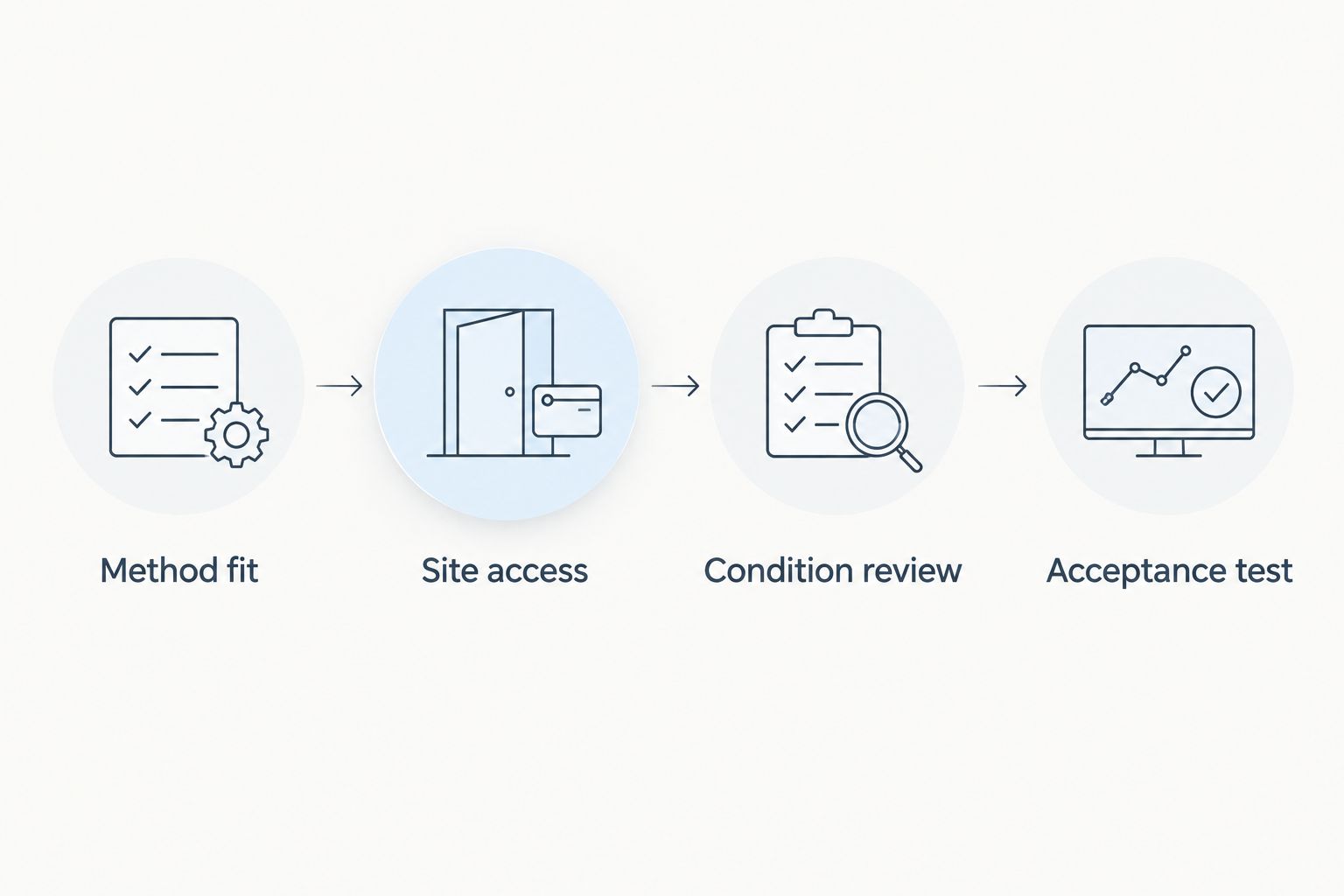
Keep the final decision tied to evidence, not the number of features on a listing. A documented limitation is easier to plan around than an assumed capability discovered at the first borehole.
- Attach the agreed equipment and tooling inventory.
- Record demonstrated functions and outstanding inspection items.
- Specify required documents, manuals, and maintenance records.
- Assign responsibility for repairs and follow-up checks.
- Obtain approval from the people responsible for field operation and testing.
Compare drill rig options for foundation investigations
Choose the configuration that meets your investigation requirements with the fewest unresolved compromises. Carrier type alone does not establish depth capability, sampling quality, or suitability for a particular drilling method. Check the exact machine and its fitted equipment.
| Option | Best for | Main advantage | Key limitation |
|---|---|---|---|
| Truck-mounted geotechnical rig | Firms working at sites with suitable vehicle access | Combines the drilling unit and road-going carrier | Vehicle access, setup space, and carrier condition require separate checks |
| Track-mounted geotechnical rig | Firms that need a tracked carrier for movement around suitable sites | Offers a different site-mobility configuration from a truck | Transport, ground support, and slope limits still govern deployment |
| Restricted-access or low-headroom rig | Firms investigating constrained locations | Addresses access or operating-height restrictions when correctly configured | Tool handling and method capability must fit the available working envelope |
| Core-focused drilling rig | Firms whose investigations specifically require rock core recovery | Supports a coring-centered equipment package | Coring capability does not establish suitability for required soil sampling or SPT work |
Carrier, drilling method, and mechanical condition are separate selection axes. A rebuilt truck-mounted rig is still subject to truck-access constraints; a compact tracked rig still needs the right sampling system. Compare written configurations, not broad category names.
Common mistakes foundation testing firms make
Confusing investigation rigs with foundation installation equipment
An investigation rig gathers subsurface information; foundation construction equipment performs a different job. Some equipment has overlapping capabilities, but the intended work must remain explicit. Write “investigation drilling and sampling” into the requirements when that is the actual purchase purpose.
Treating depth as the main acceptance criterion
A depth claim does not answer how the borehole will be advanced or what samples will be recovered. Ground conditions, tooling, and operating configuration affect the work. Require the seller to explain the basis of any capability claim and compare it with your method schedule.
Buying the machine but overlooking the sampling system
Missing samplers, incompatible connections, or unverified hammer documentation leave the investigation package incomplete. Keep a separate sampling-equipment inventory. Approve it alongside the rig rather than after delivery, when the crew is preparing to mobilize.
Assuming refurbishment covers every system
“Refurbished” does not define a repair scope. Ask what was inspected, repaired, replaced, and demonstrated, including the carrier and safety systems. Distinguish completed work from recommended work, and retain the written record with the equipment file.
FAQ
What’s the best drill rig for foundation testing firms?
The best drill rig for foundation testing firms matches their specified investigation methods, sampling equipment, and site-access requirements. Select the configuration first, then verify the exact machine’s condition and documented capabilities.
Is a truck-mounted rig better than a track-mounted rig?
Neither carrier is universally better for foundation investigations. Compare measured access constraints, transport arrangements, ground support, and working space before choosing the carrier.
Can a foundation investigation rig perform standard penetration tests?
A foundation investigation rig can support SPT work when it has suitable equipment and the testing procedure meets the applicable requirements. Rig ownership alone does not establish hammer performance, procedural compliance, or acceptable test results.
Do foundation testing firms need a rock coring rig?
Foundation testing firms need rock coring capability when the investigation specification requires rock core recovery. Confirm the coring package and any required soil-sampling capability separately.
Should a foundation testing firm buy a used or rebuilt rig?
Choose between a used and rebuilt rig by comparing documented condition, completed work, and unresolved defects. A rebuild description is useful only when the scope and acceptance checks are clear.
What should be inspected before buying a used geotechnical rig?
Inspect the drilling functions, structural condition, hydraulics, safety systems, carrier, and included sampling equipment. Use a qualified inspector and retain a written defect list and operating-demonstration record.
Does Drillrigmarketplace support repairs as well as used rig purchases?
Drillrigmarketplace provides used drill rig sales and brokerage alongside repair and rebuild services. Its Beaver, West Virginia facility handles work including hydraulic repairs, electrical and safety-system repairs, drivetrain repairs, and refurbishment.
One last thing
Before approving a 2026 purchase, ask the field lead to walk through a representative boring using the proposed equipment inventory. Have the lead identify every tool change, sample collection step, support requirement, and access constraint. A missing adapter or unverified sampling arrangement can invalidate the equipment plan even when the rig itself passes inspection.