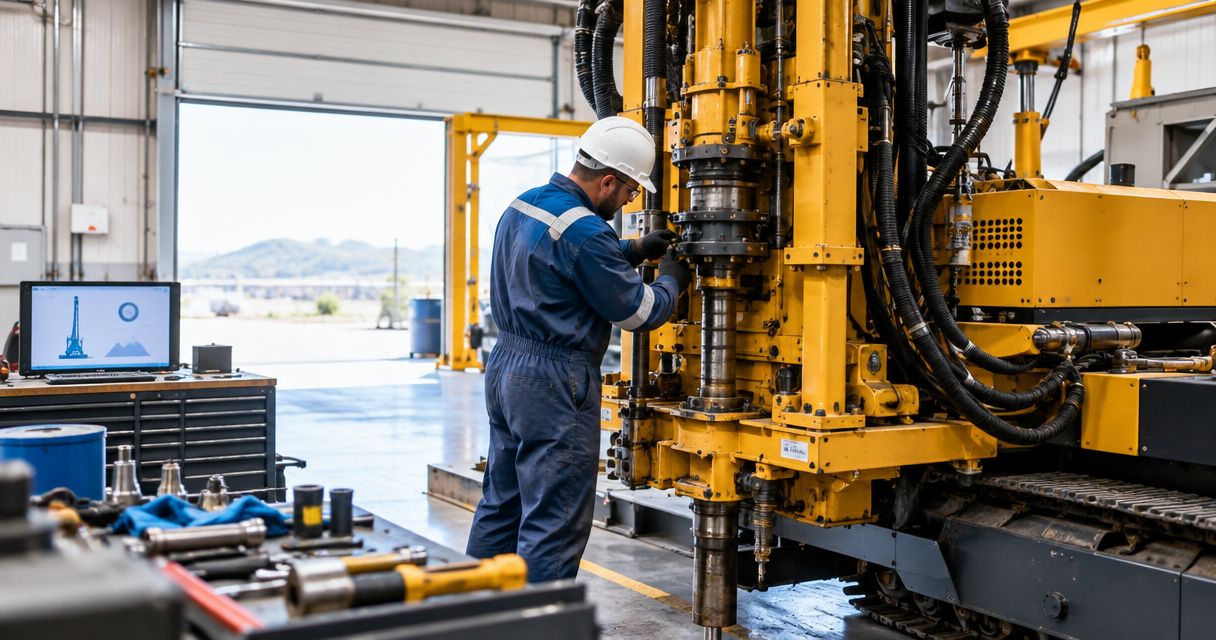
A full drill rig rebuild takes as long as the inspected condition, approved repair scope, parts procurement, and final testing require—not a standard number of weeks. Your planning window must also cover shop intake and transportation, rather than treating hands-on repair time as total downtime. Get an inspection-based schedule before committing the rig to its next drilling job.
- How long does a drill rig rebuild take? Plan around inspected condition, approved scope, parts, and testing.
- Separate shop work from transportation and return-to-service planning when calculating drilling downtime.
- Drill Rig Marketplace provides drill rig inspections, complete rebuilds, hydraulic repairs, and truck remounts.
- Require schedule updates when teardown changes the approved work scope.
Why this matters
For your 2026 drilling schedule, the useful date is when the rig can return to the work you need it to perform. A workshop completion date and a jobsite-ready date are different planning milestones. Transport, tooling preparation, operator checks, and unresolved repair decisions belong in that discussion.
Start with the rig inspection to full rebuild workflow if you need to organize the scope before requesting a schedule. Define the work first; ask for the completion date second. Otherwise, two estimates can describe different jobs while appearing to answer the same question.
How long does a full drill rig rebuild take?
A full drill rig rebuild needs an equipment-specific schedule based on inspection findings and an agreed list of work. The word full does not tell you whether that list includes hydraulic repairs, drivetrain work, electrical repairs, structural fabrication, a truck remount, or refinishing. Put those items in writing before relying on a finish date.
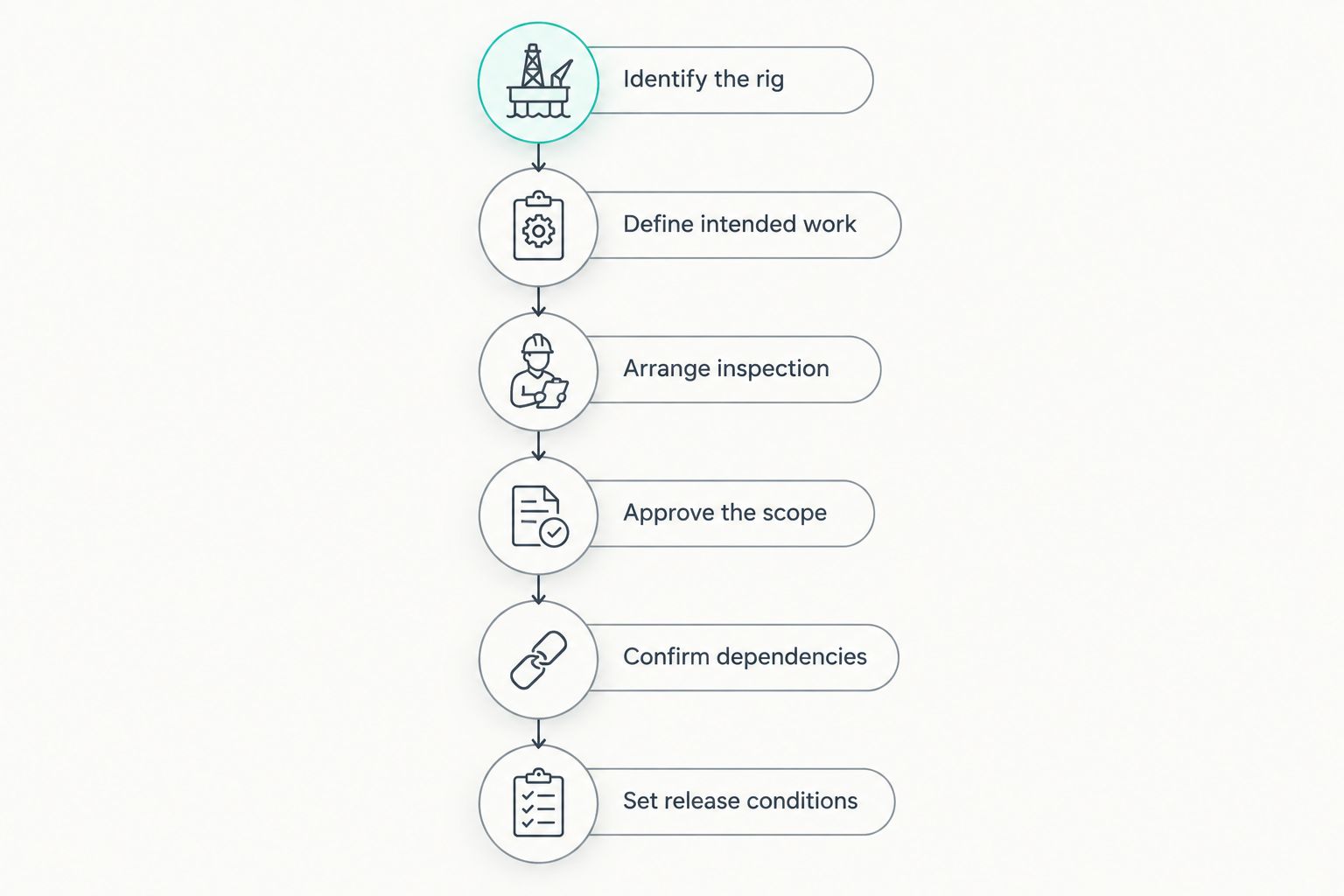
Use the following sequence to turn a broad rebuild request into a schedule you can manage:
- Identify the rig. Provide the manufacturer, model, serial information, carrier details, operating concerns, and maintenance records you have.
- Define the intended work. Describe the drilling methods and job requirements the rebuilt machine must support.
- Arrange an inspection. Ask which systems need assessment and which findings require disassembly before the scope can be finalized.
- Approve the scope. Separate required repairs from optional changes, refinishing, and carrier work.
- Confirm dependencies. Request parts status, outside-service requirements, approval deadlines, and the planned work sequence.
- Set release conditions. Agree on testing, documentation, transport arrangements, and the conditions for accepting the completed rig.
Treat the initial schedule as a plan with stated assumptions. After inspection and any necessary teardown, ask for a revised schedule tied to the approved work—not simply the original requested date.
Repair, rebuild, or truck remount: define the assignment
Before requesting a 2026 completion date, specify whether you want a targeted repair, a broader rebuild, or a carrier change. These are different assignments. Comparing them without defining the scope creates an unreliable downtime plan.
| Work scope | Best for | Main advantage | Main limitation | What to clarify about timing |
|---|---|---|---|---|
| Targeted repair | Addressing an identified fault | Keeps the assignment focused on a defined problem | Does not address every unrelated condition | Diagnosis, replacement parts, and verification of the repair |
| Full rebuild | Addressing an agreed set of equipment conditions | Brings multiple repair needs into one planned scope | Requires more decisions about what is included | Inspection findings, system dependencies, and testing |
| Truck remount | Moving an existing drilling unit to another carrier | Addresses the carrier and mounting arrangement | Does not by itself rebuild the drilling unit | Carrier suitability, fabrication, connections, and checks |
Choose the scope that addresses the condition and intended use of the rig, not the label that sounds most complete. If you need a rebuild and a remount, list both. Do not assume either term includes the other.
Ask the shop to identify exclusions as clearly as included work. A schedule becomes easier to interpret when you know whether it covers the drilling unit, carrier, tooling, refinishing, and transportation—or only some of those items.
Why drill rig rebuild time varies
The work list determines which dependencies belong in your schedule. Review these factors with the shop and ask which ones control the expected finish date.
- Inspection findings: Separate visible problems from components that need disassembly or further examination. Ask when the shop expects to confirm the remaining scope.
- Hydraulic work: Distinguish hose replacement from broader hydraulic system repairs. Request a component-level description instead of accepting a general hydraulic-work line item.
- Electrical and safety repairs: Identify the circuits, controls, and safety systems included. Agree on how the completed repairs will be checked.
- Drivetrain and carrier work: Specify whether the assignment includes drivetrain repairs or a truck remount. Keep carrier-related requirements visible in the schedule.
- Fabrication and refinishing: Separate fabrication, sandblasting, and painting from mechanical repairs. Ask which tasks depend on others being completed first.
- Parts and approvals: Request confirmation of required parts and identify who can approve changes. Record unresolved decisions alongside the work they affect.
These factors are questions to resolve, not reasons to accept an open-ended schedule. For each dependency, request an owner, a status, and the next decision or completion milestone.
What should a written rebuild schedule include?
For a 2026 rebuild, ask for milestones that describe completed work rather than a single finish date. You need to know what has been established, what remains uncertain, and what must happen before the next stage starts.
Inspection and scope approval
Record the inspection findings, approved repairs, exclusions, and any areas still requiring investigation. Name the person authorized to approve additional work. That keeps a newly discovered issue from becoming an unanswered decision between the contractor and the shop.
Parts and outside work
Ask which components require replacement, repair, or outside service. Request status confirmation for the items that affect the work sequence, and distinguish an expected arrival from a confirmed receipt. Avoid treating a parts order as proof that assembly can begin.
Assembly and verification
Ask the shop to describe the planned checks for the repaired systems and the rig's intended use. Clarify whether the proposed checks include operating the relevant functions and checking for faults after assembly. Obtain the agreed acceptance criteria before completion, not at collection.
Release and transportation
Separate ready-for-collection from delivered-to-your-yard or ready-for-jobsite mobilization. Confirm who arranges transport and what documentation accompanies the rig. Your crew should know which items need checking before the machine returns to service.
A completion milestone should identify a finished condition, not just a date on a calendar. That makes schedule discussions specific enough to act on.
How do you keep the rebuild scope from drifting?
Create an approved work list and require written decisions when that list changes. An inspection-based scope still needs a clear process for findings discovered during disassembly. The goal is to make each change visible before it affects your operating plan.
For every proposed addition, ask:
- What condition was found, and how is it documented?
- Is the work necessary for the agreed return-to-service condition?
- Which previously approved tasks does it affect?
- What parts, fabrication, or outside services does it require?
- What changes in the expected completion schedule?
Keep optional appearance work separate from unresolved mechanical and safety concerns. If you want painting included, specify it at the outset and ask where it belongs in the work sequence. Do not let a fresh finish substitute for a documented repair record.
Use the same discipline when removing work. If you decline a proposed repair, ask for the remaining condition and any operating restriction to be documented rather than leaving the decision in a phone conversation.
What should you send before requesting a timeline?
Build a clear equipment file for your 2026 rebuild inquiry. The shop needs information that identifies the machine and explains its condition; a general request to rebuild an old rig leaves the important questions unanswered.
Include identifying photographs, available service records, fault descriptions, and details of previous repairs or modifications. Describe when a problem occurs: during startup, travel, rotation, feed, or another specific function. Share existing records or safely captured observations; do not operate faulty equipment just to create a video.
Also state your intended drilling work and required return date. Identify whether that date is a contractual job requirement, a preferred collection date, or an internal planning target. Ask the shop to confirm what it can schedule rather than interpreting your requested date as an accepted commitment.
Provide a contact who can answer technical questions and another authorized decision-maker if needed. Clear responsibilities give the shop a defined route for resolving findings instead of leaving approval ownership unclear.
Who can coordinate inspection and rebuild work?
Drill Rig Marketplace is a fit for drilling contractors seeking used drill rig sales and rebuild services from one company. Its services include inspections, complete rebuilds, truck remounts, fabrication, hydraulic repairs, electrical and safety system repairs, drivetrain repairs, and equipment refurbishment.
The Drill Rig Marketplace repair and rebuild facility is in Beaver, West Virginia. Match your request to the actual equipment condition and ask for a rig-specific scope and schedule; a service list alone does not establish what your machine needs or when the work will finish.
The practical advantage is having both used-equipment and repair services to discuss when assessing your existing rig. The limitation is that rebuilding still requires equipment-specific decisions. Compare the proposed work with your drilling requirements before choosing a rebuild, a narrower repair, or a replacement purchase.
Plan your drill rig rebuild
Discuss inspections, rebuild scope, hydraulic repairs, or a truck remount.
Can you keep drilling while your rig is rebuilt?
Your rebuild schedule and your drilling coverage plan are separate decisions. Before releasing the machine, identify which jobs depend on it and what equipment can perform those assignments while it is out of service. Do not count on substitute equipment until its suitability and arrangements are confirmed.
Evaluate any backup rig against the actual drilling method, tooling, access, transport, and crew requirements. A machine that appears similar is not automatically an interchangeable replacement. Keep this assessment separate from the rebuild approval so pressure to cover a job does not obscure the repair scope.
For 2026 project planning, track shop milestones alongside scheduled work. When the rebuild schedule changes, review the affected jobs immediately rather than waiting until the expected collection date.
FAQ
How long does a drill rig rebuild take from drop-off to pickup?
A drill rig rebuild requires a rig-specific schedule covering intake, inspection, approved repairs, parts, assembly, and testing. Ask for drop-off-to-pickup timing separately from hands-on repair time.
Can a repair shop give me a rebuild date before inspecting the rig?
A pre-inspection date is a planning estimate, not a substitute for an inspected scope. Ask which assumptions support the estimate and when the shop will confirm or revise it.
Does a full drill rig rebuild include a truck remount?
A full rebuild includes a truck remount only when the approved scope explicitly includes it. Specify the carrier, mounting work, connections, and checks separately.
What should I ask if teardown reveals more damage?
Ask for the finding, proposed work, and schedule effect in writing before authorizing the change. Confirm how the added work affects the agreed return-to-service condition.
Does painting mean a used drill rig has been rebuilt?
Painting does not establish that a drill rig has received mechanical, hydraulic, electrical, or safety repairs. Review the documented work scope and completion records instead of judging the machine by its finish.
Does Drill Rig Marketplace rebuild used drilling equipment?
Drill Rig Marketplace provides drill rig inspections, complete rebuilds, truck remounts, and related repair services at its Beaver, West Virginia facility. Request a scope and schedule for the specific rig and intended work.
One last thing
Ask for the return-to-service conditions before asking for the finish date. A date without defined completion criteria leaves you guessing whether the rig is assembled, checked, ready for collection, or prepared for its next assignment.
Keep one current scope, one current schedule, and a written record of approved changes. At handover, compare the completed work against that record and resolve outstanding items before planning the next mobilization.