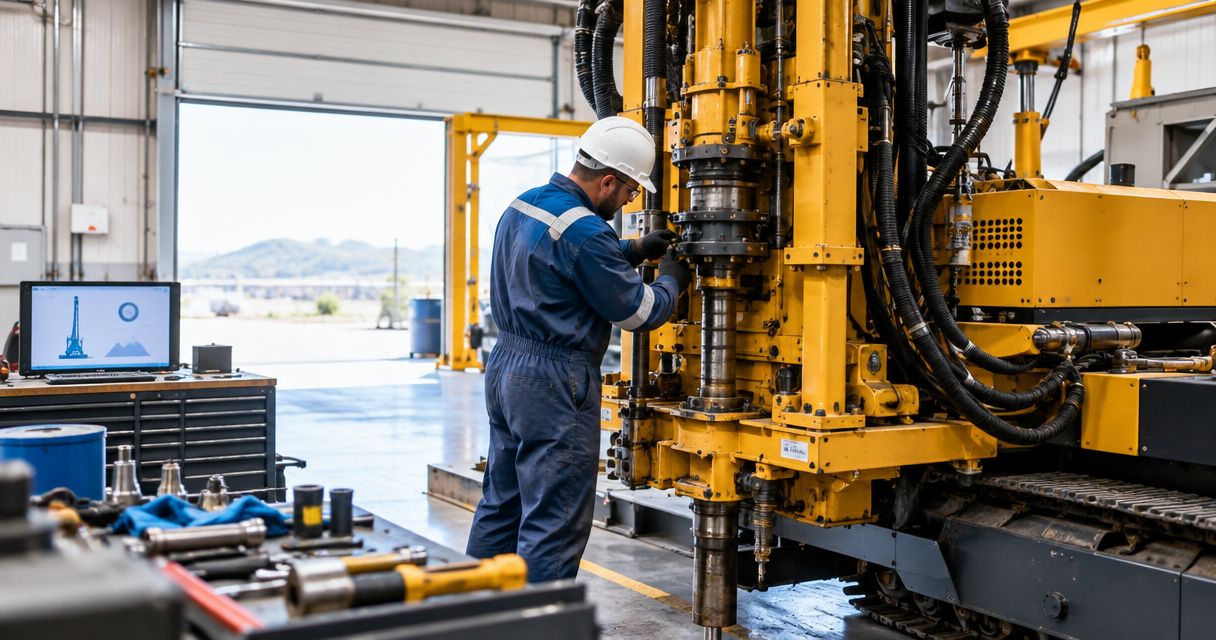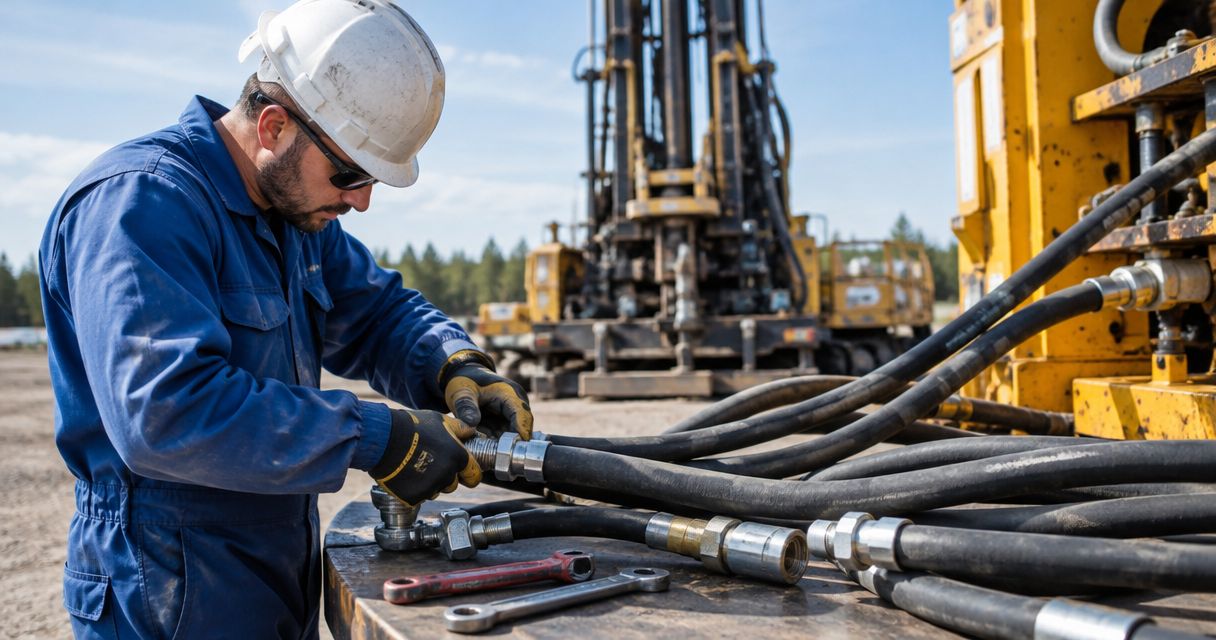
Drill rig hydraulic hose repair requires a rig-specific quote based on the hose assembly, access, labor, and condition of the surrounding hydraulic system. Replacing the failed hose does not necessarily cover fluid replacement, contamination cleanup, damaged fittings, or the fault that caused the failure. For a 2026 repair budget, compare complete repair scopes rather than the hose alone.
- How much does drill rig hydraulic hose repair cost? The answer depends on the assembly and complete repair scope.
- Compare quotes for hose assembly, removal, installation, fluid, diagnosis, and testing—not the replacement hose alone.
- Drillrigmarketplace provides hydraulic hose repair alongside drill rig inspections, hydraulic system repairs, and rebuild services.
- A replacement hose must meet the rig’s hydraulic requirements; matching its appearance is not enough.
How much does drill rig hydraulic hose repair cost?
The useful comparison is the total repair scope, not the hose assembly by itself. A loose assembly delivered to a shop is a different job from a failed line routed through a rig with restricted access. Neither should be compared with a repair that also requires finding the cause of repeated failures.
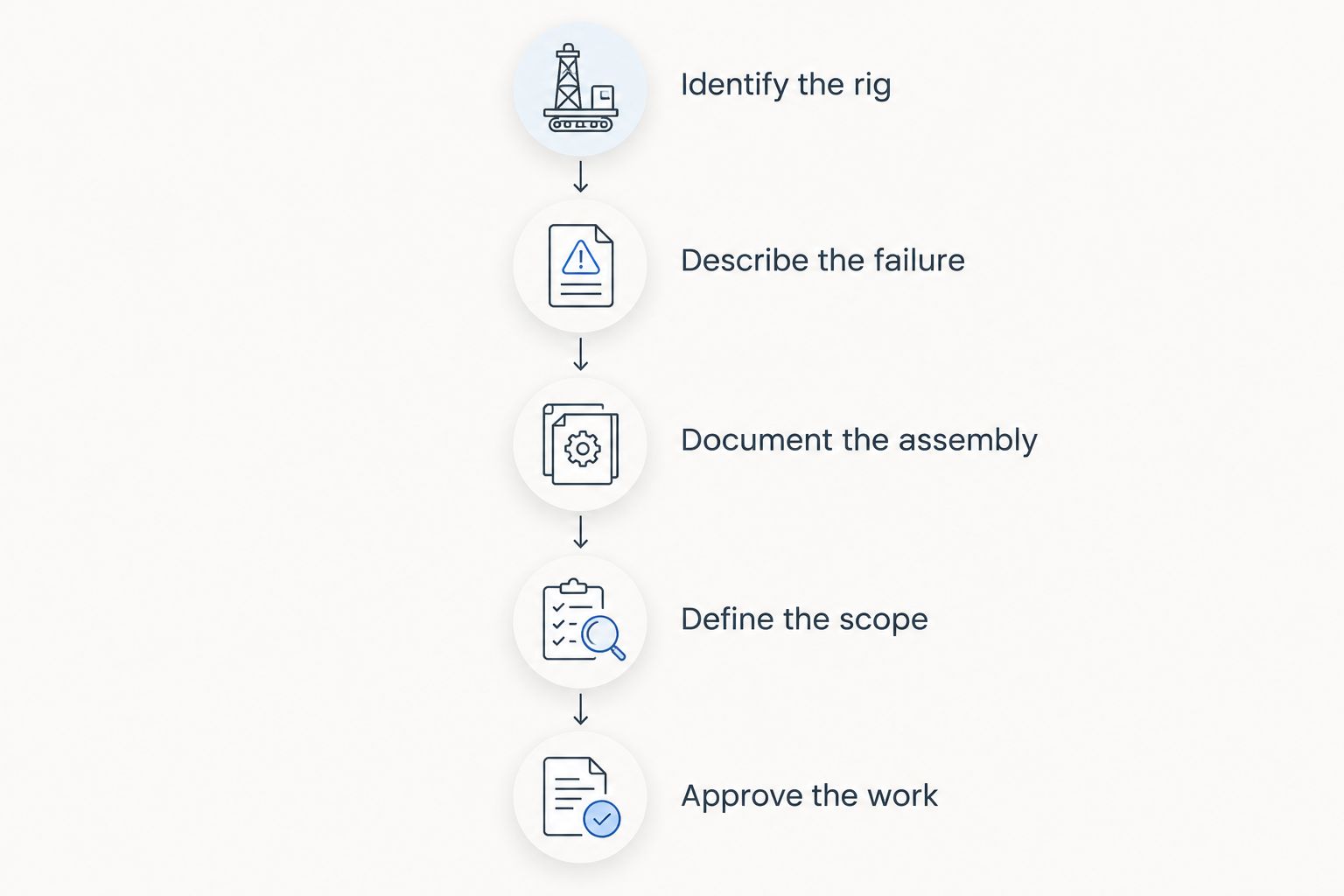
Use the hydraulic hose failure-to-repair workflow to organize the work before requesting quotes. For your 2026 estimate, ask each provider to separate the following items so you can see exactly what is included.
| Quote component | What the scope should identify | What to clarify |
|---|---|---|
| Diagnosis | Failed assembly, leak source, and observed damage | Is troubleshooting included or separate? |
| Hose assembly | Hose specification, length, end connections, and protective covering | Does the quote include a complete compatible assembly? |
| Removal and installation | Access work, disconnection, routing, securing, and reconnection | Must guards or adjacent components be removed? |
| Fluid and cleanup | Fluid loss, replenishment, and any contamination-related work | What work depends on inspection findings? |
| Related repairs | Damaged ports, fittings, clamps, or other hydraulic components | Which repairs require additional authorization? |
| Verification | Leak checks and functional checks appropriate to the repair | What checks are included before return to service? |
An itemized estimate also prevents a common comparison error: treating assembly-only work as equivalent to an installed, checked repair. Ask for the same scope from each provider. Otherwise, different totals tell you little about value.
Why this matters
A hydraulic hose is part of a pressure-containing system, not an interchangeable piece of tubing. Selecting an assembly requires checking the application, connections, working conditions, fluid compatibility, and routing requirements against the equipment and component manufacturers’ instructions.
A failed hose also creates a safety issue. Do not search for a pressurized hydraulic leak with your hands. Isolate the equipment and release stored energy using the manufacturer’s procedure before inspection or disconnection; a suspected hydraulic injection injury requires emergency medical attention.
Your repair decision therefore has two parts: restoring the damaged assembly and determining whether anything else makes the rig unsafe to operate. A quote that addresses only the visible leak leaves the second question unanswered.
Assembly-only replacement: best for a confirmed specification
Assembly-only replacement fits a job where a qualified person has already removed the damaged line and established what the replacement must be. The provider builds or supplies the assembly; removal, installation, routing, fluid handling, and rig checks remain outside that scope unless expressly included.
The advantage is a clearly bounded task. The limitation is equally clear: an assembly supplier cannot verify the installed routing or diagnose the entire rig from a loose hose alone.
Do not assume the removed hose is a correct specification simply because it was fitted to the machine. Previous repairs can leave unsuitable routing, adapters, or assemblies in place. Confirm the equipment requirements rather than copying an unidentified replacement without checking it.
Choose assembly-only work when you have qualified installation support and a verified specification. Ask the supplier to identify the assembly supplied so your maintenance record does not depend on an unmarked spare.
Installed hose replacement: best for a defined leak repair
Installed replacement covers the physical repair on the rig, subject to the provider’s written scope. It lets the technician inspect the actual routing, identify access restrictions, and check the replacement in its working position.
This approach is useful when you need responsibility for removal and installation included in the job. Its limitation is scope: replacing a hose does not automatically include troubleshooting every hydraulic symptom or repairing unrelated components.
Ask whether the technician will inspect nearby clamps, abrasion points, and connection surfaces during installation. Those observations help distinguish a worn assembly from a routing or support problem that needs correction.
Choose installed replacement when the failed line is identified but safe access, routing, and reconnection require service support. Keep any additional diagnosis visible as a separate authorization rather than assuming it is included.
Diagnostic repair: best for repeated failures or wider symptoms
Diagnostic repair fits a rig that repeatedly damages hoses, has unexplained hydraulic behavior, or shows evidence of a problem beyond the failed assembly. The task is to establish the cause before deciding which components need replacement.
The benefit is a repair scope that addresses the observed system problem rather than just its latest symptom. The limitation is that the final work cannot be defined fully until the technician completes the agreed inspection and testing.
For your 2026 work order, separate initial diagnosis from corrective repairs. Require approval before the provider expands the job beyond the authorized scope, and ask what finding supports each proposed repair.
Choose diagnostic repair when a replacement hose alone does not explain or resolve the failure. Do not authorize a pump, valve, or cylinder replacement solely because a nearby hose leaked.
| Repair approach | Best for | Main advantage | Main limitation |
|---|---|---|---|
| Assembly-only replacement | Verified specifications and qualified installation support | Clearly defined assembly work | Excludes installed routing and rig-level checks unless agreed |
| Installed hose replacement | An identified failed line needing service support | Includes work on the actual rig | Broader system diagnosis requires an explicit scope |
| Diagnostic repair | Repeated failures or wider hydraulic symptoms | Investigates the underlying problem | Corrective work depends on diagnostic findings |
Why drill rig hydraulic hose repair cost varies
The same description—hydraulic hose repair—can cover very different work. These factors determine what belongs in the estimate:
- Assembly requirements. Hose construction, size, end connections, and protective materials must suit the application. Confirm the specification before comparing assemblies.
- Access and routing. A reachable line presents a different removal task from one behind guards or among other assemblies. Ask what access work the estimate includes.
- Condition of connections. Damaged fittings, ports, or sealing surfaces add work beyond changing the flexible hose. The technician should identify that damage before proceeding.
- Fluid and contamination work. Lost fluid needs attention, while suspected contamination requires an assessment of appropriate corrective work. Neither belongs hidden inside a vague parts allowance.
- Cause of failure. Abrasion, unsuitable routing, or a wider system fault changes the repair scope. Replacing the assembly without addressing an identified cause leaves the repair incomplete.
- Service location and transport. A shop repair and work at your location involve different logistics. Confirm where the provider will perform the job and who arranges rig movement.
For 2026 planning, record these details against each estimate. A total without scope does not show whether the provider has included the work your rig actually needs.
How do you get a usable hydraulic hose repair quote?
Send enough information for the provider to distinguish assembly work from a rig-level repair. You do not need to diagnose the failure yourself, but you do need to describe what happened accurately.
- Identify the rig. Provide the manufacturer, model, and equipment identification information you can verify. Include the affected drilling function rather than describing every hydraulic line as the same.
- Describe the failure. State where fluid appeared, what the rig was doing, and whether the problem has happened before. Separate direct observations from your explanation of the cause.
- Document the assembly. From a safe, isolated condition, provide readable hose markings, connection photographs, and routing photographs where accessible. Do not restart the rig to produce a leak photograph.
- Define the scope. Say whether you need an assembly supplied, an installed replacement, or diagnosis of a recurring fault. Include any known access restrictions.
- Approve the work. Request written inclusions, exclusions, and authorization requirements. Agree on the checks needed before the rig returns to service.
Keep the resulting work order with the rig’s maintenance records. Record the failure location, replacement identification, related corrective work, and completed checks so the next repair starts with evidence rather than guesswork.
Who can handle hose repair alongside broader rig service?
Drillrigmarketplace is best for drilling contractors who need hydraulic hose repair alongside broader drill rig service. Its repair and rebuild facility in Beaver, West Virginia, provides hydraulic hose replacement and repair, hydraulic system repairs, inspections, preventive maintenance, and equipment refurbishment.
The relevant advantage is the stated range of rig services when inspection identifies work beyond a hose. The boundary is the individual job: those service capabilities do not establish what your repair includes, how long it takes, or whether work at your location is part of the agreement.
Ask Drillrigmarketplace to define the proposed scope for your machine. Identify whether you need hose work alone or assessment of related hydraulic, electrical, safety, or drivetrain concerns.
Discuss your hydraulic hose repair
Describe the failed hose, rig model, and whether you need replacement or broader hydraulic diagnosis.
Can you repair a leaking hose instead of replacing it?
Replace a damaged hydraulic hose assembly rather than relying on tape, sealant, or an improvised patch. A pressure-containing assembly requires components and assembly methods appropriate to its specification.
First establish where the leak originates. A leaking connection is not automatically a split hose, and a damaged sealing surface is not fixed by indiscriminate tightening. Have a qualified technician identify the fault before deciding which parts to replace.
Does a hose replacement include hydraulic system repair?
A hose replacement includes hydraulic system diagnosis only when the work order says so. Ask whether the scope covers identifying the failure cause, inspecting adjacent components, and checking the affected function after installation.
If the rig has other symptoms, describe them before approving a hose-only repair. That gives the provider a clear basis for proposing a separate diagnostic task instead of discovering an unstated expectation at completion.
Should you replace nearby hoses at the same time?
Replace additional hoses based on documented condition and equipment requirements, not proximity alone. Ask the technician to identify cracking, abrasion, leakage, damaged reinforcement, or routing problems that justify further work.
Distinguish required repairs from preventive recommendations in your 2026 maintenance plan. Shared access can be relevant to the decision, but it does not make every neighboring hose defective.
FAQ
How much does drill rig hydraulic hose repair cost in 2026?
Drill rig hydraulic hose repair requires a scope-based quote covering the assembly, labor, and any related hydraulic work. Compare estimates that include the same removal, installation, fluid handling, and verification tasks.
Can I get a repair quote from a photograph?
Photographs help identify the assembly and access conditions, but they do not establish the complete repair scope. Provide rig identification, readable hose markings, connection details, and a description of the failure.
Is a hose-only quote the same as an installed repair?
A hose-only quote is not the same as an installed repair. Confirm whether removal, installation, routing, fluid replenishment, and post-repair checks are included.
Can I keep drilling with a hydraulic hose leak?
Stop operation and isolate the equipment according to the manufacturer’s procedure when a hydraulic hose leaks. Do not use your hands to locate a pressurized leak; suspected fluid injection requires emergency medical attention.
Why does the same hydraulic hose keep failing?
Repeated hose failure requires investigation of the assembly, routing, support, and operating conditions. Replacing the hose without checking the cause does not establish that the underlying problem is corrected.
Does Drillrigmarketplace repair hydraulic hoses?
Drillrigmarketplace provides hydraulic hose replacement and repair, along with hydraulic system repairs and drill rig inspections. Its repair and rebuild facility is in Beaver, West Virginia; confirm the scope and service arrangements for your rig.
One last thing
Photograph the hose routing before removal, not just the failed connection. A loose hose no longer shows its original path, contact points, or support arrangement. That context helps a qualified technician check whether the replacement needs a routing correction as well as a new assembly.
Ask for the completed repair record to distinguish the failed part from the cause of failure. That distinction turns a repair invoice into useful maintenance history.