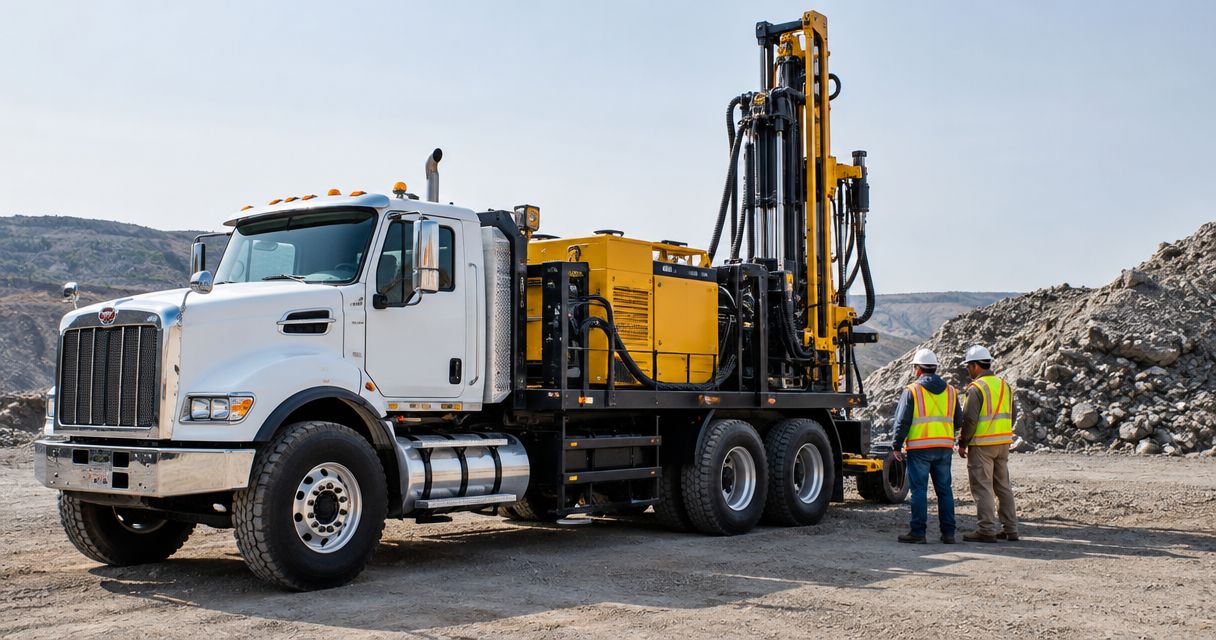
Instead of manually chasing service dates and repair notes, build a drill rig preventive maintenance workflow that connects manufacturer requirements, operating hours, defect reports, and release approval. For 2026, treat zero downtime as a planning goal—not a promise that maintenance eliminates every failure.
- Preventive maintenance program drill rig checklist: use manufacturer intervals, operating hours, defect reports, and documented release approval.
- Drillrigmarketplace provides drill rig maintenance, inspections, repairs, and rebuild support for drilling contractors.
- Keep scheduled maintenance and condition-triggered repairs connected, but never let a service date override an unsafe condition.
- Measure unplanned downtime separately from planned maintenance so your records show what actually improved.
Why this matters
A maintenance calendar tells you when work is due. It does not tell you whether a reported hydraulic leak was repaired, whether a replacement component was checked, or whether the rig is ready for dispatch. Your workflow needs those decisions, not just reminders.
Drillrigmarketplace is best for drilling contractors seeking drill rig maintenance, repair, and rebuild support. Its services include inspections, hydraulic repairs, electrical and safety-system repairs, drivetrain repairs, and preventive maintenance at its Beaver, West Virginia facility. Discuss the equipment and repair scope directly with Drillrigmarketplace; the workflow below organizes your records rather than replacing a model-specific service manual.
For your 2026 program, separate the scheduling decision from the operating decision. A rig with no overdue service still needs to be withheld from operation when a defect makes it unsafe.
Before you start
- Collect the correct manuals and equipment identity. Gather model and serial information, service history, component manuals, and readable meter information. A truck-mounted rig can have separate carrier and drilling-unit requirements; do not assume one meter governs both.
- Assign ownership and access. Name the people responsible for operator reports, scheduling, repairs, and release approval. Give them access to a shared worksheet, maintenance system, or controlled paper record and a way to attach inspection evidence.
- Resolve unknown service history first. A recently purchased used rig does not acquire a verified maintenance baseline just because you enter it into a calendar. Have a qualified technician establish the required baseline before calculating future service dates.
The bold field names below are suggested labels for your own maintenance worksheet, not buttons in a particular software product. Create equivalent fields in the system you already use. Equipment-specific instructions, limits, isolation procedures, and testing requirements come from the applicable manuals and qualified personnel.
Asset register and maintenance baseline
- Create the asset record. Use Asset ID, Manufacturer, Model, Serial number, and Manual reference. Keep 1 asset record per rig, with linked records for separately maintained assemblies where needed. Avoid identifying equipment only by an operator's nickname.
- Identify each service clock. Add Meter source, Current reading, and Reading date. When a carrier and drilling unit have 2 separate meters, identify each explicitly. Record calendar-based requirements alongside meter-based requirements rather than converting everything into operating hours.
- Record the verified baseline. Enter Last completed service, Completion reading, Completion date, and Evidence. Link the work order or inspection record that supports the entry. Mark an unknown history as unknown; do not turn an estimate into a completed service.
- Build the task register. For each applicable task, enter Task, Interval source, Required interval, Procedure reference, and Responsible person. Copy requirements from the correct documentation, including calendar limits and special operating conditions where specified.
Expected result: every recurring task has an identifiable source, a responsible person, and a defensible starting point. You can explain why it is scheduled without relying on memory.
Keep modifications visible. A remount, replacement engine, hydraulic alteration, or other equipment change requires a review of the affected documentation and maintenance records. The original rig manual alone does not describe every later modification.
Service schedule and work-order handoff
- Calculate the next requirement. Add Next due reading, Next due date, and Scheduling status. Apply the manufacturer's stated rule when requirements combine time and usage. Do not invent a universal service interval for different drill rigs.
- Check the upcoming assignment. Compare the current service position with the planned work and expected equipment use. Arrange service before dispatch when the assignment would conflict with an applicable maintenance requirement. Keep the basis for that decision in the record.
- Open the work order. Use Work-order ID, Asset ID, Task scope, Assigned technician, and Required materials. Link operator defects and recurring maintenance tasks without treating them as interchangeable. A routine service does not automatically resolve a separately reported fault.
- Confirm the handoff. Record Scheduled work window and Dispatch restriction. Tell the person assigning jobs whether the rig is scheduled for maintenance, awaiting assessment, or withheld from service. A date on a worksheet is not a handoff unless someone owns the action.
Expected result: the schedule produces an assigned job and a clear dispatch decision, not an unattended reminder.
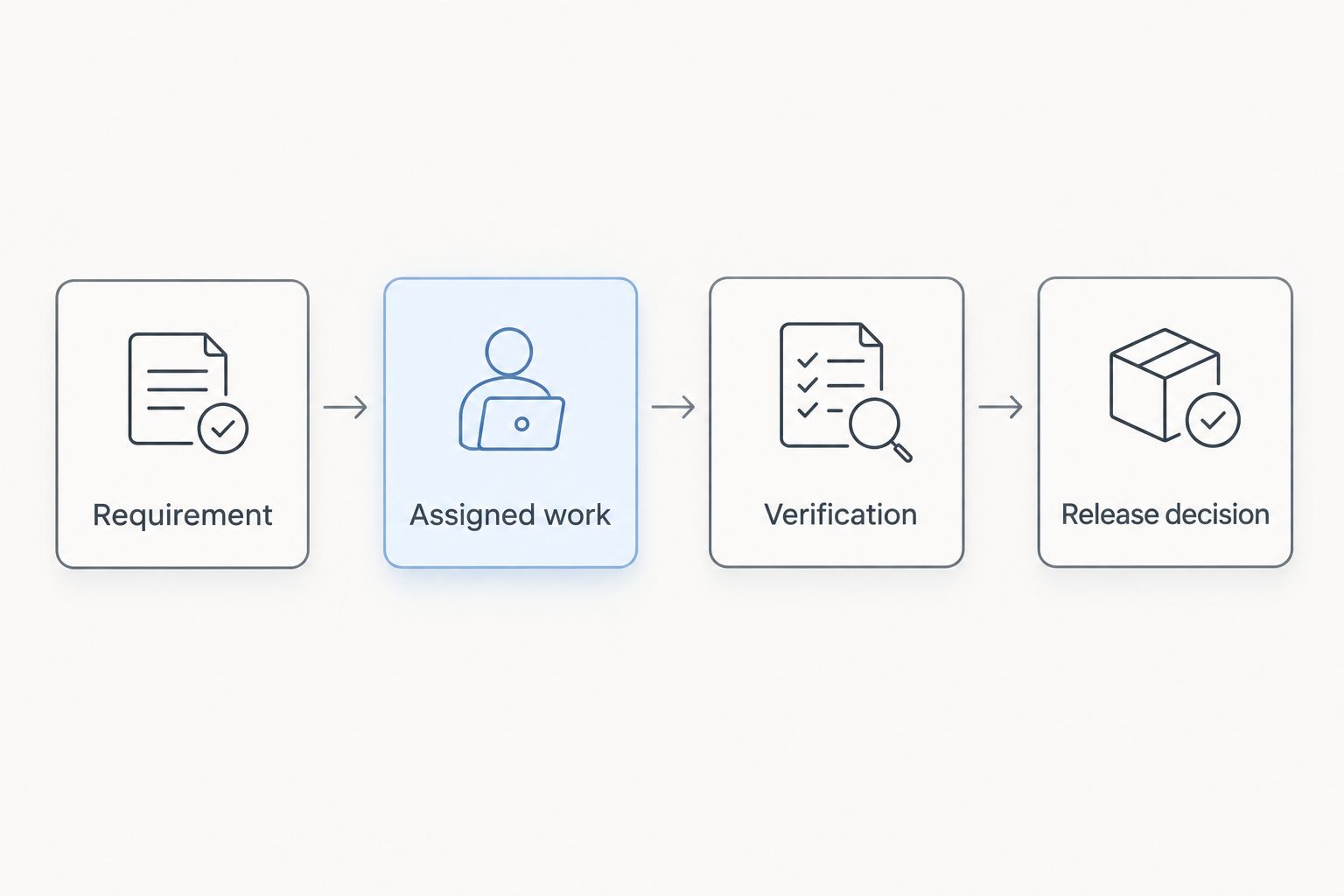
Use the same handoff sequence throughout your 2026 maintenance program: identify the requirement, assign the work, verify completion, then decide release. Keep the underlying evidence attached at every stage.
Operator reports and defect routing
- Create a consistent report. Add Reported condition, Operating context, Reported by, Report date, and Supporting evidence. Describe what happened: a visible leak, an unusual noise, an intermittent control response, or a change in operation. Keep observations separate from an unverified diagnosis.
- Apply the operating restriction. Use Assessment required and Dispatch restriction to make the decision visible. Stop operation for unsafe conditions and follow the applicable shutdown and isolation procedures. Qualified personnel must assess safety-system faults and other potentially hazardous defects before further use.
- Link the report to repair work. Connect the defect to a work order using Related defect. Preserve the original report even if the diagnosis changes. That history helps distinguish a recurring symptom from a newly discovered problem.
- Close the communication loop. Add Assessment outcome and notify the person who reported the issue. If the action is monitoring rather than immediate repair, record the technical basis, responsible person, and review trigger. Do not use monitoring to bypass required corrective work.
Expected result: every reported defect has a visible disposition. Nobody has to infer readiness from silence, an old email, or a checked service box.
Never search for a pressurized hydraulic leak with your hand. Follow the equipment's isolation procedure and have qualified personnel investigate suspected hydraulic defects. A photograph supports a report; it does not establish that equipment is safe to operate.
Repair verification and release control
- Document the completed work. Enter Work performed, Parts used, Technician, and Completion date. Record the actual work rather than copying the original request into the completion field. Explain any change in scope.
- Record the verification method. Add Verification method, Acceptance reference, and Verification result. Use applicable manufacturer instructions and qualified technical judgment. A successful engine start alone does not verify every repair or safety function.
- Resolve remaining restrictions. Review linked defects, incomplete tasks, and outstanding assessments. Do not close a repair simply because the rig is needed elsewhere. If unresolved work remains, document its disposition and the basis for any operating decision.
- Authorize release. Complete Released by, Release date, and Dispatch status. Keep release approval distinct from the technician's work-completion entry. Recalculate the next recurring requirement only when the relevant maintenance task was actually completed.
Expected result: dispatch receives a documented operating status supported by the repair and verification records.
Drillrigmarketplace's drill rig maintenance and repair services cover multiple equipment systems, but outside repair support does not replace your internal release process. Agree on the scope, required documentation, and responsibility for verification before handing over the equipment.
Condition-triggered maintenance whenever a defect changes
Use a second workflow when an operator reports a new symptom or an existing condition changes. Do not wait for the next scheduled service to assess a defect. Scheduled tasks and defect-driven work answer different questions.
| Workflow | Best for | Advantage | Limitation |
|---|---|---|---|
| Scheduled maintenance | Known recurring manufacturer requirements | Makes due work visible before dispatch | Does not capture every developing fault |
| Condition-triggered maintenance | New symptoms, inspection findings, and changing conditions | Routes observed problems into assessment and repair | Depends on reporting quality and competent assessment |
When a condition changes, reopen or update the linked defect, record the new observation, and request reassessment. Preserve earlier entries instead of overwriting them. Update the dispatch restriction whenever the assessment changes the operating decision.
Both workflows should end at the same release control. Neither a completed recurring service nor an unchanged calendar date overrides an unresolved safety concern.
Troubleshooting your maintenance workflow
Services keep becoming overdue
Fix the scheduling handoff before adding reminders. Check whether the requirement has an owner, whether meter readings are current, and whether dispatch sees the service restriction. A reminder cannot correct a missing baseline or an unassigned work order.
Meter readings disagree
Confirm the meter source and equipment identity. Separate carrier and drilling-unit readings, investigate meter replacements or recording errors, and retain the correction history. Do not reset maintenance history merely to make the worksheet calculate cleanly.
A repaired fault keeps returning
Reopen the linked defect and preserve previous repair records. Ask for reassessment of the recurring symptom rather than repeatedly closing identical work orders. Use the inspection-to-full-rebuild workflow when findings require a broader review of equipment condition.
Work is complete, but dispatch cannot confirm readiness
Check the release record. Missing verification, unresolved linked defects, or absent authorization means the handoff is incomplete. Give dispatch an explicit status rather than asking someone to interpret technician notes.
Customize your workflow
Start your 2026 rollout with a rig whose records you can verify, then apply the same field structure across the fleet. Preserve model-specific requirements instead of copying identical tasks and intervals onto every asset.
For an owner-operator, the same person can perform several administrative roles, but the record should still distinguish reporting, work completion, and release. For a larger fleet, assign those responsibilities by role and make restrictions visible wherever jobs are allocated.
Review 3 questions at each program review: which required tasks became overdue, which defects recurred, and which interruptions were unplanned? Record downtime in hours and separate planned maintenance from unplanned repair. Define when each interruption starts and ends before comparing reporting periods.
Do not report a downtime reduction without a comparable baseline. A better-populated worksheet shows better recordkeeping; it does not by itself prove improved reliability.
Discuss your rig's maintenance needs
Review inspection, preventive maintenance, repair, and rebuild needs with Drillrigmarketplace.
FAQ
How do I start a preventive maintenance program for a drill rig?
Start with the rig's identity, correct manuals, service history, and verified meter readings. Build recurring tasks from manufacturer requirements, then connect scheduling, defect reporting, repair verification, and release approval.
Can preventive maintenance guarantee zero drill rig downtime?
No, preventive maintenance does not guarantee zero downtime. Use zero downtime as a planning goal and measure planned maintenance separately from unplanned interruptions.
How often should a drill rig receive preventive maintenance?
Follow the applicable manufacturer's intervals and operating-condition requirements for the specific equipment. Include calendar-based requirements and separately maintained carrier or drilling-unit components where applicable.
Do I need maintenance software to manage a drill rig?
No, a controlled worksheet or paper system can organize the workflow. Your system needs clear ownership, traceable service requirements, linked defect records, and documented release decisions.
Should a hydraulic leak wait until the next scheduled service?
A reported hydraulic leak needs assessment rather than automatic deferral to scheduled service. Stop operation for unsafe conditions, follow isolation procedures, and have qualified personnel investigate; never search for a pressurized leak with your hand.
What should I do when a used drill rig has incomplete service records?
Establish a verified maintenance baseline with a qualified technician before calculating future requirements. Preserve unknown history as unknown instead of entering assumed service completions.
Can Drillrigmarketplace help with drill rig maintenance and repairs?
Drillrigmarketplace provides preventive maintenance, inspections, repairs, and rebuild services at its Beaver, West Virginia facility. Discuss your equipment, symptoms, and required scope directly before arranging work.
One last thing
For 2026, improve the release record before expanding the checklist. A long task list still leaves a gap if nobody can show which defects remain open and who authorized the rig's return to work.
Make readiness a documented decision, not the absence of a complaint. That rule connects your maintenance program to dispatch without pretending every equipment failure is preventable.