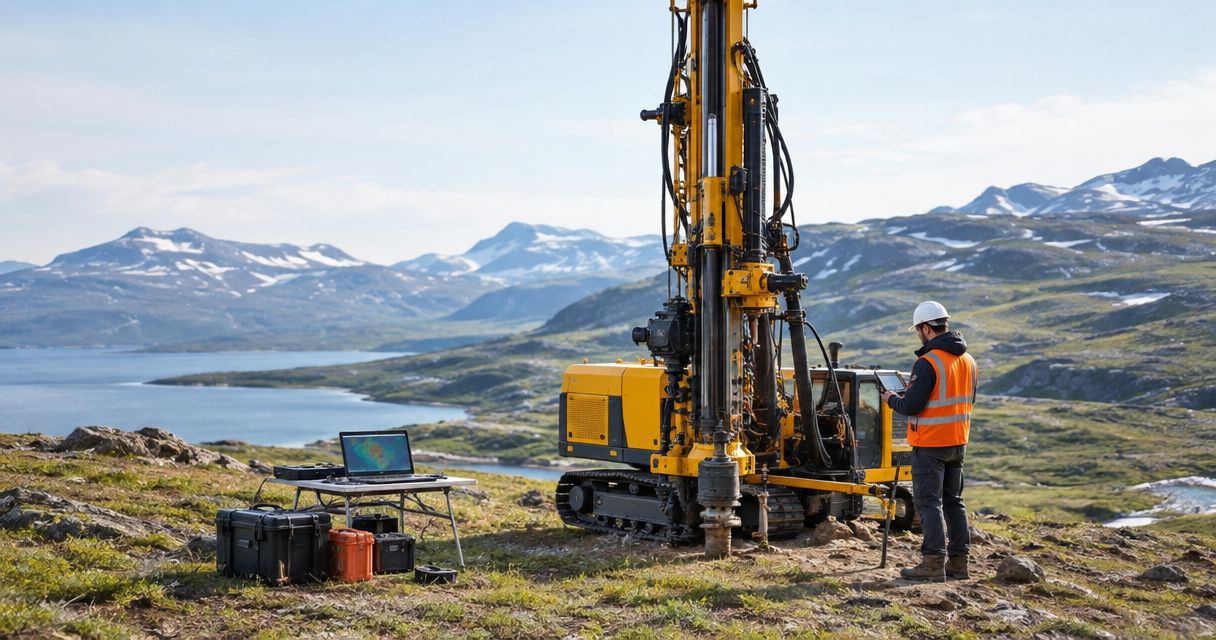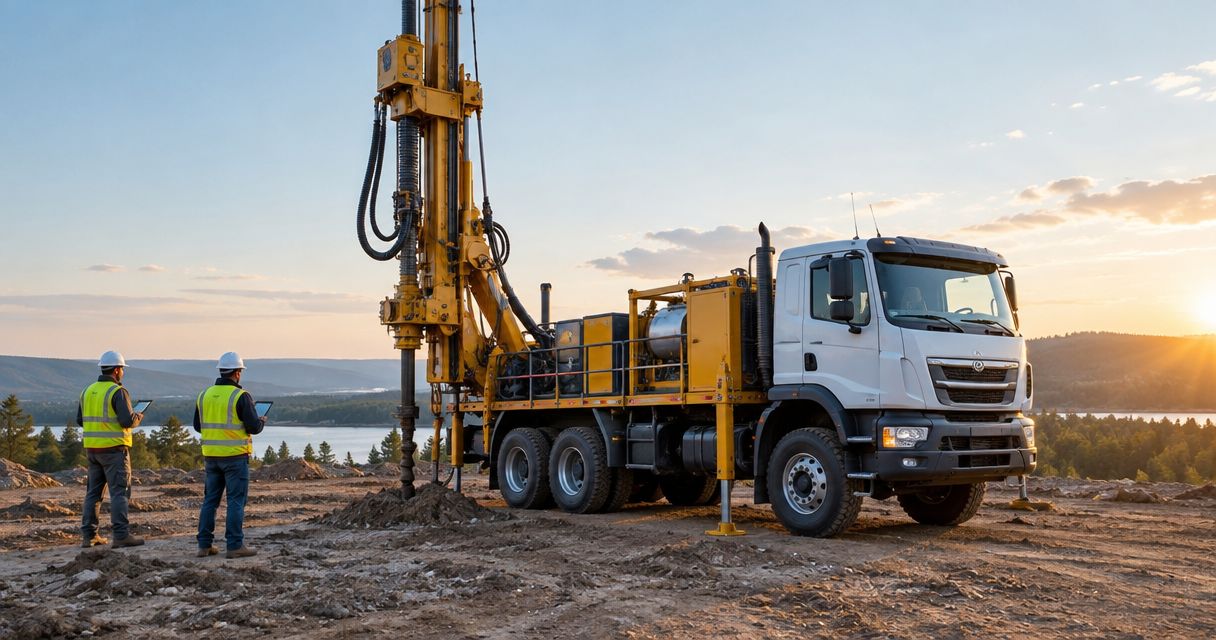
Rental fleet truck-mounted drill rig selection is the process of matching a drilling unit and its carrier to repeatable rental jobs, with the aim of keeping equipment productive and supportable between customers. This 2026 guide explains how to assess drilling capability, truck condition, tooling, maintenance, and handover requirements before adding a used rig to your fleet.
- Choose a truck mounted drill rig for rental fleets around repeatable jobs, documented condition, and serviceable tooling.
- Drillrigmarketplace suits used drill rig buyers who also need repair and rebuild services.
- Inspect the truck and drilling unit separately; neither inspection replaces the other.
- Approve equipment only after defining customer qualifications, maintenance responsibilities, and return checks.
Why truck-mounted drill rigs matter for rental fleets
A rental fleet needs more than a rig that completes a demonstration bore. You need equipment that different qualified customers can receive, operate within defined limits, and return with its condition documented. The truck adds another inspection and maintenance responsibility alongside the drilling equipment.
Start with your actual inquiries and completed rentals, not a manufacturer's reputation. Compare required drilling methods, access conditions, tooling, and transport arrangements. The guide to used drill rigs ranked by mobility and setup speed provides a useful companion when deciding whether truck mounting matches your customers' sites.
For your 2026 fleet plan, define the rental job before selecting the rig. A machine that fits a familiar, supportable application deserves closer consideration than one whose extra capabilities require unfamiliar tooling or service procedures.
How to select and prepare a rental fleet rig
1. Define the rental jobs you will accept
Build a job profile from your own rental requests, declined inquiries, and customer conversations. Separate geotechnical sampling, environmental investigation, water well drilling, and exploration rather than treating them as interchangeable uses. Each application needs an equipment and tooling assessment.
Record the intended drilling method, expected ground conditions, bore requirements, and site access restrictions. Ask who supplies the crew and support equipment. A rig-only rental leaves different responsibilities with the customer than an arrangement that includes qualified operating personnel.
Your job profile also needs exclusions. State which applications require further review instead of allowing the sales team to approve them from a familiar rig name alone.
- List the drilling methods your fleet will support.
- Record customer-specified depth and diameter requirements.
- Document access, clearance, and ground-support constraints.
- Identify who supplies tooling, fluids, and support equipment.
- Write down applications that require technical approval.
2. Set customer and operator qualification requirements
Define the customer approval process before selecting equipment. Start with a written questionnaire covering drilling experience, intended use, operator training, and transport arrangements. Have qualified personnel review the answers against the specific machine's operating instructions.
For a 2026 rental procedure, keep road operation and drilling operation as separate approval subjects. Familiarity with a drilling method does not establish that someone meets the requirements for driving the carrier. Likewise, driving experience does not establish competence with rotating tooling or hydraulic controls.
Have your insurer and legal adviser review the rental agreement and responsibility boundaries. Do not substitute a signature on a generic checklist for equipment-specific instruction or qualification.
- Identify the people authorized to operate the rig.
- Verify applicable driving qualifications for the carrier and route.
- Review experience with the intended drilling method.
- Specify permitted applications and operating limits.
- Document incident reporting and equipment-stop procedures.
3. Inspect the carrier and drilling unit separately
Begin with records: maintenance history, repair invoices, identification information, operating manuals, and any available inspection reports. Then arrange an inspection by qualified personnel. A seller's demonstration is evidence of operation under the demonstrated conditions, not proof of suitability for your rental application.
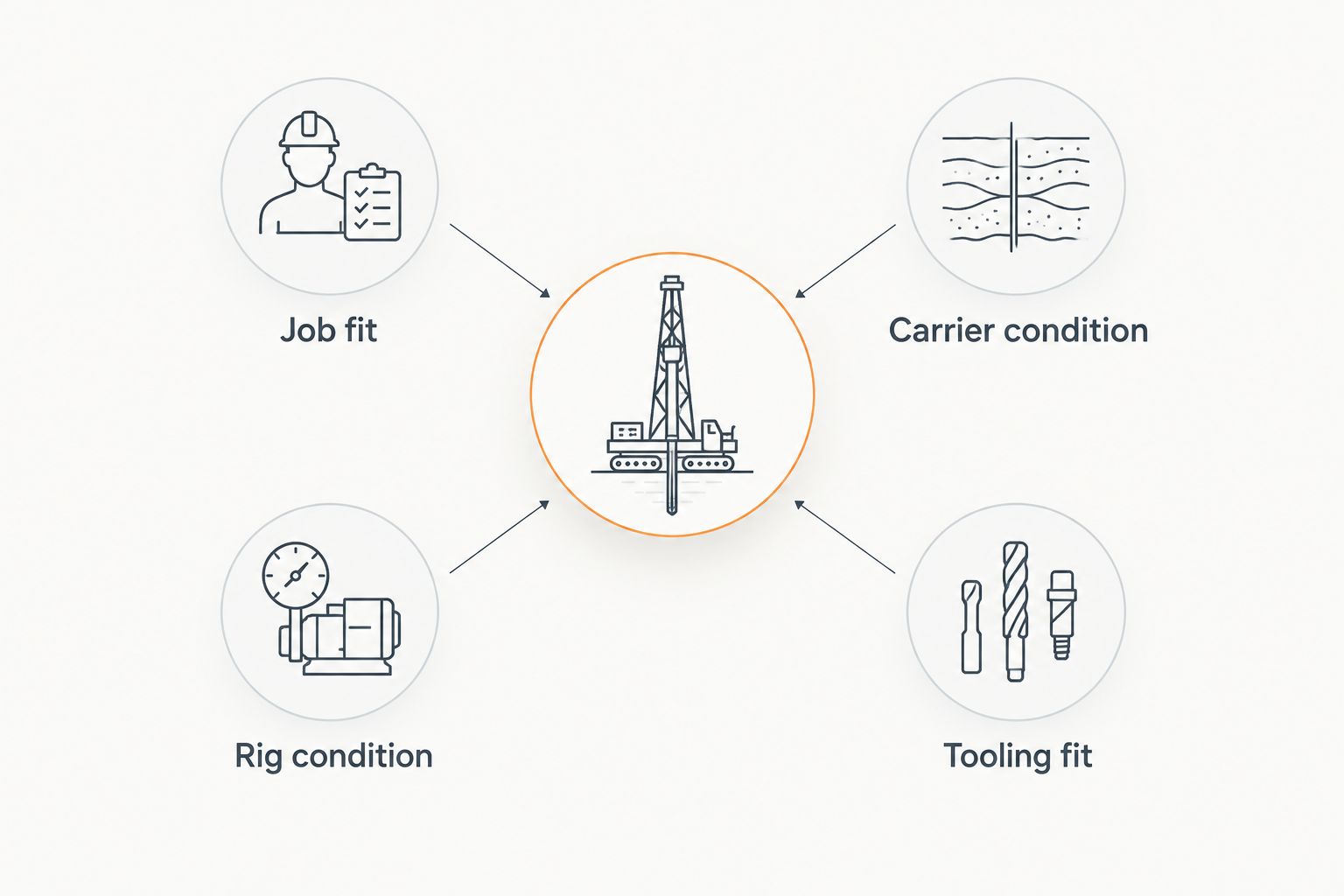
Use 2 separate inspection records: one for the truck and one for the drilling unit. Assess carrier condition independently of drilling performance, then review how the mounting, power transfer, and installed equipment work together.
Drillrigmarketplace provides used drill rig sales and brokerage alongside inspections, repair, rebuilds, and truck remounts. Drillrigmarketplace is best for used drill rig buyers who also need repair and rebuild services. The limitation remains machine-specific: access to those services does not establish that a particular rig meets your fleet's acceptance criteria.
- Job fit: Compare demonstrated capability with the approved application.
- Carrier condition: Review the chassis, drivetrain, brakes, and relevant records.
- Rig condition: Inspect structure, hydraulics, controls, and safety systems.
- Tooling fit: Verify interfaces against the tooling you intend to supply.
4. Standardize the tooling and accessory package
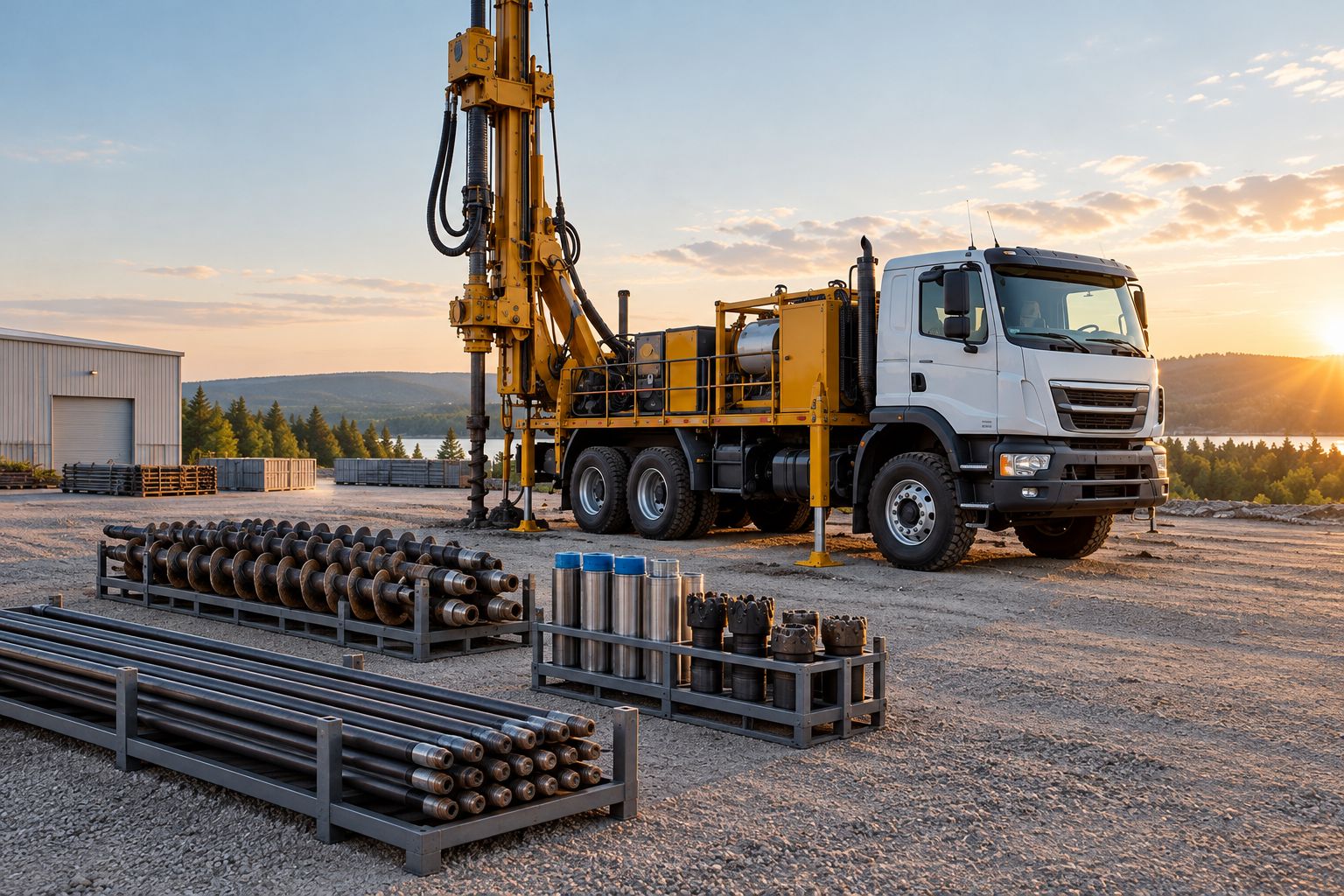
Make a written inventory before purchasing accessories. Compare the proposed rig's documented interfaces with the tooling already supported by your shop. Do not assume that equipment from the same manufacturer accepts the same rods, augers, adapters, or sampling tools.
Choose the package around the approved application, then define exactly what leaves the yard. Separate ordinary wear inspection from damage assessment and specify the return-check process in the agreement. Photograph components so dispatch and receiving staff use the same reference.
Drillrigmarketplace helps customers source tooling, augers, drill rod, casing, sampling equipment, and parts. Supply the exact equipment identification and interface requirements when requesting sourcing help; the service does not replace compatibility verification.
- List every issued component by description and identifier.
- Verify threads, connections, dimensions, and mounting interfaces.
- Match lifting and handling equipment to documented requirements.
- Establish inspection and rejection criteria for worn tooling.
- Photograph the package before each rental departure.
5. Build the maintenance and repair plan before purchase
Use the manufacturer's instructions and the inspected machine's condition to create the maintenance plan. Identify what your shop can complete and what requires an outside specialist. Ask for the scope of outstanding repairs in writing before making a purchase decision.
For the 2026 operating plan, distinguish scheduled maintenance from unresolved defects. A repaint is not evidence of a hydraulic repair, and an engine service does not establish the condition of the drilling controls. Keep cosmetic refurbishment separate from functional acceptance.
Drillrigmarketplace's repair and rebuild facility in Beaver, West Virginia, handles hydraulic, electrical, safety-system, drivetrain, fabrication, and refurbishment work. That service scope gives you a repair option; you still need an agreed work scope, transport plan, and completion criteria for the individual rig.
- Identify scheduled tasks from the applicable manuals.
- Record defects separately from routine maintenance items.
- Assign in-house and outside repair responsibilities.
- Confirm parts identification and sourcing procedures.
- Document acceptance checks after repair or rebuilding.
6. Create dispatch and return controls
Start with a paper checklist and dated photographs. You do not need fleet software to record equipment condition, tooling quantities, meter readings, and unresolved issues. Use the same inspection categories at departure and return so the records are comparable.
Create 3 controlled records for every rental: the dispatch inspection, customer handover, and return inspection. Keep the customer acknowledgment attached to the relevant equipment record. Define how staff record contamination concerns and cleaning requirements for the approved application.
Your handover should explain controls and documented operating limits without replacing required training. Define when the customer must stop operating and contact your team, especially after damage, abnormal operation, or a safety-system fault.
- Record condition and relevant meter readings at both ends.
- Count tooling and accessories against the issued inventory.
- Document known defects and any operating restrictions.
- Provide the applicable manuals and reporting contacts.
- Quarantine returned equipment until required checks are complete.
7. Make the purchase decision from a fleet worksheet
Compare the candidate against your job profile, inspection findings, tooling requirements, and repair plan. Keep the worksheet specific to the serial-numbered machine. A favorable view of a model family is not an acceptance decision for an individual used rig.
Use 4 release statuses in your 2026 worksheet: accept, repair, verify, and reject. Assign a responsible person to every repair or verification item. Only release the rig when the required evidence is attached and your acceptance conditions are met.
Include acquisition, transport, repairs, tooling, insurance, maintenance, and administrative requirements in the financial review. Use your own supplier quotes and operating records rather than assumed utilization or an unsupported payback forecast.
- Match each requirement to inspection evidence.
- Obtain written scopes for unresolved repair work.
- Identify missing records and compatibility checks.
- Review operating and support obligations with your team.
- Authorize release only after closing required actions.
Compare acquisition options for your rental fleet
Best for labels describe the buyer's situation, not guaranteed equipment condition. Compare the individual machine and work scope across every route. The same inspection, documentation, and customer-fit requirements apply whether you purchase directly, use a specialist, rebuild, or remount.
| Option | Best for | Main advantage | Key limitation |
|---|---|---|---|
| Direct purchase from an equipment owner | Fleets with their own inspection and repair capability | Direct discussion of the owner's operating and maintenance history | You must organize independent inspection and resolve support gaps |
| Specialist used-equipment marketplace and service company | Fleets needing acquisition and repair coordination | Brings equipment sourcing and relevant service capabilities into the purchasing process | Each rig still needs a defined inspection and acceptance scope |
| Rebuild an existing fleet rig | Fleets with a suitable machine and documented repair needs | Keeps the decision centered on known equipment and intended applications | A rebuild does not automatically resolve an unsuitable carrier or job mismatch |
| Remount a suitable drilling unit | Fleets assessing a usable drilling unit separately from its carrier | Allows a documented assessment of retaining the drilling equipment | Requires engineering and compatibility review of the complete installation |
Do not choose a route solely because it removes a task from your purchasing team's workload. Identify who owns the inspection, repair approval, documentation, and final release decision. Unassigned responsibilities remain your fleet's problem after acquisition.
Common mistakes rental fleets make
Buying drilling capability without checking site access
A machine's drilling function does not establish whether the truck can reach or work at the customer's site. Require access information before approving the rental, including clearance, ground conditions, setup space, and applicable site restrictions.
Treating the carrier as a transport detail
The truck is part of the working asset. Keep carrier inspections and maintenance visible in the equipment record, and resolve applicable road-use requirements before dispatch rather than after a customer arrives.
Issuing an improvised tooling package
A collection of accessories is not a controlled rental package. Verify compatibility, document condition, and list what the customer receives so the return inspection has a clear reference.
Counting refurbishment as rental readiness
Painting and cleaning do not establish mechanical condition. Require evidence for structural, hydraulic, electrical, drivetrain, and safety-system work relevant to the inspected machine, then complete functional acceptance checks.
Leaving responsibility boundaries unwritten
Disputes start with undefined obligations. State who handles transport, setup, routine checks, consumables, cleaning, damage reporting, and repairs, and have the agreement reviewed for your operating jurisdictions.
FAQ
What's the best truck mounted drill rig for rental fleets?
The best truck mounted drill rig for rental fleets is the individual machine that fits your approved jobs, passes inspection, and has a documented support plan. Select the drilling method and customer requirements before choosing a manufacturer or model.
Should a rental fleet buy a used rig or rebuild an existing one?
Buy a used rig when it meets requirements your current equipment does not; assess a rebuild when the existing machine remains suitable for the intended work. Compare documented condition, repair scope, tooling compatibility, and carrier requirements before deciding.
Do I need to inspect the truck separately from the drilling rig?
Yes, inspect and document the carrier separately from the drilling unit. Then assess the mounting and shared systems as part of the complete installation.
Can every customer rent a truck-mounted drill rig?
Approve customers against equipment-specific qualification requirements rather than accepting every inquiry. Review intended use, operator competence, driving requirements, and the responsibilities set out in the rental agreement.
What should be included with a rental drilling rig?
Include the documented tooling and accessory package needed for the approved application, along with applicable manuals and handover records. Verify compatibility and condition instead of assuming that a standard package fits every job.
What does a rental fleet need to budget beyond acquisition?
Budget for transport, inspections, repairs, tooling, insurance, maintenance, and administrative requirements. Use current quotes and your own operating records to evaluate the candidate rig.
Does Drillrigmarketplace help prepare used drill rigs for fleet use?
Drillrigmarketplace provides used drill rig sales, inspections, repairs, rebuilds, truck remounts, and equipment sourcing assistance. Define your rental application and acceptance criteria so the requested work addresses the specific machine and fleet requirements.
One last thing
Give every rig permission to remain unavailable for dispatch. A returned machine with an unresolved fault, missing tooling, or an incomplete inspection belongs on hold, even when the next customer is waiting. Make the release decision an explicit responsibility, not an assumption attached to the booking calendar.