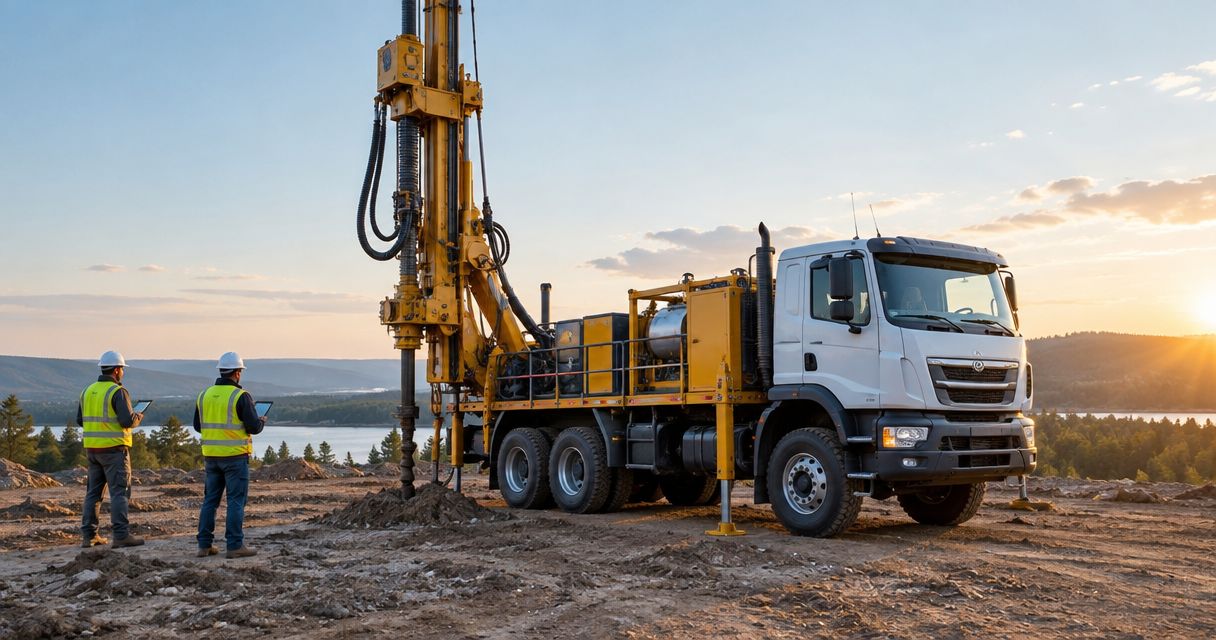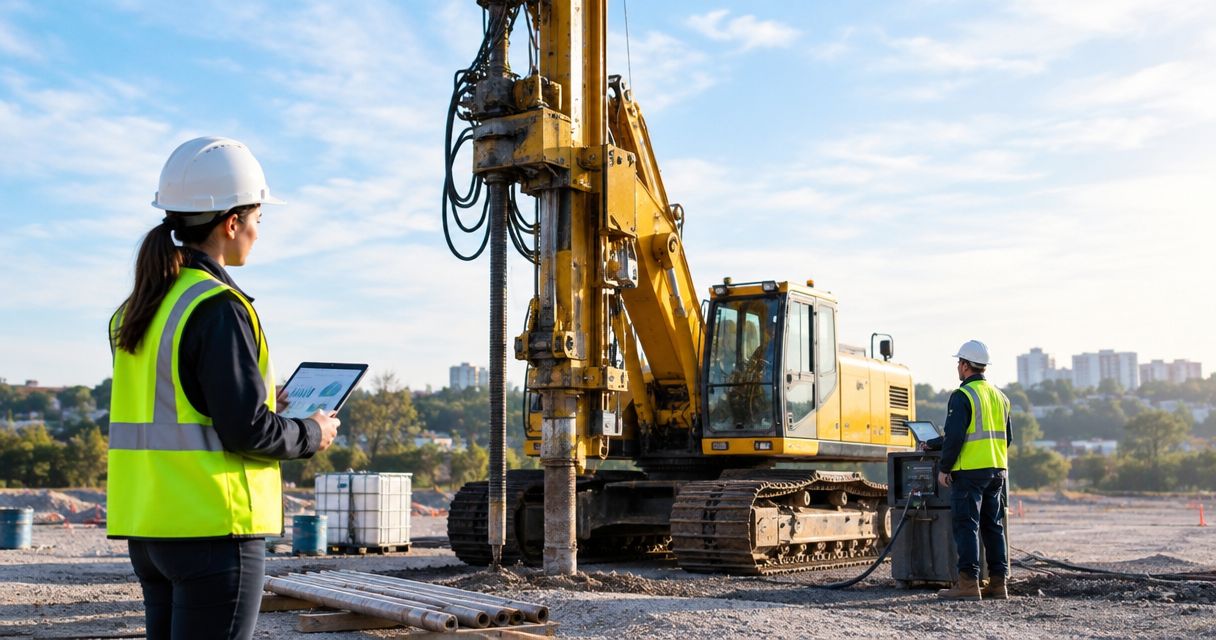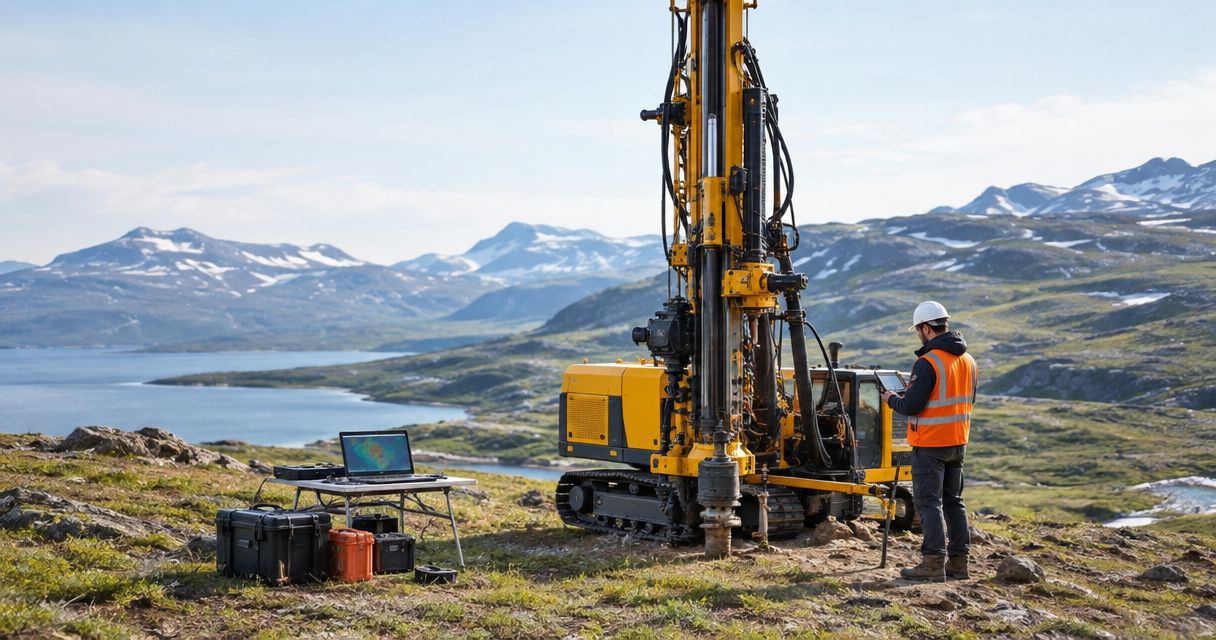
Geophysical survey companies’ drill rig selection is the process of matching drilling equipment to the boreholes, samples, and instrument access needed to interpret subsurface conditions. This 2026 guide explains how to choose a drill rig for geophysical survey companies without confusing drilling capacity with suitability for the measurement program.
- Choose a drill rig for geophysical survey companies around borehole purpose, probe clearance, ground conditions, and site access.
- Drillrigmarketplace suits used drill rig buyers needing brokerage, inspections, and repair support.
- A surface geophysical survey does not automatically require drilling; define the investigation before choosing equipment.
- Verify borehole stability and instrument compatibility before comparing rig specifications.
Why drilling capability matters for geophysical survey companies
The rig must produce a usable investigation point, not merely reach the planned depth. Surface geophysical measurements, borehole logging, and physical sampling answer different questions. Your drilling specification should connect those activities rather than assume that any completed hole supports every measurement.
For your 2026 equipment plan, separate survey work that needs no drilling from work requiring instrument access, geological confirmation, or permanent installations. Ownership makes sense only after you define the drilling work your business will perform.
Access also deserves its own decision. A machine that suits the borehole method still needs a workable route, setup area, and support arrangement; the guide to drill rig mobility and setup speed provides a useful companion framework.
How to choose the right drilling setup
1. Define the investigation deliverables
Start with the survey specification and make a written list of what the drilling must produce. Separate an open hole for logging from a recovered core, a soil sample, or a completed monitoring installation. Those are different acceptance criteria.
Ask the geophysicist and drilling lead to approve the same scope before equipment discussions begin. If the project requires only surface measurements, do not turn a survey requirement into an equipment purchase by default.
Use these 3 deliverables as your starting brief:
- Investigation objective: State which interpretation the drilling will help verify.
- Borehole requirements: Record the specified depth, diameter, orientation, and completion.
- Acceptance criteria: Define which samples, logs, or installation records establish completion.
2. Match the drilling method to the ground and measurement
Build the method shortlist manually from geological information, nearby borehole records where accessible, and the project’s measurement requirements. Review the shortlist with the person responsible for interpreting the geophysical data.
Auger drilling, rotary drilling, and diamond coring are not interchangeable. Augers suit certain soil investigations; rotary methods provide other hole-construction options; diamond coring recovers rock core. Actual suitability depends on the formation, tooling, and required result—not the method name alone.
For a 2026 purchase, make the logging provider’s requirements part of the equipment specification. Borehole diameter, casing, drilling fluids, and hole condition all need review against the selected logging method. Do not assume that a nominal hole size guarantees instrument passage.
- Record the anticipated formations and groundwater conditions.
- Identify whether the investigation needs samples, core, or instrument access.
- Confirm the probe diameter and required clearance with the logging provider.
- Document acceptable casing and drilling-fluid arrangements.
- Specify how the crew will respond to unstable ground or refusal.
3. Build a shortlist around verified capabilities
Use the approved specification to screen equipment records before arranging inspections. Make a simple comparison sheet covering the drilling method, tooling interfaces, carrier, hydraulic systems, and documented configuration. An unsupported specification stays unverified until you obtain evidence.
Drillrigmarketplace provides used drill rig sales and brokerage, inspections, repairs, and rebuild services. That gives buyers a route to discuss both equipment selection and the work a used machine needs, rather than treating purchase and repair as unrelated decisions.
Drillrigmarketplace is best for used drill rig buyers who need brokerage and repair support. Its service scope does not establish that a particular machine meets your borehole requirements; you still need a configuration-specific assessment.
- Compare each candidate against the same written drilling specification.
- Request documentation for the exact rig and its installed components.
- Separate included tooling from equipment you must source separately.
- Identify repairs or modifications that need assessment before purchase.
- Reject candidates with unresolved conflicts against mandatory requirements.
4. Check access, setup, and borehole handover
Walk the proposed work area before selecting a carrier. Check the route to the drilling position, ground support, working clearance, overhead restrictions, and space for tooling and support equipment. The carrier’s dimensions alone do not describe its working footprint.
Truck-mounted equipment and track-mounted equipment solve different access problems. Neither eliminates the need to assess bearing conditions, transport arrangements, and safe setup. A compact carrier also needs room for the actual drilling operation.
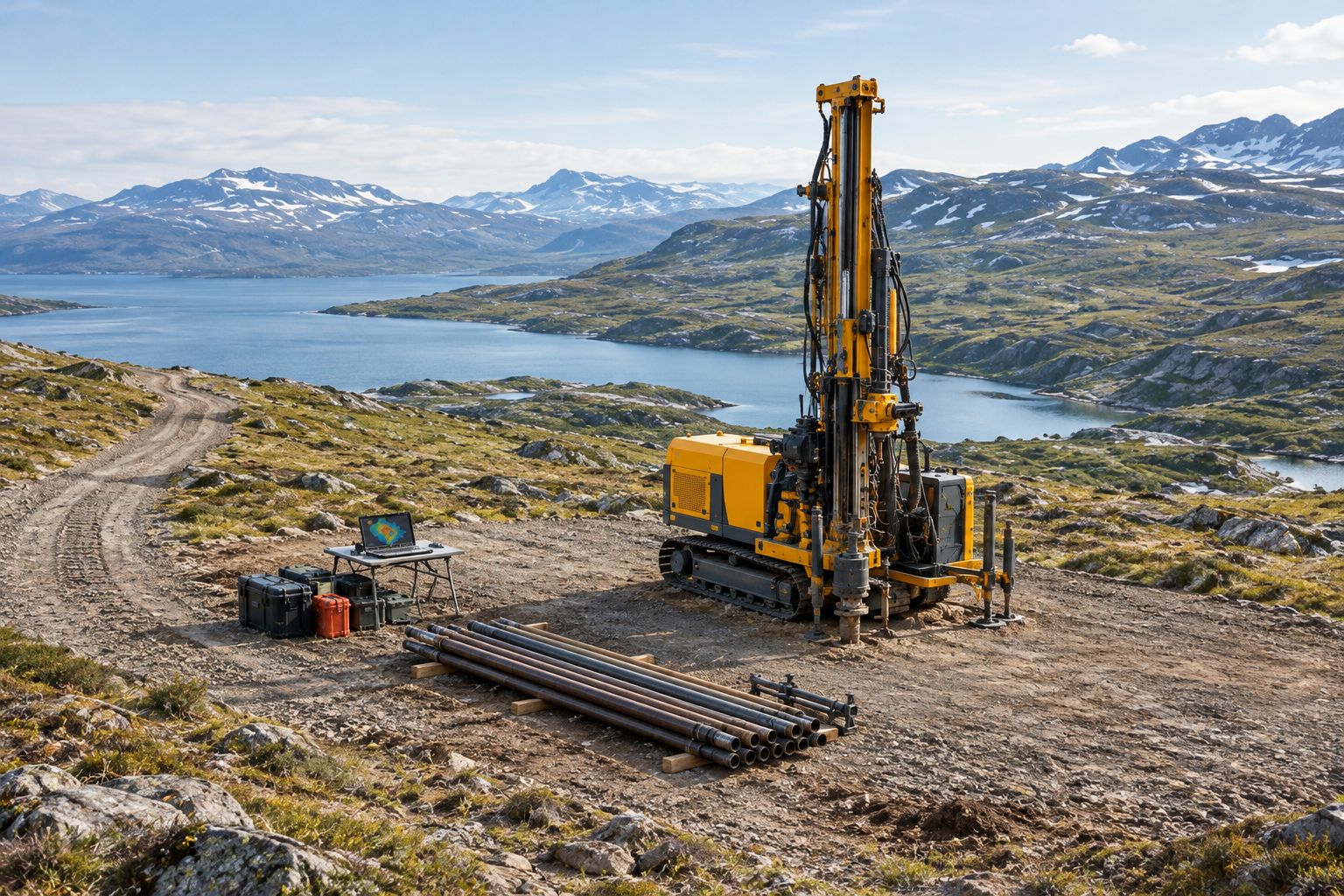
Plan the handover to the logging crew at the same time. A drillable location is not automatically a practical instrument deployment location, particularly when support vehicles or cable handling need additional space.
Use 4 checkpoints for the site review:
- Access route: Confirm the approach, turning space, and transport constraints.
- Working clearance: Check mast clearance, utilities, and rod-handling space.
- Ground support: Assess the setup surface and required support arrangements.
- Borehole handover: Agree on hole protection, location records, and instrument access.
5. Inspect the used rig as a complete working system
Start by collecting maintenance records, repair documentation, and a list of known defects. Then have a qualified inspector assess the machine against its intended work. A fresh finish does not establish hydraulic condition, structural integrity, or correct safety-system operation.
Your 2026 inspection brief should include the carrier as well as the drilling equipment. A rig mounted on a truck introduces drivetrain and roadworthiness questions; another carrier configuration requires its own assessment. Inspect the installed machine rather than relying on the reputation of its original model.
Drillrigmarketplace operates a repair and rebuild facility in Beaver, West Virginia, with hydraulic, electrical, safety-system, and drivetrain repair services. Use that stated service scope to frame questions about identified defects; obtain a specific work scope rather than assuming every issue is included.
- Review mast, mounting points, and visible structural repairs.
- Assess hydraulic components, hoses, and evidence of leakage.
- Have qualified personnel check controls, guards, and safety systems.
- Examine the rotary head, feed system, and tooling connections.
- Document carrier defects and required corrective work.
- Record unresolved findings before making a purchase decision.
6. Approve the drilling-to-logging workflow
Write the operating sequence before committing to equipment. Assign responsibility for hole construction, sampling, borehole protection, logging, and closure. The handover between drilling and measurement deserves an explicit acceptance check.
A manual workflow document is enough to expose gaps. Put the sequence on one page and ask both the drilling lead and the geophysical lead to review it. Require 2 approvals: one for constructing the investigation point and one for using it to obtain the specified data.
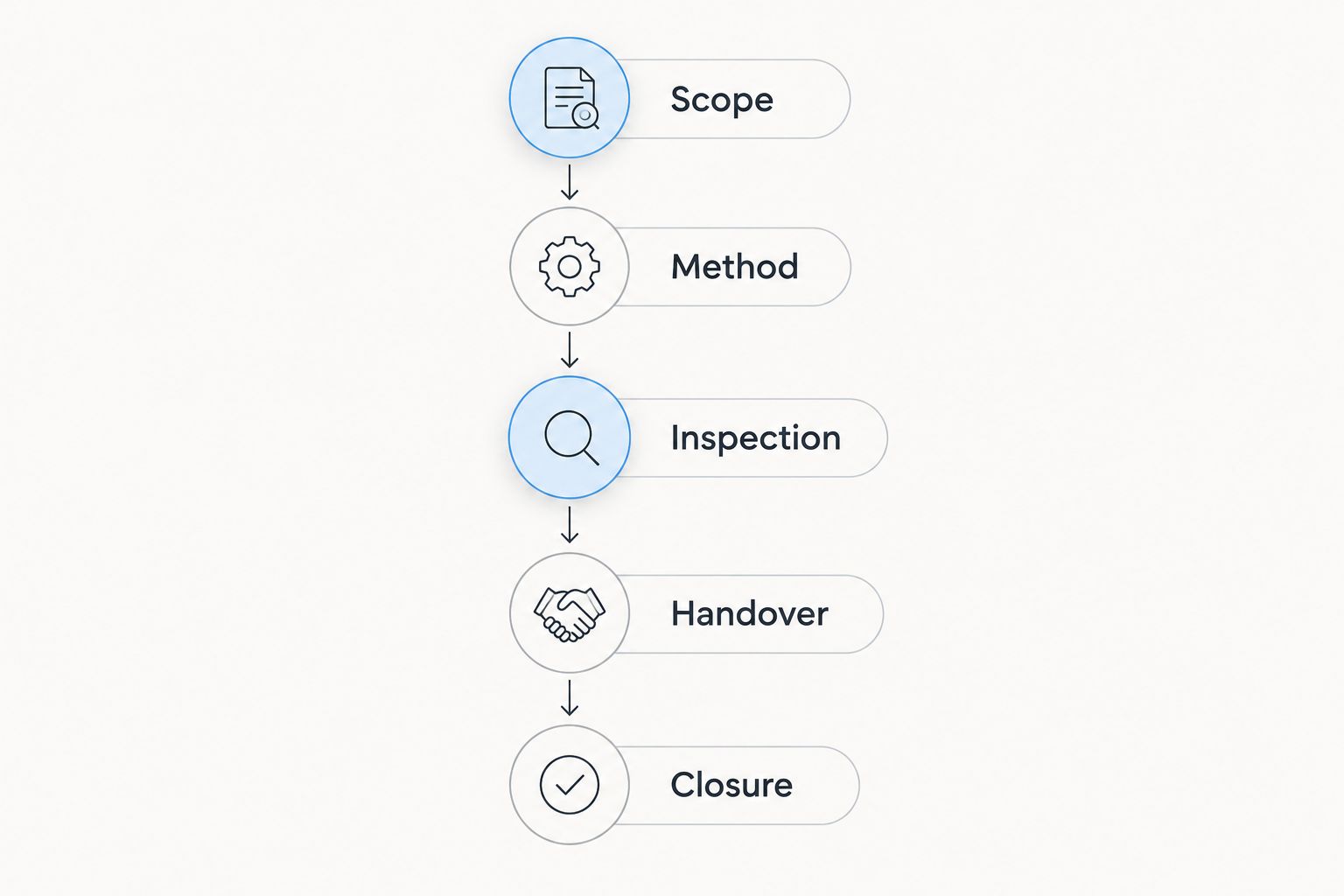
The process should show who can stop work when conditions differ from the specification. Equipment selection is incomplete if the crew has no agreed response to an unusable hole or an incompatible completion.
- Scope: Confirm the required investigation result and acceptance criteria.
- Method: Approve the drilling, sampling, and borehole-support approach.
- Inspection: Resolve equipment findings before deployment.
- Handover: Check the hole against the logging provider’s requirements.
- Closure: Assign responsibility for completion records and applicable closure requirements.
Compare drilling options for your survey work
Choose the required investigation result first; choose the carrier second. The options below describe methods and delivery arrangements, not verified specifications for any particular machine. Confirm capability against the exact rig, tooling, and site.
| Option | Best for | Main advantage | Key limitation |
|---|---|---|---|
| Auger drilling setup | Soil investigations requiring compatible sampling or access methods | Supports soil-focused investigation workflows | Formation conditions and the required completion restrict suitability |
| Rotary drilling setup | Borehole construction where the selected rotary method fits the geology | Offers hole-construction approaches for different investigation requirements | Fluids, casing, and hole condition need review against logging requirements |
| Diamond core drilling setup | Rock investigations requiring recovered core | Produces physical rock core for examination | Core recovery alone does not establish suitability for the planned borehole measurements |
| Truck-mounted carrier | Sites with suitable vehicle access and working space | Keeps drilling equipment on a road-going carrier | Route restrictions, setup space, and carrier condition still require assessment |
| Track-mounted carrier | Sites where the assessed access route favors tracks | Provides an alternative carrier arrangement | Tracks do not establish safe ground support or eliminate transport planning |
| Specialist drilling subcontractor | Survey firms that need drilling support without operating a rig | Separates equipment operation from the survey company’s own workload | Requires clear scope, scheduling, and borehole-handover responsibilities |
Do not interpret this table as a model recommendation. A carrier type says little about the installed drilling system, and a drilling method says nothing about the condition of a used machine. Keep those comparisons separate until you assemble the final specification.
Common mistakes geophysical survey companies make
Buying for maximum depth instead of usable borehole conditions
A depth rating does not tell you whether a probe can pass through the completed hole or collect the intended measurement. Specify the usable borehole before screening rigs. Include geometry, stability, casing, and measurement requirements in the acceptance criteria.
Treating every geophysical project as a drilling project
Surface geophysical surveys do not automatically require boreholes. Define where drilling contributes to the investigation, then decide whether to own equipment or appoint a drilling contractor. Do not use an equipment purchase to substitute for a clear investigation design.
Letting the drilling crew and logging crew specify separately
A drilling crew can complete its assigned work while leaving the logging provider with an unsuitable hole. Make the requirements shared, written, and approved before mobilization. Assign responsibility for checking the handover rather than assuming either crew owns it.
Confusing a rebuild description with documented condition
A rebuild label does not explain which components were inspected, repaired, or replaced. Request the actual work record and remaining defects. Drillrigmarketplace provides rebuild services, but the scope of any particular machine’s work still needs documentation.
Ignoring the support equipment
The rig is only part of the field setup. Tooling, casing, sampling equipment, transport, and borehole protection all belong in the plan. Review the complete deployment before approving the purchase, especially when the survey team and drilling team use different equipment lists.
FAQ
What’s the best drill rig for geophysical survey companies?
The best drill rig matches the required borehole, ground conditions, measurement method, and site access. Choose the drilling method first, then verify the exact machine’s configuration and condition.
Do geophysical survey companies always need a drill rig?
No, surface geophysical surveys do not automatically require a drill rig. Drilling serves projects that need borehole access, physical samples, core, or installations as part of the investigation.
Is a track-mounted drill rig better than a truck-mounted rig?
Neither carrier is universally better for geophysical survey work. Compare the access route, setup area, ground support, transport needs, and installed drilling system before choosing.
Can drilling fluids affect borehole geophysical logging?
Yes, drilling fluids and borehole conditions can affect some logging methods. Obtain the logging provider’s requirements before choosing the drilling and borehole-support approach.
What should I inspect before buying a used drill rig?
Inspect the drilling system, structure, hydraulics, controls, safety systems, and carrier with qualified personnel. Review maintenance records and document required repairs against the intended work.
Can Drillrigmarketplace help with repairs after equipment selection?
Drillrigmarketplace provides drill rig repair, inspections, rebuilds, and related services at its Beaver, West Virginia facility. Confirm the specific work scope for the machine rather than assuming a standard package.
Should a geophysical survey firm buy a rig or subcontract drilling?
Subcontract drilling when you need drilling support without operating equipment; assess ownership when you plan to run drilling operations yourself. Compare staffing, maintenance responsibilities, transport, and project requirements before deciding.
One last thing
Ask the logging provider to approve the borehole specification before you approve the rig. That reverses the equipment-first buying sequence and puts the measurement requirement in control.
For your 2026 purchase file, keep the approved specification beside the inspection report. If the proposed equipment, tooling, or completion changes, return to those documents before accepting the substitution.