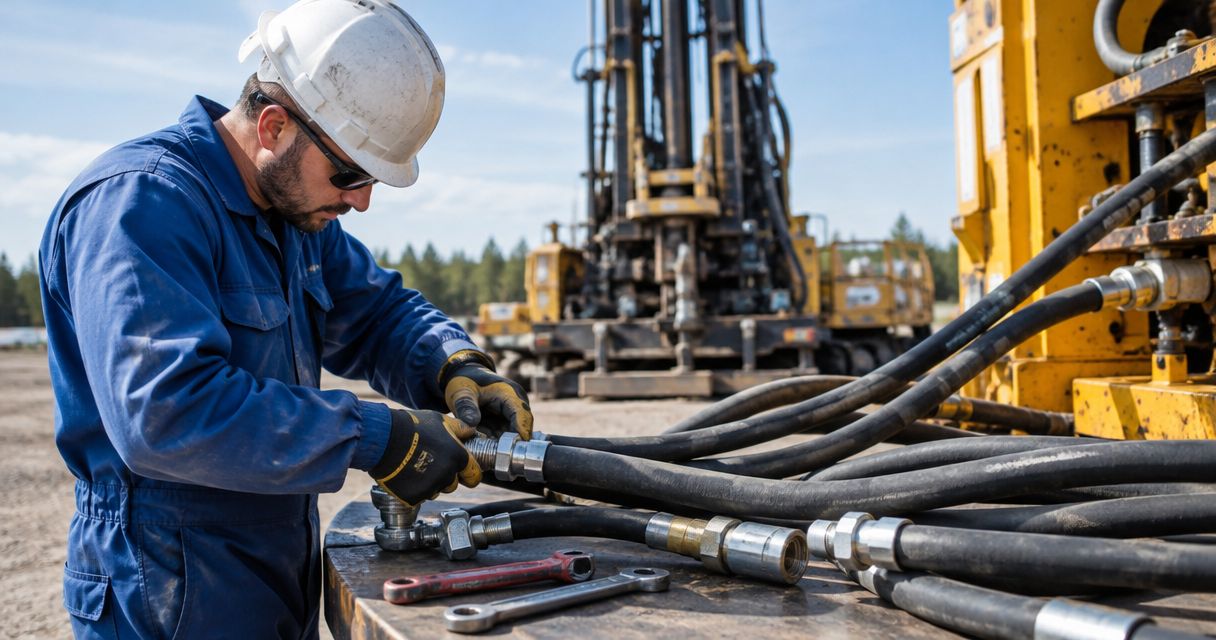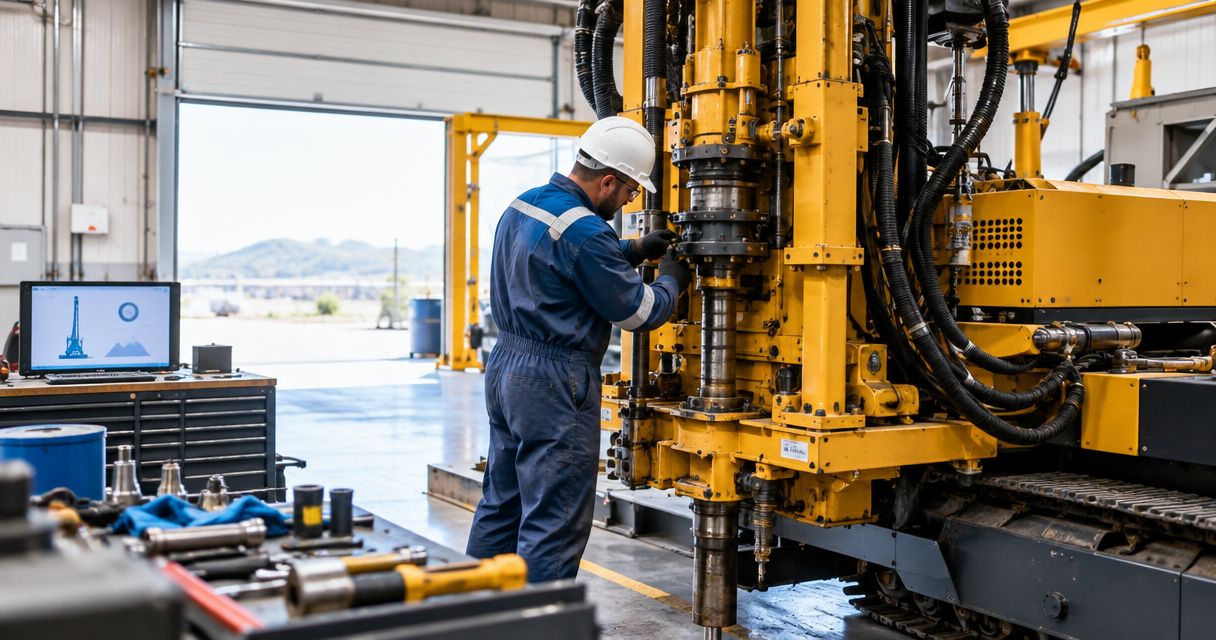
A drill rig rebuild needs an equipment-specific scope and quote in 2026, not a generic average applied to every machine. The total depends on which hydraulic, electrical, drivetrain, structural, and carrier components need work. Before approving a rebuild, establish whether inspection, transportation, truck work, tooling, and testing are included or treated separately.
- How much does a drill rig rebuild cost? Start with an inspection-based scope, not a generic average.
- Drill Rig Marketplace provides drill rig inspections, repairs, complete rebuilds, and truck remounts.
- Choose targeted repairs for an isolated problem; assess a complete rebuild when several systems need attention.
- Compare exclusions, testing, transportation, and carrier work before approving a drill rig rebuild.
Why this matters: A rebuild proposal is useful only when it identifies what will change and what will remain untouched. Two proposals carrying the same description are not equivalent if one includes hydraulic repairs and the other covers mostly refurbishment.
Drill Rig Marketplace provides both used equipment sales and drill rig repair services. That combination is relevant when you need to evaluate keeping your existing machine against replacing it, rather than treating a rebuild as the automatic answer.
How much does a drill rig rebuild cost in 2026?
A defensible rebuild budget starts with an inspection, a written work scope, and clearly stated exclusions. Model information alone does not establish the work required. A machine with a known hydraulic fault needs a different assessment from one with drivetrain problems, damaged controls, and a deteriorated carrier.
For a 2026 rebuild decision, ask the shop to organize its proposal around the following scope categories. Treat this as a request checklist, not a statement that every rebuild includes every item.
| Scope category | What to request in the proposal | What to clarify separately |
|---|---|---|
| Inspection | Systems examined and findings documented | Disassembly needed for further diagnosis |
| Hydraulic work | Hoses, components, and circuits being addressed | Components retained without repair |
| Electrical and safety systems | Repairs and functional checks specified | Existing defects outside the scope |
| Drivetrain | Components inspected, repaired, or replaced | Carrier work versus drilling equipment work |
| Fabrication and structure | Specific repairs or modifications proposed | Additional work discovered after access improves |
| Refurbishment | Surface preparation, sandblasting, and painting | Mechanical work not included in cosmetic refurbishment |
| Completion | Testing and handover documentation requested | Transportation, tooling, and other separate services |
Ask for the distinction between confirmed work and work that depends on further inspection. You need to know which decisions are settled before the rig enters the shop and which require your approval later.
The inspection-to-full-rebuild workflow is a useful next guide when you need to organize that decision before discussing individual repairs.
Targeted repair: best for an isolated problem
A targeted repair addresses a defined fault rather than renewing the entire rig. Hydraulic hose replacement, electrical repairs, or a specific drivetrain repair belong in this discussion when inspection identifies a limited problem.
Best for: Owners whose rig still suits their work and whose inspection supports a narrowly defined repair. The advantage is a clear boundary around the task; the limitation is that unrelated wear remains outside that boundary.
Ask the shop to explain the fault, the proposed correction, and the checks used to confirm the repair. Do not treat a repaired hose as evidence that every hydraulic component has been assessed.
If other defects appear during inspection, request separate descriptions. That lets you distinguish work necessary to address the original fault from additional maintenance or refurbishment you choose to authorize.
Complete rebuild: best for coordinated work across systems
A complete rebuild is the option to assess when the proposed work spans several systems. The phrase itself does not identify which components will be repaired, replaced, inspected, or left in service.
Best for: Owners who want to retain a suitable rig while addressing multiple documented problems together. The advantage is a coordinated scope; the limitation is that the word complete still needs a component-level definition.
Ask for a system-by-system list. For each major assembly, the proposal should explain the intended action and how its condition will be evaluated.
For a 2026 proposal, make the retained-component list as explicit as the replacement list. An owner needs to understand the condition of the machine being returned, not just the length of the work order.
Truck remount: best for evaluating a carrier problem
A truck remount deserves its own assessment when the drilling equipment remains relevant to your work but the carrier needs a different solution. Do not assume a drilling-unit rebuild resolves problems with the truck beneath it.
Best for: Owners evaluating whether to retain the drilling equipment while changing its carrier. The benefit is separating the drilling-unit decision from the truck decision; the limitation is that mounting, connections, and carrier suitability need their own review.
Request a written boundary between truck work and drilling equipment work. Ask which fabrication, hydraulic, electrical, and drivetrain tasks belong to each part of the proposal.
A remount is not automatically a substitute for a rebuild. If the drilling equipment also needs repairs, those tasks still require an explicit scope.
Rebuild, repair, remount, or replace?
Compare the alternatives against the condition of your equipment and the work you need it to perform. A familiar rig is not automatically the right rig to retain, and a replacement machine still requires inspection.
| Option | Best for | Main advantage | Main limitation |
|---|---|---|---|
| Targeted repair | An isolated, diagnosed fault | Keeps the scope focused | Leaves unrelated condition issues unresolved |
| Complete rebuild | Multiple systems requiring coordinated work | Brings several repairs into one defined project | Requires detailed agreement on inclusions and exclusions |
| Truck remount | A carrier problem assessed separately from the drilling unit | Separates carrier replacement from rig replacement | Does not resolve drilling-unit defects by itself |
| Used replacement | A machine that no longer matches the required work | Lets you reassess the equipment configuration | Introduces another machine that needs inspection |
Choose the scope that addresses the diagnosed problem, not the most reassuring label. Ask what evidence supports each recommendation and what condition issues remain afterward.
Drill Rig Marketplace is best for drilling contractors seeking both used drill rig sales and repair or rebuild services. Its repair and rebuild facility is in Beaver, West Virginia; transportation should therefore be part of your planning conversation, not an assumption buried in the work order.
Why drill rig rebuild scope varies
The useful question is not just whether one machine needs more work than another. It is which differences change the proposed work and your decision to approve it.
- Hydraulic condition: Separate hose replacement from broader hydraulic system repairs. Ask which components and circuits the inspection covers.
- Electrical and safety systems: Identify the faults being corrected and the functional checks requested at completion. Keep unresolved findings visible.
- Drivetrain condition: Distinguish repairs to the drilling equipment from repairs to the carrier. Neither description should silently stand in for the other.
- Structural and mounting work: List fabrication and remount tasks individually. Ask what additional inspection is needed before those tasks are defined.
- Refurbishment scope: Separate sandblasting and painting from mechanical repairs. A cosmetic task should not be presented as proof of mechanical condition.
- Supporting services: Identify transportation, tooling, parts sourcing, and other assistance separately. Confirm which services form part of the rebuild agreement.
Use these categories to compare proposals in 2026. If a category is excluded, record that exclusion rather than assuming it is covered somewhere else.
How to request a useful drill rig rebuild quote
Send the shop enough information to identify the rig, understand the complaint, and distinguish known faults from unanswered questions. A detailed request supports a focused inspection conversation; it does not replace inspection.
Identify the rig
Provide the manufacturer, model, identification information, mounting arrangement, and available maintenance records. Include photographs that show the machine and the areas involved in the reported problem.
Describe the equipment as it exists now. If components or the carrier have changed, document those changes rather than relying on the original model designation.
Describe the fault
Explain what the operator observes, when it happens, and which functions are affected. Separate observations from a suspected diagnosis.
For example, describing where a leak appears is more useful than declaring that every hydraulic component needs replacement. Let the inspection establish the repair scope.
Define the work
State what you need the rig to do after the project. Identify whether you are requesting a specific repair, broader mechanical work, a remount assessment, or refurbishment.
List tooling and sampling requirements separately from machine repairs. That keeps equipment needs from disappearing inside a general rebuild description.
Set approval boundaries
Request a written process for approving additional work discovered during disassembly or inspection. Ask how the shop will document the finding and present the proposed change.
Your approval should identify the added task. Avoid leaving the phrase repair as needed to carry an undefined project.
Agree on verification
Ask what functional checks, inspection records, and handover information the proposal includes. Identify who will review the completed work and how unresolved items will be recorded.
The completion discussion should connect directly to the original fault and authorized scope. A freshly painted rig and a completed mechanical repair are different deliverables.
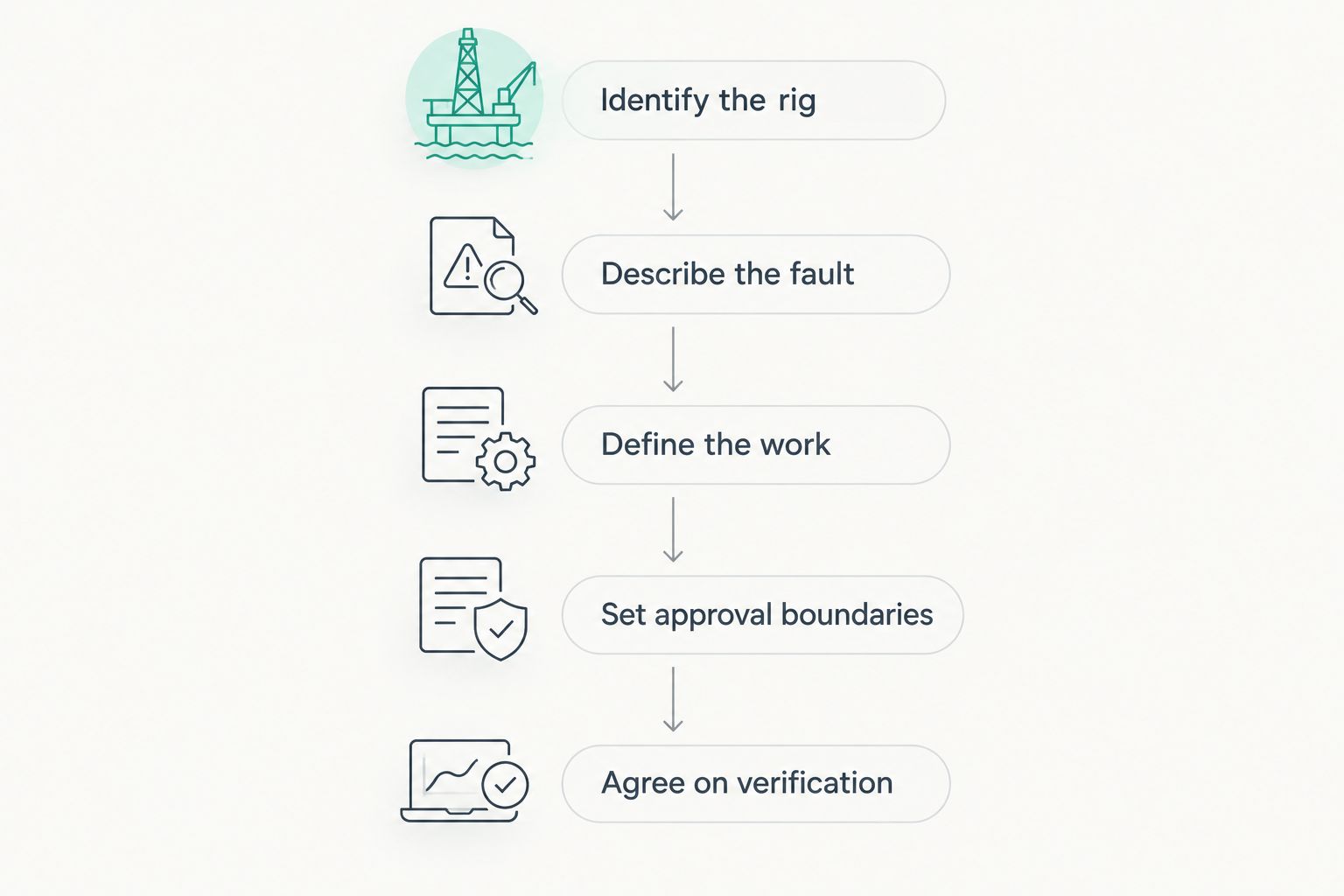
Use the same request format when comparing shops. Consistent questions make differences in scope easier to see without treating every proposal as interchangeable.
What should you check before approving the work?
For a 2026 rebuild authorization, read the exclusions before accepting the headline description. They identify the condition issues and supporting tasks that remain your responsibility.
Ask these questions before signing:
- Which findings require correction within the proposed scope?
- Which components will remain in service without repair?
- What additional diagnosis requires disassembly?
- How will additional work be documented and approved?
- Which completion checks are included?
- Who is responsible for arranging transportation?
- What records will accompany the rig at handover?
Keep the answers with the approved work order. A telephone conversation is useful for clarifying the plan, but the written scope needs to reflect the decisions you actually made.
Also separate your operating plan from the shop's repair plan. Ask about scheduling, arrange any transportation you authorize, and identify how you will handle existing drilling commitments while the machine is away.
Is rebuilding a drill rig better than buying another used rig?
Rebuilding is the option to assess when your existing rig still matches the required work and inspection supports retaining it. Buying another used rig deserves a separate evaluation when the current machine's configuration no longer meets your needs.
Compare documented condition on both sides. Do not compare a detailed rebuild proposal against a replacement listing without requesting an inspection of the replacement machine.
Keep tooling compatibility, carrier needs, transportation, and required repairs visible in both evaluations. Otherwise, you are comparing different project boundaries rather than different equipment decisions.
Does a drill rig rebuild include the truck and tooling?
A drill rig rebuild includes truck and tooling work only when the written scope says so. Request separate descriptions for the drilling unit, carrier, mounting work, augers, drill rod, casing, and sampling equipment where relevant.
This distinction matters even when one company can help with all those needs. Service capability does not establish what a particular agreement includes.
FAQ
How much does a drill rig rebuild cost in 2026?
A drill rig rebuild needs an equipment-specific quote based on inspection and a written scope. Confirm the systems being repaired and whether transportation, carrier work, tooling, and testing are included.
Can I get a drill rig rebuild quote from photos alone?
Photos support an initial discussion but do not establish the condition of every component. Ask which findings require inspection or disassembly before the scope can be confirmed.
Is replacing hydraulic hoses the same as rebuilding the hydraulic system?
Replacing hydraulic hoses is not the same scope as broader hydraulic system repairs. Ask which hoses, components, and circuits are being addressed and which remain outside the work.
Should I rebuild my rig or remount it on another truck?
Assess a rebuild for drilling-equipment problems and a remount for the carrier decision. If both need work, request distinct scopes so neither set of repairs is assumed to be included.
Does painting a used drill rig count as a mechanical rebuild?
Painting does not establish that mechanical repairs have been completed. Request separate descriptions for surface preparation, painting, mechanical repairs, and completion checks.
Who provides drill rig rebuild services in West Virginia?
Drill Rig Marketplace operates a drill rig repair and rebuild facility in Beaver, West Virginia. Its stated services include inspections, complete rebuilds, truck remounts, fabrication, and hydraulic, electrical, safety-system, and drivetrain repairs.
What should I send when requesting a drill rig inspection?
Send identifying information, maintenance records, photographs, and a clear description of the operating problem. Explain the work you need the rig to perform and ask what further inspection is required.
One last thing
Ask for a list of what the rebuild will leave untouched. The repaired-component list explains the work being purchased; the untouched-component list helps you understand what you still own afterward.
Make that list part of your 2026 approval conversation. It is a direct way to test whether you and the shop mean the same thing by rebuilt.