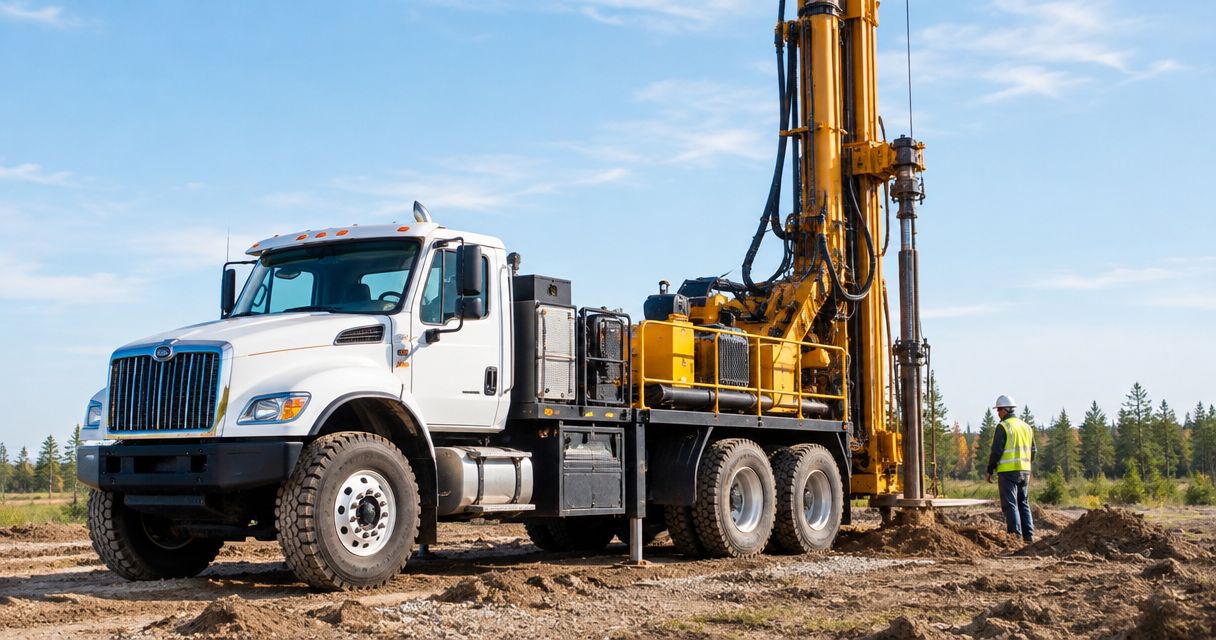
A truck remount has no single standard turnaround: the schedule depends on the receiving truck, mounting work, system connections, and repairs included in the project. Workshop completion also excludes transportation and your own return-to-work preparations unless the schedule explicitly includes them. For a 2026 project, get a written completion estimate tied to an inspected rig, an identified truck, and an agreed scope—not a generic number of weeks.
- How long does a truck remount take? Get a project-specific schedule covering fabrication, system connections, repairs, and testing.
- Separate workshop completion from transportation and return to drilling before committing equipment to another job.
- Drill Rig Marketplace provides truck remounts and drill rig repairs; confirm the scope before accepting a completion estimate.
- Keep remount work and optional refurbishment separate so you can see what affects the schedule.
Why this matters
A completion date is useful only when you know what it covers. A truck ready for collection is not necessarily a rig ready to start your next drilling contract: transport, tooling, documentation, and crew preparation still need their own arrangements.
Start with the equipment interface, not the calendar. The guide to connecting a truck remount to your existing drill rig addresses the relationship between the existing rig and its replacement carrier. Your schedule should follow that assessment rather than precede it.
Ask for a defined handover condition before asking for a finish date. That turns a vague turnaround discussion into a plan you can use when allocating crews and accepting work.
How long does a truck remount take?
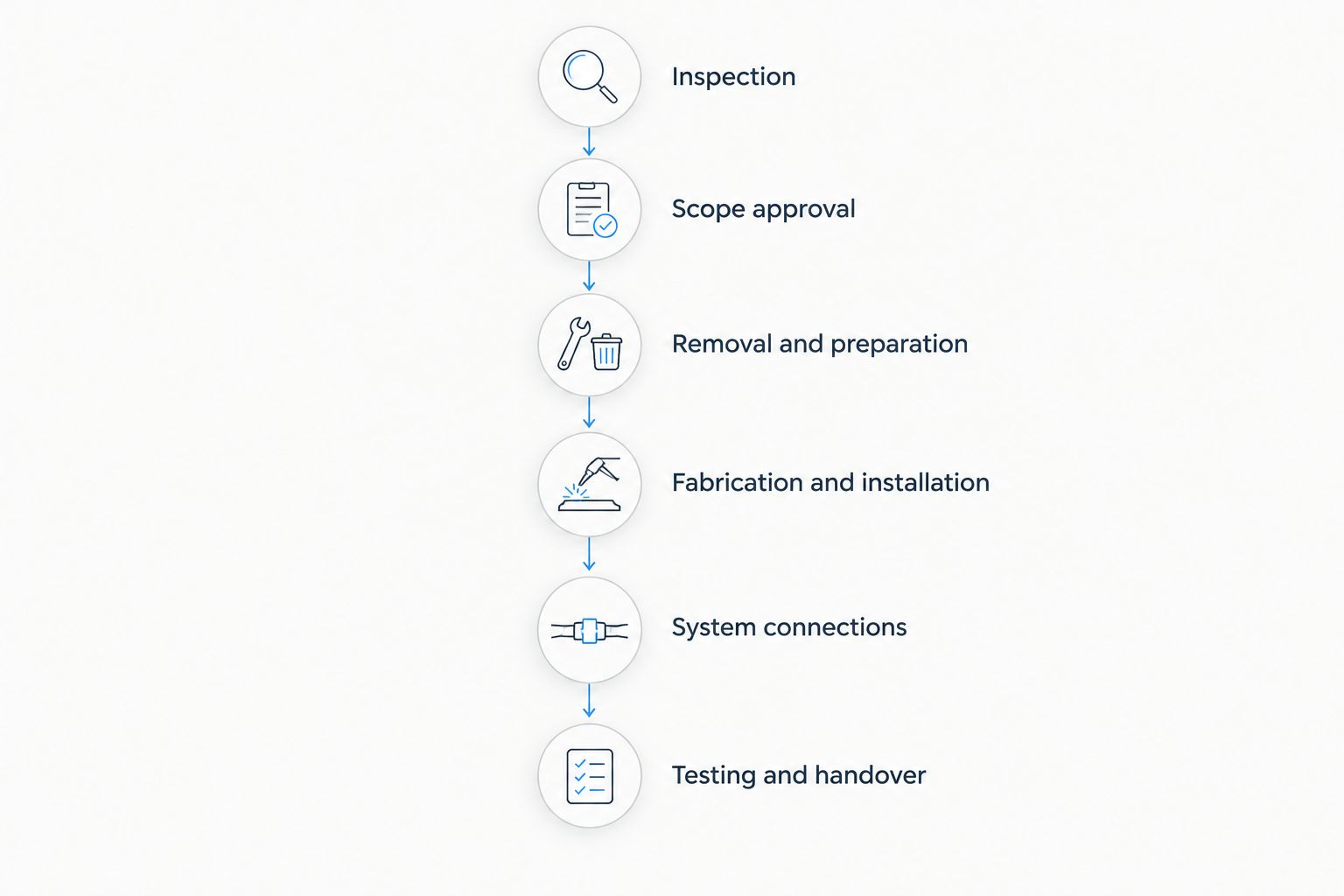
The defensible answer is the duration stated in a project-specific work plan after the rig and receiving truck have been assessed. Separate the schedule into the following stages, and ask which stages must finish before the next can begin.
- Inspection: Establish the condition of the drilling equipment and receiving truck. Record defects and identify the work required for the proposed installation.
- Scope approval: Agree on mounting work, system connections, repairs, testing, and exclusions. Resolve who supplies the truck and any required components.
- Removal and preparation: Plan the removal of the drilling equipment and preparation of the receiving carrier. Confirm lifting arrangements and responsibilities with the workshop.
- Fabrication and installation: Complete the approved mounting work and install the drilling equipment. Keep changes subject to written approval.
- System connections: Address hydraulic, electrical, drivetrain, and safety-system work included in the scope. Specify the checks required for those connections.
- Testing and handover: Complete the agreed checks, resolve outstanding defects, and document the handover condition. Arrange transportation against the confirmed release date.
These are planning stages, not promised durations. For your 2026 schedule, ask the workshop to identify the expected start, dependencies, and completion condition for each applicable stage.
Remount only: define the transfer boundary
A remount-focused scope centers on transferring drilling equipment to a receiving truck and completing the work needed for that installation. It does not automatically include restoring every worn component on the drill rig.
Best for: contractors who want to retain their drilling equipment and change its carrier. The benefit is a clear project boundary; the limitation is that existing rig defects still need separate decisions.
Ask the workshop to identify which components will be reused, replaced, or modified. A scope that simply says remount leaves too much unanswered, particularly around hoses, wiring, controls, and mounting fabrication.
Define responsibility for the receiving truck as well. Before delivery, agree on its required condition and the information the workshop needs to assess the proposed installation.
Remount with repairs: identify added work before approval
A remount with repairs includes both the carrier transfer and specifically approved corrective work. Hydraulic repairs, electrical repairs, safety-system work, and drivetrain repairs should each appear as distinct scope items when required.
Best for: owners who need identified defects addressed during the same workshop visit. Combining the work brings those decisions into one project, but additional repair tasks introduce additional dependencies.
Do not treat every repair as interchangeable. Replacing a hose and diagnosing a system fault are different tasks; ask what has been diagnosed, what remains to be inspected, and what requires your approval.
For a 2026 booking, establish how newly discovered defects will be reported. Require a description of the finding, the proposed work, and its effect on the completion estimate before authorizing a change.
Remount with rebuild: separate restoration from relocation
A remount combined with a rebuild has a broader purpose than changing the truck underneath the drilling equipment. The written rebuild scope should identify which assemblies and systems receive repair, replacement, or refurbishment.
Best for: owners pursuing both a carrier change and defined restoration work. The benefit is a coordinated project; the trade-off is a broader scope that needs more detailed approval and scheduling.
The word rebuild is not a substitute for a component list. Ask whether the proposed work includes hydraulics, electrical systems, drivetrain work, fabrication, painting, or other refurbishment—and which items remain excluded.
| Project scope | Best for | Main benefit | Limitation to resolve |
|---|---|---|---|
| Remount only | Retaining the rig while changing its carrier | Keeps the transfer scope identifiable | Existing rig defects need separate decisions |
| Remount with repairs | Addressing known defects during the transfer | Brings approved corrective work into the project | Repair findings and approvals affect scheduling |
| Remount with rebuild | Combining a carrier change with restoration | Coordinates installation and broader equipment work | Requires a detailed rebuild scope, not a label |
Choose the scope that matches the equipment condition and your intended work. Do not compare completion estimates until each proposal describes the same handover condition.
Why truck remount timing varies
The work list determines what needs to happen before release. These factors belong in the schedule discussion because each corresponds to a distinct part of a remount or associated repair project:
- Receiving-truck preparation: Confirm what preparation the truck needs and who completes it before installation begins.
- Mounting and fabrication: Identify required fabrication rather than assuming the existing mounting arrangement transfers unchanged.
- Hydraulic work: Separate hose replacement from other hydraulic-system repairs and specify what is included.
- Electrical and safety systems: Define the connections, repairs, and checks needed for the approved installation.
- Drivetrain repairs: Establish whether drivetrain work belongs in the project or remains outside the remount scope.
- Refurbishment: List sandblasting, painting, and other refurbishment separately so their place in the sequence is visible.
Ask which item currently controls the completion estimate. A list of open tasks does not tell you which task prevents the project from moving to the next stage.
What should a truck remount estimate include?
A useful estimate describes both the work and the assumptions behind its schedule. For a 2026 project, request a written scope that another person on your team can understand without repeating the entire sales conversation.
Your approval document should address:
- The drilling equipment and receiving truck covered by the proposal.
- Inspection findings and unresolved assessment items.
- Included mounting, fabrication, and connection work.
- Approved repairs and explicitly excluded repairs.
- Responsibility for sourcing and supplying components.
- The event that starts the quoted project period.
- The process for approving scope changes.
- Testing requirements and the condition required for release.
- Collection or transportation responsibilities.
An estimated finish date without a defined start condition is incomplete. Ask whether the schedule starts at booking, equipment arrival, inspection approval, or readiness to begin the approved work.
Keep the written assumptions with the estimate. If the receiving truck changes or you add repairs, ask for the schedule to be reviewed against that revised scope.
How do you plan drilling work around a remount?
Plan around confirmed project milestones rather than an informal completion conversation. Your operating schedule needs a distinction between equipment in the workshop, equipment released for collection, and equipment ready for your crew to use.
First, tell the workshop about the job commitments that constrain your downtime. Ask whether the proposed scope and completion estimate fit those commitments before arranging delivery.
Next, assign someone on your team to approve changes. Agree on how the workshop will reach that person and what information an approval request must contain.
Then coordinate the return journey. Transportation planning should use the confirmed release status, while your own return-to-work plan should address tooling, records, and crew readiness.
For 2026 project planning, keep the workshop completion target and the next drilling commitment as separate entries. Do not turn an estimated release date into a guaranteed mobilization date.
Is Drill Rig Marketplace suitable for a remount project?
Drill Rig Marketplace suits drilling contractors seeking truck remounts and drill rig repair through one service company. Its repair and rebuild facility is in Beaver, West Virginia, and its stated services include inspections, fabrication, hydraulic repairs, electrical and safety-system repairs, drivetrain repairs, and refurbishment.
That service range is relevant when the transfer requires more than mounting work. It does not establish your project's completion date or mean every service belongs in your scope.
Use Drill Rig Marketplace to discuss the rig, receiving truck, and intended work. Ask for the inspection requirements, scope boundaries, and project-specific schedule before making a transport commitment.
Discuss your truck remount scope
Review your receiving truck, repair requirements, and handover expectations before planning downtime.
FAQ
How long does a truck remount take from delivery to collection?
A truck remount needs a project-specific completion estimate based on the inspected equipment and approved scope. Confirm whether that estimate includes inspection, mounting work, repairs, testing, and release for collection.
Can I get a firm remount date before the rig is inspected?
Treat a pre-inspection date as provisional unless the workshop explicitly confirms its assumptions and commitment. Ask what findings or changes would require the schedule to be revised.
Does a truck remount include a full drill rig rebuild?
A truck remount does not automatically include a full drill rig rebuild. The written scope should identify any repair, replacement, or refurbishment work beyond the carrier transfer.
What should I send the workshop before a remount assessment?
Send the rig and receiving-truck identification, available equipment records, photographs, known defects, and your intended work requirements. Ask the workshop what further information it needs before assessing the installation.
Can hydraulic and electrical repairs be included in the remount?
Hydraulic and electrical repairs can be specified alongside the remount work. Ask for each repair to be listed separately, with its approval requirements and effect on the project schedule.
Does the completion estimate include transporting the rig back?
Transportation is included only when the project agreement explicitly says so. Separate workshop release, collection, and arrival at your operating location when planning equipment downtime.
What should happen before I accept the completed remount?
Confirm that the agreed testing and handover requirements have been completed. Review outstanding items, repair records, and any operating or maintenance instructions supplied for the completed work.
One last thing
The most useful scheduling question is not simply when the remount will finish. Ask: What must be true before you release the rig, and what remains my responsibility afterward?
That question separates installation completion from operational readiness. Put the answer in the work order, then use it to coordinate collection, equipment checks, and your next drilling assignment.