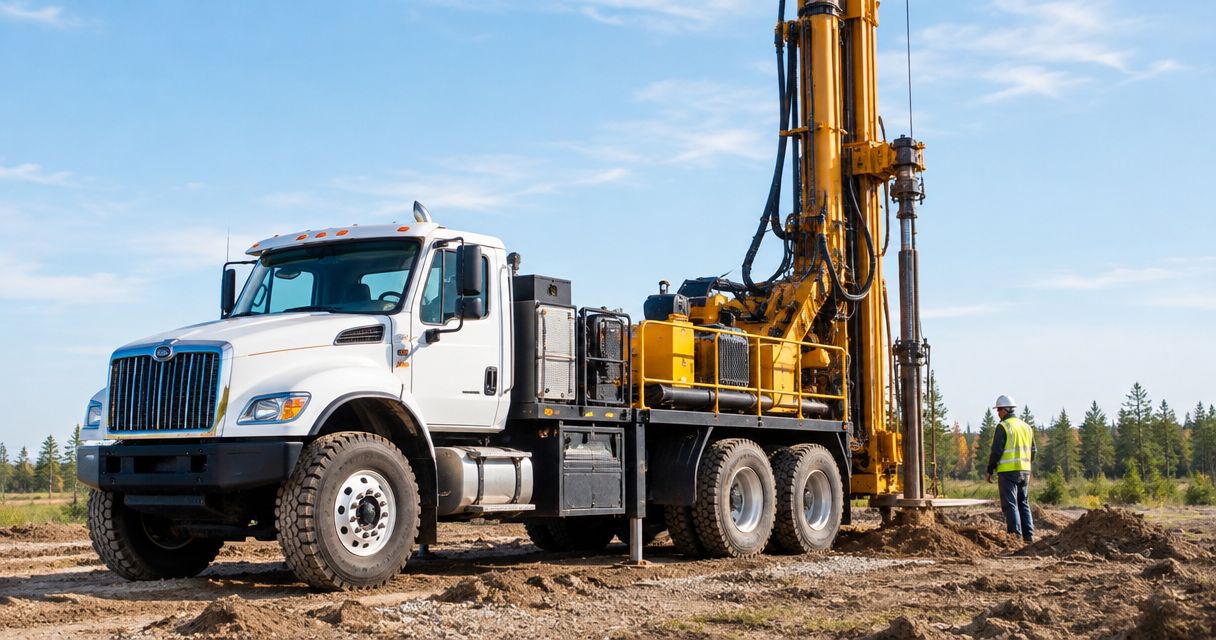
A rebuilt drill rig is not automatically as reliable as a new one: judge the specific machine by its rebuild scope, retained components, inspection findings, and documented operating tests. Replacing worn parts does not reset the condition of every system, so the purchase decision must include what the rebuild left untouched.
- Is a rebuilt drill rig as reliable as new? The rebuild label alone does not establish equivalent reliability.
- Drillrigmarketplace serves contractors seeking used drill rigs alongside repair and rebuild services.
- Require component-level records, operating tests, and an inspection before accepting a rebuilt rig.
- Evaluate the drilling assembly and carrier separately; repairing one does not establish the other's condition.
Why this matters
For a 2026 equipment purchase, the useful question is not whether rebuilding works in principle. It is whether the offered rig has documented condition and operating capability suitable for your work.
A rebuild description needs to distinguish completed repairs from inspections, retained components, and cosmetic work. Start with the rig inspection-to-rebuild workflow, then apply the same scrutiny to the individual machine you intend to buy.
Buy documented condition, not the word rebuilt. A detailed work order gives you something to evaluate; a broad sales description does not.
Is a rebuilt drill rig as reliable as a new one?
There is no blanket equivalence between rebuilt and new drill rigs. Reliability describes performance over time, while an inspection or demonstration establishes condition and function at the time of assessment. Neither a rebuild label nor a successful demonstration proves future uptime.
Compare the evidence behind each machine rather than treating its category as a guarantee. For your 2026 shortlist, use the following distinctions.
| Equipment condition | Best for | Main advantage | Main limitation | Evidence to request |
|---|---|---|---|---|
| New drill rig | Buyers whose work requires the offered factory configuration | No prior drilling service on the machine | New condition does not establish future uptime | Specifications, acceptance procedure, and written support terms |
| Documented rebuilt drill rig | Buyers evaluating an existing platform with recorded corrective work | Repair records identify which defects were addressed | Retained components still require assessment | Rebuild scope, inspection findings, parts records, and operating tests |
| Used drill rig with selected repairs | Buyers prepared to evaluate the remaining machine in detail | Individual repairs can be traced when documented | Completed repairs do not establish whole-machine condition | Repair invoices, maintenance history, and inspection results |
The table is a purchasing framework, not a reliability ranking. Choose the machine whose documented condition matches the job, rather than assuming either newness or rebuilding settles the decision.
Documented rebuild: inspect what was restored
A useful rebuild record identifies the original findings, the corrective work, and the checks performed afterward. Ask the seller to connect those records to the machine's identification and relevant component identifiers.
For each major assembly, request a clear status: replaced, repaired, inspected and retained, or not evaluated. These descriptions answer different questions. An inspected component is not necessarily a replaced component, and a replaced component does not establish the condition of its connected systems.
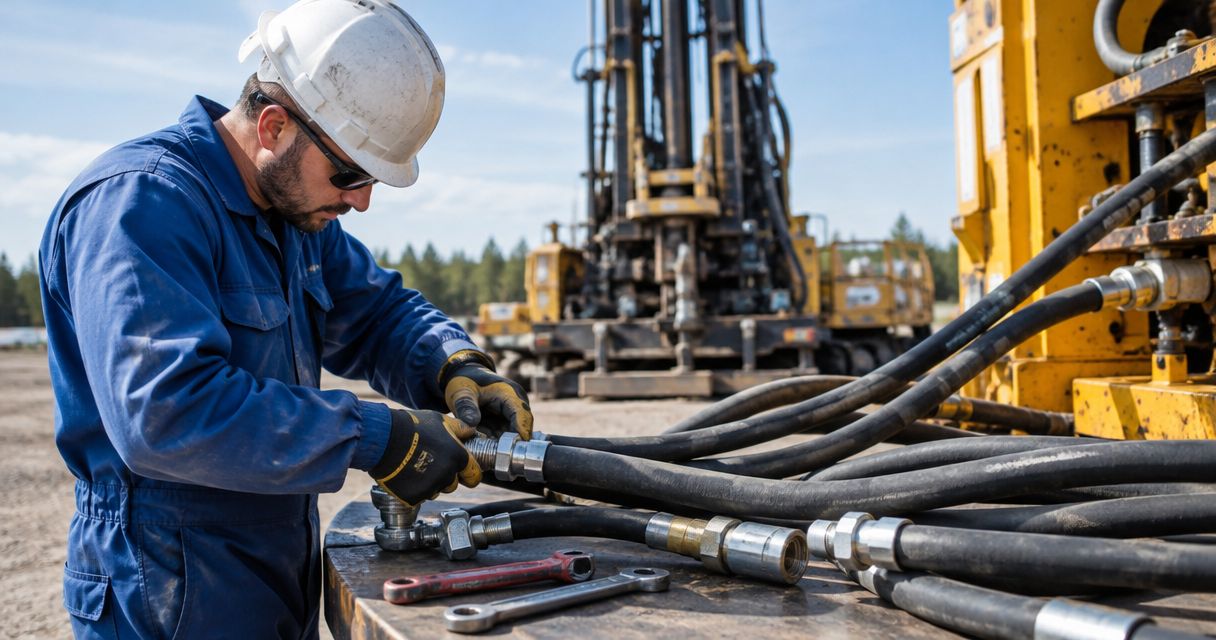
For hydraulic work, ask what was done beyond replacing visible hoses. Request the applicable inspection and test records for pumps, valves, cylinders, connections, and controls. Have a qualified technician interpret the findings against the machine's specifications.
Best for: buyers who want to evaluate an existing drilling platform through documented corrective work. The advantage is traceability; the limitation is that the machine still contains components whose condition must be assessed individually.
Cosmetic refurbishment: separate appearance from condition
Sandblasting and painting describe surface work. They do not establish the condition of a hydraulic pump, drivetrain, electrical circuit, or drilling assembly.
Treat refurbishment as a list of completed tasks, not a substitute for inspection. Ask which mechanical repairs accompanied the finish work and request the corresponding records. If the seller describes the rig as fully rebuilt, ask for the scope that supports that description.
Best for: buyers evaluating a machine whose appearance has been restored but whose mechanical condition will be assessed separately. The benefit is the completed surface work; the limitation is that appearance provides no operating evidence.
Do not reject a freshly painted rig simply because it looks restored. Instead, keep appearance and mechanical acceptance on separate lines of your checklist.
Truck remount: evaluate the carrier separately
A truck remount concerns the relationship between the drilling equipment and its carrier. It does not, by itself, establish that the drilling assembly or the truck received a complete mechanical rebuild.
Request separate records for the carrier and drilling equipment. Have the inspection address the mounting arrangement, connections, controls, and applicable vehicle requirements, as well as the condition of each assembly.
Best for: owners considering a different carrier for an existing drilling platform. A remount addresses the carrier arrangement; its limitation is that it does not establish the condition of unrelated components.
Keep both sides of the assessment visible. A satisfactory truck inspection does not answer questions about drilling hydraulics, and a satisfactory drilling demonstration does not answer every question about the truck.
Why rebuilt drill rig reliability varies
The scope of work matters more than the rebuild label. Use these factors to identify what requires evidence rather than asking the seller for a general assurance.
- Rebuild scope: Identify the assemblies repaired or replaced and the defects the work addressed. Separate complete assembly work from individual component repairs.
- Retained components: Request the findings supporting decisions to leave components in service. Age alone is not a condition report.
- Hydraulic condition: Have a qualified technician assess the system using the manufacturer's procedures and specifications. A hose replacement record answers only part of that assessment.
- Electrical and safety systems: Request functional checks of controls and installed safety devices. Mechanical repairs do not establish electrical condition.
- Carrier and drivetrain condition: Review these separately from the drilling assembly, particularly when the machine has been remounted.
- Maintenance and job fit: Match the manufacturer's maintenance requirements and machine specifications to the work you intend to perform.
These factors define the questions to resolve. They do not support a universal service-life estimate or a failure-rate comparison between rebuilt and new equipment.
How do you verify a rebuilt drill rig before buying?
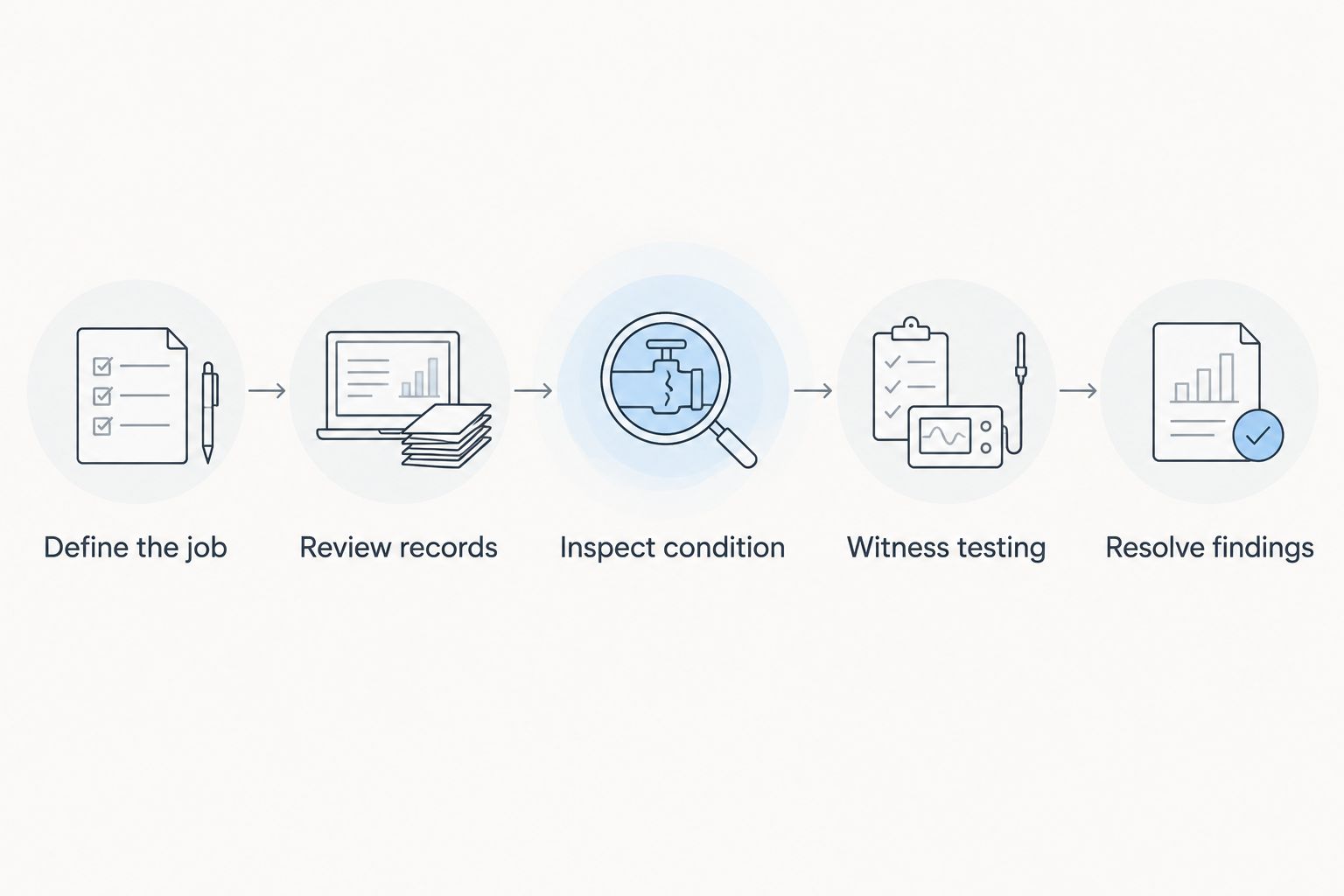
Use this acceptance sequence for a 2026 purchase. Complete the records review before arranging the final demonstration, so the inspection can focus on specific claims and unresolved items.
- Define the job. Write down the drilling method, tooling, site access needs, and required capabilities. Compare those requirements with the machine's documented specifications, not assumptions based on its appearance.
- Review records. Obtain the rebuild scope, repair invoices, maintenance history, and available test reports. Confirm that the documents identify the offered machine and distinguish completed work from proposed work.
- Inspect condition. Arrange an assessment by a qualified drill rig technician. Include the drilling equipment, carrier, hydraulics, electrical systems, controls, and installed safety devices as applicable.
- Witness testing. Agree on an operating demonstration appropriate to the rig and intended work. Follow the manufacturer's procedures and record the conditions, observations, and unresolved faults.
- Resolve findings. Put required corrective work, acceptance conditions, included equipment, and written support terms into the purchase documents before committing.
Do not use a seller's willingness to demonstrate the rig as a substitute for agreeing on what the demonstration must establish. Define the acceptance criteria first, then assess the results against them.
Keep operating tests within a controlled inspection process. Do not improvise load tests or bypass safety devices to reproduce a job-site task. A qualified technician should determine the appropriate procedure and interpret the results.
What should a rebuild report include?
A useful rebuild report lets you trace a finding to an action and then to a verification result. Organize your 2026 purchase file around that chain rather than collecting disconnected photographs and invoices.
Ask for an assembly-level work summary, supporting parts and repair records, inspection findings, and post-work test results. Record what remains unknown as well as what has been established. Unknown condition is a reason for further assessment, not evidence of failure or evidence of reliability.
Keep measured results with their units and test conditions. A pressure reading without an identified circuit, procedure, and applicable specification is difficult to interpret. Likewise, an operating video needs context about what functions were demonstrated.
Require traceable findings, not just a folder of documents. If a report identifies a defect, the acceptance file should show whether it was corrected, retained with an explanation, or left unresolved.
Does rebuilding reset a drill rig's operating hours?
A rebuild does not erase a drill rig's operating history. Treat the machine's recorded hours and any documented component service hours as separate information, with clear explanations of what each record represents.
Ask whether the hour meter was replaced and whether earlier readings are available. A meter reading is not, by itself, evidence of time since rebuild or proof of component condition.
Use operating history to guide the inspection questions, not to replace the inspection. The decisive records identify what work occurred and what subsequent checks established.
Can a rebuilt rig come with the same warranty as a new rig?
A rebuilt rig's coverage is whatever its written agreement states. Do not assume that either a rebuilt or new machine includes particular warranty terms without reading the applicable documents.
Ask who provides coverage, which assemblies it includes, what it excludes, and how a claim is handled. Clarify any responsibilities for labor, transport, diagnosis, and maintenance records before signing.
Warranty coverage and reliability are different questions. An agreement describes remedies under its terms; it does not establish that a machine will operate without faults.
When should you involve a drill rig repair specialist?
Involve a specialist before acceptance when the rebuild description, inspection findings, or test results need technical interpretation. Give the specialist the intended drilling work and the available records so the assessment addresses your actual purchase decision.
Drillrigmarketplace is a fit for contractors seeking used drill rigs alongside repair and rebuild services. Its stated services include inspections, complete rebuilds, truck remounts, hydraulic repairs, electrical and safety system repairs, and drivetrain repairs at its Beaver, West Virginia facility.
You can discuss those needs with Drillrigmarketplace. Those service capabilities are relevant to the evaluation, but they do not establish the condition or future reliability of an individual listed rig; request machine-specific evidence.
FAQ
Is a rebuilt drill rig as reliable as new?
A rebuilt drill rig is not automatically as reliable as a new one. Evaluate its rebuild scope, retained components, inspection findings, and operating tests; the label alone does not establish equivalent reliability.
What's the most important document when buying a rebuilt drill rig?
The component-level rebuild scope is a key starting document because it identifies what work was completed. Read it alongside repair records, inspection findings, and test results rather than treating it as standalone proof of condition.
Does a fresh paint job mean a drill rig was rebuilt?
A fresh paint job does not establish that a drill rig was mechanically rebuilt. Request a separate record of mechanical work and the checks performed afterward.
Should I inspect a rebuilt drill rig before buying it?
Yes, arrange a machine-specific inspection before accepting a rebuilt drill rig. Have a qualified technician review the drilling assembly, carrier, applicable systems, and supporting records.
Does a truck remount mean the drilling equipment was rebuilt?
A truck remount does not establish that the drilling equipment was rebuilt. Review the carrier work and drilling assembly work separately, including their inspection and test records.
Can a seller guarantee that a rebuilt rig will have no downtime?
Do not treat a seller's assurance of no downtime as evidence of future reliability. Base acceptance on documented condition and tests, and review any contractual promises in writing.
Does Drillrigmarketplace repair used drill rigs?
Drillrigmarketplace provides used drill rig repair and rebuild services at its Beaver, West Virginia facility. Its stated services include inspections, hydraulic repairs, electrical and safety system repairs, drivetrain repairs, and truck remounts.
One last thing
Ask the seller one final question before your 2026 acceptance decision: which major components were left untouched, and what evidence supports keeping them in service? That question directs attention beyond the most visible repairs to the remaining machine.
A good rebuild file explains what stayed, not only what changed. Use that distinction to decide what still needs inspection before you buy.