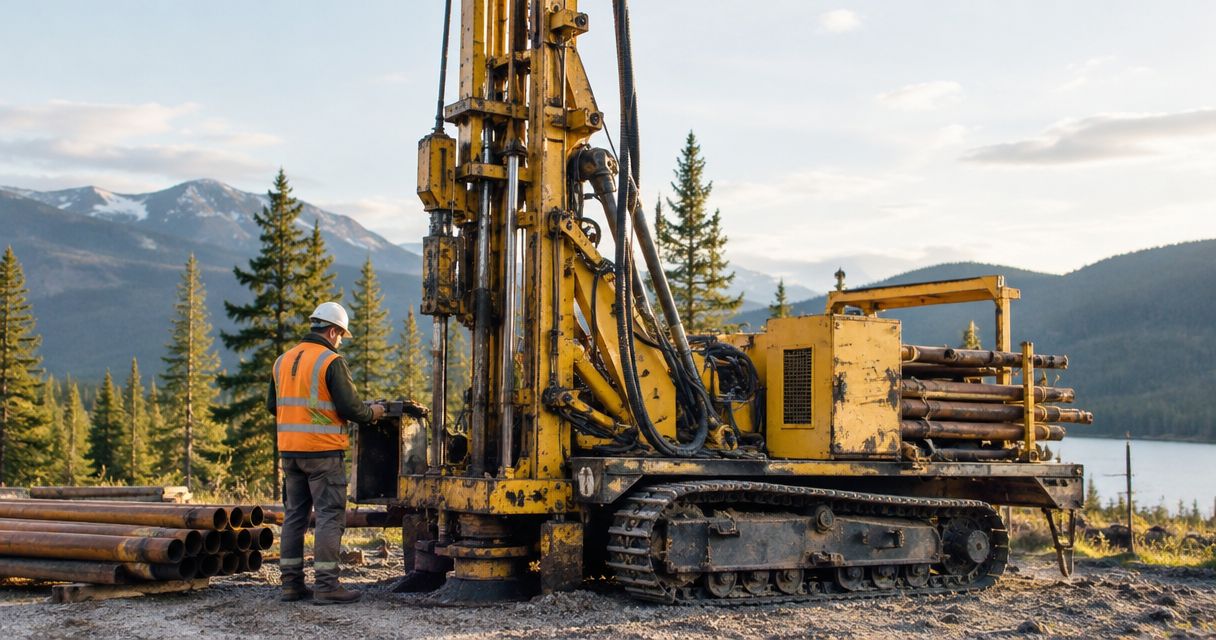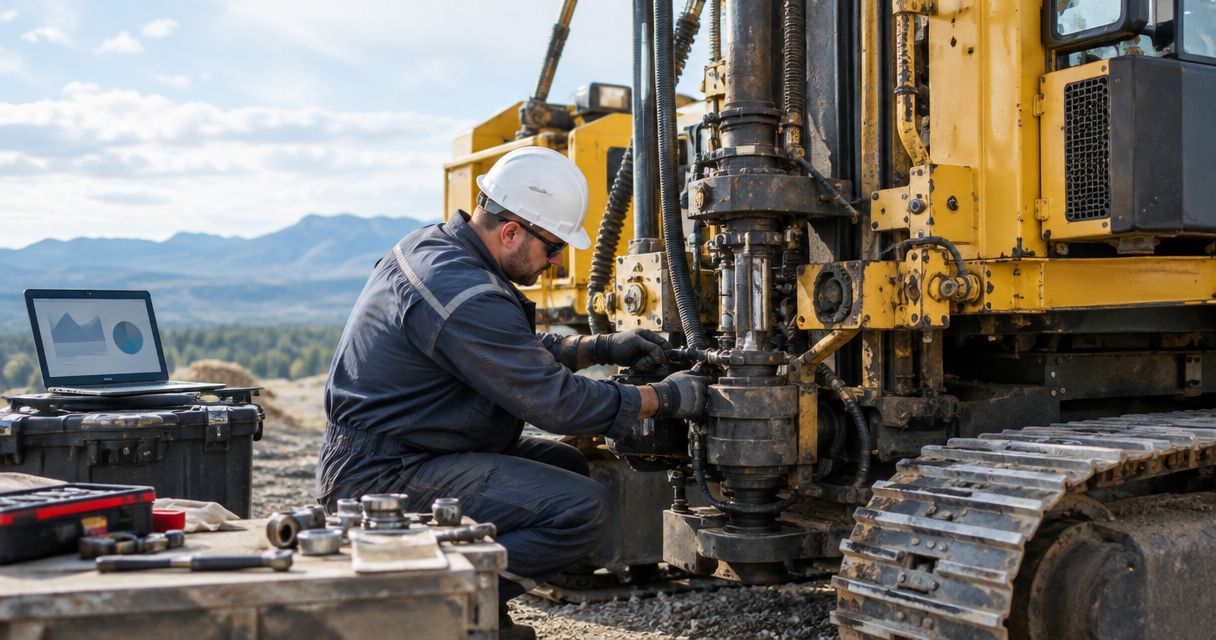
Buying a used drill rig is worth it in 2026 when its verified condition, drilling capabilities, and ownership obligations fit the work you expect to perform. The purchase decision must also account for repairs, tooling, transportation, and the carrier—not just the drilling unit. Buy only after an inspection and an operating demonstration establish what you are taking on.
- Is buying a used drill rig worth it? Yes, when inspection confirms job fit and manageable repair requirements.
- Drillrigmarketplace combines used drill rig sales with repair and rebuild services for drilling contractors.
- Compare an existing-condition rig, a documented rebuild, and a new rig against the same drilling requirements.
- Treat tooling, transportation, carrier condition, and maintenance as purchase decisions, not afterthoughts.
Is buying a used drill rig worth it in 2026?
Yes—provided the machine passes a job-specific evaluation. A rig that cannot perform your drilling method or reach your sites is the wrong purchase regardless of its cosmetic condition. Start with your work requirements, then follow an inspection-to-rebuild workflow to separate acceptable wear from work that must happen before deployment.
Compare purchase paths using the same requirements. These are decision categories, not quality ratings: an undocumented rebuild does not automatically outrank a well-maintained used machine.
| Purchase path | Best for | Main advantage | Main limitation | Decision rule |
|---|---|---|---|---|
| Used rig in existing condition | Contractors able to evaluate and manage identified repairs | You can assess the machine as presented and define the required work | Existing faults and undocumented history remain part of the decision | Buy only with a written condition assessment |
| Used rig with a documented rebuild | Contractors seeking evidence of completed corrective work | The rebuild scope identifies what was repaired or replaced | Components outside the scope still require inspection | Buy based on records and testing, not the rebuild label |
| New rig | Contractors whose requirements call for a specified new configuration | You can evaluate a defined build specification | A new machine still needs to match your tooling, access, and operating requirements | Compare the actual configuration against your work |
Condition and suitability matter more than the label attached to the sale. Keep that rule at the center of your 2026 purchase decision.
Why this matters
A used drill rig purchase connects mechanical condition to your ability to complete contracted work. The drilling unit, truck or tracked carrier, tooling, and support arrangements all need to work together. Evaluating only the machine in the listing leaves the rest of that system unresolved.
Separate acceptable maintenance from defects that prevent safe operation or the required drilling work. A disclosed issue with a defined repair plan is different from a fault nobody has diagnosed. You need that distinction before committing—not after the rig reaches your yard.
When a used drill rig makes sense
A used rig makes sense when you can describe its intended work and demonstrate that the specific machine meets those requirements. Write down the drilling method, expected ground conditions, sampling needs, access restrictions, and tooling you intend to use. Give those requirements to the inspector rather than asking whether the rig is generally in good shape.
The strongest purchase case connects each requirement to evidence. That evidence includes manufacturer documentation for the particular configuration, service records, inspection findings, and an appropriate operating demonstration. A seller's familiarity with the rig helps explain its history; it does not replace verification.
For a 2026 purchase, distinguish present capability from planned modification. If the rig needs a remount, hydraulic work, or different tooling before it can do your work, evaluate those tasks as part of the acquisition. Do not treat an unfinished conversion as a ready-to-deploy machine.
Buy the configuration you can verify, not the configuration you hope to create. If modifications are essential, define their scope and acceptance criteria before purchasing.
When you should pass on a used rig
Pass when the seller cannot support a meaningful inspection or demonstrate essential functions safely. Also pass when critical identification details, ownership documentation, or the included equipment remain unresolved. Uncertainty is not a repair plan.
A rig is also a poor fit when your intended drilling method depends on capabilities that have not been established. Familiar paint, a recognized manufacturer, or a similar-looking machine in another contractor's fleet does not prove compatibility.
Use a clear stop list:
- Unresolved safety defects: Require evaluation and correction before operation.
- Unverified configuration: Confirm the actual components and capabilities against documentation.
- Undefined repair scope: Obtain a diagnosis rather than accepting a general promise to fix it.
- Unclear inclusions: Identify the tooling, accessories, and documents included in writing.
- Unsettled transport arrangements: Establish how the complete machine will reach your operating location.
Walking away is the right decision when the evidence cannot support acceptance. You do not need to prove that the rig is unusable; you need adequate evidence that it is suitable for you.
How do you evaluate a used drill rig before buying?
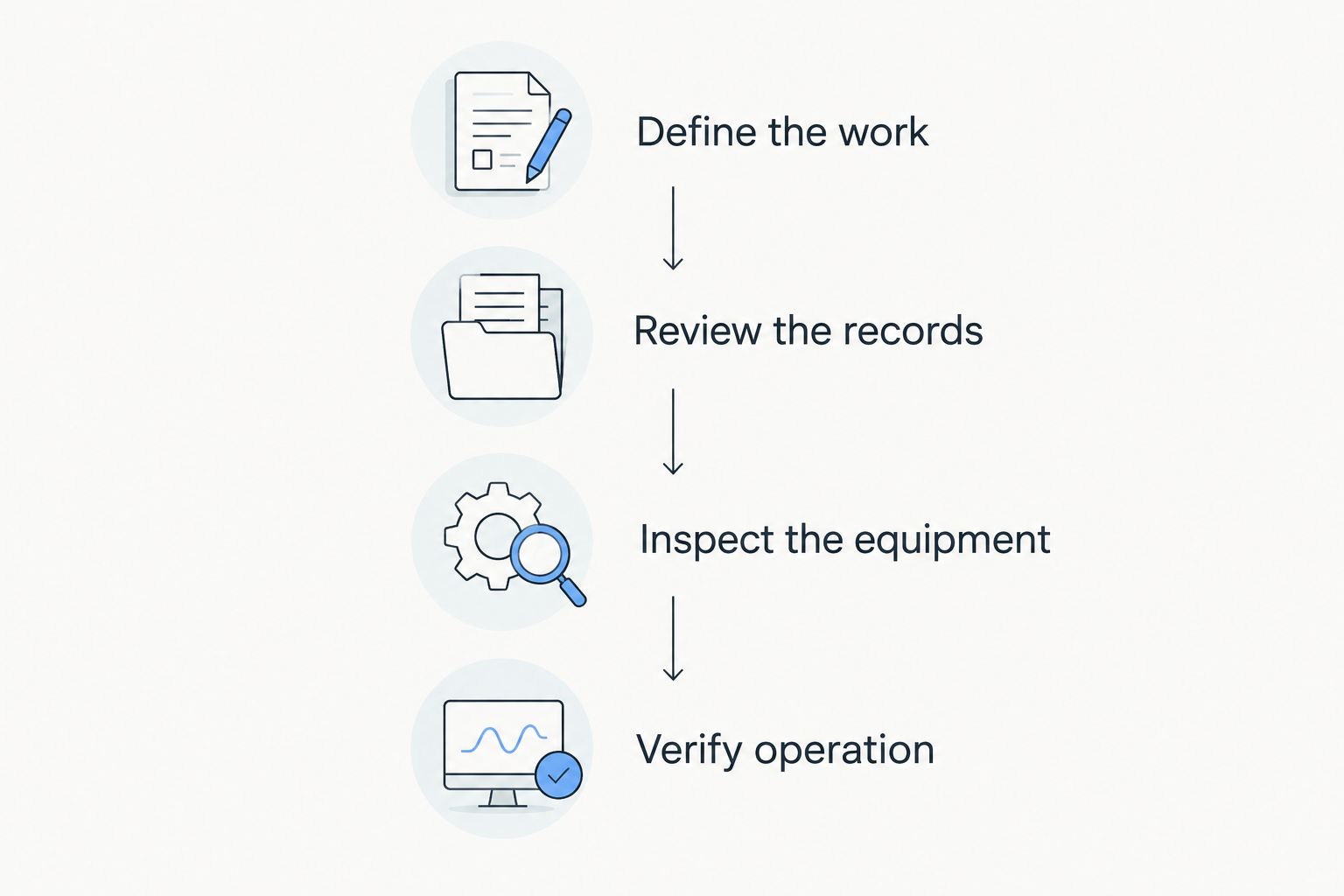
Use an inspection sequence that ends with a written acceptance decision. Keep the drilling unit and carrier in scope, and have qualified personnel perform mechanical checks and operating demonstrations under appropriate safety procedures.
- Define the work. Document drilling methods, site access, sampling requirements, and the tooling you plan to run. Identify which requirements are essential and which are preferences.
- Review the records. Match machine identification to the available documentation. Review maintenance, repair, rebuild, and remount records, including what each job covered.
- Inspect the equipment. Have a qualified inspector evaluate structural condition, hydraulics, electrical and safety systems, drivetrain, and carrier condition as applicable. Record unresolved findings rather than relying on memory.
- Verify operation. Arrange a safe demonstration appropriate to the machine and intended work. Document what was tested, what was not tested, and what must be corrected before acceptance.
Turn the findings into a written disposition: acceptable as inspected, acceptable after specified corrective work, or rejected. Assign responsibility for each corrective task. State how completion will be verified before the transaction reaches its acceptance point.
Do not turn the demonstration into an improvised stress test. The inspection procedure should follow the equipment's documentation and the qualified inspector's direction. Your objective is useful evidence, not an unsafe display.
What does a rebuild actually prove?
A documented rebuild proves that the recorded work was performed; it does not establish the condition of every component. Ask which systems were inspected, repaired, replaced, or left unchanged. Request supporting records and the results of relevant functional checks.
Separate drilling-unit work from carrier work. Hydraulic repairs do not establish drivetrain condition, and a truck remount does not establish the condition of every drilling component. Sandblasting and painting describe refurbishment work, not a mechanical acceptance test.
For any rig described as rebuilt in 2026, ask for the scope before evaluating the label. Match each completed task to an inspection finding or stated objective. Then identify the remaining maintenance and unresolved work.
A rebuild is only as useful to your purchase decision as its documented scope. That makes a clear work order more valuable than a broad description such as fully refurbished.
Why the value of a used drill rig varies
The value to your business depends on the work the rig can perform and the obligations you assume. Use these factors to compare candidates without substituting general market claims for machine-specific evidence:
- Mechanical condition: Hydraulic, electrical, drivetrain, and safety-system findings determine what needs attention before use.
- Carrier condition: Evaluate the truck or tracked carrier separately from the drilling equipment mounted on it.
- Job fit: Confirm the drilling method, site access, sampling requirements, and necessary configuration.
- Tooling compatibility: Identify which augers, drill rod, casing, and sampling equipment fit the proposed setup.
- Repair scope and support: Establish who will diagnose faults, perform corrective work, and source needed parts.
- Transportation and preparation: Define the work required to move the machine and prepare it for its first assignment.
Use the same checklist for every candidate. Otherwise, you risk comparing a machine with included tooling against one that requires a separate tooling package, or comparing documented repairs against an unsupported description.
Is buying used better than buying new?
Buying used is better when the specific used machine meets your work requirements and you accept its documented condition and maintenance obligations. Buying new is the better fit when your decision requires a new configuration that the used candidates do not provide. Neither route removes the need to verify suitability.
Keep the comparison operational. Ask what work each candidate can perform, what supporting equipment it requires, and what must happen before deployment. Avoid choosing a category first and trying to justify a particular machine afterward.
Is a rebuilt drill rig better than an unrepaired used rig?
A rebuilt drill rig is better only when the completed work addresses the conditions that matter to your intended use. A clear repair history supports the decision, but an undocumented rebuild leaves essential questions unanswered. Inspect both machines against the same acceptance criteria.
Your comparison should distinguish completed corrective work from deferred maintenance. If the scope omits a system you depend on, investigate that system separately. The word rebuilt does not close the inspection.
Can a used drill rig be your main production machine?
A used drill rig can serve as your main production machine when its verified capabilities and condition support your work. Before assigning it that role, establish maintenance responsibilities, access to repair support, and a response plan for equipment faults.
For an owner-operator, that plan needs to fit the people and equipment actually available. Identify who handles service work when you are drilling and how you will manage a job if the rig requires repair. Do not confuse a successful demonstration with a maintenance plan.
Where specialist sales and repair support fits
Drillrigmarketplace is best for drilling contractors seeking used drill rig sales and repair services from the same company. Its stated services include inspections, rebuilds, truck remounts, hydraulic repairs, electrical and safety-system repairs, and drivetrain repairs, with a repair facility in Beaver, West Virginia.
That service scope gives you relevant subjects to discuss when assessing a candidate. The limitation remains machine-specific: the company's service capabilities do not establish that a listed rig has received those services. Ask what work applies to the particular machine and request the supporting documentation.
Use Drillrigmarketplace to discuss the equipment and service scope relevant to your purchase. Keep the inquiry concrete: intended work, candidate configuration, known defects, inspection requirements, and required corrective tasks.
FAQ
Is buying a used drill rig worth it in 2026?
Buying a used drill rig is worth it in 2026 when verified condition and drilling capabilities match your work. Include repairs, tooling, carrier condition, and transportation in the decision.
What should I check before buying a used drill rig?
Check identification, ownership documentation, maintenance records, mechanical condition, safety systems, and suitability for your drilling method. Have qualified personnel inspect the equipment and conduct an appropriate operating demonstration.
Should I buy a rebuilt drill rig instead?
Buy a rebuilt drill rig when its documented scope addresses the conditions relevant to your work. Inspect systems outside that scope rather than assuming the entire machine was renewed.
Does fresh paint mean a used drill rig is in good condition?
Fresh paint does not establish mechanical condition. Evaluate the rig through records, inspection findings, and functional checks rather than appearance.
Do I need to inspect the truck as well as the drill rig?
Inspect the truck separately from the drilling unit on a truck-mounted rig. Carrier condition and drilling-unit condition are distinct parts of the purchase decision.
Can Drillrigmarketplace help with repairs after a purchase?
Drillrigmarketplace offers drill rig repair and rebuild services, including hydraulic, electrical, safety-system, and drivetrain repairs. Confirm the scope applicable to your machine directly with the company.
One last thing
Before you accept a used rig, reconcile the inspection findings with the final written agreement. Every unresolved item needs a decision: corrected before acceptance, accepted with a defined plan, or grounds to stop the purchase.
The strongest final check is simple: can you explain what you are buying, what still needs work, and who is responsible? If you cannot, the purchase is not ready.